Explained
Running Shoes, Explained: What to Look For
Decode the specs on a daily trainer so you can pick shoes that fit your feet, not the marketing.
In this guide
A daily trainer is the everyday running shoe most beginners actually need: cushioned, durable, and forgiving. This guide explains the numbers and jargon on the box so you know what changes how a shoe feels underfoot.
The 30-second version
- Fit beats every spec. A shoe that fits your foot shape and length matters more than drop, foam, or plate. If it rubs or pinches in the store, no stat will fix it on a run.
- For a first daily trainer, boring is good. A neutral, well-cushioned shoe with a moderate drop suits most beginners. Save the racing and carbon-plate features for later, if ever.
- Most spec differences are small. A few millimeters of drop or stack height are easy to over-think. Comfort on a short test run tells you more than the numbers do.
- Cushioning foam is where real money goes. Higher-end foams feel bouncier and last longer, but a mid-tier EVA trainer is perfectly fine for building a running habit.
- Shoes wear out on a schedule. Cushioning breaks down with mileage, not just visible tread. Plan to replace daily trainers before they feel flat, usually a few hundred miles in.
The products this guide is about
Our verdict on each, with the full reasoning on the companion review.
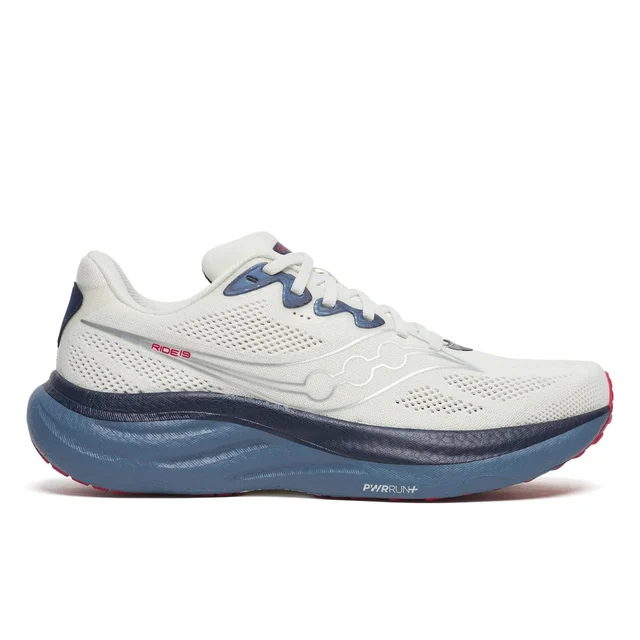
- Buy Saucony Ride 19 A balanced daily trainer with reformulated PWRRUN+ foam and added forefoot durability. Amazon
- Buy Brooks Ghost 18 The safe, do-no-harm neutral trainer with a wide, stable base that forgives beginner form. Amazon
- It depends Hoka Clifton 10 Maximum plush cushioning on a tall stack that some beginners love and others find tippy. Amazon
- Skip Nike Vaporfly 4 A brilliant carbon-plated racer that is simply the wrong tool for a beginner's daily miles. Amazon
What actually matters
- Fit and sizing - Running shoes usually run a half-size up from your street shoe because feet swell and slide forward on runs. A thumbnail of space at the toe and a locked-in heel prevent black toenails and blisters. This is the single most important thing to get right.
- Cushioning and how it feels - More foam softens impact but can feel unstable; less foam feels firm and connected to the ground. There is no 'best' amount, only what your legs and stride prefer over 30 minutes.
- Neutral vs stability - Neutral shoes let your foot move naturally; stability shoes add support for feet that roll inward a lot. Most beginners do fine in neutral, and 'support' you don't need can feel intrusive.
- Heel-to-toe drop - The height difference between heel and forefoot changes where your foot lands and which muscles work. A moderate drop is a safe, familiar starting point; large jumps between shoes can aggravate calves or knees.
- Durability and outsole - Rubber coverage on the sole and denser foam decide how many months a shoe lasts. A daily trainer should be built to absorb repeated mileage, not shaved down for lightness.
- Weight and breathability - Lighter shoes feel quicker but often cushion or last less; breathable uppers keep feet cooler and drier. For everyday training, a little extra weight in exchange for comfort and longevity is a fair trade.
The specs, in plain English
Green flags vs red flags
Green flags
- Your heel feels locked in place while your toes have a thumbnail of wiggle room
- It feels comfortable immediately, with no 'break-in' pain you're hoping goes away
- Clearly labeled as a neutral daily trainer or everyday trainer
- Generous rubber coverage on the outsole for durability
- A breathable mesh upper that doesn't pinch across the top of the foot
- A moderate, familiar heel-to-toe drop rather than an extreme
Red flags
- Any pinching, rubbing, or numbness in the store - it only gets worse on a run
- Marketing that leans on carbon plates and race times for a beginner shoe
- A drop or stack height wildly different from what you're used to, with no reason
- Thin, sparse outsole rubber that will wear through quickly
- 'Stability' or 'motion control' pushed on you without a gait assessment
- Sizing that matches your street shoe exactly, with no room for foot swell
Who's who: the brands
- Brooks - Known for cushioned, neutral daily trainers that many runners find reliable and unfussy.
- ASICS - Long line of everyday trainers spanning firm-to-soft cushioning and both neutral and stability options.
- Nike - Wide range from beginner trainers to carbon racers; read the specific model, not the logo.
- New Balance - Offers multiple width options, which helps runners with narrow or wide feet get a real fit.
- Saucony - Makes well-regarded daily trainers with a mix of moderate and low drops.
- Hoka - Recognizable for tall, maximal cushioning; comfortable for many, but the high stack feels unusual to some at first.
- Adidas - Sells everything from soft trainers to plated racers; check the model's intended use before buying.
- Mizuno - Tends toward firmer, responsive rides that some runners prefer for everyday training.
How to read a listing without getting fooled
Start with fit, not the spec sheet. Try shoes on late in the day when your feet are largest, wear your running socks, and walk or jog a few steps if the store allows. Confirm the heel is snug and the toes have room, then check that it's labeled a neutral daily trainer and that the drop and stack aren't a huge departure from what you already wear. Treat foam type, weight, and plates as tie-breakers between two shoes that both fit well, not as the reason to buy. If a feature only matters for racing, it doesn't need to matter to you yet.
How much should you spend?
Running shoes fall into rough tiers. Budget trainers use standard EVA foam and simpler uppers; they cushion fine and are a completely reasonable place to start a running habit. Mid-tier shoes add more durable or bouncier foam, better outsole coverage, and a more refined fit, which is where most everyday runners land. Premium and racing shoes bring the lightest high-end foams and carbon plates, aimed at performance rather than daily comfort. Spending more buys longevity and a livelier ride, not necessarily a better fit for you, and a well-fitting mid-tier trainer will outperform an expensive shoe that pinches. Buy for fit and intended use first, and let price follow.
Questions, answered
How much bigger should running shoes be than my normal shoes?
Usually about a half-size up. Your feet swell and slide forward during a run, so you want roughly a thumbnail of space at the front. Fit the longer foot, wear running socks, and prioritize a snug heel with room at the toes.
Do I need stability shoes or neutral shoes?
Most beginners are fine in neutral shoes, which let your foot move naturally. Stability shoes help runners whose feet roll inward a lot, but that's best confirmed by a professional. Don't buy 'support' you haven't been told you need; it can feel restrictive.
What heel-to-toe drop should a beginner choose?
A moderate drop is the safe default; it feels familiar and eases strain on the calf and Achilles. What matters most is not jumping to an extreme or a very different drop all at once, since big changes can aggravate your calves, knees, or feet.
When should I replace my running shoes?
Replace daily trainers after a few hundred miles, before the cushioning feels flat. Foam breaks down from mileage even when the tread still looks okay. Watch for a firmer ride, new aches, or creased midsoles, and rotate two pairs to stretch their life.
Do I need a carbon-plate shoe?
No. Carbon plates are a racing feature meant to boost efficiency for experienced runners. For building a running habit they add cost and stiffness you won't benefit from. A cushioned, neutral daily trainer is a better first choice for nearly everyone.
Are more expensive running shoes worth it?
Sometimes. Higher prices buy lighter, longer-lasting foams and better outsoles, which can mean a livelier ride and more miles. But they don't buy a better fit. A well-fitting mid-tier trainer beats a pricey shoe that rubs or pinches every time.
Or jump to the head-to-head: Saucony Ride 19 vs Brooks Ghost 18.