Explained
Robot Vacuums, Explained: What to Look For
Understand what actually makes a robot vacuum work well before you buy one.
In this guide
Robot vacuums are marketed on big suction numbers and dock gadgets, but day-to-day happiness comes down to how well the machine navigates your home and how little you have to babysit it. This guide translates the spec sheet into plain English.
The 30-second version
- Navigation matters more than suction. A vacuum that maps your rooms and cleans in tidy rows will beat a stronger one that bounces around randomly and misses spots.
- The dock is where convenience lives or dies. Auto-empty, self-wash, and heat-dry docks cut how often you touch the robot. Decide which of those chores you actually want automated.
- Suction is measured in Pa, and more isn't always better. Past a certain point extra Pa mostly adds noise. For carpet and pet hair, brush design and airflow matter as much as the headline number.
- Mopping is a spectrum, not a feature. Some robots drag a damp pad; others scrub and lift. Know which kind you're getting before you expect a clean floor.
- Obstacle avoidance saves you from messes, literally. Good avoidance means fewer tangled cords and no 'poop-painting' incidents if you have pets. It's worth prioritizing over minor spec bumps.
The products this guide is about
Our verdict on each, with the full reasoning on the companion review.
- Buy eufy Auto-Empty C10 The value champion: flagship-level pet-hair and carpet pickup at a budget price, minus the mop. Amazon
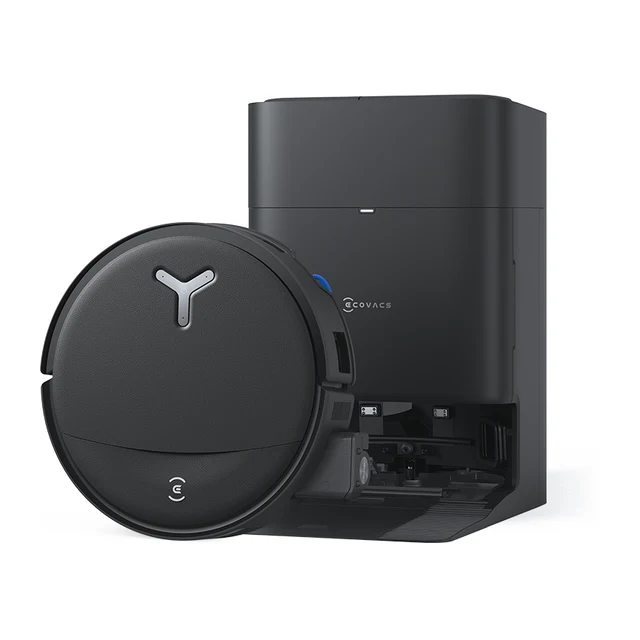
- Buy Ecovacs Deebot T80S OMNI The best all-around cleaner short of flagship money, with near-flagship carpet and mop performance. Amazon
- It depends Roborock Qrevo S Excellent dual-spinning-mop value when it goes on sale, but skip it if your floors are cluttered.
- Skip iRobot Roomba Combo j5+ A familiar name at a tempting sale price, but bankruptcy risk and weak mopping make it the one to avoid. Amazon
What actually matters
- How it navigates. LiDAR or camera mapping lets a robot clean methodically and remember your floor plan; cheaper gyro or bump-and-go models wander and miss coverage. This is the single biggest driver of results.
- How hands-off the dock is. An auto-empty dock means you deal with dust every few weeks instead of after every run. Self-wash and heat-dry docks extend that to mopping. More automation means a bigger, more expensive base station to house.
- Whether it handles your floors. Match the robot to your home: thick carpet needs strong airflow and the right brush; homes with rugs and thresholds need decent climbing ability and carpet detection.
- Pet hair and brush design. Rubber or tangle-resistant brushes shed wrapped hair better than bristle brushes. If you have long-haired pets, this matters more than raw suction.
- Obstacle avoidance quality. Camera or laser obstacle detection helps the robot dodge cords, socks, and pet accidents. Weak avoidance leads to jams, mid-clean stalls, and worse.
- Real coverage per charge. Battery life and recharge-and-resume determine whether a large or multi-level home gets finished in one go or needs babysitting.
The specs, in plain English
Green flags vs red flags
Green flags
- LiDAR or camera-based mapping with editable room maps and no-go zones
- Tangle-resistant rubber brush, especially if you have pets
- Recharge-and-resume so large homes finish in one cycle
- An auto-empty dock if you want to touch dust as rarely as possible
- Clear, well-reviewed obstacle avoidance rather than bump-and-go
- A simple, stable app that keeps its map instead of rebuilding it each run
Red flags
- Headline suction numbers with no mention of how it navigates
- 'AI' avoidance claims with nothing describing how it actually behaves
- Passive drag-pad mopping sold as real floor scrubbing
- Proprietary bags, filters, or pads with unclear ongoing cost
- No app map or virtual walls on anything but the most basic budget pick
- Reviews mentioning frequent lost maps, getting stuck, or stranded off the dock
Who's who: the brands
- iRobot (Roomba) - The category originator; wide range from basic bump-and-go to mapped, auto-empty models. Historically strong at navigation reliability.
- Roborock - Known for LiDAR mapping and feature-loaded docks, including self-wash and heat-dry mopping systems at the higher end.
- Ecovacs (Deebot) - Broad lineup often bundling mopping and obstacle-avoidance features; feature sets vary widely across price tiers.
- Shark - Popular for approachable pricing and self-empty options; brush and navigation capability differ noticeably by model.
- Eufy (Anker) - Focuses on straightforward, value-oriented robots; some models keep things simple rather than piling on dock features.
- Dreame - Offers high-suction, LiDAR-mapped robots and elaborate all-in-one docks, often competing on feature count.
- Neato - Known for a distinctive D-shape aimed at reaching corners and edges; historically LiDAR-based navigation.
- Samsung / LG - Appliance makers with premium robot lines; expect app ecosystem integration and higher-end dock features.
How to read a listing without getting fooled
Start with navigation, because it decides whether the robot cleans your whole floor or just parts of it: look for real mapping, not just a suction figure. Then decide how hands-off you want to be and pick the dock features that match, since docks drive both convenience and price. Match suction and brush type to your actual floors and pets rather than to the biggest number on the box. Treat mopping honestly, knowing whether you're getting a damp wipe or a real scrub. Finally, read owner reviews specifically for the boring failure modes, like lost maps and getting stuck, because those are what make people give up on a robot.
How much should you spend?
Entry-level robots typically skip real mapping and rely on random or gyro navigation, with basic or no mopping and a dock that only charges. Mid-tier is where most people find the sweet spot: reliable LiDAR or camera mapping, editable maps with no-go zones, decent brushes, and often an auto-empty dock. Premium models add the elaborate all-in-one docks that wash and heat-dry mop pads, refill water, and empty dust, plus the strongest avoidance and mopping systems. Spend up when navigation reliability and hands-off maintenance genuinely matter to you; don't pay for a giant multi-function dock if you only care about vacuuming bare floors.
Questions, answered
Is high suction (Pa) the most important spec?
No. Navigation quality matters more for everyday results. A well-mapped robot with moderate suction cleans your whole floor methodically, while a high-Pa robot that wanders randomly will still miss spots. Use Pa as one factor, weighed against brush design and how the robot moves.
LiDAR or camera navigation: which is better?
LiDAR uses a laser to map and works reliably even in the dark, usually giving the most consistent paths. Camera (vSLAM) systems are capable and often cheaper but can struggle in dim rooms. Both beat basic gyro navigation. Pick based on lighting, budget, and any privacy preferences.
Do robot vacuums actually mop floors well?
It depends heavily on the type. Passive systems just drag a damp pad and mostly wipe light dust. Vibrating and especially spinning-pad systems apply pressure and scrub, cleaning noticeably better. Check which kind you're buying, and don't expect any robot to replace a deep manual mop.
Are auto-empty docks worth it?
For many people, yes. They let you deal with dust every few weeks instead of after each run, which is the difference between a robot you forget about and one you tend constantly. The trade-offs are a larger base station, ongoing bag cost, and loud emptying cycles.
Will a robot vacuum handle pet hair?
The right one can. Prioritize a tangle-resistant rubber brush over a bristle brush, since wrapped hair is the main failure point, plus solid obstacle avoidance to skip pet messes. Raw suction helps less than people expect. Long-haired pets make brush design the deciding factor.
Do I need smart mapping and no-go zones?
If your home has more than one room or areas you want the robot to skip, mapping is very useful for targeted cleaning and virtual walls. On the most basic single-room use it matters less. Just confirm the map stays stable rather than rebuilding itself every run.
Or jump to the head-to-head: Ecovacs Deebot T80S OMNI vs eufy Auto-Empty C10.