Explained
Electric Toothbrushes, Explained: What to Look For
Understand every spec on the box so you can pick a brush that cleans well and skip the features you'll never use.
In this guide
An electric toothbrush moves the bristles for you, which mostly helps people be more consistent and less aggressive. This guide explains the parts and specs so you can tell what actually matters from what's just marketing.
The 30-second version
- Technique and consistency beat the motor. Any decent electric brush used twice a day, for two full minutes, with a soft head and light pressure, does the real work. The gadget is a helper, not a cure.
- Two features carry most of the value. A built-in two-minute timer and a pressure sensor address the two most common mistakes: brushing too briefly and scrubbing too hard. Almost everything else is optional.
- The brush is cheap; the heads are the real cost. Replacement heads every few months are the ongoing expense. Check that heads are affordable and easy to find before you commit to a handle.
- Sonic vs oscillating is a preference, not a winner. Both styles clean well when used correctly. The 'right' one is whichever feels comfortable enough that you actually use it every day.
- Apps and extra modes are mostly skippable. Smart tracking can be a novelty that fades in a week. Buy for the fundamentals, and treat the app as a bonus you can ignore.
The products this guide is about
Our verdict on each, with the full reasoning on the companion review.
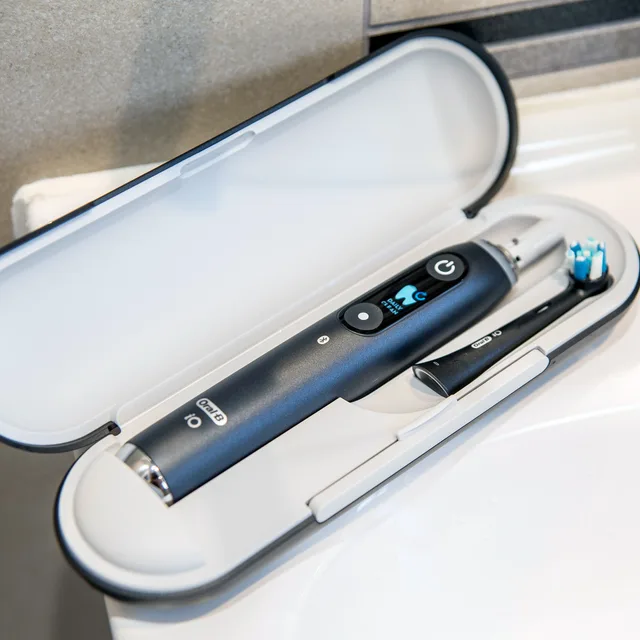
- Buy Oral-B iO Series 2 The best all-around pick: real oscillating-rotating cleaning, a bright pressure sensor, and a quiet iO motor without the flagship price. Amazon
- Buy Philips Sonicare 4100 Series The best value: gentle high-frequency sonic cleaning and a two-week battery at a budget price. Amazon
- It depends Oral-B Pro 3 3000 Excellent no-frills oscillating clean if you'll skip the app and tolerate a buzzier, plainer handle.
- Skip Quip Sonic A stylish, subscription-driven brush whose weak motor cleans barely better than a manual brush. Amazon
What actually matters
- A two-minute timer. Most people brush for well under the recommended two minutes. A timer (ideally with a 'quadpacer' that nudges you every 30 seconds to switch mouth sections) fixes the single most common brushing mistake automatically.
- A pressure sensor. Brushing too hard wears enamel and irritates gums over time. A sensor that lights up or slows the motor when you press too hard protects you from yourself, and it's more useful than any fancy mode.
- Brush-head cost and availability. You'll replace heads every few months for the life of the brush. A cheap handle with expensive or hard-to-find heads is a bad deal. Confirm heads are widely stocked and reasonably priced.
- A soft-bristle head that fits your mouth. Dentists broadly favor soft bristles; medium and hard heads can do more harm than good. A smaller head reaches back teeth more easily, which matters more than bristle gimmicks.
- Comfortable handling and battery life. A brush that's too heavy, too loud, or constantly dead gets abandoned. Look for a grip that suits your hand and a battery that lasts a couple of weeks per charge so travel and daily use are painless.
- Honest cleaning fundamentals over feature count. More modes, more lights, and more app screens don't clean better. Judge a brush on timer, pressure sensor, head quality, and comfort first.
The specs, in plain English
Green flags vs red flags
Green flags
- Has both a two-minute timer and a pressure sensor
- Uses widely available, reasonably priced replacement heads
- Comes with soft-bristle heads and offers head sizes that fit your mouth
- Battery lasts roughly two weeks or more per charge
- Comfortable weight, grip, and noise level for daily use
- Clear, honest feature descriptions rather than buzzword overload
Red flags
- Proprietary heads that are expensive or hard to find
- Marketing that leans on huge 'strokes per minute' numbers
- No pressure sensor, or a timer buried behind app-only features
- Bundled medium/hard bristle heads presented as 'deep clean'
- Vague whitening or 'removes X% more plaque' claims with no context
- Locks core functions like the timer behind a phone app and account
Who's who: the brands
- Oral-B - Best known for oscillating-rotating round heads. Wide range from basic timer models to app-connected ones; head prices and lineups vary a lot within the brand.
- Philips Sonicare - The reference name for sonic brushes. Spans simple timer models to smart versions; heads are typically their own ecosystem, so factor in ongoing head cost.
- Colgate - A familiar oral-care name offering both simpler and connected electric brushes, often positioned as approachable everyday options.
- Quip - Sonic brushes with a minimalist design and subscription head delivery. Light on modes and sensors; appeals to people who want simple over feature-heavy.
- Burst - Sonic brushes commonly sold with a head-subscription model. Emphasizes simplicity; check the ongoing subscription terms against buying heads outright.
- Fairywill / Bitvae - Budget-focused brands offering sonic brushes with timers at low cost. Quality and head availability vary, so check reviews and replacement-head supply.
- Waterpik (Sonic-Fusion) - Better known for water flossers; also makes brushes that combine brushing and flossing. A niche pick if you specifically want both in one device.
- Store / pharmacy brands - Retailer-label electric brushes cover the basics cheaply. Fine for timer-and-sensor fundamentals; just confirm heads are easy to rebuy.
How to read a listing without getting fooled
When you read a spec sheet, sort features into three piles: things that change how well you clean, things that change how consistently you clean, and marketing. The first two piles are short. A pressure sensor and a genuine two-minute timer land in the first two piles; strokes-per-minute, mode counts, and whitening claims usually land in marketing. Once you've mentally moved the buzzwords aside, most brushes in a given tier are more alike than the packaging suggests, and your decision comes down to head cost, comfort, and whether the fundamentals are present.
How much should you spend?
Think in tiers rather than figures. Entry-level brushes typically give you the essentials: a working timer, sometimes a pressure sensor, and one or two modes, which is genuinely enough for most people. Mid-range adds better batteries, more head options, and extra modes you may never touch. Premium tiers pile on app tracking, travel cases, and displays that mostly raise the price and the head cost without cleaning better. The smartest move is to buy the lowest tier that includes a timer and pressure sensor, then budget for the real recurring expense, which is replacement heads, not the handle.
Questions, answered
Is an electric toothbrush actually better than a manual one?
For many people, yes, mostly because the timer and consistent motion encourage better habits. But a manual brush used correctly, twice a day for two minutes with soft bristles, also cleans well. The electric brush's main advantage is helping you not cut corners.
Sonic or oscillating-rotating, which should I pick?
Neither is clearly better; both clean effectively when used properly. Sonic vibrates and you glide it along; oscillating uses a round head you move tooth by tooth. Choose based on feel and comfort, since the one you'll actually use daily is the right one.
How often should I replace the brush head?
Generally every few months, or sooner if the bristles look frayed or splayed. Worn bristles clean poorly and can irritate gums. Because heads are the ongoing cost, factor their price and availability into your choice before you buy the handle.
Do I need a brush with an app?
No. App tracking can motivate some people early on, but many stop using it within weeks. A built-in timer and pressure sensor deliver most of the benefit without a phone. Treat smart features as a bonus, never the reason to buy.
Does the ADA Seal mean a brush is better?
It means the brush met the American Dental Association's safety and effectiveness standards for its claims, which is a reassuring baseline. It doesn't rank products, and many good brushes never apply. Use it as one signal, not a final verdict.
What features can I safely ignore?
High strokes-per-minute numbers, long lists of brushing modes, whitening claims, and screens or displays add cost without cleaning better. Focus on a two-minute timer, a pressure sensor, soft heads, comfort, and affordable replacement heads instead.
Or jump to the head-to-head: Oral-B iO Series 2 vs Philips Sonicare 4100 Series.