Explained
Air Purifiers, Explained: What to Look For
Understand CADR, filters, and room ratings before you buy, so you're paying for clean air and not marketing.
In this guide
An air purifier is a fan that pulls room air through filters and pushes it back out cleaner. The whole game is matching how much air it can clean to the size of your room, and the specs below tell you whether it actually can.
The 30-second version
- CADR is the number that matters. It measures how much clean air a unit delivers per minute. Room-size claims are marketing; CADR is the tested reality. Learn to read it and you can ignore half the box.
- True HEPA is the real filter. 'HEPA-type,' 'HEPA-like,' and '99% HEPA' are looser marketing terms. True HEPA (H13/H14) captures 99.97% of tiny particles; the copycats don't have to prove anything.
- Room ratings are almost always inflated. Most 'covers 1,500 sq ft' claims assume a single, slow air change per hour. For allergy or smoke relief you want more air changes, so treat the rated area as roughly double what you should trust.
- Filters are the ongoing cost. The machine is a one-time purchase; the filters aren't. Before buying, find out how often they need replacing and whether the replacements are proprietary and pricey.
- Ignore ionizers, ozone, and 'plasma' extras. Mechanical HEPA filtration does the work. Add-on ionizers can produce ozone, a lung irritant, and add little you'd notice. If a feature can't be turned off, that's a strike.
The products this guide is about
Our verdict on each, with the full reasoning on the companion review.
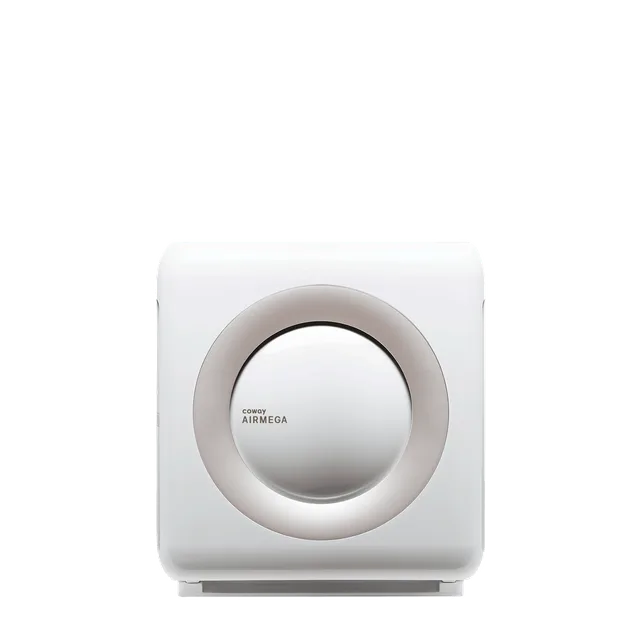
- Buy Coway Airmega AP-1512HH Mighty The decade-long top pick that still posts strong test numbers at a fair price. Amazon
- Buy Levoit Core 400S The smart pick: laser air-quality sensor, real-time PM2.5, and app scheduling. Amazon
- It depends Winix 5500-2 A longtime budget allergy champ with a great washable-filter design - but Winix has dropped it from its US lineup.
- Skip Molekule Air Mini Slick marketing and a premium price, but it's out-cleaned by budget HEPA units.
What actually matters
- Matching CADR to your room - because an underpowered unit in a big room just hums quietly while doing almost nothing. This is the single most common mismatch buyers make.
- A True HEPA filter - because that's the part physically trapping pollen, dust, dander, and smoke particles. Everything else on the machine is a fan and a housing around it.
- Honest air-change math - because 'covers your room' at one air change per hour is not the same as clearing allergens fast; you generally want four-plus changes in the space you actually use.
- Noise at usable speeds - because a purifier only works when it's running, and if the effective speed is too loud to sleep or think next to, you'll turn it down and lose the benefit.
- Filter replacement reality - because a cheap machine with expensive, frequent, proprietary filters can cost more over a couple of years than a pricier one with standard filters.
- Activated carbon (if odors matter) - because HEPA catches particles but not gases and smells; a real carbon stage is what handles cooking, smoke, and VOC odors.
The specs, in plain English
Green flags vs red flags
Green flags
- A clearly stated CADR that comfortably exceeds what your room size needs
- A True HEPA (H13/H14) filter named as such, not 'HEPA-type'
- AHAM Verifide and/or CARB certification printed on the specs
- A separate, weighty activated-carbon stage if you care about odors
- A washable pre-filter and standard, reasonably priced replacement filters
- Any ionizer is clearly optional and can be turned fully off
Red flags
- 'HEPA-type,' 'HEPA-like,' or '99%' with no True HEPA or micron rating
- A huge room-size claim but no CADR number to back it up
- Ozone, ionization, or 'plasma' marketed as a headline benefit
- Proprietary filters that are expensive and need frequent replacement
- Noise specs only quoted at the lowest, near-useless fan speed
- 'Kills viruses/bacteria' claims used to distract from basic filtration specs
Who's who: the brands
- Coway - Well-regarded for solid CADR-to-size ratios and multi-stage filters; a common reference point for mid-range home units.
- Levoit - Widely available across budget and mid tiers; ranges from basic models to sensor-equipped ones, so check the specific spec sheet.
- Winix - Known for capable filtration at accessible pricing, though many models include an ionizer feature worth switching off.
- Blueair - Positioned around quiet operation and higher-end filtration; some models pair mechanical and electrostatic filtering.
- Honeywell - A long-standing name with straightforward True HEPA units; filters are generally easy to find as replacements.
- Dyson - Design-forward units with app features and sensors; you pay a premium for styling and extras, so weigh CADR against the price.
- IQAir - A high-end specialist favored for heavy-duty filtration and large sealed filters; overkill and costly for a small bedroom.
- Alen - Focuses on larger-room coverage with swappable filter types tuned for allergens, smoke, or odors.
How to read a listing without getting fooled
Start with your room, not the machine. Measure the square footage of the space you'll actually run it in, then look only at units whose CADR supports several air changes per hour there, ignoring the headline room-size claim. Confirm the filter is True HEPA, and add a real carbon stage only if odors are a concern for you. Then check the noise at the speed you'd run overnight and price out a couple of years of replacement filters. Whatever's left after that comparison is a short list you can trust.
How much should you spend?
Entry-level purifiers cover small rooms with basic True HEPA filtration and manual controls, which is genuinely enough for a bedroom. The mid tier is where most people land: bigger CADR, better carbon, quieter operation, and auto-mode sensors that earn their keep in a living room. Premium units buy you large sealed filters, high coverage, and app features, but a lot of that spend goes to design and smart extras rather than cleaner air. Spend up for coverage and filter quality that match your space; be skeptical of paying extra mainly for looks, ionizers, or app novelty. And factor filters into the true cost, since a cheap machine with pricey cartridges can quietly cost more over time.
Questions, answered
Is True HEPA actually better than HEPA-type?
Yes. True HEPA is certified to trap 99.97% of particles at 0.3 microns, the size hardest to catch. 'HEPA-type' and 'HEPA-like' are unregulated marketing terms with no required standard, so their real capture rate can be much lower. For allergies, insist on True HEPA.
How big a purifier do I need for my room?
Match CADR to your square footage, not the box's room claim. Aim for a CADR that clears the room's air about four to five times per hour. Because room-size ratings are often measured at a single, slow air change, treat the rated coverage as roughly double what you should trust.
Are ionizers and ozone features safe?
They're best avoided. Ionizers can produce ozone, a known lung irritant, and add little to what a True HEPA filter already does mechanically. If a unit has one, choose a model where you can switch it off completely, and generally leave it off.
How often do I replace the filters, and does it cost a lot?
Most True HEPA filters last 6 to 12 months depending on use and air quality; carbon layers can wear out sooner. Costs vary widely, and proprietary combined filters are pricier. Price out two years of replacements before buying, since ongoing filter cost often outweighs the machine's price.
Does an air purifier help with smoke and odors?
Only if it has activated carbon. A True HEPA filter captures smoke particles, but the smell itself is gas, which HEPA can't hold. You need a substantial activated-carbon stage for odors from smoke, cooking, or VOCs. A thin carbon mesh does very little.
Should I run it constantly or just when needed?
For steady allergy relief, running it continuously on a moderate speed usually works better than short high-speed bursts. That's why quiet operation matters: a unit you can sleep next to gets left on. Auto mode, if the sensor is decent, handles this by speeding up only when air quality drops.
Or jump to the head-to-head: Coway Airmega AP-1512HH Mighty vs Levoit Core 400S.