Explained
Cold Brew Coffee Makers, Explained
After reading, you will understand the two kinds of cold brew makers, why filtration and materials matter, and how to pick one for your routine.
In this guide
A cold brew maker is really just a vessel that steeps coarse coffee grounds in cold water for many hours, then filters the grounds out. The confusing part is that two very different machines share the same name: some brew a strong concentrate you dilute and store, while others brew a lighter cup you pour straight over ice. Most first-time buyers pick on price or looks and only later discover that filter type, body material, and batch size are what actually shape the coffee and the cleanup.
The 30-second version
- Concentrate or ready-to-drink is the first fork. Concentrate makers brew a strong base you dilute and store for up to about two weeks; ready-to-drink pitchers brew a normal-strength cup you drink now.
- Filtration decides clarity and smoothness. Felt filters give the cleanest, lowest-acid cup, reusable stainless mesh is maintenance-free, and fine nylon mesh runs slightly cloudier.
- Materials shape long-term flavor. Glass carafes stay taste-neutral, while all-plastic bodies and silicone seals can absorb coffee oils and pick up a stale taste over months of daily use.
- Draining is where the mess hides. A release switch or spigot is far tidier than inverting a full brewer over the sink, so how you empty the maker matters as much as how it brews.
- Match capacity to how much you drink. A small batch is fine for one or two cups a day, but bulk drinkers want a large brewer that makes a week or two of concentrate at once.
The products this guide is about
Our verdict on each, with the full reasoning on the companion review.
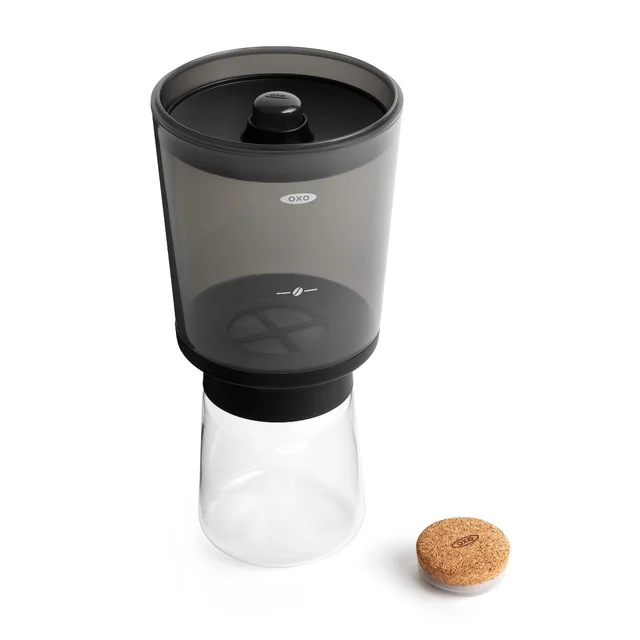
- Buy OXO Brew Compact Cold Brew Coffee Maker The easiest all-rounder: a perforated rainmaker lid wets grounds evenly and a switch drains the brew cleanly into a glass carafe. Amazon
- Buy Toddy Cold Brew System The original concentrate system still makes the smoothest, lowest-acid brew of the group thanks to its felt filtration. Amazon
- It depends Hario Mizudashi Cold Brew Coffee Pot (1000 mL) A budget-friendly glass pitcher that brews a lighter, ready-to-drink cup highlighting delicate bean character. Amazon
- Skip Takeya Deluxe Cold Brew Coffee Maker (1 qt) Cheap, airtight, and portable, but the Tritan body and silicone seal tend to hold onto coffee oils over months of daily use. Amazon
What actually matters
- Brew style (concentrate vs ready-to-drink): concentrate is flexible and space-efficient because you dilute it to taste and it stores longer; ready-to-drink is simpler because there is no measuring at serving time.
- Filtration quality: this is the single biggest driver of how clean and smooth the coffee tastes, since finer filtration removes more oils and sediment.
- Body material: glass stays neutral over years, while porous plastics and silicone can hold onto coffee oils that washing does not fully remove.
- Draining and cleanup: a switch or spigot that empties the brewer without inverting it saves mess and makes daily use far more likely to stick.
- Batch capacity: the right size depends entirely on your household's weekly consumption, not on which number sounds bigger.
- Ongoing cost: most makers use permanent reusable filters, but a few rely on replaceable felt or paper that adds a small recurring expense.
- Fragility and portability: glass rewards flavor purists but breaks; shatter-resistant plastic travels well but trades away some long-term taste neutrality.
The specs, in plain English
Green flags vs red flags
Green flags
- A glass carafe or decanter that keeps flavor neutral for years
- A reusable filter (stainless mesh or felt) so you are not locked into consumables
- A brew-release switch or spigot that drains without inverting the whole brewer
- A stated batch size that matches how much coffee you actually drink in a week
- An even water-distribution feature, such as a perforated lid, that wets all the grounds
- Dishwasher-safe parts and a wide opening that make rinsing the grounds easy
Red flags
- All-plastic body plus silicone seal on a maker you plan to use daily for years
- Owner reports of a stale or plasticky taste developing after months of use
- No easy drain, so you must tip a full, heavy brewer over the sink
- A capacity far larger or smaller than your real consumption
- Proprietary filters that are expensive or hard to find as replacements
- Vague or missing detail about filter type, which usually means basic fine mesh
Who's who: the brands
- OXO - Kitchen-tool maker known for thoughtful, low-effort designs; its cold brew maker pairs an even-wetting lid with a clean drain into a glass carafe.
- Toddy - The original home cold brew system, still the benchmark for the smoothest, lowest-acid concentrate thanks to felt filtration.
- Hario - Japanese glassware specialist whose simple borosilicate pitchers are popular with single-origin drinkers who want a lighter, delicate cup.
- Takeya - Value-focused brand making affordable, airtight Tritan pitchers built for portability rather than long-term flavor purity.
How to read a listing without getting fooled
Start by finding two things on any listing: the brew style and the filter type. If it says 'concentrate,' expect a strong base you dilute; if it says 'ready-to-drink' or lists a normal-sounding capacity in cups, you drink it as-is. Next, look for the filter material by name. 'Felt' signals the cleanest cup with some upkeep, 'stainless mesh' signals maintenance-free and clean, and vague 'fine mesh' usually means a slightly cloudier budget brew. Check what the body is made of, since 'glass' or 'borosilicate' stays taste-neutral while 'BPA-free plastic' or 'Tritan' can pick up flavor over time. Finally, see how it drains: photos of a switch, spigot, or removable basket mean tidy cleanup, whereas a plain jar means you will be inverting it. Ignore marketing words like 'premium' or 'artisan' and read the capacity as a real number against your weekly habit.
How much should you spend?
Cold brew hardware is mechanically simple, so you do not need to spend much to get good coffee, and the cheapest models can brew a genuinely nice cup. The value sweet spot sits in the middle of the range, where you gain a glass carafe, better filtration, and an easy drain switch that make daily use pleasant and keep flavor neutral for years. Spending more is usually worth it when you brew often and want convenience, clean materials, and no replacement filters, because those features pay off every single morning. Spending more is not worth it if you only make cold brew occasionally or need something portable, where a budget pitcher does the job. Also factor in quiet ongoing costs: a maker with replaceable felt or paper filters can look cheaper up front yet cost a little every month.
Questions, answered
What is the difference between a concentrate maker and a ready-to-drink pitcher?
A concentrate maker brews a strong base at a low water-to-coffee ratio that you dilute with water, milk, or ice before drinking, and it also stores longer in the fridge. A ready-to-drink pitcher brews at a normal ratio so you pour the coffee straight over ice. Concentrate is more flexible and space-efficient; ready-to-drink is simpler because there is no measuring when you serve.
Which type makes the smoothest, least acidic cup?
Filtration matters more than the machine's price. Felt filters remove the most fine particles and oils, so they consistently produce the smoothest, lowest-acid result, with fine stainless mesh close behind. Grind and steep time matter just as much, so use a coarse grind and steep roughly 12 to 24 hours to taste.
Do cold brew makers need replacement filters or other ongoing purchases?
Most do not. Makers with permanent stainless or nylon mesh have nothing to buy after purchase. The exception is felt-filter systems, whose filters last many brews but eventually wear out and must be replaced, adding a small recurring cost you should factor in.
Why do some cold brew pitchers develop a plastic taste?
Plastic bodies and silicone seals are slightly porous and can absorb the oils in coffee over time, and washing does not fully remove them. Owners most often report this with all-plastic pitchers after months of daily use. Glass-carafe designs avoid the problem, and drying parts thoroughly between brews helps with any maker.
How long does cold brew keep, and how much coffee should I use?
Concentrate typically keeps well in the fridge for up to about two weeks, while ready-to-drink cold brew is best within several days. As a starting point, use a coarse grind at roughly a 1:4 to 1:8 coffee-to-water ratio for concentrate and closer to 1:8 to 1:12 for ready-to-drink, then adjust to taste. This is general product information rather than dietary advice.
Is glass or plastic better for a cold brew maker?
Glass, usually borosilicate, stays completely taste-neutral for years and resists odors and stains, which is why flavor-focused drinkers prefer it, but it can break. Shatter-resistant plastic like Tritan travels well and survives drops, at the cost of gradually absorbing coffee oils. Choose glass for everyday home use and flavor purity, and plastic for portability or occasional brewing.
Or jump to the head-to-head: OXO Brew Compact Cold Brew Coffee Maker vs Toddy Cold Brew System.