Explained
French Presses, Explained
After reading, you'll understand what makes one French press brew a cleaner, hotter cup than another, and how to match a press to how you actually drink coffee.
In this guide
A French press looks like the simplest coffee maker there is: a jug, a plunger, a mesh screen. But the models vary enormously in how well they keep grit out of your cup, how long they hold heat, and how long they survive daily use. Most first-time buyers fixate on looks or price and end up frustrated by a gritty, lukewarm brew, when the details that actually matter are the filter design and the walls of the pot.
The 30-second version
- Filtration is the whole ballgame. A double or two-stage filter keeps far more fine sediment out of your cup than the single mesh screen most cheap presses use.
- Insulation decides your second cup. Double-walled or vacuum-insulated stainless keeps coffee hot for the whole pot, while single-wall glass goes lukewarm fast.
- Material is durability. Stainless steel shrugs off drops and years of use; glass is cheaper and lets you watch the brew but cracks and shatters.
- Buy for your batch size. Presses brew best filled near capacity, so an oversized pot used for single cups actually makes weaker coffee.
- Pretty doesn't mean better. Some of the priciest presses charge for design, not brewing, so check that the filter and insulation earn the premium.
The products this guide is about
Our verdict on each, with the full reasoning on the companion review.
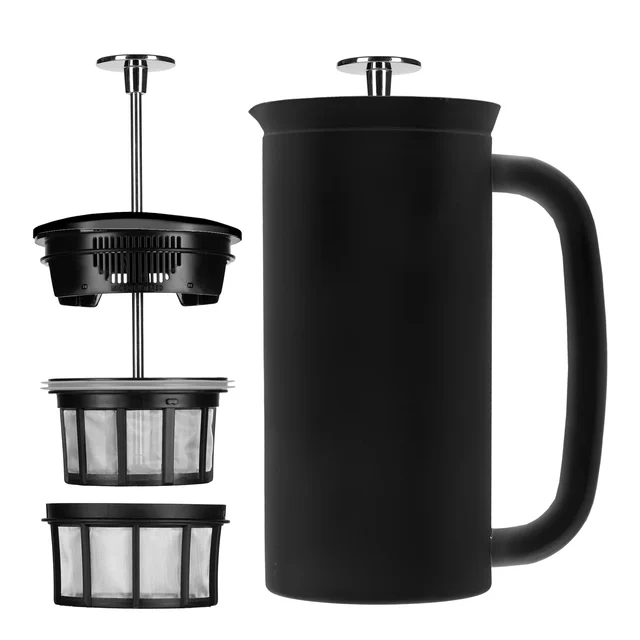
- Buy Espro P7 French Press The cleanest cup in the category, thanks to a genuinely different double micro-filter. Amazon
- Buy Frieling Double-Walled Stainless Steel French Press A near-indestructible insulated press built to outlive every other maker in this roundup. Amazon
- It depends Bodum Chambord French Press (8-Cup) The affordable classic that still makes great coffee, if you accept fragile glass and some grit. Amazon
- Skip Fellow Clara French Press Gorgeous and insulated, but you are paying mostly for looks rather than a better cup. Amazon
What actually matters
- Filtration design is the single biggest driver of cup quality. A double micro-filter or two-stage screen traps the fine grounds that make coffee gritty and over-extracted; a single mesh lets them slip through.
- Heat retention determines whether your later cups stay drinkable. Insulated stainless walls can keep a pot hot for an hour or more; plain glass cools much faster.
- Material and build set how long the press lasts. Stainless steel survives a busy kitchen and travel, while glass is fragile and vulnerable to thermal shock.
- Capacity should match your typical brew. Match cup rating to how many drinkers you serve, and remember presses under-extract when filled well below the line.
- Ease of cleaning affects whether you keep using it. Simple screens rinse in seconds; multi-part filters trade convenience for cleaner coffee, and coated interiors need gentler care.
- Coatings and finishes are worth checking. Some interiors are non-stick coated, which some owners avoid, and mirror finishes show every fingerprint.
The specs, in plain English
Green flags vs red flags
Green flags
- A double or two-stage filter clearly described in the specs, not just 'stainless mesh'
- Double-walled or vacuum-insulated stainless construction for heat retention
- A capacity that matches your usual number of drinkers
- Fully disassemblable filter and widely available replacement parts
- A meaningful manufacturer warranty, a sign the maker expects it to last
Red flags
- A single mesh screen sold at a premium price with no filtration upgrade
- Thin single-wall glass marketed mainly on looks
- A premium price justified by aesthetics rather than filter or insulation
- A non-stick interior coating if you prefer bare stainless steel
- No replacement parts available, so a cracked carafe means a whole new press
Who's who: the brands
- Espro - Known for dual micro-filters that produce among the cleanest, least gritty cups in the category.
- Frieling - Makes heirloom-grade double-walled stainless presses built for heat retention and durability.
- Bodum - The affordable classic; its Chambord glass press is the iconic, widely available everyday brewer.
- Fellow - A design-led maker whose insulated presses lead on looks, though filtration can trail similarly priced rivals.
How to read a listing without getting fooled
When you read a product listing, start with the filter: the words to look for are 'double,' 'micro-filter,' or 'two-stage,' which signal real sediment control, whereas 'fine mesh' or 'stainless screen' alone usually means a single layer and more grit. Next, check the walls: 'double-walled' or 'vacuum-insulated stainless' means your coffee stays hot, while a plain glass carafe will cool fast no matter how nice the photos look. Translate the cup rating into real mugs by halving it, roughly, since a 'cup' is a small serving. Finally, be skeptical of a high price attached mostly to a distinctive color or finish; a beautiful press with a single mesh screen is still a single-mesh press. If a listing leans hard on aesthetics and stays vague about the filter, assume the filter is basic.
How much should you spend?
You do not have to spend much to brew genuinely good coffee; the affordable glass classics still make a flavorful cup and remain a smart entry point if you will handle glass with care. Stepping up in price mainly buys you two things: better filtration for a cleaner, less bitter cup, and insulated stainless walls that keep later cups hot and survive drops. That upgrade is worth it if grit, bitterness, or lukewarm second cups are your main complaints. The top of the market goes to buy-it-for-life insulated stainless presses, and the value there only pays off if you keep the press for many years. Where spending more stops making sense is when the premium is driven by color and styling rather than a better filter or insulation, so match your budget to the features that change the coffee, not the ones that change the shelf appeal.
Questions, answered
Why is my French press coffee always gritty?
Almost always the filter. A single mesh screen lets fine grounds through, so you taste sediment and over-extraction. A double or two-stage filter traps far more of those fines. Beyond hardware, use a coarse, even grind, don't slam the plunger all the way down, and leave the last inch in the pot where grounds settle.
Is a stainless steel press worth it over glass?
If you value heat retention and durability, yes. Insulated stainless keeps coffee hot far longer and won't shatter, which suits busy kitchens and travel. Glass presses cost much less and let you watch the brew, but they cool quickly and are fragile. It comes down to whether hot later cups and toughness matter more to you than the lowest price.
What size French press should I buy?
Match capacity to your usual batch. A 3-to-4 cup press suits one or two drinkers, while an 8-cup or larger model serves a household or guests. Remember that a 'cup' here is a small serving, not a mug, and that presses brew best filled near capacity, so an oversized press used for single cups can taste weak.
Should I worry about a non-stick coating inside a press?
It is a preference, not a safety verdict. Coatings are generally stated to be free of certain legacy compounds, but some owners simply prefer bare stainless steel to avoid any coating wear over years of use. If that concerns you, an all-stainless press sidesteps the question entirely.
How do I keep my coffee hot without buying an insulated press?
Preheat the empty press with hot water before brewing, and serve the whole batch promptly rather than letting it sit. A glass press will still cool faster than insulated stainless, which is exactly why insulated models exist, but pouring the pot into a warmed thermos right after brewing also helps.
Or jump to the head-to-head: Espro P7 French Press vs Frieling Double-Walled Stainless Steel French Press.