Explained
Manual Coffee Grinders, Explained
After reading, you'll understand burrs, bearings, adjustment steps and capacity, and which hand grinder suits your coffee.
In this guide
Most first-time buyers pick a hand grinder by looks or price, then wonder why their coffee tastes muddy or sour. Even grounds depend on sharp burrs held steady by good bearings, and on enough adjustment to match your brewer. Those details are on the spec sheet if the maker publishes them.
The 30-second version
- Burrs decide the grind, and sharp steel burrs are the modern standard.
- Bearings keep burrs aligned, which is what makes grounds consistent.
- More clicks mean finer control, which matters most for espresso.
- Capacity sets your batch size, so match it to how many cups you make.
- Missing specs are a warning, since good grinders publish burr and bearing details.
The products this guide is about
Our verdict on each, with the full reasoning on the companion review.
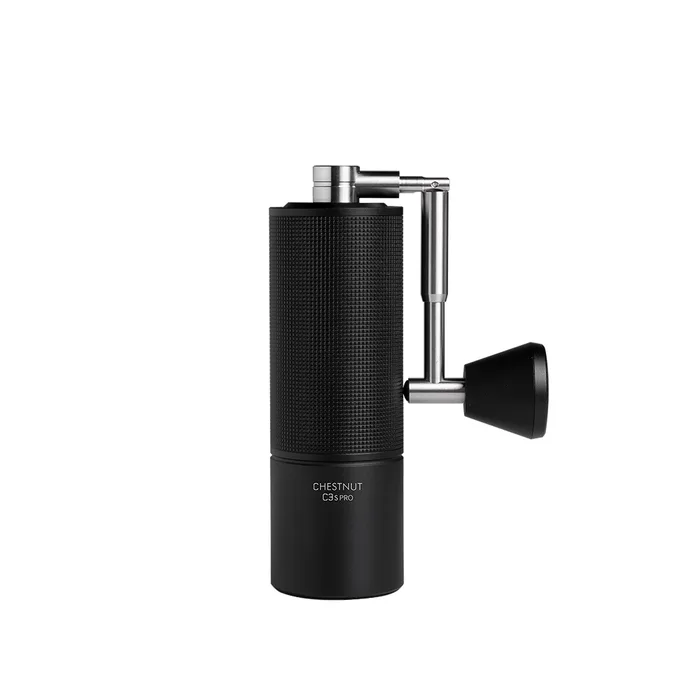
- Buy Timemore Chestnut C3S An all-metal grinder with steel burrs and dual bearings that handles every brew method.
- Buy Timemore Chestnut S3 Timemore's flagship hand grinder with finer adjustment and upgraded burrs and bearings.
- It depends Hario Skerton Pro Ceramic Coffee Mill A large-capacity ceramic grinder for filter batches, with a lighter build than metal grinders.
- Skip JavaPresse Manual Burr Coffee Grinder A cheap, popular hand grinder with coarse adjustment and few published specs.
What actually matters
- Burr material - Steel burrs are usually sharper; ceramic burrs resist wear and rust.
- Burr size - Larger burrs, around 38 mm and up, usually grind faster.
- Bearings - One or two bearings on the shaft keep the burrs from wobbling.
- Adjustment - The number of clicks and the distance per click decide how finely you can dial in.
- Capacity - How many grams of coffee the grinder holds per batch.
- Build - Metal bodies are stiffer and more durable than plastic and glass.
- Portability - Folding handles and compact bodies make travel easier.
The specs, in plain English
Green flags vs red flags
Green flags
- Published burr material and size.
- Dual or named bearings.
- Many clicks or a published step size.
- Metal body.
- Suggested settings for each brew method.
Red flags
- Only a handful of grind settings.
- No burr size or bearing details.
- Big durability claims without test data.
- Plastic body with wobbly handle.
- No guidance on espresso capability.
Who's who: the brands
- Timemore - Coffee equipment maker known for the Chestnut line of hand grinders.
- 1Zpresso - Taiwanese hand grinder specialist known for external adjustment rings.
- Hario - Japanese coffee brand known for the V60 dripper and ceramic hand mills.
- Comandante - German maker of premium hand grinders.
- JavaPresse - US coffee brand selling budget hand grinders and brewing gear.
How to read a listing without getting fooled
Look for the burr material and size first, then the bearing setup. Check how many clicks the grinder has and, if listed, the step size, and whether the maker gives suggested settings for espresso and filter. Then check capacity and body material. If a listing gives only a number of settings and a durability claim, compare it against a grinder that publishes the full set of specs.
How much should you spend?
Budget hand grinders often use ceramic burrs, plastic parts and few settings, which suits occasional coarse brewing. Mid-range grinders add steel burrs, dual bearings and metal bodies, which covers most home brewing. Premium grinders add upgraded burrs, finer adjustment and better bearings, worth it mainly for espresso and fine-tuning.
Questions, answered
How do I clean a hand grinder?
Brush out the burrs and catch cup regularly, and avoid water on steel burrs unless the maker allows it. Some makers sell cleaning brushes. Don't use rice or soap.
Why is my coffee bitter even with a good grinder?
The grind may be too fine for your brewer, or the brew time too long. Try a few clicks coarser. Stale beans and water that's too hot also cause bitterness.
How fine should I grind for pour-over?
Medium to medium-fine, roughly like sea salt. Timemore suggests 50 to 80 clicks for pour-over on the S3. Adjust by taste.
Do hand grinders wear out?
Burrs dull over years of use, and some makers sell replacements. Bearings and handles can loosen. A metal build and replaceable parts extend the grinder's life.
Or jump to the head-to-head: Timemore Chestnut C3S vs Timemore Chestnut S3.