

Coffee & Espresso
The Best Manual Coffee Grinders: 4 Compared (and One to Skip)
We compared four hand coffee grinders on burr type and size, adjustment steps, bearings, capacity and build.
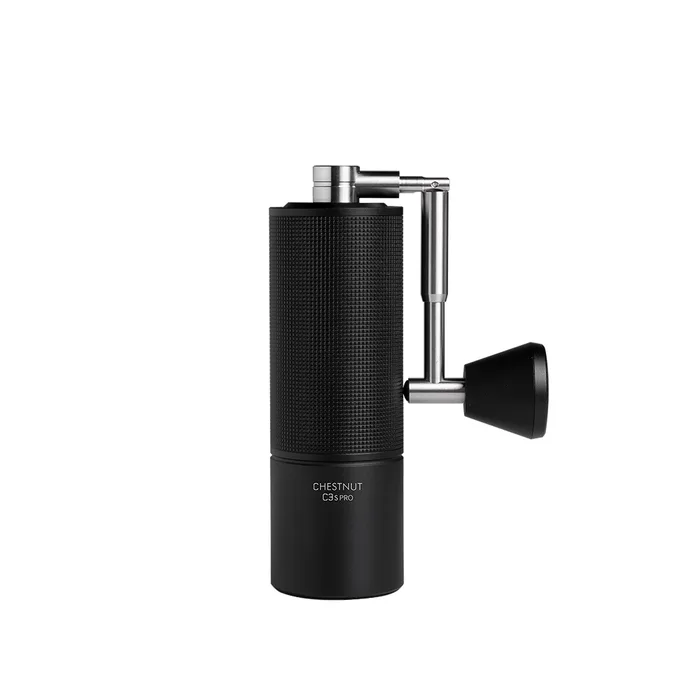
The short version
The Timemore Chestnut C3S is the pick: an aluminum unibody, 38 mm stainless steel burrs on dual bearings and 90 clicks from espresso to French press, at a mid-range price. The Timemore Chestnut S3 is the premium buy from the same maker, with S2C890 steel burrs, 0.015 mm per step adjustment, custom bearings and a spring-assisted folding handle. The Hario Skerton Pro suits filter brewers who grind larger batches, with ceramic conical burrs and a 100 g capacity, but it is mostly plastic with a glass bowl. Skip the JavaPresse Manual Burr Grinder: ceramic burrs and just over 15 settings, with few published specs. Best for: pour-over, AeroPress and home espresso drinkers who want better grounds without an electric grinder.
Our picks at a glance
- Timemore Chestnut C3S - Buy. An all-metal grinder with steel burrs and dual bearings that handles every brew method.
- Timemore Chestnut S3 - Buy. Timemore's flagship hand grinder with finer adjustment and upgraded burrs and bearings.
- Hario Skerton Pro Ceramic Coffee Mill - It depends. A large-capacity ceramic grinder for filter batches, with a lighter build than metal grinders.
- JavaPresse Manual Burr Coffee Grinder - Skip. A cheap, popular hand grinder with coarse adjustment and few published specs.
The verdict in 30 seconds
What mattered most
- Burrs
- Adjustment
- Bearings
- Body
- Capacity
- Espresso capable
A good hand grinder is the cheapest way to grind as well as an expensive electric one, as long as it has sharp burrs, stable bearings and enough adjustment steps. Cheap ones wobble and give uneven grounds that no brewer can fix. We compared a value all-metal grinder, a flagship from the same maker, a glass-bottomed ceramic classic and a best-selling budget grinder, using the specs each maker publishes.
An all-metal grinder with steel burrs and dual bearings that handles every brew method.
Best for: Most home brewers moving up from pre-ground coffee or a blade grinder.
- 38 mm stainless steel burrs, CNC-cut, on a dual-bearing shaft for stability.
- 0 to 90 clicks, from espresso to French press.
- Aluminum alloy unibody, travel-friendly size, with folding-handle and larger catch cup options.
- Timemore's page gives a 20 g catch cup on the standard version, so big batches need two rounds.
- Espresso needs care at the fine end of the range.
- No warranty term shown on the product page.
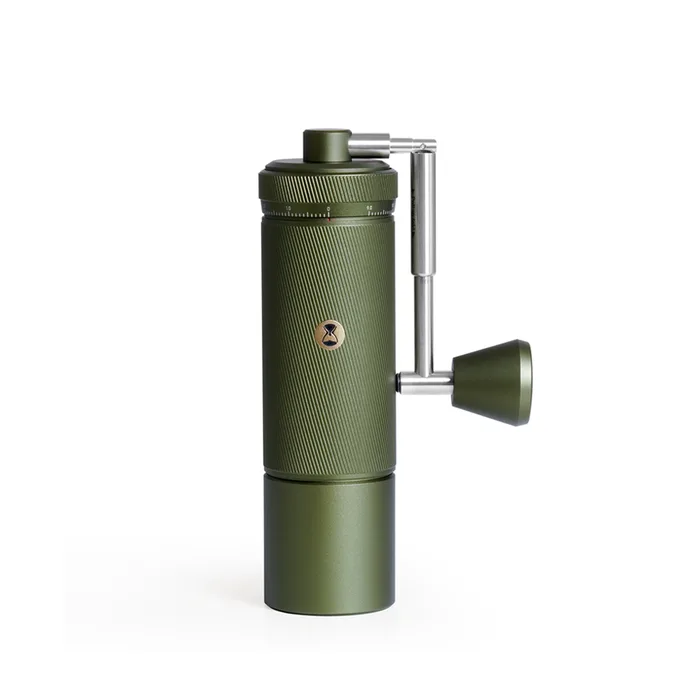
Timemore's flagship hand grinder with finer adjustment and upgraded burrs and bearings.
Best for: Espresso drinkers and enthusiasts who fine-tune every brew.
- Patented S2C890 steel burrs and a full-metal unibody.
- 0.015 mm per step adjustment with a precision digital adjustment system, accurate to 0.1 step.
- Custom bearings Timemore says improve precision by 20%, and a spring-assisted folding handle.
- Costs close to twice the C3S.
- Timemore doesn't publish a burr diameter or capacity on the page.
- Most of the gains matter for espresso and fine-tuning, less for casual brewing.
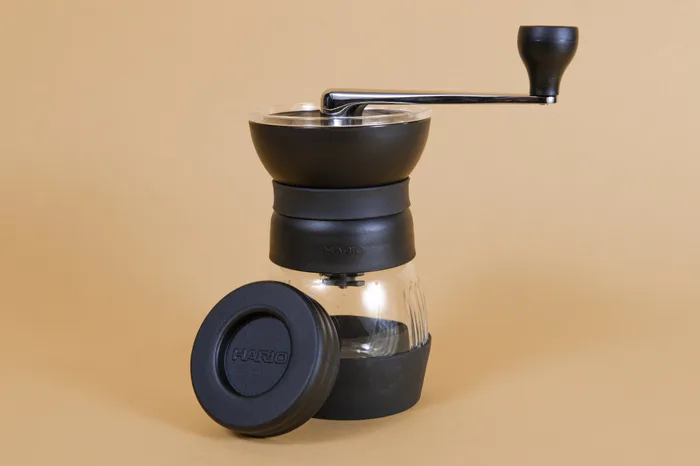
A large-capacity ceramic grinder for filter batches, with a lighter build than metal grinders.
Best for: Pour-over and French press drinkers who brew for several people at home.
- Ceramic conical burrs, which Hario says transfer less heat.
- 100 g ground coffee capacity, enough for several cups at once.
- Borosilicate glass bowl made in Japan, with an aluminum handle and non-slip silicone cover.
- Body, hopper and lid are polypropylene rather than metal.
- Hario publishes no number of settings or step size.
- At 195 mm tall with a glass bowl, it is less suited to travel.
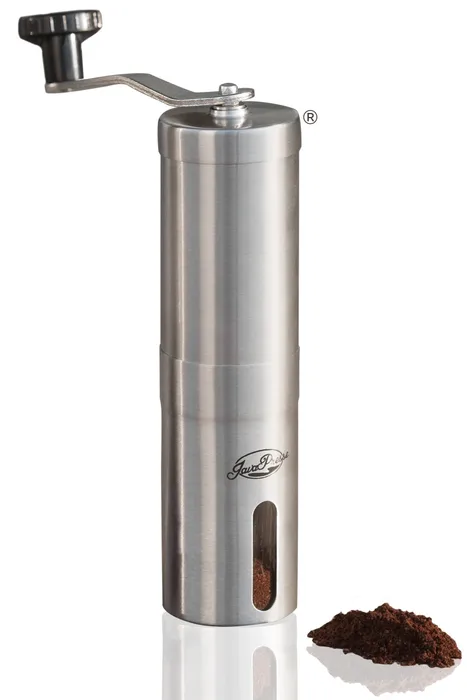
A cheap, popular hand grinder with coarse adjustment and few published specs.
Best for: Occasional French press drinkers on the tightest budget.
- A ceramic conical burr, which JavaPresse says it inspects three times.
- Quiet, portable and needs no power.
- The lowest price here.
- Just over 15 grind settings, far fewer than the C3S's 90 clicks.
- JavaPresse publishes no burr size, capacity or bearing details.
- Its claim that ceramic burrs last five times longer than steel comes from JavaPresse itself, with no test data shown.
- The Timemore C3S costs more but adds steel burrs, dual bearings and far finer adjustment.
| Criteria | Chestnut C3S Top pick | Chestnut S3 | Skerton Pro Ceramic Coffee Mill | Manual Burr Coffee Grinder |
|---|---|---|---|---|
| Verdict | Buy it | Buy it | It depends | Skip it |
| Best for | Most home brewers moving up from pre-ground coffee or a blade grinder. | Espresso drinkers and enthusiasts who fine-tune every brew. | Pour-over and French press drinkers who brew for several people at home. | Occasional French press drinkers on the tightest budget. |
| Price tier | $$ · mid-range | $$$ · premium | $ · budget | $ · budget |
| Burrs | 38 mm stainless steel | S2C890 steel | Ceramic conical | Ceramic conical |
| Adjustment | 0 to 90 clicks | 0.015 mm per step | Not published | 15+ settings |
| Bearings | Dual bearings | Custom bearings | Not published | Not published |
| Body | Aluminum unibody | Full-metal unibody | Polypropylene, glass bowl | Not published |
| Capacity | 20 g cup (standard) | Not published | 100 g | Not published |
| Espresso capable | Yes | Yes, 1 to 15 clicks | Not stated | Not stated |
| Portability | Compact, folding option | Folding handle | 195 mm, glass | Compact |
| Price tier | $$ | $$$ | $ | $ |
Which one is right for you?
- Most home brewers moving up from pre-ground coffee or a blade grinder. Buy it Timemore Chestnut C3S
- Espresso drinkers and enthusiasts who fine-tune every brew. Buy it Timemore Chestnut S3
- Pour-over and French press drinkers who brew for several people at home. It depends Hario Skerton Pro Ceramic Coffee Mill
- Occasional French press drinkers on the tightest budget. Skip it JavaPresse Manual Burr Coffee Grinder
How we judged the field
Five things decide how good a hand grinder is. The burrs come first: their material, size and sharpness decide how evenly they cut. Bearings keep the burrs aligned, which is what separates consistent grounds from uneven ones. Adjustment steps decide how finely you can dial in, especially for espresso. Capacity decides how much you can grind at once. And the build, metal or plastic, affects stability and how long it lasts.
The field splits into all-metal grinders with steel burrs, premium flagships, larger ceramic grinders for batches, and cheap ceramic grinders. We picked the Timemore Chestnut C3S and S3, the Hario Skerton Pro and the JavaPresse Manual Burr Grinder. We include two Timemore models because they sit at clearly different prices. Every spec below comes from the maker’s own product page.
The Timemore Chestnut C3S is the pick because it brings the parts that matter to a mid-range price. It uses 38 mm stainless steel burrs, CNC-cut, on a dual-bearing shaft, which keeps the burrs stable and the grounds even. The body is a single piece of aluminum alloy, and you adjust across 0 to 90 clicks, from espresso to French press. It is compact enough to travel, with options for a pull-to-fold handle and a larger catch cup. The limits are modest: Timemore lists a 20 g catch cup on the standard version, so larger batches take two rounds, espresso needs care at the fine end, and no warranty term appears on the page. For most people moving up from pre-ground coffee, it is the grinder to buy.
The Timemore Chestnut S3 is the premium pick for enthusiasts. Timemore fits it with patented S2C890 steel burrs in a full-metal unibody and adjusts it in 0.015 mm steps using a precision digital adjustment system accurate to 0.1 step, with suggested ranges like 1 to 15 clicks for espresso and 50 to 80 for pour-over. Custom bearings, which Timemore says improve precision by 20%, keep the burrs aligned, and a spring-assisted handle folds against the body. Timemore also says each S3 leaves the factory with a 0.075 mm burr gap. It costs close to twice the C3S, the page doesn’t list a burr diameter or capacity, and the gains matter most to espresso drinkers and people who fine-tune. For them, it is worth the money.
The Hario Skerton Pro is the one to pick if you brew batches of filter coffee. It uses ceramic conical burrs, which Hario says transfer less heat and shave beans rather than crack them, and it holds 100 g of grounds, far more than the Timemores. The bowl is borosilicate glass made in Japan, the handle is aluminum and a silicone cover keeps it steady. The trade-offs are build and precision: the body, hopper and lid are polypropylene, Hario doesn’t publish the number of settings or step size, and at 195 mm tall with a glass bowl it is not a travel grinder. For French press and pour-over at home for several people, it does the job; for espresso, choose a Timemore.
The JavaPresse Manual Burr Grinder is one of the most popular cheap hand grinders. It has a ceramic conical burr and a built-in adjustable selector with just over 15 settings, and it is quiet and portable. JavaPresse claims its ceramic burrs last five times longer than stainless steel but shows no test data. The bigger issue is precision. Fifteen or so settings is coarse compared with the C3S’s 90 clicks, and JavaPresse publishes no burr size, capacity or bearing details, so there’s little to judge consistency by. The Timemore C3S costs more but adds steel burrs, dual bearings and far finer adjustment. Unless budget is the only factor, skip it.
Timemore Chestnut C3S vs Timemore Chestnut S3: which should you buy?
The C3S and the S3 come from the same maker and share an all-metal build and steel burrs, so the choice comes down to precision and price. The C3S uses 38 mm stainless steel burrs on dual bearings with 90 clicks. The S3 upgrades to S2C890 burrs, custom bearings, 0.015 mm steps with a precise digital adjustment and a spring-assisted folding handle, for close to twice the price.
Choose the C3S if you brew pour-over, AeroPress or French press, or want a great first hand grinder. Choose the S3 if you pull espresso at home, change recipes often, or want the most precise adjustment Timemore makes. Either will be a big step up from pre-ground coffee.
What to look for
- Burr material and size: sharp steel burrs around 38 mm or larger grind faster and more evenly.
- Bearings: dual or upgraded bearings keep burrs aligned for consistent grounds.
- Adjustment range and step size: more clicks or smaller steps help you dial in, especially for espresso.
- Capacity: match the catch cup to how much you brew at once.
- Build: metal bodies are sturdier than plastic and glass for daily use and travel.
- Published specs: makers that list burr size, bearings and steps give you something to compare.
Our final take
For most home brewers, the Timemore Chestnut C3S is the hand grinder to buy: steel burrs, dual bearings, 90 clicks and a metal body at a mid-range price. If you pull espresso or fine-tune every recipe, the Timemore Chestnut S3 is worth the premium for its finer adjustment and upgraded parts. The Hario Skerton Pro is a sensible pick for filter batches at home. The JavaPresse is cheap, but its coarse adjustment and missing specs make it poor value next to the C3S.
Questions, answered
Is a manual grinder as good as an electric one?
A good one can match or beat many electric grinders at the same price, because the money goes into burrs and bearings instead of a motor. The trade-off is effort and time, especially for fine espresso grinds. For one or two cups a day, a hand grinder is excellent value. For many cups or espresso every morning, an electric grinder saves work; we compare those separately.
Steel or ceramic burrs?
Steel burrs are usually sharper and more precise, which is why many modern hand grinders like the Timemore C3S use them. Ceramic burrs resist wear and don't rust, and Hario says they transfer less heat. In practice, burr sharpness, alignment and bearings matter more than the material.
What do grind settings or clicks mean?
Each click moves the burrs slightly closer or farther apart. More clicks and smaller steps let you fine-tune, which matters most for espresso, where small changes affect the shot a lot. Timemore gives the S3's step size as 0.015 mm; the JavaPresse lists just over 15 settings.
Can I grind for espresso by hand?
Yes, with a capable grinder. Timemore suggests 1 to 15 clicks for espresso on the S3. It takes more effort than coarser grinds, so a grinder with good bearings and a comfortable handle helps. Budget grinders often can't grind fine and consistent enough.
How long does it take to grind by hand?
It depends on the grinder and grind size. A dose for one pour-over usually takes under a minute on a good grinder; espresso takes longer. Larger capacity grinders like the Skerton Pro take more time per batch simply because they hold more coffee.
Deciding between the top two? See our head-to-head: Timemore Chestnut C3S vs Timemore Chestnut S3.
More Coffee & Espresso reviews
 The Best Milk Frothers: 4 Compared (and One to Skip)
  The Best Moka Pots: 4 Compared (and One to Skip)
  The Best Nespresso Machines: 4 Compared (and One to Skip)
  The Best Portable Espresso Makers: 4 Compared (and One to Skip)
  The Best Pour-Over Coffee Makers: 4 Compared (and One to Skip)
  The Best Stovetop Kettles: 4 Compared (and One to Skip)