Explained
Single-Serve Coffee Makers, Explained
After reading, you'll understand which single-serve specs change your daily routine and which are just marketing.
In this guide
Single-serve coffee makers look alike on the shelf, but they differ in ways that only show up after a week of use. First-time buyers often miss that some machines take only one pod system, that a small machine may have no tank at all, and that the biggest advertised cup size might be grounds-only. Iced coffee modes also promise more than they deliver if you expect cold brew. This guide explains the terms so you can read a listing and know how the machine will fit your mornings.
The 30-second version
- Format comes first, so decide whether you want pods, grounds or both before comparing anything else.
- Check the reservoir, because a pour-in-each-time design means filling the machine for every cup.
- Read brew sizes by format, since the largest sizes are often available with grounds only.
- Over-ice modes brew hot, making a strong hot coffee to pour onto ice rather than a true cold brew.
- Measure your travel mug, and compare it with the clearance the maker publishes.
The products this guide is about
Our verdict on each, with the full reasoning on the companion review.
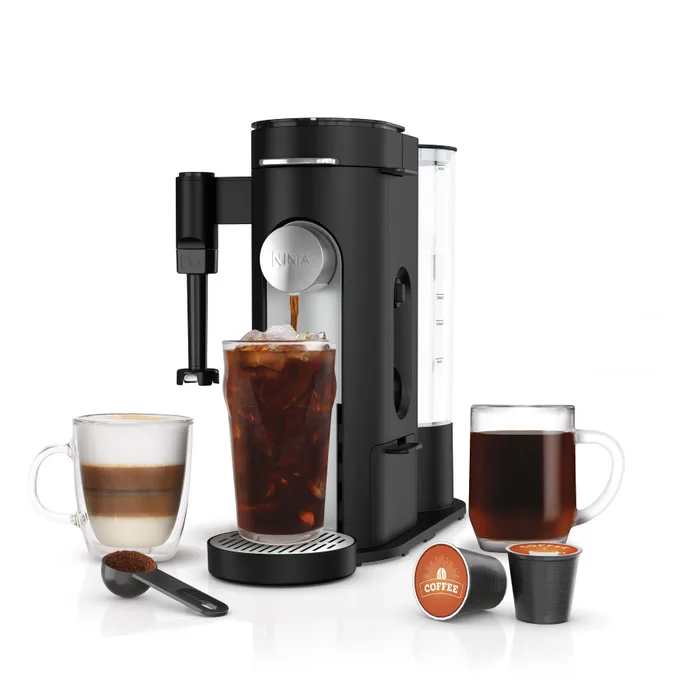
- Buy Ninja PB051 Pods & Grounds Specialty Single-Serve Coffee Maker The most flexible single-cup brewer here: pods or grounds, seven grounds sizes up to 24 oz, an Over Ice style and a fold-away frother.
- Buy Hamilton Beach FlexBrew Single-Serve Iced & Hot Coffee Maker (49921) Pods or grounds, iced or hot, with a removable 50 oz tank and an 8 oz cup in about 90 seconds, for less than the Ninja.
- It depends Keurig K-Mini Single Serve Coffee Maker A K-Cup brewer less than 5 inches wide that fits almost anywhere, as long as you are happy filling it for every cup.
- Skip Mr. Coffee Single-Serve Iced and Hot Coffee Maker (BVMC-IHCMBL) A widely sold grounds-only iced and hot brewer that is slower and less flexible than a similar Hamilton Beach.
What actually matters
- Pod format - The pod type decides what you can buy and what it costs per cup. A machine that names its compatible pods, or sells an adapter, saves you guesswork.
- Grounds option - Brewing your own ground coffee usually costs less per cup and gives you more choice of beans. Some machines include a basket; others rely on a separate reusable filter.
- Reservoir - A removable tank lets you fill once for several cups. Machines without one need fresh water for every brew, which is fine for one cup a day and tiresome beyond that.
- Brew size range - A wide range lets one machine fill an espresso cup or a travel mug. Check the range for pods and for grounds separately.
- Strength or style settings - Settings like Rich or bold slow the brew or change the ratio for a stronger cup. They matter most if you add milk or brew over ice.
- Mug clearance - A removable cup rest and a stated maximum mug height tell you whether your travel mug fits. Without a published figure, measure in person.
- Footprint - Width and depth decide where the machine can live. Slim machines save space but often give up the tank or the grounds basket.
The specs, in plain English
Green flags vs red flags
Green flags
- Pods and grounds both supported, with the holder and basket in the box
- A removable reservoir with a published capacity
- Brew sizes listed separately for pods and grounds
- A stated maximum travel mug height
- A clear list of compatible pods or a named adapter part
Red flags
- Pod compatibility described only vaguely, with no named format
- No reservoir when you plan to make several cups a day
- A large headline cup size that turns out to be grounds-only
- Iced coffee marketed as if it were cold brew
- No published dimensions or mug clearance
Who's who: the brands
- Ninja - Known for feature-heavy hybrids that combine pods, grounds, many brew sizes and built-in frothers.
- Hamilton Beach - Known for its FlexBrew line of practical, lower-cost pods-and-grounds brewers.
- Keurig - The company behind the K-Cup pod, with machines ranging from the slim K-Mini to large-tank models.
- Mr. Coffee - A long-running budget coffee brand with specialty brewers such as iced coffee makers.
How to read a listing without getting fooled
Start with the format line: does the listing say pods, grounds or both, and does it name the pod type or an adapter? Then find the reservoir figure and whether the tank is removable, or whether the machine wants fresh water for every brew. Read the brew sizes twice, once for pods and once for grounds, because the biggest number is often grounds-only. Look for a maximum mug height and the machine's width, depth and height so you know it fits both your mug and your counter. Finally, check the warranty term and what is in the box, such as a permanent filter or pod holder, so you are not buying accessories later.
How much should you spend?
Budget single-serve machines usually brew one format, often with no tank or a small one and a short list of sizes. Mid-range machines add both pods and grounds, a removable reservoir and sometimes an iced setting, and this is where most buyers get the best value. Premium single-serve brewers add more brew sizes, strength styles, concentrate modes and built-in frothers. Remember to count the running cost too: pods cost more per cup than ground coffee, so a machine that takes both can pay back the difference over time.
Questions, answered
Why does my single-serve coffee taste weak?
Single-serve machines push a fixed amount of water through a small amount of coffee, so large cup sizes often taste thin. Choose a smaller size or a stronger setting such as Rich or bold if your machine has one. With grounds, use a little more coffee rather than the largest water setting. Descaling a machine that has built up mineral deposits can also help the brew run as designed.
Do I need to descale a single-serve machine?
Yes, minerals in tap water build up inside the heater and lines over time. Follow the schedule in your machine's manual, which usually uses a descaling solution or a vinegar mix. Signs that it is due include slower brewing, smaller cups than you selected, or a descale light. Filtered water can stretch the time between cleanings.
Are reusable pod filters worth it?
They are if you want to use your own coffee in a pod-only machine. They save money per cup and cut down on used pods. The trade-off is a bit of mess and rinsing after each cup. If you plan to use grounds most of the time, a machine with a built-in grounds basket is easier.
How long should a single-serve coffee maker last?
Few makers publish an expected lifespan, so the warranty is the best hint, and on the machines we compared it is often one year where it is stated. Regular descaling and emptying standing water from the reservoir help any machine last longer. Machines with removable parts like baskets and adapters are easier to keep clean. Keep the receipt and register the product if the maker offers it.
Or jump to the head-to-head: Ninja PB051 Pods & Grounds Specialty Single-Serve Coffee Maker vs Hamilton Beach FlexBrew Single-Serve Iced & Hot Coffee Maker (49921).