Explained
Burr Coffee Grinders, Explained
After reading this you will understand every spec on a burr grinder box and know which ones actually change your morning cup.
In this guide
A burr grinder crushes coffee between two abrasive surfaces set a precise distance apart, which is why it produces a far more even grind than a spinning-blade chopper. The specs that fill product pages, burr size, settings count, conical versus flat, sound scientific but often matter less than mundane things like how much coffee gets stuck inside or flung across the counter. This guide translates the marketing so you can match a grinder to how you actually brew.
The 30-second version
- Uniformity beats burr shape. A well-built conical grinder can out-perform a poorly built flat one, so judge the specific machine and the cup it produces, not the geometry on the box.
- Match the grind range to your brew method. Filter and French press drinkers do not need a deep espresso range, while espresso lovers must confirm the grinder reaches a true fine setting.
- Static and retention are daily annoyances. They decide how much coffee you waste and how much you wipe up each morning, and cheap plastic grinders are the worst offenders.
- Serviceability saves money over time. A grinder you can open, clean, and repair with sold-separately parts outlasts a sealed unit you must replace.
- Dosing style shapes your workflow. Timed dosing, single-dosing, and portafilter dosing each suit different routines, so pick the one that fits how you brew.
The products this guide is about
Our verdict on each, with the full reasoning on the companion review.
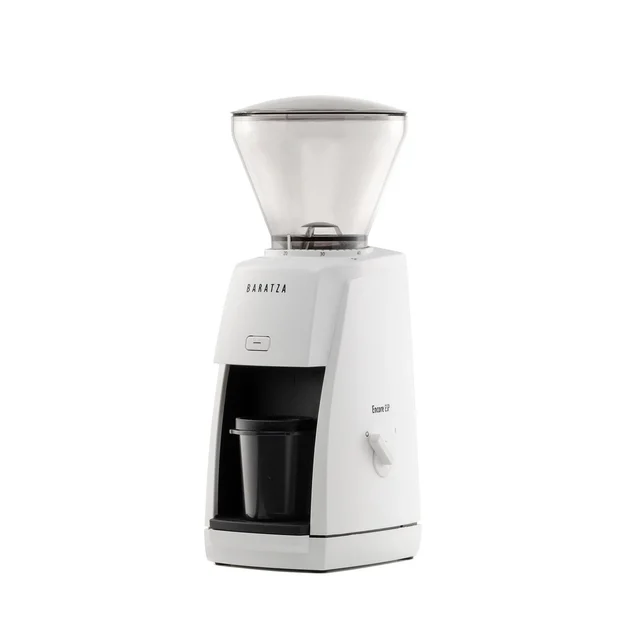
- Buy Baratza Encore ESP A serviceable, uniform all-rounder that brews great filter and handles entry espresso. Amazon
- Buy Fellow Opus 2 A quiet, compact single-doser with low mess and a true espresso-to-cold-brew range. Amazon
- It depends Breville Smart Grinder Pro Hands-free portafilter dosing and 60 settings, held back by static and stepped espresso. Amazon
- Skip Cuisinart Supreme Grind (DBM-8P1) A cheap real-burr upgrade over a blade grinder, undone by static and inconsistent grinds. Amazon
What actually matters
- Grind uniformity across the settings you actually use, because even particles extract evenly and produce a cleaner, more balanced cup, while uneven grinds taste both sour and bitter at once.
- Grind range from fine espresso to coarse French press, since a grinder that cannot reach your brew method's ideal setting will fight you every morning.
- Static and retention determine mess and waste, as static-charged grounds scatter across the counter and retained coffee goes stale inside the machine.
- Adjustment precision matters most for espresso, where stepped grinders can strand you between one setting that runs too fast and the next that runs too slow.
- Serviceability decides long-term value, because a repairable grinder with replacement burrs and motor parts is a fix rather than a landfill trip.
- Noise and footprint are real quality-of-life factors in a small kitchen or an early, quiet morning household.
- Dosing method affects daily convenience, whether you grind into a cup, single-dose one shot at a time, or dose straight into a portafilter.
The specs, in plain English
Green flags vs red flags
Green flags
- Real burrs, not blades, described as conical or flat with a stated diameter
- A grind range that clearly covers your main brew method
- Replacement burrs and parts sold openly, signaling a repairable design
- Anti-static features or a magnetic catch cup that keep mess low
- Metal internals and a solid body rather than an all-plastic build
Red flags
- Marketed as a burr grinder but shows a spinning blade in photos
- No mention of espresso capability when you plan to pull shots
- Owner reports of heavy static scattering grounds across the counter
- Very few settings when you need fine espresso control
- Sealed, unrepairable construction with no parts available
- Vague specs that hide burr type, size, or grind range
Who's who: the brands
- Baratza - Known for repairable, serviceable home grinders with parts sold openly and a strong filter-to-entry-espresso reputation.
- Fellow - Design-forward brand focused on quiet, low-mess single-dosing grinders with anti-static features.
- Breville - Mainstream kitchen brand offering convenient timed and portafilter dosing aimed at espresso-curious buyers.
- Cuisinart - Budget household brand whose burr grinders undercut on price but struggle with static and grind consistency.
How to read a listing without getting fooled
Start by confirming the machine truly uses burrs, not a blade, then find the burr type and size, though treat size as a rough hint rather than a guarantee of quality. Next, read the grind range against your brew method: if it does not explicitly claim espresso and you want espresso, assume it cannot do it well. Check whether adjustment is stepped or stepless, because stepped grinders sometimes cannot hit the exact espresso point. Then look past the headline specs to the words owners use most, static, retention, and mess, since those describe daily life with the grinder. Finally, search for whether replacement parts exist; a listing that mentions serviceable parts is telling you the machine is built to last.
How much should you spend?
The cheapest burr grinders are a genuine upgrade over blade choppers and pre-ground bags, but they buy that low price with static mess, uneven grinds at the extremes, and no real espresso ability. Spending one tier up typically buys meaningful uniformity, better build materials, and serviceability you notice in the cup every morning, which is the value sweet spot for most filter and casual espresso drinkers. Paying a further premium is worth it if you specifically want single-dosing, very low mess, a quiet compact body, or precise espresso control, and it is wasted money if you brew only drip or French press. The most expensive grinders chase tight espresso precision that a filter-first drinker will never use, so let your brew method, not the price tag, set your ceiling.
Questions, answered
Is a conical or flat burr grinder better?
Neither wins automatically. Flat burrs often give a very uniform filter grind, while good conical burrs run quieter and stay versatile across brew methods. Execution matters far more than shape, so judge the specific grinder rather than the geometry printed on the box.
Do I really need a burr grinder instead of a cheap blade grinder?
If you care about how your coffee tastes, yes. A blade grinder chops beans into wildly uneven chunks and powder, which brews sour and bitter at the same time. A burr grinder sets a precise distance between two surfaces so particles come out consistent, which is the single biggest upgrade most home coffee drinkers can make.
Can an affordable burr grinder make real espresso?
Sometimes, but check carefully. Espresso needs a very fine, precise, and consistent grind, and many budget grinders cannot reach or hold it. Look for a machine that explicitly claims an espresso range and, ideally, fine adjustment near the fine end, rather than assuming any burr grinder can pull a shot.
Why do my grounds fly everywhere and stick to the grinder?
That is static, and it is common on grinders with plastic internals and chutes. Grinding builds up an electrical charge that makes grounds cling and scatter. Anti-static features, a magnetic metal catch cup, or a tiny spritz of water on the beans before grinding all help reduce the mess.
What is retention and should I worry about it?
Retention is the coffee that stays stuck inside the grinder between uses. Some retention is normal, but high retention wastes beans and lets yesterday's stale grounds mix into today's fresh dose. Single-dosing grinders and low-retention designs minimize it, which matters most if you switch beans often.
How many grind settings do I actually need?
Fewer than the marketing implies. For filter and French press, a modest number of settings covers you comfortably. Espresso is where you want more precision, because a small change makes a big difference; there, stepless or finely stepped adjustment near the fine end helps you dial in a good shot.
Or jump to the head-to-head: Baratza Encore ESP vs Fellow Opus 2.