

Coffee & Espresso
The Best Burr Coffee Grinders (2026): Honest Picks and One to Skip
A critical look at four burr coffee grinders for 2026: our all-round pick, a low-mess single-doser, an espresso specialist, and the popular one to skip.
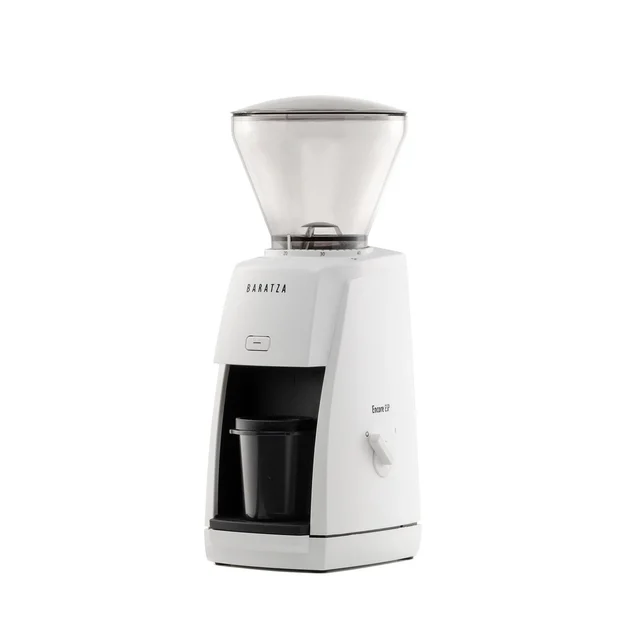
The short version
Buy the Baratza Encore ESP: a uniform, repairable all-rounder that nails filter and handles entry espresso. Choose the Fellow Opus 2 if you single-dose and want a quiet, low-mess grinder with real espresso-to-cold-brew range. The Breville Smart Grinder Pro suits espresso-first buyers who want hands-free portafilter dosing but can tolerate static. Skip the Cuisinart Supreme Grind; it beats a blade grinder but the static and inconsistency wear thin. Best for most kitchens: the Encore ESP.
Our picks at a glance
- Baratza Encore ESP - Buy. A serviceable, uniform all-rounder that brews great filter and handles entry espresso.
- Fellow Opus 2 - Buy. A quiet, compact single-doser with low mess and a true espresso-to-cold-brew range.
- Breville Smart Grinder Pro - It depends. Hands-free portafilter dosing and 60 settings, held back by static and stepped espresso.
- Cuisinart Supreme Grind (DBM-8P1) - Skip. A cheap real-burr upgrade over a blade grinder, undone by static and inconsistent grinds.
The verdict in 30 seconds
What mattered most
- Burrs
- Grind range
- Settings
- Dosing
- Mess / static
- Serviceability
Grinding fresh is the biggest upgrade most home coffee drinkers can make, but the grinder aisle is full of look-alikes that behave very differently on the counter. We compared four burr grinders still sold in 2026 across grind quality, mess, dosing, and how long they last. Three are worth your money for different reasons, and one popular model is best left on the shelf.
A serviceable, uniform all-rounder that brews great filter and handles entry espresso.
Best for: Filter-first drinkers who want one grinder they can keep and repair for years.
- Repairable design with replacement parts sold openly
- Uniform filter grind plus an included 54mm dosing cup
- Genuine espresso range on a long-proven platform
- Noticeable static and some retention between doses
- Loud motor you will hear early in the morning
- Stepped espresso range, with no fine-tuning between settings
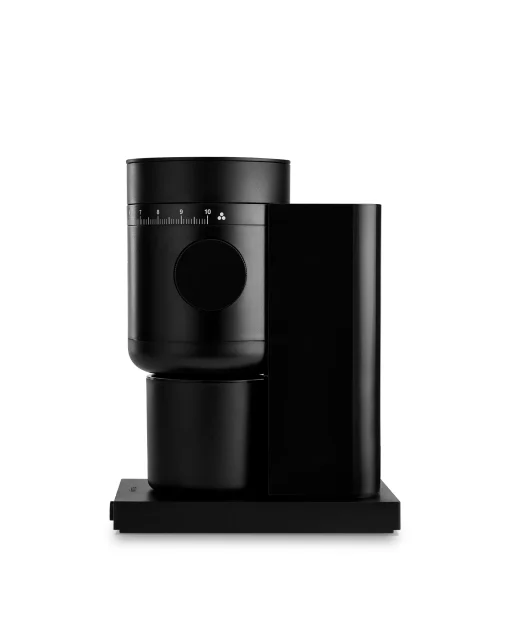
A quiet, compact single-doser with low mess and a true espresso-to-cold-brew range.
Best for: Single-dosers in small kitchens who brew espresso and everything else.
- 48mm conical burrs and a stepless side dial with 48 marked settings
- Built-in ionizer and magnetic catch cups keep mess low
- Compact, quiet body suited to single-dosing
- No built-in scale or weight dosing, so you weigh beans separately
- Its espresso range and single-dose design are extras a filter-only drinker may not need
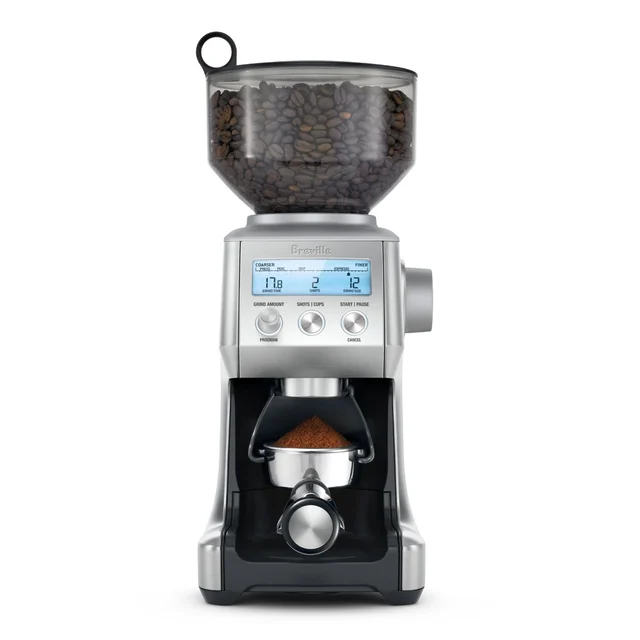
Hands-free portafilter dosing and 60 settings, held back by static and stepped espresso.
Best for: Espresso-first home baristas who want convenient, repeatable dosing.
- Doses by time or shot count straight into the portafilter
- 60 stepped settings plus an airtight grounds container and two cradles
- Static-prone and messy around the grind chute
- Stepped adjustment can strand you between two espresso settings
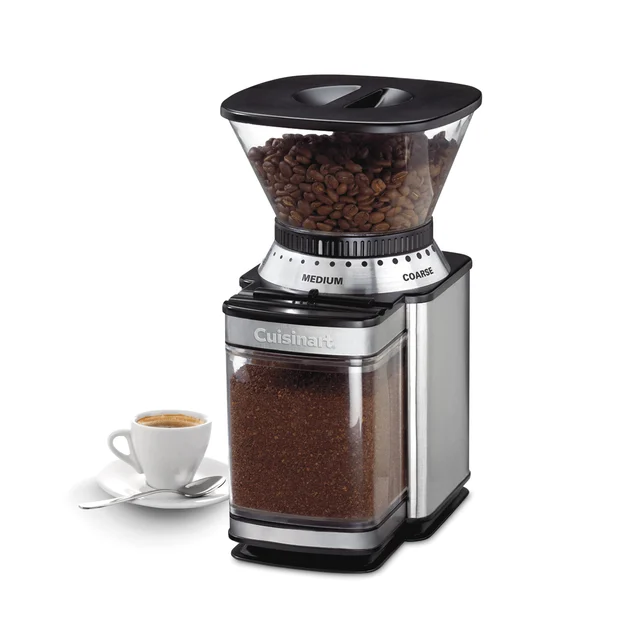
A cheap real-burr upgrade over a blade grinder, undone by static and inconsistent grinds.
Best for: Drip-only buyers on the tightest budget, and little else.
- A real step up from blade grinders and pre-ground bags
- Hopper sized for big drip batches
- Aggressive static scatters grounds across the counter
- Inconsistent at coarse and fine extremes, with no true espresso fine
- Largely plastic build that feels its price
| Criteria | Baratza Encore ESP Top pick | Fellow Opus 2 | Breville Smart Grinder Pro | Cuisinart Supreme Grind (DBM-8P1) |
|---|---|---|---|---|
| Verdict | Buy it | Buy it | It depends | Skip it |
| Best for | Filter-first drinkers who want one grinder they can keep and repair for years. | Single-dosers in small kitchens who brew espresso and everything else. | Espresso-first home baristas who want convenient, repeatable dosing. | Drip-only buyers on the tightest budget, and little else. |
| Price tier | $$ · mid-range | $$ · mid-range | $$ · mid-range | $ · budget |
| Burrs | 40mm conical steel | 48mm conical | Stainless conical | Small conical, plastic-heavy |
| Grind range | Espresso to cold brew | Espresso to cold brew | Espresso to French press | Drip to coarse; weak at extremes |
| Settings | 40 stepped | Stepless, 48 marked | 60 stepped | Stepped |
| Dosing | Into 54mm cup | Single-dose, auto shutoff | Timed into portafilter | Timer dial into bin |
| Mess / static | Some static | Low, ionizer | Static-prone | Very static, messy |
| Serviceability | Repairable, parts sold | Limited | Limited | Not serviceable |
Which one is right for you?
- Filter-first drinkers who want one grinder they can keep and repair for years. Buy it Baratza Encore ESP
- Single-dosers in small kitchens who brew espresso and everything else. Buy it Fellow Opus 2
- Espresso-first home baristas who want convenient, repeatable dosing. It depends Breville Smart Grinder Pro
- Drip-only buyers on the tightest budget, and little else. Skip it Cuisinart Supreme Grind (DBM-8P1)
How we judged the field
We do not run a lab. Real Buyer Experiences synthesizes patterns across a wide range of published expert critique and long-term buyer feedback, then weighs what holds up over months of daily grinding rather than a single first impression. For burr grinders we care about three things above marketing claims: grind uniformity across the range you will actually use, how much coffee gets stuck inside or flung across the counter, and whether the machine can be adjusted precisely and kept running for years. We limited this guide to models still in production in 2026, and we deliberately included one popular grinder we think most people should walk past. Conical or flat burr type matters less than execution, so we judged each machine on the cup it produces and the daily friction of living with it.
Baratza Encore ESP
Buy itThe Encore ESP takes the long-serving Encore platform and adds a genuine espresso range, using a 40mm conical steel burr set and 40 stepped settings: Baratza assigns 1 to 20 to espresso and 21 to 40 to filter, French press, and cold brew. It ships with a 54mm dosing cup, plus a 58mm adapter, that catches grounds cleanly for a portafilter. What we liked more: it is one of the few grinders in its tier built to be opened, cleaned, and repaired, with replacement parts sold openly, so a worn burr or motor is a fix rather than a landfill trip. The grind distribution stays respectable across filter settings, which is where most people spend their time. What we liked less: it holds onto a little coffee between doses and can throw static-charged grounds, and the motor is loud enough to notice early in the morning. For espresso it works, but the steps are fixed, so you cannot fine-tune between two settings the way a stepless grinder allows.
Fellow Opus 2
Buy itOpus 2 is the grinder to buy if counter space, noise, and single-dosing matter to you. It steps up to 48mm conical burrs and a smooth, stepless side dial marked with 48 settings, and it is designed to grind one dose at a time rather than store beans in a big hopper. What we liked more: the built-in ionizer and magnetic catch cups keep mess unusually low for an electric grinder, and the compact, quiet body suits a small kitchen far better than a bulky tower. Its range genuinely covers espresso through cold brew. What we liked less: there is no built-in scale, so hitting an exact gram target means weighing beans before you load them, and a filter-only drinker may not need its espresso range. Retention is low but not zero.
Breville Smart Grinder Pro
It dependsThe Smart Grinder Pro is the espresso-curious buyer’s convenience play. Stainless steel conical burrs and 60 stepped settings feed a digital timer, adjustable in 0.2-second increments, that doses by cups or shots directly into a portafilter cradle, with a second cradle and an airtight grounds container included. What we liked more: dosing hands-free straight into the basket, plus the fine-grained timer, makes pulling repeatable shots at home much easier than grinding into a cup and transferring. What we liked less: it is static-prone and messy around the chute, and because the adjustment is stepped you can land between too coarse and too fine for espresso with no setting in between, which is the single most common frustration with it. For filter brewing it is fine; for espresso it is capable but fussy.
Cuisinart Supreme Grind (DBM-8P1)
Skip itThis is the popular grinder we think most people should skip. It is a genuine burr mill, not a blade chopper, and it sells in enormous numbers on price and a familiar brand name. It offers stepped grind settings and a hopper with a timed dial. What we liked more: it is a real upgrade over a blade grinder and pre-ground bags, and it grinds large batches for a drip machine without complaint. What we liked less is why it lands here: the largely plastic build generates aggressive static that scatters grounds across the counter, the grind turns inconsistent at both the coarse and fine extremes, and it cannot reach a true espresso fine. For French press you get silt; for espresso you get frustration. Spend a little more once and skip the daily mess.
Baratza Encore ESP vs Fellow Opus 2: which should you buy?
These two cover most home setups between them, so the choice comes down to habits, not quality. Pick the Encore ESP if you value serviceability and want a proven all-rounder that leans toward filter with espresso as a bonus; its openness to repair makes it the safer long-term bet, and the two sit in a similar price bracket. Pick the Opus 2 if you single-dose, brew a rotating mix of methods including espresso, and want a quiet, clean, compact machine on the counter. Filter-first drinkers rarely regret the Encore ESP; espresso-and-everything single-dosers tend to prefer the Opus 2.
What to look for
Start with your main brew method. If you live on pour-over, drip, or French press, prioritize a clean, uniform grind at medium-to-coarse settings and do not overpay for a deep espresso range you will not use. If espresso is the goal, prioritize fine adjustment near the fine end and a tidy path from burr to basket, because stepped grinders can strand you between two settings. Then weigh the daily annoyances: retention and static decide how much coffee you waste and how much you wipe up each morning. Finally, consider whether the grinder can be cleaned and repaired; a serviceable machine you keep for years costs less over time than a sealed one you replace. Noise and footprint are real factors too if your kitchen is small or your mornings are early.
Our final take
For most people, the Baratza Encore ESP is the one to buy: a uniform, serviceable all-rounder that brews excellent filter and handles entry-level espresso. Choose the Fellow Opus 2 if you single-dose and want a quiet, low-mess, design-forward grinder with true espresso-to-cold-brew range. The Breville Smart Grinder Pro earns a conditional nod for espresso-first buyers who want hands-free portafilter dosing but can tolerate static and stepped adjustment. Skip the Cuisinart Supreme Grind; it is a step up from a blade grinder and nothing more, and the static and inconsistency will wear on you. Best for the widest range of kitchens: the Encore ESP.
Questions, answered
Is a conical or flat burr grinder better?
Neither wins automatically; execution matters more than shape. Flat burrs often give a very uniform filter grind, while good conical burrs run quieter and stay versatile. Every grinder here uses conical burrs and brews well, so judge the specific machine, not the burr geometry.
Can these grinders make real espresso?
Yes, with caveats. The Fellow Opus 2 and Breville Smart Grinder Pro reach a true espresso fine, and the Baratza Encore ESP dedicates half its 40 steps to espresso, though without stepless fine-tuning. The Cuisinart cannot hold a consistent espresso grind, so avoid it for that use.
Why not just buy the cheapest burr grinder?
Because budget burr grinders like the Cuisinart Supreme Grind trade consistency for price. You get static mess, uneven grinds at the extremes, and no real espresso ability. Spending one tier up buys uniformity and serviceability that you notice in the cup every single morning.
Do I need separate grinders for espresso and filter?
Not necessarily. An all-rounder like the Baratza Encore ESP or Fellow Opus 2 covers filter and entry espresso from one machine. Dedicated espresso drinkers chasing tight shots may eventually want a specialist, but most home kitchens are well served by a single versatile grinder.
Deciding between the top two? See our head-to-head: Baratza Encore ESP vs Fellow Opus 2.
More Coffee & Espresso reviews
 The Best Coffee Canisters: 4 Compared (and One to Skip)
  The Best Coffee Scales: 4 Compared (and One to Skip)
  The Best Cold Brew Coffee Makers: 4 Compared (and One to Skip)
  Best Drip Coffee Makers (2026): Flavor, Value, and One to Skip
  The Best Electric Kettles: Honest Picks for Tea, Coffee, and Everyday Boiling
  The Best Espresso Distribution Tools: 4 Compared (and One to Skip)