

Home & Kitchen
The Best Cast Iron Skillets in 2026: Four Pans Compared
We compared four cast iron skillets on surface finish, weight, seasoning, and everyday value. One workhorse wins, two premium pans earn their keep, one to skip.
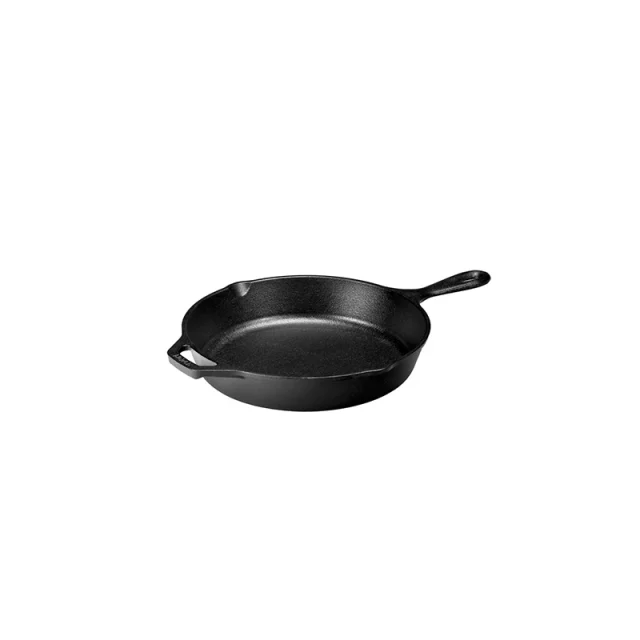
The short version
Cast iron rewards patience more than spending. The Lodge Seasoned Skillet is the pick for most people: heavy and rough at first, but tough, inexpensive, and near-nonstick once seasoned. The Field No. 8 is worth the premium if you cook often and want a lighter, machined-smooth pan. The Smithey No. 12 is a polished, keep-forever splurge for those who don't mind the weight. Skip thin budget skillets like the Cuisinel; one better single pan outlasts them.
Our picks at a glance
- Lodge Seasoned Cast Iron Skillet - Buy. A heavy, rough-cast workhorse that costs little and lasts for decades.
- Field Company No. 8 Cast Iron Skillet - Buy. A light, machined-smooth pan that seasons fast and is easy to cook with daily.
- Smithey Ironware No. 12 Cast Iron Skillet - It depends. A polished, heirloom-grade skillet that is refined, heavy, and priced accordingly.
- Cuisinel Cast Iron Skillet - Skip. A cheap, thin skillet that a single better-made pan out-cooks and outlasts.
The verdict in 30 seconds
What mattered most
- Cooking surface
- Weight for its size
- Factory seasoning
- Handle and helper
- Where it's made
- Overall value
Cast iron is one of the few pans that can outlive the person who buys it, which makes choosing one less about hype and more about how it feels in daily use. We compared four skillets sold in 2026 on surface finish, weight, seasoning, and value, drawing on independent expert testing and long-term owner reports rather than our own lab. Three are worth owning for different cooks; one is a widely sold budget option we would leave on the shelf.
A heavy, rough-cast workhorse that costs little and lasts for decades.
Best for: Anyone who wants one durable, do-everything skillet without overspending.
- Made in the USA and close to indestructible for the money
- Dual pour spouts and an integral assist-handle loop add everyday utility
- Pebbly sand-cast surface takes months of cooking to smooth out
- Short handle heats fast and the pan is dense for a 10-inch
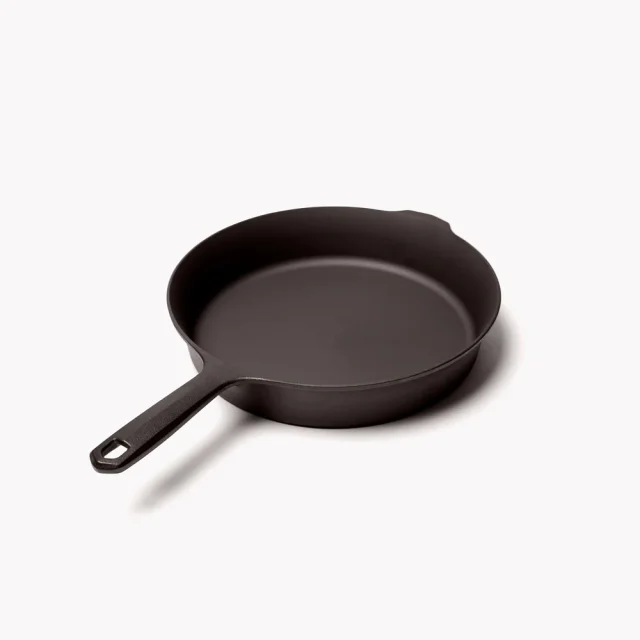
A light, machined-smooth pan that seasons fast and is easy to cook with daily.
Best for: Frequent cooks who want less weight and a smoother surface and will use it enough to justify the cost.
- Machined-smooth interior releases food well and seasons quickly
- Thin-wall casting is noticeably lighter (about 4.5 lb) and heats fast
- Single long handle with no helper handle makes a full pan awkward to lift
- Premium price, and the flat cooking area is smaller than the size suggests
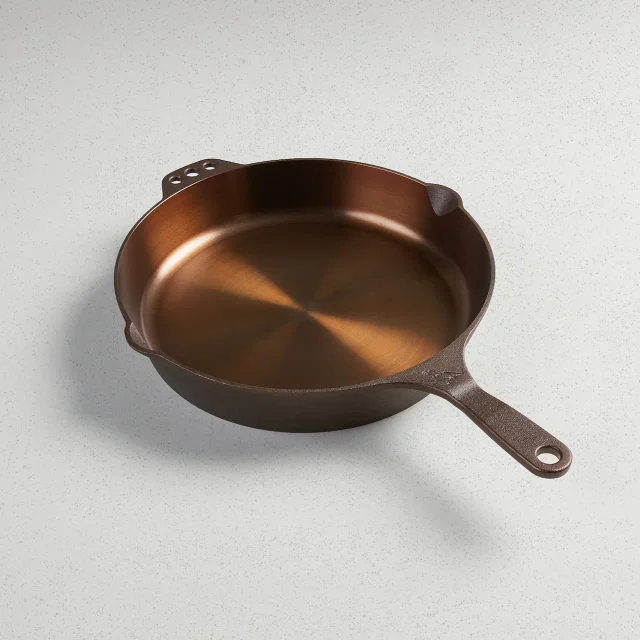
A polished, heirloom-grade skillet that is refined, heavy, and priced accordingly.
Best for: Cooks who want a polished, keep-forever pan and don't mind the weight or the price.
- Hand-polished, satin-smooth interior gives excellent food release once seasoned
- Steep walls, dual spouts, and a helper handle suit frying and oven work
- Heavy at around eight pounds for the 12-inch body
- Polished surface seasons unevenly for the first few months and costs a lot
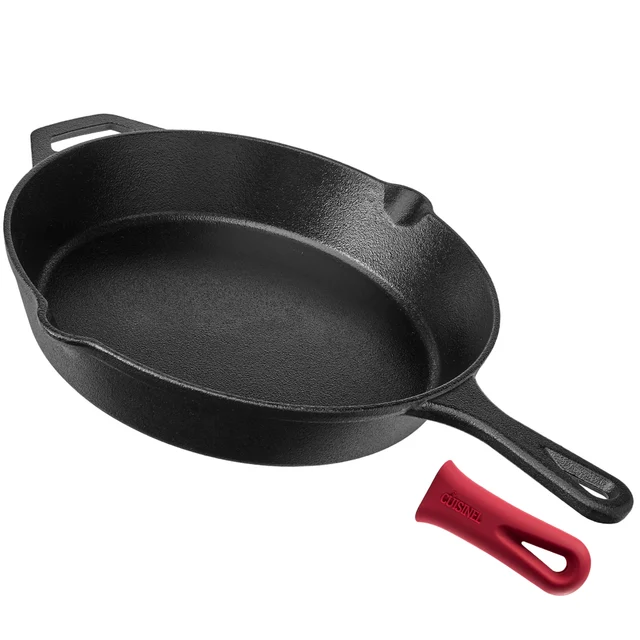
A cheap, thin skillet that a single better-made pan out-cooks and outlasts.
Best for: Almost no one; put the money toward a single better-made skillet instead.
- Inexpensive and ships with a silicone handle sleeve
- Pre-seasoned and oven-safe like pricier pans
- Thin, rough casting can rock on flat cooktops and arrives with patchy, sometimes sticky seasoning
- No durability or cooking edge over a similarly priced, better-made single skillet
| Criteria | Lodge Seasoned Cast Iron Skillet Top pick | Field Company No. 8 Cast Iron Skillet | Smithey Ironware No. 12 Cast Iron Skillet | Cuisinel Cast Iron Skillet |
|---|---|---|---|---|
| Verdict | Buy it | Buy it | It depends | Skip it |
| Best for | Anyone who wants one durable, do-everything skillet without overspending. | Frequent cooks who want less weight and a smoother surface and will use it enough to justify the cost. | Cooks who want a polished, keep-forever pan and don't mind the weight or the price. | Almost no one; put the money toward a single better-made skillet instead. |
| Price tier | $ · budget | $$$ · premium | $$$$ · flagship | $ · budget |
| Cooking surface | Rough, pebbly | Machined smooth | Polished satin-smooth | Rough, pebbly |
| Weight for its size | Heavy (~5 lb, 10-inch) | Light (~4.5 lb, 10-inch) | Heavy (~8 lb, 12-inch) | Light but thin |
| Factory seasoning | Thin but usable | Good, builds fast | Blotchy early, improves | Patchy, often sticky |
| Handle and helper | Long plus assist loop | Long only, no helper | Long plus helper handle | Long plus helper and sleeve |
| Where it's made | USA | USA | USA | Imported |
| Overall value | Excellent | Strong for frequent cooks | Premium, heirloom | Poor |
Which one is right for you?
- Anyone who wants one durable, do-everything skillet without overspending. Buy it Lodge Seasoned Cast Iron Skillet
- Frequent cooks who want less weight and a smoother surface and will use it enough to justify the cost. Buy it Field Company No. 8 Cast Iron Skillet
- Cooks who want a polished, keep-forever pan and don't mind the weight or the price. It depends Smithey Ironware No. 12 Cast Iron Skillet
- Almost no one; put the money toward a single better-made skillet instead. Skip it Cuisinel Cast Iron Skillet
How we judged the field
We synthesize independent expert testing and long-term owner reports; we do not run our own lab. Cast iron is simple material, so the differences that matter are practical. We looked at how smooth the cooking surface is out of the box, how much the pan weighs, how evenly it sits and heats, how quickly the factory seasoning becomes genuinely usable, and whether the handle lets you lift a loaded pan without strain. Durability and repairability counted too, because a skillet like this should outlast the cook and can be re-seasoned indefinitely. We considered only models in production in 2026, and we treated price as a rough tier rather than a headline number, since a pan you keep for decades is judged on how it cooks. Four skillets came through: a budget workhorse, a lightweight machined pan, a polished heirloom, and one widely sold budget option we think you should pass on.
Lodge Seasoned Cast Iron Skillet
Buy itThe Lodge is the default cast iron pan for a reason. It is sand-cast and pre-seasoned in the United States, carries dual pour spouts and a small integral loop opposite the main handle for a second grip, and costs a fraction of everything else here. The trade-off is finish and heft. The cooking surface is pebbly rather than smooth, so eggs and delicate fish can stick until several months of cooking build the seasoning into something slick. At a little over five pounds in the 10-inch size it is dense for its diameter, and the handle is short and heats quickly. None of that stops it from searing, roasting, baking, and frying as well as pans that cost far more. What we liked more is the value and toughness: it shrugs off metal utensils, high heat, and the occasional drop. What we liked less is the rough factory surface, which asks for patience before it earns its keep. Verdict: buy.
Field Company No. 8 Cast Iron Skillet
Buy itThe Field No. 8 answers the two most common complaints about entry-level cast iron: weight and texture. Its walls are cast thinner and the interior is machined smooth, so at roughly four and a half pounds it is easy to maneuver and its surface releases food and takes seasoning quickly. It is made in the United States using traditional green-sand casting modeled on prized vintage pans. The catch is the handle and the price. There is a single long handle with a hang hole and no helper handle, so lifting the pan full of food is more of a two-hand affair than it should be, and the flat cooking area is smaller than the 10.25-inch label implies because of the sloped sides. It sits in a premium tier. What we liked more is the low weight paired with a smooth surface that behaves well early. What we liked less is the missing helper handle and the cost, which pays off only if you cook often enough to notice the difference every week. Verdict: buy.
Smithey Ironware No. 12 Cast Iron Skillet
It dependsThe Smithey No. 12 is the show pan of this group. After casting, the interior is ground and polished to a satin, almost glass-like finish that gives excellent food release once seasoned, and the steep, tall walls, dual spouts, and helper handle make it capable for frying and oven work at a family scale. It is also the heaviest and most expensive pan here, at around eight pounds for the 12-inch body and a luxury tier to match. The polished surface has one quirk worth knowing: it holds seasoning less readily than rough cast iron at first, so expect blotchy, uneven color for the first few months before it settles. This is a pan to buy with intent, not on impulse. What we liked more is the polished interior and the heirloom-grade build. What we liked less is the weight and the patience the finish demands early on. For the right cook it is a keep-forever tool; for most it is more pan and more money than the job needs, which is why it lands as a depends rather than a firm buy. Verdict: depends.
Cuisinel Cast Iron Skillet
Skip itThe Cuisinel is the kind of inexpensive, heavily marketed skillet that looks like a bargain and usually is not. It is imported, cast thin, and left with a rough, pebbly surface, and it typically ships with a silicone handle sleeve to soften the sharp, hot handle. The problems show up in use. Thin castings are more prone to sitting unevenly and rocking on a flat cooktop, the factory seasoning is often patchy and can turn sticky, and the pan does not cook or last better than a well-made single skillet that costs about the same. What we liked more is only that it is cheap and includes a handle cover. What we liked less is everything that matters: the uneven casting, the unreliable seasoning, and the false economy. Multi-pack sets amplify the issue, giving you two mediocre pans instead of one good one. Verdict: skip.
Lodge Seasoned Cast Iron Skillet vs Field Company No. 8: which should you buy?
These two frame the real decision for most people, because the Smithey is a splurge and the Cuisinel is a pass. The Lodge wins on price and resilience and asks only for time; its rough surface becomes near-nonstick with months of normal cooking, and you will never worry about abusing it. The Field wins on the day-to-day experience: it is lighter in the hand, its machined surface releases food sooner, and it needs less breaking in. If budget is the priority, or if you want a pan you can treat carelessly, the Lodge is the smarter buy. If you cook several times a week and value low weight and an easier surface enough to pay a premium, the Field earns it. Keep the missing helper handle in mind if you often cook heavy, full loads.
What to look for
Start with size and weight, since they decide whether you actually reach for the pan. A 10 to 10.25-inch skillet suits one or two people and stays manageable; a 12-inch feeds more but can exceed eight pounds full, which is a lot to lift one-handed. Look for a helper handle opposite the main one if you plan to move loaded pans. Surface finish is a matter of patience versus money: rough pans reach near-nonstick eventually, while machined and polished pans get there faster and weigh less, though no finish stays meaningfully slicker forever. Avoid thin, ultra-cheap pans that can warp or rock. Whatever you choose, care is identical: rinse hot, scrub, dry on the burner, and wipe with a thin film of oil.
Our final take
For nearly everyone, the Lodge Seasoned Cast Iron Skillet is the pan to buy: cheap, tough, made to outlast you, and every bit as capable once seasoned as pans that cost many times more. Step up to the Field No. 8 if you cook often and want the lighter weight and smoother surface, and consider the Smithey No. 12 if a polished, keep-forever pan is worth the heft and the outlay. Leave the thin budget skillets like the Cuisinel alone; the savings are not real when one better pan lasts a lifetime.
Questions, answered
Is an expensive smooth skillet worth it over a cheap rough one?
It depends on how you cook. A machined or polished pan releases eggs sooner and tends to be lighter, which matters if you cook daily. If you mostly sear, roast, and bake, a rough, inexpensive pan seasons into a near-nonstick surface within a few months anyway.
Do rough cast iron surfaces ever become nonstick?
Yes. The pebbly factory texture fills in with polymerized oil as you cook, and after a few months of regular use it approaches nonstick for eggs and fish. Smooth pans just reach that point faster; they do not end up meaningfully slicker over the long run.
How heavy is too heavy for a cast iron skillet?
A 12-inch pan can top eight pounds once full, and lifting that one-handed is hard for many cooks. If wrist strain is a concern, choose a lighter thin-walled 10-inch pan, or make sure the skillet has a helper handle opposite the main one.
Can I put cast iron in the dishwasher?
No. Detergent and prolonged water strip the seasoning and invite rust. Rinse with hot water, scrub with a brush or chainmail, dry on the burner, and wipe a thin film of oil. That routine is the same for every pan here, budget or premium.
Are cheap multi-pack skillets a good deal?
Rarely. They cost about the same as one well-made single skillet but use thinner, rougher castings that can sit unevenly on flat cooktops and arrive with patchy seasoning. One durable pan you keep for decades beats two mediocre ones you replace.
Deciding between the top two? See our head-to-head: Lodge Seasoned Cast Iron Skillet vs Field Company No. 8 Cast Iron Skillet.
More Home & Kitchen reviews
 The Best Ceiling Fans: 4 Compared (and One to Skip)
  The Best Cellular Shades: 4 Compared (and One to Skip)
  The Best Chainmail Scrubbers for Cast Iron: 4 Compared (and One to Skip)
  The Best Charcoal Grills: 4 Compared (and One to Skip)
  The Best Charcoal Starters: 4 Compared (and One to Skip)
  The Best Charcuterie Boards: 4 Compared (and One to Skip)