Explained
Drip Coffee Makers, Explained
After reading, you will know which drip coffee maker specs actually affect flavor and which are just marketing.
In this guide
A drip coffee maker looks simple, and the good news is that only a couple of things truly separate a great cup from a mediocre one. Most buyers get distracted by cup counts, programmable clocks, and feature lists, when the real story is how hot the water gets and how evenly it soaks the grounds. This guide decodes the jargon so you can spot a quality brewer without overpaying for gimmicks.
The 30-second version
- Brew temperature is everything. Water in roughly the 195 to 205 degree Fahrenheit range extracts coffee properly; a machine that runs cooler will taste thin and sour no matter what else it offers.
- Even saturation matters as much as heat. A wide showerhead that wets the whole bed of grounds beats a single stream that drills one spot and leaves dry pockets.
- Carafe type is a lifestyle choice, not a quality one. Glass on a warming plate is fine if you drink fast; a thermal carafe keeps coffee hot for hours without stewing it bitter.
- Programming adds convenience, never flavor. Clocks, timers, and brew-strength switches are handy, but do not pay a quality premium for them.
- Serviceability decides longevity. The machines that last a decade are the ones with replaceable parts and a real warranty, not the ones with the longest feature list.
The products this guide is about
Our verdict on each, with the full reasoning on the companion review.
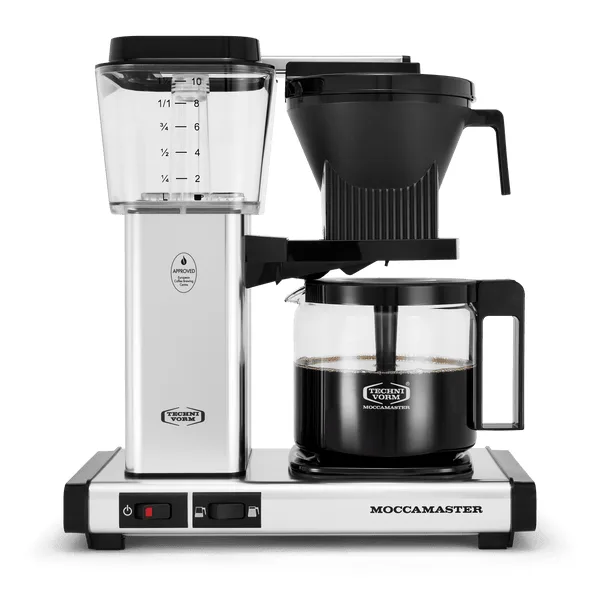
- Buy Technivorm Moccamaster KBGV Select The flavor benchmark - it simply brews excellent coffee, year after year. Amazon
- Buy Ratio Six Coffee Machine An automated pour-over with a bloom phase and a thermal carafe, run from one button.
- It depends Cuisinart PerfecTemp 14-Cup Programmable (DCC-3200) The programmable big-batch machine, worth it if a timer and 14 cups matter more to you than a stated brew standard. Amazon
- Skip Hamilton Beach FlexBrew Trio (49902) A three-way pod, single-cup and carafe machine whose page never mentions brew temperature. Amazon
What actually matters
- Brew temperature is the single biggest driver of flavor. Coffee under-extracts and tastes sour when water is too cool, so a brewer that reaches and holds the specialty window is worth prioritizing above all else.
- Water distribution (the showerhead) determines whether every ground gets used. Even, all-over wetting produces balanced coffee; a narrow stream leaves dry patches and uneven strength.
- Carafe and heat retention shape how the coffee tastes over time. A hot plate slowly cooks a glass carafe bitter, while an insulated thermal carafe holds heat without the stewed edge.
- Capacity matched to your habits protects quality. A large machine run at a fraction of its capacity often extracts worse than a right-sized brewer, so buy for how much you actually drink.
- Programmability and controls add real convenience for scheduled brewing and strength tuning, but contribute nothing to cup quality, so weigh them separately from flavor.
- Build quality and warranty tell you how long the machine will keep brewing well. Replaceable parts and a multi-year warranty signal a brewer built to outlive its box.
The specs, in plain English
Green flags vs red flags
Green flags
- States a brew temperature in or near the 195 to 205 degree range, or carries a recognized brewing certification
- Uses a wide showerhead or multi-hole spray arm that visibly wets the whole bed of grounds
- Offers a thermal carafe option if you tend to drink slowly
- Comes with a multi-year warranty and replaceable parts
- Owner reports describe consistent taste and reliable temperature over years of use
Red flags
- Marketing leans on cup count and a clock while staying silent on brew temperature
- Owner reports repeatedly mention weak, lukewarm, or under-extracted coffee
- A do-everything hybrid that splits effort across pods, single cups, and a carafe rather than brewing one thing well
- Recurring complaints about clogged needles, overflow, leaking, or warping parts
- Plasticky build with a very short or no warranty
- A single-stream outlet that soaks only the center of the grounds
Who's who: the brands
- Technivorm (Moccamaster) - Dutch maker of hand-assembled, temperature-consistent brewers built to last a decade; the flavor and longevity benchmark.
- Ratio - Portland maker of one-button automated pour-over brewers with a bloom phase and an optional double-wall thermal carafe.
- Cuisinart - Mainstream brand offering feature-rich, large-capacity programmable machines with strong convenience and value.
- Hamilton Beach - Budget-focused maker of versatile hybrid brewers that trade cup quality for format flexibility such as pods and single cups.
How to read a listing without getting fooled
Start by hunting for a brew-temperature number or a brewing certification, because that is the spec that most affects your cup and the one marketing most often hides behind cup counts and clocks. Treat capacity and the word programmable as convenience features, not quality signals; a machine can be fully programmable and still brew lukewarm. Look at how water is distributed, since a wide showerhead beats a single stream, and check whether the carafe is glass on a hot plate or insulated thermal, which decides how the coffee tastes an hour later. Finally, weigh build quality and warranty against the price: a long feature list on a flimsy body is a worse buy than a plain machine that nails temperature and keeps working for years.
How much should you spend?
Spending more generally buys you temperature consistency, even saturation, sturdier materials, and a longer service life, not extra features. The value sweet spot sits with a mid-tier brewer that hits the specialty temperature window and includes a thermal carafe, delivering most of a flagship's taste for meaningfully less. Budget machines can brew genuinely well and add handy programming, but durability tends to be the compromise, so expect a shorter lifespan. Paying flagship prices is worth it if you drink coffee daily, care about flavor consistency, and value a machine you can service and keep for a decade; it is not worth it if you mainly want a clock, a big carafe, or pod-and-carafe versatility, since those come cheaper elsewhere.
Questions, answered
Do I really need an SCA-certified brewer?
Not strictly, but certification verifies the two things that most affect flavor: brew water in the roughly 195 to 205 degree range and correct contact time with the grounds. If you drink light or specialty roasts, it is the fastest way to guarantee proper extraction. For dark roasts, the difference is smaller.
Should I get a glass or thermal carafe?
Choose thermal if you sip slowly. A glass carafe on a warming plate stays hot but gradually cooks the coffee bitter over an hour, while an insulated thermal carafe holds heat without stewing it. If you finish a pot within about twenty minutes, glass is perfectly fine.
Are programmable features worth paying extra for?
They are worth it for convenience but not for flavor. A timer, auto-start, and a brew-strength switch make a machine easier to live with, yet none of them improve extraction. Do not pay a quality premium for a clock; judge the brewer on temperature and saturation first, then add convenience if the budget allows.
Why do hybrid pod-and-carafe machines get criticized for drip quality?
Splitting a machine across pods, single cups, and a full carafe usually means the carafe side brews below the specialty temperature window, so the coffee tastes thin and under-extracted. Owners also report more clogging and leaking on these units. They earn their keep for versatility, not for the best possible cup.
How does grind and beans factor in versus the machine?
The machine sets the ceiling for extraction, but fresh beans and a grind matched to a flat- or cone-bottom basket determine whether you reach it. Even the best brewer cannot rescue stale, unevenly ground coffee, so treat the machine, the grind, and the beans as a team rather than expecting hardware alone to fix flavor.
Or jump to the head-to-head: Technivorm Moccamaster KBGV Select vs Ratio Six Coffee Machine.