Explained
Home Coffee Roasters, Explained
After reading, you'll understand how to match a home coffee roaster to your batch size, roast level and kitchen.
In this guide
First-time roasters tend to buy on batch size and price, then discover smoke, chaff and roast times. Listings use words like fluid-bed, first crack and profile without explaining them, and the most important limits, such as which roast levels a machine supports, are often only in the manual. Temperature readouts also vary: some measure the beans, others measure air or metal nearby. This guide explains the terms so you can read a roaster's spec sheet with your kitchen in mind.
The 30-second version
- Batch size is green weight, so you get somewhat less roasted coffee than the number on the box.
- Air roasters are fast and visible, while drum roasters handle bigger batches and need more space.
- Bean temperature beats air temperature, because exhaust and wall readings do not tell you where the beans are.
- Every roaster makes smoke, and darker roasts and bigger batches make more, so plan venting first.
- Read the manual before buying, since roast-level limits and voltage conditions often live there, not on the product page.
The products this guide is about
Our verdict on each, with the full reasoning on the companion review.
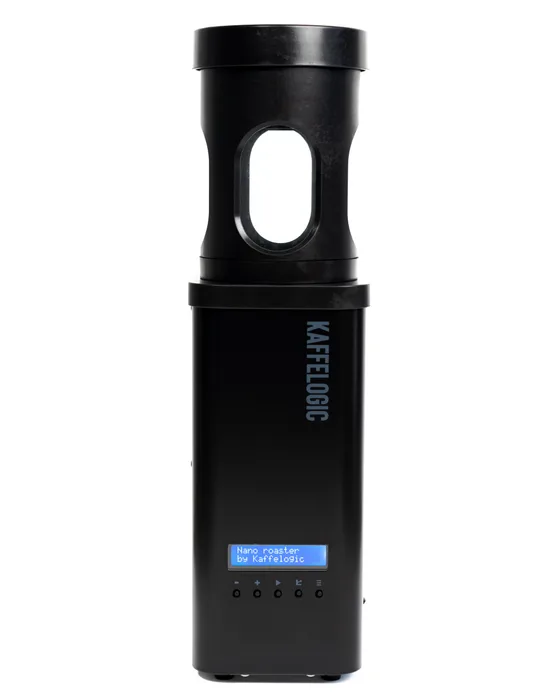
- Buy Kaffelogic Nano 7 A profile-driven fluid-bed roaster with PID temperature control that turns small batches into repeatable roasts.
- Buy Fresh Roast SR800 A hands-on air roaster with a glass chamber, 9 heat levels and up to 8 oz per batch, the most roaster for the money here.
- It depends Aillio Bullet R2 A 1 kg induction drum roaster with infrared bean temperature sensing and profiling software, for roasters who have outgrown small batches.
- Skip Behmor 2000AB Plus A popular countertop drum roaster with a 1 lb headline capacity that comes with conditions, slow default times and no route to dark roasts.
What actually matters
- Batch size - Capacity is quoted in green beans, and different processes produce different amounts of chaff. Match it to a week of your coffee so you are not roasting daily.
- Roasting method - Fluid-bed air roasters float beans in hot air, drum roasters tumble them in a heated drum. Air is quicker for small batches; drums scale to larger ones.
- Temperature sensing - A probe or infrared sensor at the beans gives readings you can act on. Exhaust or chamber readings are only rough guides.
- Control and profiles - Profiles let you repeat a roast exactly, manual controls let you react as it happens. Pick the style you will enjoy.
- Roast time - A small air roast can finish in about 10 minutes, a large drum batch takes longer plus preheating. Time per batch adds up quickly.
- Cooling - Beans keep roasting until they cool. Quick cooling in the machine or on a fan tray stops the roast where you intended.
- Venting and power - Large roasters can need outdoor venting and a full household circuit. Check both before you buy.
The specs, in plain English
Green flags vs red flags
Green flags
- A bean temperature probe or infrared bean sensor
- Clear batch range in grams or ounces, including a minimum
- Published roast time and cool-down time
- Plain guidance on smoke and venting from the maker
- Replaceable parts and a published warranty
Red flags
- Capacity quoted only as a maximum with conditions in the fine print
- Temperature readouts the maker says are not bean temperatures
- Roast levels you drink excluded in the manual
- No information on cooling or chaff handling
- A large roaster with no venting guidance
Who's who: the brands
- Kaffelogic - New Zealand maker of the Nano 7, a compact PID-controlled fluid-bed roaster with profile software.
- Fresh Roast - Long-running line of affordable glass-chamber air roasters, sold by Home Roasting Supplies.
- Aillio - Danish-designed maker of the Bullet induction drum roasters with RoasTime software.
- Behmor - US company known for its countertop drum roaster with smoke suppression.
How to read a listing without getting fooled
Start with the batch range and confirm it is quoted in green beans, then look for a minimum as well as a maximum. Next find what the temperature readout measures; bean temperature is what you want, and anything else is a rough guide. Check roast time, cool-down time and preheat time together, since they set how long each batch really takes. Then read the venting and electrical requirements, and finally download the manual and look for limits on roast level, batch size at your voltage, and safety features that need you present. Accessories such as extension tubes, coolers and boost kits can change capacity, so note what is in the box.
How much should you spend?
Budget glass-chamber air roasters are the cheapest way to learn and handle about half a pound at a time with manual controls. Premium compact roasters add PID control, profiles and software for repeatable small batches. Flagship drum roasters handle kilogram batches with bean sensors and logging software, and they bring venting, power and space demands to match. Add the cost of a cooler, venting and shipping or import fees when comparing.
Questions, answered
How long should roasted beans rest before brewing?
Freshly roasted coffee releases carbon dioxide for days, which can make brewing uneven. Many home roasters wait at least a day, and longer for espresso. Taste across the first week to find what you prefer.
Where do I buy green coffee?
Home roasting suppliers sell green coffee by the pound, often with tasting notes and recommended roast levels. Buying a few small samples first helps you learn how different origins roast. Green coffee keeps well in a cool, dry place.
Is home roasting a fire risk?
Roasting uses high heat and chaff can burn, so makers build in safety features and tell you to stay with the roaster. Behmor, for example, includes an alert that stops the roast unless you respond, and gives instructions for a bean fire. Never leave a roast unattended and keep the chaff collector clean.
Can I use a popcorn popper instead?
Some people start that way, but poppers are not designed for coffee, have no roast control and can overheat. A purpose-built air roaster gives you adjustable heat and fan, chaff collection and safety features for not much more effort.
Or jump to the head-to-head: Kaffelogic Nano 7 vs Fresh Roast SR800.