

Coffee & Espresso
The Best Home Coffee Roasters: 4 Compared (and One to Skip)
We compared four home coffee roasters on batch size, roast control, temperature sensing, roast time, smoke and venting needs, and cooling, using each maker's published specs and manuals.
The short version
The Kaffelogic Nano 7 is the best overall: a PID-controlled fluid-bed roaster that runs preset or custom profiles, roasts a 120 g batch in under 10 minutes and cools it in 2 to 3. The Fresh Roast SR800 is the value pick, roasting up to 8 oz with 9 heat levels and an adjustable fan you control by hand, with a glass chamber so you can watch the beans. The Aillio Bullet R2 suits committed roasters who want 1 kg batches and real profiling software, but it weighs 35.3 lb, draws 15 A and Aillio says full batches need proper venting. Skip the Behmor 2000AB Plus: its 1 lb capacity depends on a full 120 V supply, Behmor says it is not intended for Vienna, French or Italian roasts, and its temperature readouts are not bean temperatures. Best for: Kaffelogic if you want repeatable roasts at the push of a button, Fresh Roast if you want to learn roasting by eye and ear for less.
Our picks at a glance
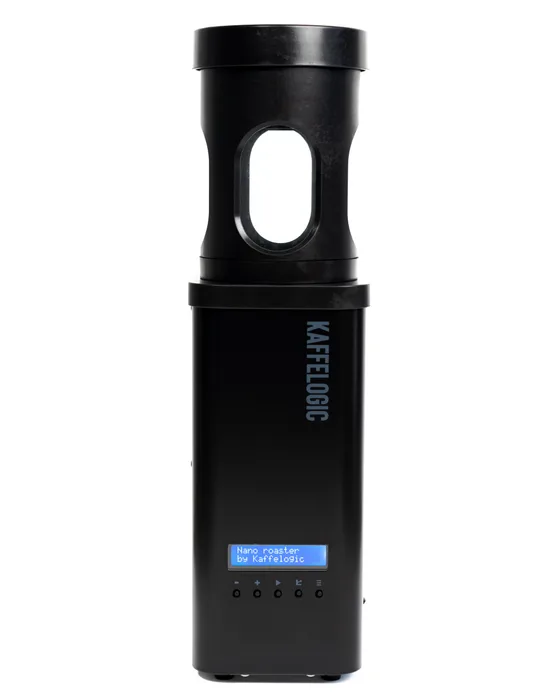
- Kaffelogic Nano 7 - Buy. A profile-driven fluid-bed roaster with PID temperature control that turns small batches into repeatable roasts.
- Fresh Roast SR800 - Buy. A hands-on air roaster with a glass chamber, 9 heat levels and up to 8 oz per batch, the most roaster for the money here.
- Aillio Bullet R2 - It depends. A 1 kg induction drum roaster with infrared bean temperature sensing and profiling software, for roasters who have outgrown small batches.
- Behmor 2000AB Plus - Skip. A popular countertop drum roaster with a 1 lb headline capacity that comes with conditions, slow default times and no route to dark roasts.
The verdict in 30 seconds
What mattered most
- Roasting method
- Batch size
- Control
- Temperature sensing
- Typical roast time
- Cooling
Roasting your own green coffee is cheaper per pound than buying roasted beans and gives you coffee days old instead of weeks old. The machines differ more than the category name suggests: some blow hot air through a small batch in under ten minutes, others tumble beans in a drum, and the batch sizes run from about 120 g to a full kilogram. We picked a programmable air roaster for precision, a hands-on air roaster for value, a 1 kg drum roaster for people turning a hobby into a habit, and the long-running drum roaster that many beginners still buy.
A profile-driven fluid-bed roaster with PID temperature control that turns small batches into repeatable roasts.
Best for: Coffee drinkers who want consistent, repeatable roasts of small batches without babysitting the machine.
- Rapid PID digital temperature control with variable temperature and airspeed, running preset profiles or your own built in Kaffelogic Studio.
- Typical roast under 10 minutes and a 2 to 3 minute cool-down, so a batch is done in about a quarter of an hour.
- Small 125 x 125 mm footprint, powder-coated steel case and aluminium roast chamber, with continuous monitoring and automatic shutdown.
- Standard batch is 120 g of green beans; the 50 to 200 g range needs the separate BOOST kit.
- Sold from Kaffelogic's New Zealand store, and Kaffelogic says shipping does not include duties, tariffs or customs fees.
- Warranty covers parts for 2 years, so check what labor or shipping support looks like where you live.
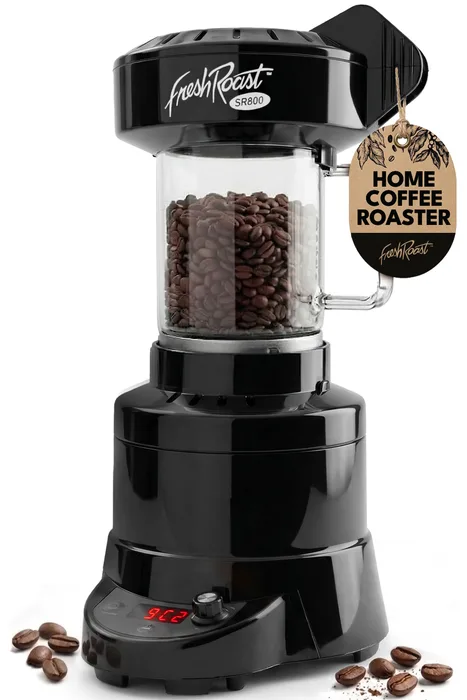
A hands-on air roaster with a glass chamber, 9 heat levels and up to 8 oz per batch, the most roaster for the money here.
Best for: New roasters who want to learn by sight, sound and smell, and roast weekly batches without spending premium money.
- Roasts up to 8 oz (226 g) of wet-processed green beans per batch, about twice the Kaffelogic's standard batch.
- Nine heat levels and an expanded fan range on a single knob, adjustable in real time while you watch the beans through the glass chamber.
- 1600 W heater, a chamber temperature readout, and accessories such as an extension tube and bean cooler sold by the maker.
- Manual controls only; Home Roasting Supplies says it is not computer-controlled, so repeatability is up to you.
- Dry-processed beans are limited to 6 oz (170 g) because of higher chaff, and the minimum batch is 4 oz.
- 120 V, North America only, and the warranty is 1 year on the base and 6 months on the glass chamber, top cap and chaff basket.
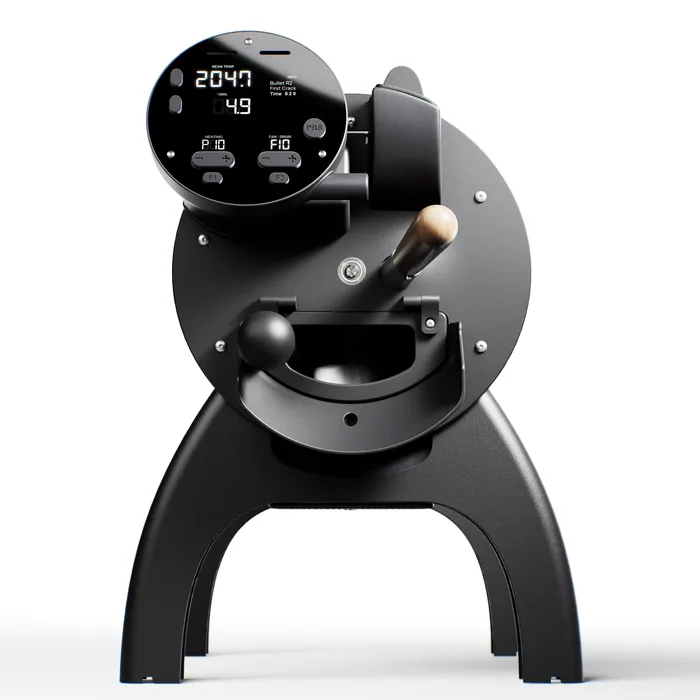
A 1 kg induction drum roaster with infrared bean temperature sensing and profiling software, for roasters who have outgrown small batches.
Best for: Serious hobbyists or micro-roasters who roast large batches regularly and can vent smoke outdoors.
- Batch range from 200 g to 1 kg, with Aillio quoting 7 to 9 minutes to first crack for a full 1 kg batch.
- 1700 W induction heating with 10 heat steps, 12 fan steps and 9 drum speeds, plus an infrared bean temperature sensor and a BT probe.
- RoasTime 4 software on macOS, Windows and Linux over USB-C or Wi-Fi, with data logging, profile sharing and playback.
- Aillio says there is no built-in venting and full batches need adequate outdoor ventilation or an air cleaner.
- Heavy and large: 35.3 lb, 23.7 in long and 29.5 in with the cooling tray.
- Draws 15 A at 120 V on a standard 15 A household circuit, and preheating takes 10 to 15 minutes from cold.
- Costs several times what the other roasters here do.
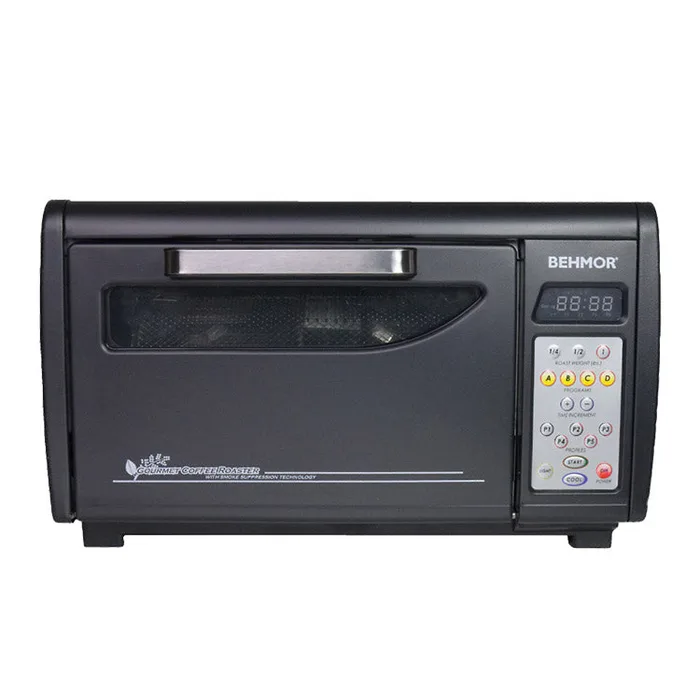
A popular countertop drum roaster with a 1 lb headline capacity that comes with conditions, slow default times and no route to dark roasts.
Best for: Only someone who roasts medium batches up to a medium roast and is happy to stay with it; most beginners do better with the Fresh Roast.
- Built-in smoke suppression and a lighted interior so you can see the drum turning.
- Five preset profiles plus a manual mode that sets heater power from 0 to 100% and drum speed at 16 or 32 rpm.
- Automatic cooling cycle starts as soon as the roast timer ends, with a manual Cool button.
- Behmor says the 1 lb capacity assumes an actual 120 V supply and recommends smaller batches for Full City+ roasts.
- Behmor says it is not intended to roast to Vienna, French or Italian levels.
- Its A and B readouts are exhaust and chamber wall temperatures, which Behmor says are not bean temperatures.
- Default roast times run 18:00 for 1 lb, and a safety alert at 75% of the roast shuts it down unless you press Start within 30 seconds.
| Criteria | Kaffelogic Nano 7 Top pick | Fresh Roast SR800 | Aillio Bullet R2 | Behmor 2000AB Plus |
|---|---|---|---|---|
| Verdict | Buy it | Buy it | It depends | Skip it |
| Best for | Coffee drinkers who want consistent, repeatable roasts of small batches without babysitting the machine. | New roasters who want to learn by sight, sound and smell, and roast weekly batches without spending premium money. | Serious hobbyists or micro-roasters who roast large batches regularly and can vent smoke outdoors. | Only someone who roasts medium batches up to a medium roast and is happy to stay with it; most beginners do better with the Fresh Roast. |
| Price tier | $$$ · premium | $ · budget | $$$$ · flagship | $$ · mid-range |
| Roasting method | Fluid-bed hot air | Fluid-bed hot air, glass chamber | Induction-heated drum | Quartz-heated drum |
| Batch size | 120 g (50 to 200 g with BOOST) | 4 to 8 oz (226 g) | 200 g to 1 kg | Up to 1 lb at full 120 V |
| Control | PID, preset and custom profiles | Manual: 9 heat levels, fan, time | Software profiling, 10 heat and 12 fan steps | 5 presets plus manual power and drum speed |
| Temperature sensing | PID controller (not listed further) | Chamber temperature display | Infrared bean sensor plus BT probe | Exhaust and wall temps, not bean temps |
| Typical roast time | Under 10 minutes | Not published | 7 to 9 min to first crack at 1 kg | 18:00 default for 1 lb |
| Cooling | 2 to 3 minutes in machine | Optional bean cooler sold separately | Detachable tray with its own fan | In-chamber cooling cycle |
| Software | Kaffelogic Studio | None | RoasTime 4, USB-C and Wi-Fi | None |
| Size and weight | 125 x 125 x 450 mm, 3.6 kg | Not published | 603 x 325 x 446 mm, 16 kg | Not published |
| Warranty | 2 years parts | 1 year base, 6 months glass parts | 2 years | Not listed on product page |
Which one is right for you?
- Coffee drinkers who want consistent, repeatable roasts of small batches without babysitting the machine. Buy it Kaffelogic Nano 7
- New roasters who want to learn by sight, sound and smell, and roast weekly batches without spending premium money. Buy it Fresh Roast SR800
- Serious hobbyists or micro-roasters who roast large batches regularly and can vent smoke outdoors. It depends Aillio Bullet R2
- Only someone who roasts medium batches up to a medium roast and is happy to stay with it; most beginners do better with the Fresh Roast. Skip it Behmor 2000AB Plus
How we judged the field
Five things matter in a home roaster. Batch size decides how often you roast and whether one batch covers a week. Control decides whether you can repeat a roast you liked, either through profiles and software or through manual heat and fan adjustments. Temperature sensing matters because a reading taken at the bean is far more useful than one taken at the exhaust or chamber wall. Speed and cooling decide how much of an afternoon each batch takes and whether the roast stops where you meant it to. Smoke and venting decide where in your home the roaster can live at all.
The field splits into small fluid-bed air roasters, which are fast and visible, and drum roasters, which handle larger batches. We picked the Kaffelogic Nano 7 for precise, repeatable small batches, the Fresh Roast SR800 as the hands-on value choice, the Aillio Bullet R2 for people ready for kilogram batches, and the Behmor 2000AB Plus as the long-selling drum roaster whose limits most buyers only find in the manual. Once you roast, a good burr grinder and an airtight canister matter as much as the roaster; our guides to both are linked from this category.
The Kaffelogic Nano 7 is the roaster for people who want the same result every time. It is a fluid-bed design with variable temperature and airspeed under a rapid PID digital controller, and it runs either a preset profile or one you build in the Kaffelogic Studio software. A typical roast takes under 10 minutes and cool-down 2 to 3 more, so you can roast, cool and bag a batch quickly. The body is only 125 mm square and 450 mm tall, with a powder-coated steel case and an aluminium roast chamber, and Kaffelogic lists continuous monitoring with automatic shutdown. The trade-off is batch size: 120 g of green beans as standard, or 50 to 200 g with the separate BOOST kit, which is a few days of coffee for one or two people. It ships from New Zealand, and Kaffelogic notes duties and customs fees are extra. It suits someone who values repeatability over volume and likes the idea of refining a profile rather than riding the controls.
The Fresh Roast SR800 is where most people should start. It roasts up to 8 oz (226 g) of wet-processed green beans per batch, or 6 oz of dry-processed beans because of their extra chaff, with a 4 oz minimum. Control is manual and immediate: one knob sets nine heat levels, an expanded fan range and time, and turning it shows the chamber temperature. The glass roasting chamber lets you watch the color change while you listen for first crack, which is the fastest way to learn what a roast is doing. The maker says the 1600 W heater and heavy-duty fan give more consistent roasts than its smaller SR540. The limits are clear: no computer control, so repeating a roast means taking notes; 120 V for North America only; and a 1-year warranty on the base with 6 months on the glass chamber, top cap and chaff basket. It is the right choice for someone who wants to learn roasting by eye and ear and spend far less than the Kaffelogic.
The Aillio Bullet R2 is a different class of machine. It roasts from 200 g up to 1 kg in a 5.9 L carbon steel drum, heated by 1700 W of induction, and Aillio quotes 7 to 9 minutes to first crack for a full kilogram. An infrared bean temperature sensor and a BT probe feed the RoasTime 4 software on macOS, Windows or Linux, over USB-C or Wi-Fi, so you can log, share and replay profiles; heat runs in 10 steps, the fan in 12 and the drum at 30 to 90 RPM. A detachable cooling tray has its own fan. The demands are equally serious. Aillio says there is no built-in venting and that roasting full batches without adequate outdoor ventilation or an air cleaner is not an option. It weighs 35.3 lb, is 29.5 in long with the tray, draws 15 A at 120 V and needs 10 to 15 minutes to preheat. Buy it if you roast large batches often and can vent outdoors.
The Behmor 2000AB Plus has sold to home roasters for years on the promise of a 1 lb batch with smoke suppression, and it does offer five preset profiles, a manual mode with heater power from 0 to 100% and two drum speeds, a lighted interior and an automatic cooling cycle. The manual tells a more cautious story. Behmor says the 1 lb capacity is based on an actual 120 V supply and that you should reduce the batch for Full City+ roasts, and that the roaster is not intended for Vienna, French or Italian roast levels. The default roast time is 18:00 for 1 lb. The A and B temperature readouts measure the exhaust and chamber wall, and Behmor says they are not bean temperatures and should never be used to judge the roast. A required safety alert at 75% of the roast stops it unless you press Start within 30 seconds. For most beginners the Fresh Roast teaches more for less; skip the Behmor unless medium roasts in bigger batches are all you want.
Kaffelogic Nano 7 vs Fresh Roast SR800: which should you buy?
The Kaffelogic Nano 7 and Fresh Roast SR800 are both fluid-bed air roasters, but they suit different people. The Kaffelogic is about repeatability: PID control and saved profiles mean a roast you liked can be run again at the press of a button, and its quick cool-down stops the roast where the profile says. The Fresh Roast is about involvement and volume: nearly twice the standard batch, a glass chamber you watch, and a knob you turn as the roast develops.
Choose the Kaffelogic if you want consistent coffee with little attention, roast a few hundred grams a week or less, and are happy to pay premium money and import duties. Choose the Fresh Roast if you want to learn the craft, need bigger batches for a household, or want to spend much less to find out whether home roasting sticks. If it does stick and you outgrow both, the Aillio is the next step.
What to look for
- Batch size: Match the green-bean capacity to how much you drink in a week, remembering beans lose weight as they roast.
- Temperature sensing: A bean temperature probe or infrared sensor is more useful than exhaust or chamber wall readings, which the maker may say do not reflect the beans.
- Control style: Decide whether you want saved profiles and software for repeatability or manual heat and fan control for hands-on roasting.
- Roast range: Check whether the maker supports the roast levels you drink, since some roasters are not intended for very dark roasts.
- Venting: Read the maker’s guidance on smoke, and plan for a range hood, window or outdoor vent before buying a large roaster.
- Cooling: Look for fast cooling in the machine, on a fan tray or with a separate cooler, so the roast stops where you want it.
Our final take
For most people curious about home roasting, the Fresh Roast SR800 is the smart first roaster: up to 8 oz per batch, nine heat levels and a glass chamber that teaches you what a roast looks and sounds like. If you would rather press a button and get the same roast every time, the Kaffelogic Nano 7 is the best roaster here, with PID control, profiles and a 2 to 3 minute cool-down. The Aillio Bullet R2 is for committed roasters with a way to vent outdoors. Skip the Behmor 2000AB Plus, whose capacity, roast range and temperature readouts all come with caveats in its own manual.
Questions, answered
Is roasting coffee at home worth it?
It is if you drink enough coffee to roast every week or two and enjoy the process. Green coffee keeps far longer than roasted coffee, so you can buy in bulk and roast small amounts as you need them. The catch is time, smoke and a learning curve: your first batches will be uneven while you learn first and second crack. If you only want fresh beans, buying from a local roaster is simpler.
Can I roast coffee indoors?
You can with a small air roaster near a range hood or open window, but every roaster makes some smoke and chaff, and darker roasts make more. Aillio states plainly that full batches on the Bullet need adequate outdoor ventilation or an air cleaner. Behmor's manual says to operate its roaster in a properly ventilated space and never outdoors, and to start cooling at once if you see heavy smoke. Plan the ventilation before you buy.
What is the difference between an air roaster and a drum roaster?
An air roaster, also called fluid-bed, blows hot air up through the beans so they float and tumble; it is fast and lets you see the beans. A drum roaster tumbles beans in a heated drum, which suits larger batches and gives a different heat profile. The Kaffelogic and Fresh Roast are air roasters; the Aillio and Behmor are drum roasters.
How much coffee does a home roaster make per batch?
It ranges widely. The Kaffelogic Nano 7 roasts 120 g of green beans as standard, the Fresh Roast SR800 up to 8 oz, the Behmor up to 1 lb under ideal voltage, and the Aillio Bullet R2 up to 1 kg. Beans lose weight as they roast, so expect a bit less roasted coffee than the green weight you put in.
Do I need a separate cooler?
Fast cooling stops the roast at the level you chose. The Kaffelogic cools in the machine in 2 to 3 minutes and the Aillio has a detachable tray with its own fan. Home Roasting Supplies sells a coffee bean cooler for the SR800 to lock in roast level. The Behmor cools inside its chamber on a timed cycle.
Deciding between the top two? See our head-to-head: Kaffelogic Nano 7 vs Fresh Roast SR800.
More Coffee & Espresso reviews
 The Best Manual Coffee Grinders: 4 Compared (and One to Skip)
  The Best Milk Frothers: 4 Compared (and One to Skip)
  The Best Moka Pots: 4 Compared (and One to Skip)
  The Best Nespresso Machines: 4 Compared (and One to Skip)
  The Best Portable Espresso Makers: 4 Compared (and One to Skip)
  The Best Pour-Over Coffee Makers: 4 Compared (and One to Skip)