Explained
Nespresso Machines, Explained
After reading, you'll know whether Original or Vertuo fits how you drink coffee, and which specs to check before you buy.
In this guide
Nespresso looks simple from the outside - drop in a pod, press a button - but it hides one big fork in the road that trips up almost every first-time buyer. The brand runs two completely separate systems, Original and Vertuo, that use different pods and make different drinks, and the pods are not interchangeable. Pick the wrong system and you're locked into the wrong coffee and the wrong pod prices for years.
The 30-second version
- System comes first. Choose Original (true espresso, cheap third-party pods) or Vertuo (big crema-topped cups, locked-in pods) before you compare any individual machine - the pods don't cross over.
- Pod cost matters more than machine price. You'll buy pods for years, so the ongoing cost per cup usually outweighs the one-time price difference between machines.
- Vertuo trades choice for convenience. Vertuo reads a barcode on each capsule to brew automatically, but that same lock means almost no cheaper third-party pods.
- Tank size and cup size are the quiet dealbreakers. A small tank means constant refilling, and each machine caps out at a maximum cup size - check both against how you actually drink.
- Reliability varies within the lineup. Some models have strong long-term owner records while others show early leaking and failures, so the badge on the box isn't a guarantee.
The products this guide is about
Our verdict on each, with the full reasoning on the companion review.
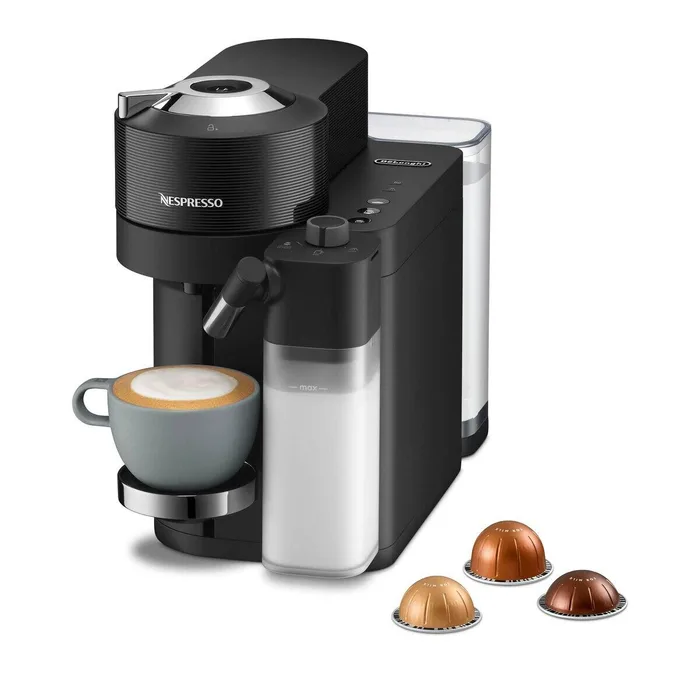
- Buy Nespresso Vertuo Lattissima (by De'Longhi) The most complete Vertuo machine here, with a built-in milk system and a 54.1 oz water tank. Amazon
- Buy Nespresso Essenza Mini (by Breville) The smallest, cheapest way into genuine 19-bar Nespresso espresso, with the widest pod savings. Amazon
- It depends Nespresso Vertuo Pop+ (by De'Longhi) The most compact, most affordable Vertuo machine, but its cup sizes stop short of the carafe. Amazon
- Skip Nespresso Vertuo Next (by De'Longhi) The only machine here that brews the 18 oz carafe, but persistent leaking and failure reports undercut it. Amazon
What actually matters
- System (Original vs Vertuo) - this single choice decides your drink style, pod prices, and pod availability, so settle it before anything else.
- Pod cost and availability - Original opens the door to inexpensive third-party and refillable pods; Vertuo effectively locks you to pricier branded capsules.
- Cup sizes you actually drink - most Original machines top out around a lungo, while Vertuo scales up to large mugs and carafes, so match the range to your habits.
- Water-tank capacity - a bigger reservoir means fewer trips to the sink, which matters most for households and anyone brewing large cups.
- Reliability track record - favor models with strong long-term owner reports and be wary of ones with documented leaking or early failures.
- Footprint - slim machines fit tight counters, while large-tank models need real estate, so measure your space first.
- Milk drinks - most pod machines don't froth milk on their own, so unless you buy a milk model like the Vertuo Creatista or Lattissima, you'll need a separate frother or a bundle that includes one.
The specs, in plain English
Green flags vs red flags
Green flags
- The system matches how you drink - Original if you want real espresso and low pod cost, Vertuo if you want big crema-topped cups.
- A reservoir large enough that you're not refilling every day or two, especially for a multi-person household.
- A strong long-term reliability record in aggregated owner reports, not just early reviews.
- One-touch or simple two-button operation that's hard to get wrong.
- The machine reaches the largest cup size you actually drink without workarounds.
Red flags
- Buying on machine price alone while ignoring that Vertuo pods cost more per cup over the years.
- Documented patterns of water leaking or units failing within the first several months to a year.
- A tiny tank paired with a small used-pod bin, meaning constant refilling and emptying.
- Assuming any pod fits - buying Vertuo capsules for an Original machine (or vice versa) wastes money.
- Expecting built-in milk frothing on a basic model; only dedicated milk models do it without a separate frother.
Who's who: the brands
- Nespresso - The brand that owns both the Original and Vertuo pod ecosystems and sets the pod standards you'll live with.
- De'Longhi - One of the two licensed makers that build Nespresso machines; a De'Longhi and a Breville version of the same model perform identically.
- Breville (Sage in the UK) - The other licensed maker of Nespresso machines, common in North America and Australia; same internals, different badge depending on region.
- Third-party and refillable pod brands - Store brands, licensed labels, and reusable capsules that fit Original machines and can cut cost per cup substantially - not an option on Vertuo.
How to read a listing without getting fooled
When you scan a Nespresso listing, find the system label first - the word 'Original' or 'Vertuo' decides everything downstream, so don't get distracted by color or price until you've settled it. Next, look for the tank capacity (in ounces or liters) and the range of cup sizes; a machine that only lists 'espresso and lungo' will never make a big mug, and one that brags about a large carafe is a Vertuo. Treat '19 bar' as a checkbox for Original espresso rather than a bragging point, since higher numbers don't buy better coffee. Ignore the manufacturer badge - De'Longhi versus Breville makes no performance difference - and remember that no listing showing a latte or cappuccino means the machine froths milk; unless it is a dedicated milk model, that's a separate frother, sometimes hidden in a pricier bundle.
How much should you spend?
Think in two buckets: what you pay once for the machine, and what you pay forever for pods. The machine itself spans a wide range, and spending more mostly buys you a bigger tank, more cup sizes, and one-touch convenience rather than better coffee - an entry-level Original machine can pull the same quality shot as a fancier one. The real long-run cost is pods, and that's where the systems split sharply: Original lets you drop to cheap third-party and refillable capsules, so a modest Original machine is often the lowest total cost over time. Vertuo locks you into pricier branded pods with few alternatives, so factor that ongoing premium in before you're seduced by the big-cup convenience. The value sweet spot for most people is a reliable mid-tier machine in the system that matches their drink - paying up only buys convenience, and paying rock-bottom often means a tiny tank you'll fight with daily.
Questions, answered
What's the difference between Nespresso Original and Vertuo?
Original machines use high pressure to pull traditional espresso and accept many cheaper third-party pods. Vertuo machines spin a barcoded capsule to make larger, crema-heavy American-style cups, but only take Vertuo pods, which cost more with almost no alternatives. Choose Original for espresso and savings, Vertuo for big cups and crema.
Can I use cheaper third-party pods to save money?
Only on the Original line. Because Original machines aren't fussy about the pod, store brands, licensed brands, and refillable capsules all work and can cut your cost per cup a lot. Vertuo machines read a barcode on each capsule to set the brew, so they're effectively locked to Vertuo pods.
Do Nespresso machines froth milk for lattes and cappuccinos?
Most don't. Milk models like the Vertuo Creatista and Vertuo Lattissima have built-in milk systems, but standard machines need Nespresso's separate Aeroccino frother, and some come bundled with one. If milk drinks are your priority, budget for a frother or pick a bundle that already includes it.
Does a higher 'bar' number mean better espresso?
Not really. Around 19 bar is plenty to extract a proper Original-line shot with crema, and going higher on the spec sheet doesn't meaningfully improve the cup. Treat it as a checkbox for the Original system, not a ranking of quality.
Which is cheaper to run over time?
The Original system, in most cases. Even a modest Original machine gives you access to inexpensive third-party and refillable pods, which usually outweighs any machine-price difference over the years. Vertuo's locked, pricier pods make it the more expensive system to feed.
Does it matter whether my machine is made by De'Longhi or Breville?
No. Nespresso licenses both makers to build the same models, and the internals and performance are identical - the badge just reflects your region. Choose based on the system, features, and price, not the manufacturer name.
Or jump to the head-to-head: Nespresso Vertuo Lattissima (by De'Longhi) vs Nespresso Essenza Mini (by Breville).