Explained
Milk Frothers, Explained
After reading, you will know which of the four frother types fits your drinks and how to read a spec sheet without being fooled.
In this guide
A milk frother whips air into milk to make foam, but the category hides four very different machines behind one name, and they do not do the same job. The biggest trap for first-time buyers is assuming every frother also heats the milk. Many do not, which turns a hot-latte purchase into a device that only makes cold foam.
The 30-second version
- Type decides everything. an automatic jug, an induction jug, a handheld wand, and a manual pump are four different tools, so pick the type before you compare brands.
- Heating is a separate feature. only electric jugs heat and froth in one step; handhelds and manual pumps aerate cold milk and leave warming to you.
- Microfoam is the premium promise. silky, pourable foam close to a steam wand generally comes only from higher-end induction jugs, not budget wands.
- Cold foam is common but not universal. if you drink iced coffee, confirm the model advertises a cold setting rather than assuming it works.
- The cheapest option is not always the value. a frother that lives in a drawer because it is fussy costs more per use than a slightly pricier one you reach for daily.
The products this guide is about
Our verdict on each, with the full reasoning on the companion review.
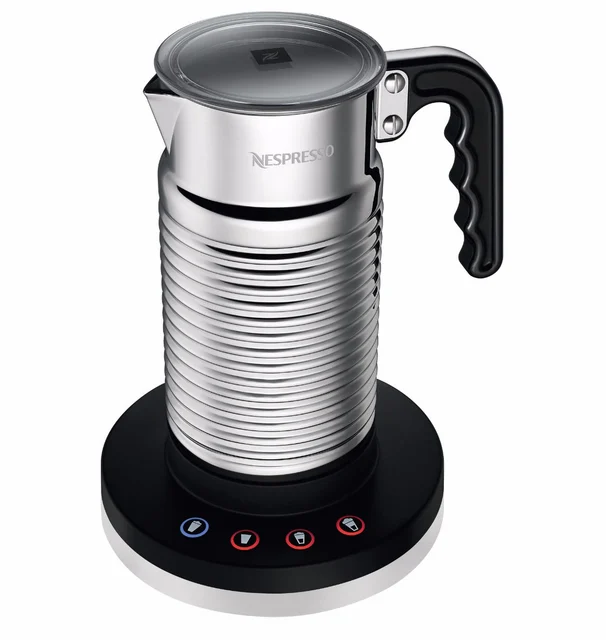
- Buy Nespresso Aeroccino 4 The most consistent one-button jug for hot and cold foam without any fuss. Amazon
- Buy Breville Milk Cafe A large-capacity frother with real temperature control and the closest thing to steam-wand microfoam short of a machine. Amazon
- It depends Zulay Kitchen Zulay Milk Boss Handheld Frother A cheap, fast handheld wand that makes great foam but heats nothing.
- Skip Bodum Latteo Manual Milk Frother A charming hand-pump carafe that works, but asks for effort electric frothers no longer require. Amazon
What actually matters
- Heating capability decides whether you get a one-touch hot latte or must warm milk in a microwave or on the stove first.
- Foam texture ranges from airy bubbles for cappuccino to dense, pourable microfoam for a flat white, so match the texture to the drinks you actually make.
- Cold-foam support matters if iced drinks are part of your routine, because not every model is designed to aerate cold milk well.
- Capacity should match how many drinks you make at once; a small jug that suits one or two cups frustrates a multi-person household.
- Speed and effort separate one-button jugs from hold-to-run wands and manual pumps that ask for real hands-on work each time.
- Cleanup drives how often a frother gets used, so dishwasher-safe or rinse-and-go parts beat fiddly assemblies with many pieces.
- Plant-milk compatibility matters for oat, soy, and almond drinkers, since barista-formulated versions foam far more reliably than standard ones.
The specs, in plain English
Green flags vs red flags
Green flags
- Clearly states whether it heats milk, so you are not guessing about hot drinks
- Offers both a foam setting and a cold-foam setting if you drink iced coffee
- Has a dishwasher-safe jug or parts that rinse clean in seconds
- Owner reports consistently describe even, repeatable foam rather than hit-or-miss results
- Capacity matches your household, with a jug sized for the number of drinks you make
- A temperature dial or induction heating if you care about flavor and microfoam
Red flags
- Marketed as a frother but buried fine print reveals it does not heat milk
- Owner reports of scorched or burnt-milk taste, a sign of uneven hot-plate heating
- Single fixed speed with a hold-to-run button when you expected walk-away convenience
- Many small parts to disassemble and wash, which predicts it will sit unused
- Vague or missing capacity specs, hinting it may be smaller than photos suggest
- Glass carafe with no note on durability if it will see daily hot milk and handling
Who's who: the brands
- Nespresso - Best known for its Aeroccino line of simple one-button automatic jugs that heat and froth hot or cold foam.
- Breville - Premium kitchen brand whose frothers add real temperature control, induction heating, and near steam-wand microfoam.
- Zulay Kitchen - Popular for inexpensive battery handheld wands that whip foam fast and double as whisks for matcha and shakes.
- Bodum - Design-forward maker of manual, no-power pump frothers built around glass carafes.
How to read a listing without getting fooled
Start by finding the frother type in the listing, because it tells you more than any headline feature. If it is a handheld wand or a manual pump, assume it does not heat milk unless the listing explicitly says so, and plan to warm milk separately. Scan for the words hot and cold: a model that only says froth may not be built for cold foam, and a model that only says whisk may not heat at all. Treat photos with latte-art hearts skeptically, since airy foam and true pourable microfoam are different things and most budget devices make the former. Finally, check the capacity in real terms, look for two fill lines inside a jug, and read owner reports for repeated mentions of scorched taste, splashing, or foam that collapses quickly rather than trusting the marketing copy.
How much should you spend?
Spending is really a question of how much work you want the machine to do for you. The least expensive tier is handheld wands and manual pumps; they make good foam but only aerate, so they are a genuine value if you already warm milk another way or mainly want cold foam and matcha. The middle of the market is where automatic jugs live, and for most daily latte and cappuccino drinkers this is the sweet spot, because paying for one-button heating and frothing buys convenience you use every morning. The top tier adds a temperature dial, induction heating, larger capacity, and the silkiest pourable microfoam; that step up is worth it for enthusiasts, multi-cup households, and anyone chasing latte art, but it is money wasted if you only make one simple drink a day. In short, do not underbuy to the point that the frother is annoying to use, and do not overbuy features like microfoam and set-temperature control that your routine will never touch.
Questions, answered
Do all milk frothers heat the milk?
No, and this is the single most common mistake buyers make. Automatic and induction electric jugs heat and froth together, but handheld wands and manual pump frothers only whip air into the milk. With a wand or pump you must warm the milk separately for a hot drink, though both work fine straight from the fridge for cold foam.
What is the difference between foam and microfoam?
Foam is the airy, bubbly layer you scoop onto a cappuccino, while microfoam is much finer and glossier, with tiny bubbles that let it pour like wet paint for a flat white or latte art. Most budget frothers make airy foam well; pourable microfoam usually requires a higher-end induction jug with a latte-style disc.
Can a standalone frother replace an espresso machine's steam wand?
Not fully. A steam wand uses pressurized steam to heat and texture milk at once, producing dense, integrated microfoam. The best countertop jugs get close enough for a basic pour with practice, but only a machine with a wand truly replicates the result.
Will a milk frother work with oat or almond milk?
Generally yes. Owners report good results with oat, soy, and almond milk across all frother types, though barista-formulated plant milks foam more reliably than standard versions. Higher-protein and higher-fat plant milks tend to hold their foam best regardless of which frother you use.
Which type is easiest to clean?
Automatic jugs with a dishwasher-safe pitcher and handheld wands that rinse under the tap are the simplest. Induction jugs add extra discs and lids to wash, and glass manual carafes are more fragile, so cleanup effort is worth weighing against how often you will actually froth.
Or jump to the head-to-head: Nespresso Aeroccino 4 vs Breville Milk Cafe.