

Coffee & Espresso
The Best French Press Coffee Makers: 4 Compared (and One to Skip)
We compared four current French presses on grit control, heat retention, durability, and value to find which is worth buying in 2026.
The short version
A French press lives or dies on how well it filters grit and holds heat. The Espro P7 is our top pick because its double micro-filter produces the cleanest, least bitter cup in the category while keeping coffee hot in a durable insulated body. The Frieling is the runner-up, a double-walled stainless press built to last if you can stomach its flagship price. The Bodum Chambord remains a fine, affordable classic so long as you accept fragile glass and some sediment. The Fellow Clara is easier to admire than to recommend, since its mesh filter and coated interior do not out-brew cheaper rivals. Best for: everyday drinkers who want a noticeably cleaner, hotter cup should buy the Espro P7.
Our picks at a glance
- Espro P7 French Press - Buy. The cleanest cup in the category, thanks to a genuinely different double micro-filter.
- Frieling Double-Walled Stainless Steel French Press - Buy. A near-indestructible insulated press built to outlive every other maker in this roundup.
- Bodum Chambord French Press (8-Cup) - It depends. The affordable classic that still makes great coffee, if you accept fragile glass and some grit.
- Fellow Clara French Press - Skip. Gorgeous and insulated, but you are paying mostly for looks rather than a better cup.
The verdict in 30 seconds
What mattered most
- Grit / sediment control
- Heat retention
- Material & durability
- Ease of cleaning
- Design & feel
- Best use
The French press is the simplest way to brew full-bodied coffee, yet the models differ enormously in how well they filter sediment, hold heat, and survive daily use. We weighed a grit-free insulated performer, a heirloom-grade stainless workhorse, the affordable glass classic, and a design-led darling. Two earn a clear recommendation, one suits a specific buyer, and one is easier to admire than to justify.
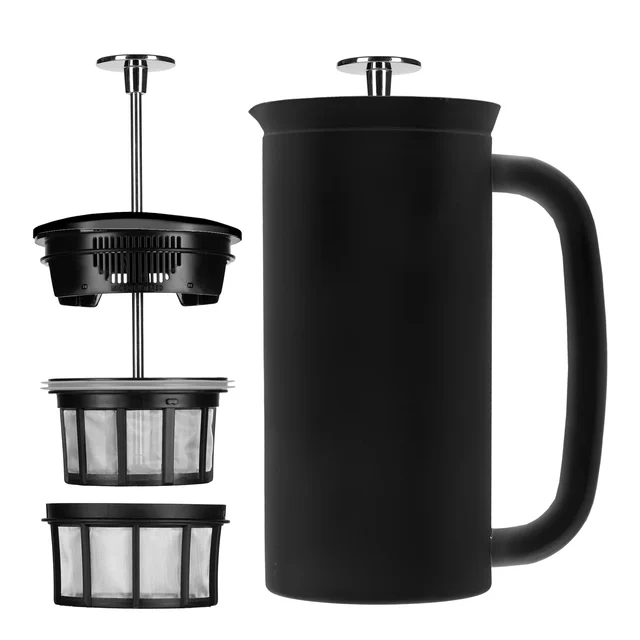
The cleanest cup in the category, thanks to a genuinely different double micro-filter.
Best for: Anyone whose main complaint about French press is grit and bitterness and who will pay for the fix.
- Dual micro-filter system produces a near-sediment-free cup that owners consistently rank at the top
- Double-walled stainless steel keeps coffee hot for an hour or more, per Espro
- The filter seals the grounds when pressed, largely stopping the over-extraction that turns late pours bitter
- Reviewers note the multi-part filter assembly is fiddlier to clean than a simple mesh screen
- A relatively high minimum fill and bulky body make small single servings awkward
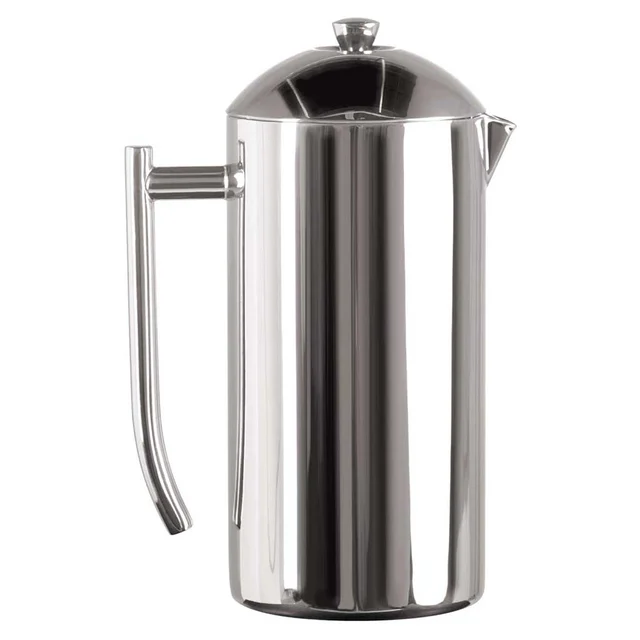
A near-indestructible insulated press built to outlive every other maker in this roundup.
Best for: Buyers who want one press for life and prize heat retention and toughness over the lowest price.
- Double-walled stainless steel holds temperature far longer than glass, which owners say keeps the second and third cups genuinely hot
- No glass to shatter, which makes it the durability pick
- Its filtration keeps most sediment out of the cup
- Among the most expensive options, and the value only makes sense if you keep it for years
- The polished mirror finish shows fingerprints and water spots readily
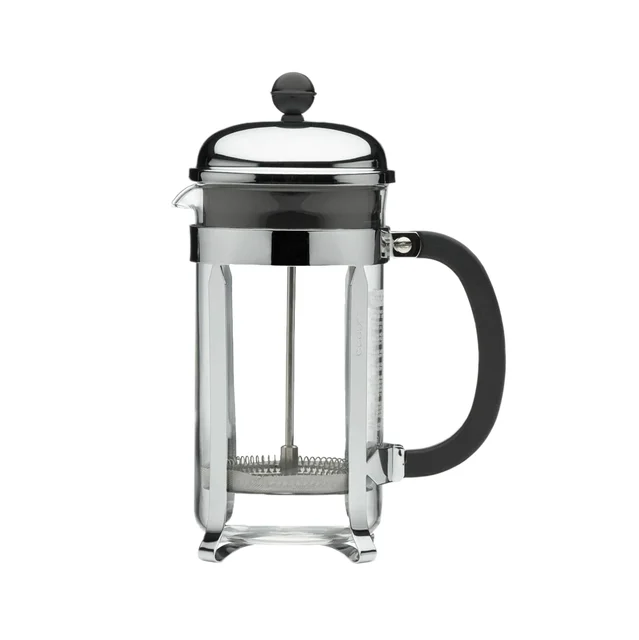
The affordable classic that still makes great coffee, if you accept fragile glass and some grit.
Best for: Budget-minded or first-time buyers who want the traditional experience and will handle the glass with care.
- Time-tested design that owners and independent testing still rate as a reliable, flavorful brewer
- Inexpensive, widely available, and fully disassembles for easy cleaning and cheap replacement parts
- The glass carafe does not retain or taint flavors between brews
- The single wire mesh lets fine grounds through, leaving more sediment than the insulated performers
- Glass carafe loses heat quickly and can crack or shatter if knocked or thermally shocked
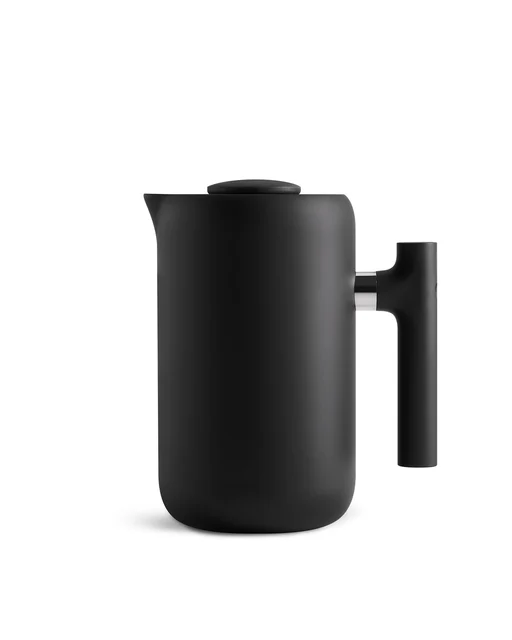
Gorgeous and insulated, but you are paying mostly for looks rather than a better cup.
Best for: Design-first buyers for whom the aesthetic matters as much as the coffee, and who accept the coating trade-off.
- Striking matte design and vacuum-insulated walls that reviewers agree keep coffee hot
- Built-in ratio guide lines let you brew by eye without a scale
- Its mesh filter does not control sediment as well as the double-filter Espro P7 at a similar price
- The interior non-stick coating worries owners who prefer bare stainless steel and complicates long-term care
- Premium pricing is driven largely by aesthetics rather than brewing performance
| Criteria | Espro P7 French Press Top pick Buy it Buy | Frieling Double-Walled Stainless Steel French Press Buy it Buy | Bodum Chambord French Press (8-Cup) It depends Buy | Fellow Clara French Press Skip it Buy |
|---|---|---|---|---|
| Best for | Anyone whose main complaint about French press is grit and bitterness and who will pay for the fix. | Buyers who want one press for life and prize heat retention and toughness over the lowest price. | Budget-minded or first-time buyers who want the traditional experience and will handle the glass with care. | Design-first buyers for whom the aesthetic matters as much as the coffee, and who accept the coating trade-off. |
| Price tier | $$$ · premium | $$$$ · flagship | $ · budget | $$$ · premium |
| Grit / sediment control | Excellent (double micro-filter) | Very good | Fair (single mesh) | Fair (mesh screen) |
| Heat retention | Very good (double wall) | Very good (double wall) | Poor (glass) | Very good (double wall) |
| Material & durability | Stainless, very durable | Stainless, exceptional | Glass, fragile | Coated stainless, durable |
| Ease of cleaning | Fiddly multi-part filter | Moderate | Easy, fully disassembles | Easy, but coating needs care |
| Design & feel | Industrial, functional | Polished, classic | Iconic, timeless | Standout modern aesthetic |
| Best use | Grit-free daily brewer | Buy-it-for-life press | Budget everyday classic | Style-led statement piece |
| Price tier | $$$ · premium | $$$$ · flagship | $ · budget | $$$ · premium |
Which one is right for you?
- Anyone whose main complaint about French press is grit and bitterness and who will pay for the fix. Buy it Espro P7 French Press
- Buyers who want one press for life and prize heat retention and toughness over the lowest price. Buy it Frieling Double-Walled Stainless Steel French Press
- Budget-minded or first-time buyers who want the traditional experience and will handle the glass with care. It depends Bodum Chambord French Press (8-Cup)
- Design-first buyers for whom the aesthetic matters as much as the coffee, and who accept the coating trade-off. Skip it Fellow Clara French Press
How we judged the field
We do not run our own lab. Instead, we synthesize independent testing, expert reviews, and aggregated owner reports to reach a consensus on what each press actually does in a real kitchen. For French presses, four criteria did the heavy lifting. First, sediment control: how clean the cup is, since grit and over-extraction are the classic French press complaints. Second, heat retention: whether the second and third cups stay hot. Third, durability and materials: glass versus insulated stainless, and how the press holds up over years. Fourth, everyday practicality: cleaning, capacity, and whether the price matches the performance. Where sources disagreed, we weighted repeated, first-hand owner observations over one-off impressions.
Espro P7 French Press
Buy itThe P7 is the press to beat on the metric most drinkers care about. Its dual micro-filter system traps fines that a single mesh lets slip, and reviewers consistently describe the result as the smoothest, least gritty cup in the category. Because the filter effectively seals the grounds when you press, extraction slows, which owners credit for a cleaner, less bitter finish even if the pot sits. The double-walled stainless body retains heat well; Espro rates it to stay hot for an hour or more. The trade-offs are honest ones: the multi-part filter takes more effort to clean, and the sizeable minimum fill makes single servings awkward. For most people upgrading to solve grit and bitterness, it is the clearest win here.
Frieling Double-Walled Stainless Steel French Press
Buy itThe Frieling is the durability and heat-retention champion. Its double-walled stainless construction keeps coffee hot far longer than a glass press, and owners repeatedly single out how much steadier the brew temperature stays through steeping, which helps even extraction. There is no glass to break and the build feels heirloom-grade. Its filtration keeps most sediment at bay, a notch behind the Espro but well ahead of single-screen presses. The catch is price: it sits at the top of the market, and the value only pays off if you keep it for many years. The mirror finish also shows every fingerprint. If lifelong toughness matters more than squeezing out the last trace of grit, it is a superb buy.
Bodum Chambord French Press (8-Cup)
It dependsThe Chambord is the affordable icon, and it still earns its reputation. Independent testing and long-time owners agree it brews a genuinely good, flavorful cup, it costs a fraction of the insulated models, and the press fully disassembles for easy cleaning with cheap, widely available replacement parts. Those strengths are real. So are the limits: the single wire mesh lets more fine grounds through than the double-filter presses, and the glass carafe loses heat quickly and can crack or shatter if knocked or thermally shocked. Whether it is right for you comes down to priorities. If you want the traditional experience on a budget and will handle glass with care, it is a smart pick; if you want a hot, grit-free cup, look higher up.
Fellow Clara French Press
Skip itThe Clara is arguably the best-looking press here, with a distinctive matte body, vacuum insulation that keeps coffee hot, and handy ratio guide lines that let you brew without a scale. The problem is that its brewing hardware does not keep pace with its looks or its price. It relies on a mesh screen rather than a double filter, so sediment control trails the similarly priced Espro P7, and its interior non-stick coating gives pause to owners who would rather have bare stainless steel and simpler long-term care. You are paying a premium largely for aesthetics. Unless the design is genuinely worth that premium to you, your money buys a better cup elsewhere.
Espro P7 vs Frieling: which should you buy?
These are the two strongest presses, and the choice is about what you optimize for. The Espro P7 wins on the cup itself: its double micro-filter delivers the cleanest, least bitter coffee of anything here, and it does so in a durable insulated body at a premium, but not flagship, price. The Frieling wins on longevity: its double-walled, all-stainless build is the closest thing to a buy-it-for-life press, though it costs meaningfully more and its filtration, while very good, is a step behind the Espro. Choose the P7 if a clean, smooth cup is your top priority. Choose the Frieling if heat retention and durability justify the higher outlay.
What to look for
- Filtration design: a double or two-stage filter controls grit far better than a single mesh screen.
- Insulation: double-walled or vacuum-insulated stainless keeps later cups hot; glass cools fast.
- Material and durability: stainless survives drops and years of use; glass is cheaper but fragile.
- Capacity: buy for your typical batch, and remember presses brew best filled near capacity.
- Cleaning: simpler filters rinse faster, while multi-part assemblies trade convenience for performance.
- Coatings: if you prefer bare stainless, check whether the interior is coated.
Our final take
For most drinkers, the Espro P7 is the press to buy: it fixes the two things people dislike about French press, grit and bitterness, without giving up heat retention or durability. The Frieling is the runner-up and the better call if you want one insulated stainless press to last for years and will pay for it. The Bodum Chambord stays relevant as the affordable classic for anyone who accepts its fragile glass and softer filtration, while the Fellow Clara is the one to skip unless its design alone wins you over, because at its price you can brew a cleaner cup elsewhere.
Questions, answered
Which French press keeps coffee hottest?
The insulated stainless presses hold heat far longer than glass. Espro rates the double-walled P7 to stay hot for an hour or more, the Fellow Clara is vacuum insulated, and the Frieling is double-walled. The single-wall glass Bodum Chambord cools the fastest, which is why glass presses are best when you serve the whole batch promptly.
How do I get less sediment (grit) in my cup?
Filtration design matters most: the Espro P7's dual micro-filter traps far more fines than a single mesh. Beyond hardware, use a coarse, even grind, avoid pressing the plunger all the way down hard, and pour off the last inch where grounds settle.
Is a stainless steel press worth it over glass?
If you value heat retention and durability, yes. Stainless presses keep coffee hot longer and will not shatter, which suits busy kitchens and travel. Glass presses like the Chambord cost much less and let you watch the brew, but they are fragile and lose heat quickly.
Should I worry about the non-stick coating in the Fellow Clara?
The coating is stated to be free of certain legacy compounds, but some owners simply prefer bare stainless steel to avoid any coating wear over years of use. If that concerns you, the all-stainless Espro P7 or Frieling sidestep the question entirely.
What size French press should I buy?
Match capacity to your typical batch: a 3-to-4 cup press suits one or two drinkers, while an 8-cup or larger model serves a household or guests. Remember that most presses brew best when filled near capacity, so an oversized press used for single cups can under-extract.
Deciding between the top two? See our head-to-head: Espro P7 French Press vs Frieling Double-Walled Stainless Steel French Press.
More in Coffee & Espresso
French Presses, Explained Plain-English guide → Espro P7 French Press vs Frieling Double-Walled Stainless Steel French Press Head-to-head →  The Best Home Coffee Roasters: 4 Compared (and One to Skip)
  The Best Manual Coffee Grinders: 4 Compared (and One to Skip)
  The Best Milk Frothers: 4 Compared (and One to Skip)
  The Best Moka Pots: 4 Compared (and One to Skip)