

Coffee & Espresso
The Best Cold Brew Coffee Makers: 4 Compared (and One to Skip)
We compared four current cold brew makers on brew quality, filtration, cleanup, durability, and ongoing cost.
The short version
For most people, the OXO Brew Compact is the easiest path to smooth cold brew concentrate: its rainmaker lid wets grounds evenly, the switch drains cleanly into a glass carafe, and there are no filters to replace. If you brew in bulk and want the smoothest, least acidic cup, the Toddy's felt filtration is worth the extra upkeep. The Hario Mizudashi is a fine, cheap glass pitcher for a lighter ready-to-drink cup, but it is fragile and makes no concentrate. We would skip the Takeya, since owners report its plastic body and silicone seal picking up a stale, plasticky taste over months of daily use. Best for: buy the OXO if you want easy everyday concentrate, or the Toddy if you brew big and chase the smoothest cup.
Our picks at a glance
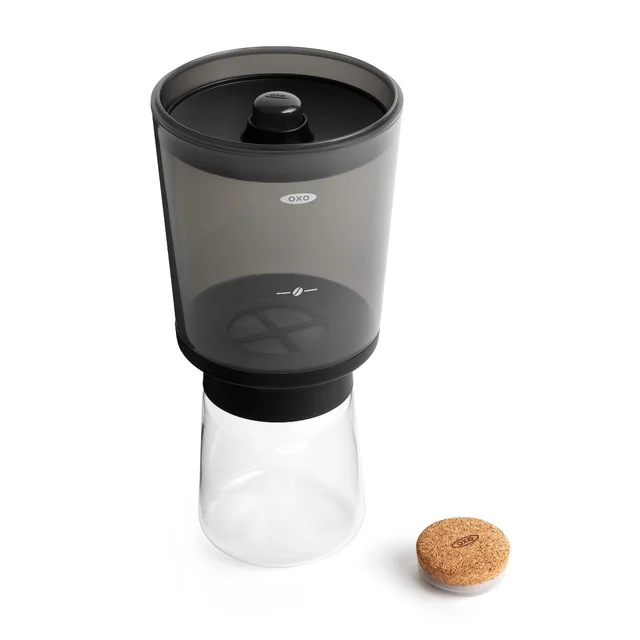
- OXO Brew Compact Cold Brew Coffee Maker - Buy. The easiest all-rounder: a perforated rainmaker lid wets grounds evenly and a switch drains the brew cleanly into a glass carafe.
- Toddy Cold Brew System - Buy. The original concentrate system still makes the smoothest, lowest-acid brew of the group thanks to its felt filtration.
- Hario Mizudashi Cold Brew Coffee Pot (1000 mL) - It depends. A budget-friendly glass pitcher that brews a lighter, ready-to-drink cup highlighting delicate bean character.
- Takeya Deluxe Cold Brew Coffee Maker (1 qt) - Skip. Cheap, airtight, and portable, but the Tritan body and silicone seal tend to hold onto coffee oils over months of daily use.
The verdict in 30 seconds
What mattered most
- Brew style
- Filter type
- Batch size
- Cleanup and draining
- Body material
- Flavor and clarity
Cold brew at home comes down to a choice between immersion pitchers you drink straight over ice and larger systems that make a stash of concentrate. We synthesized independent testing and owner reports across four current, buyable-in-2026 makers. Two earn a clear buy, one is a solid it-depends for a specific kind of drinker, and one we would skip on long-term flavor grounds.
The easiest all-rounder: a perforated rainmaker lid wets grounds evenly and a switch drains the brew cleanly into a glass carafe.
Best for: Most people who want low-effort, smooth concentrate without babysitting the process or replacing filters.
- Rainmaker lid saturates grounds evenly, which reviewers link to a consistently smooth concentrate
- Brew-release mechanism drains into the glass carafe with far less mess than pouring
- Reusable mesh filter and glass carafe avoid the plastic-taste complaints of all-plastic rivals
- Compact footprint fits a crowded counter or fridge shelf
- The compact batch size is small for a heavy-drinking household
- Owners occasionally report minor dripping during the brew step
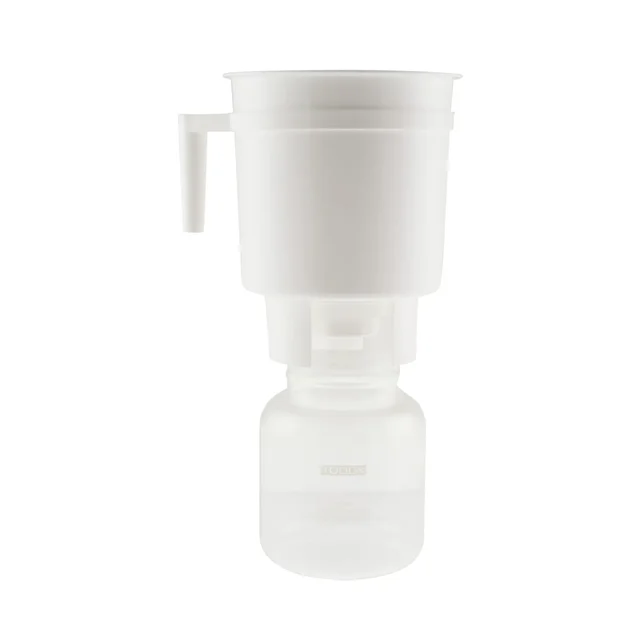
The original concentrate system still makes the smoothest, lowest-acid brew of the group thanks to its felt filtration.
Best for: Concentrate devotees who prioritize the smoothest, least acidic cup and brew in bulk.
- Felt filtration produces exceptionally clean, low-acid concentrate that reviewers rate above mesh-filtered rivals
- Yields about 36 to 38 ounces of concentrate per 12-ounce batch of coffee, which Toddy says keeps up to 2 weeks in the fridge
- Simple BPA-free plastic brewing container, glass decanter and a silicone stopper drain
- Two reusable felt filters in the box, each good for up to 10 brews
- Felt filters must be rinsed and stored sealed in the freezer, and replaced after 10 uses or 3 months, adding ongoing cost and upkeep
- Setup and draining are more hands-on and messier than switch-style pitchers
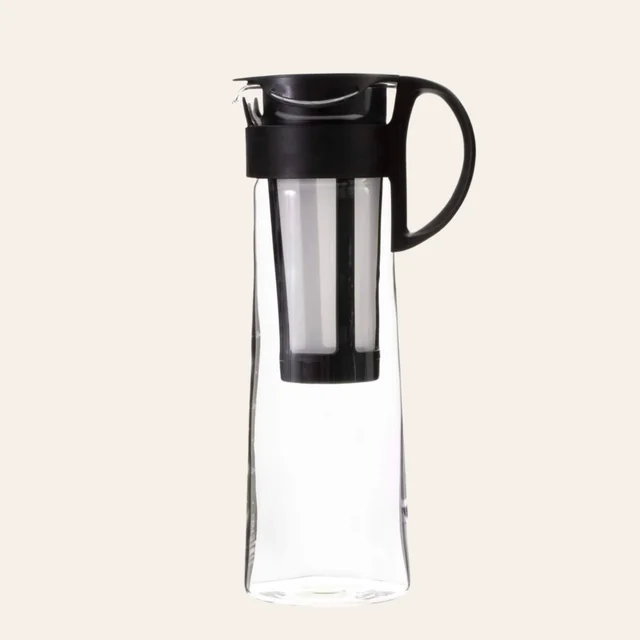
A budget-friendly glass pitcher that brews a lighter, ready-to-drink cup highlighting delicate bean character.
Best for: Single-origin drinkers who want a delicate, ready-to-drink cup and the lowest entry price.
- Inexpensive and beautifully simple: fill the mesh basket, add water, refrigerate
- Tall, narrow filter basket encourages a gentle extraction that owners say preserves floral and fruit notes
- Borosilicate glass body resists odors and stains
- Slim body, 94mm deep, fits easily in the fridge
- Fine mesh lets some fines through, so the brew is slightly cloudier than felt-filtered systems
- Glass body is more fragile than plastic pitchers, and it makes ready-to-drink brew rather than storable concentrate
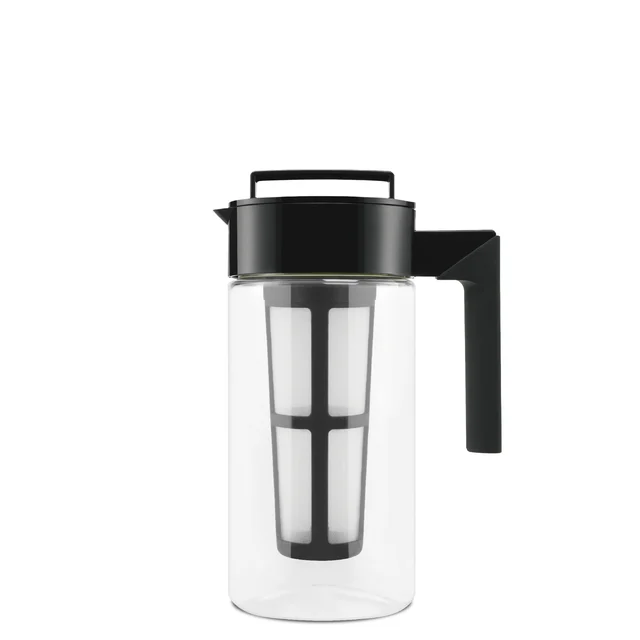
Cheap, airtight, and portable, but the Tritan body and silicone seal tend to hold onto coffee oils over months of daily use.
Best for: Travel, dorms, or occasional use where portability and price matter more than long-term flavor purity.
- Airtight, leak-resistant lid for fridge storage
- Durable, shatter-resistant Tritan plastic travels well
- Very affordable and widely available
- Owners report a plastic or stale taste developing after months of daily use as the plastic and silicone seal absorb coffee oils
- Fine-mesh basket yields a cloudier brew, and it makes ready-to-drink coffee rather than concentrate
| Criteria | OXO Brew Compact Cold Brew Coffee Maker Top pick | Toddy Cold Brew System | Hario Mizudashi Cold Brew Coffee Pot (1000 mL) | Takeya Deluxe Cold Brew Coffee Maker (1 qt) |
|---|---|---|---|---|
| Verdict | Buy it | Buy it | It depends | Skip it |
| Best for | Most people who want low-effort, smooth concentrate without babysitting the process or replacing filters. | Concentrate devotees who prioritize the smoothest, least acidic cup and brew in bulk. | Single-origin drinkers who want a delicate, ready-to-drink cup and the lowest entry price. | Travel, dorms, or occasional use where portability and price matter more than long-term flavor purity. |
| Price tier | $$ · mid-range | $$ · mid-range | $ · budget | $ · budget |
| Brew style | Concentrate | Concentrate | Ready-to-drink | Ready-to-drink |
| Filter type | Reusable mesh | Reusable felt | Polyester mesh | Ultra-fine mesh |
| Batch size | Small (compact) | Large (36 to 38 oz concentrate) | Medium (1 L) | Medium (1 qt) |
| Cleanup and draining | Very easy (switch to carafe) | Hands-on, messier | Easy (rinse basket) | Easy (rinse basket) |
| Body material | Glass carafe + plastic top | Plastic + glass decanter | Borosilicate glass | Tritan plastic |
| Flavor and clarity | Smooth, clean | Smoothest, lowest acid | Lighter, delicate, slightly cloudy | Decent early, can taste plastic over time |
| Ongoing cost | None (reusable mesh) | Felt filters replaced after 10 uses | None (reusable mesh) | None (reusable mesh) |
| Price tier | $$ · mid-range | $$ · mid-range | $ · budget | $ · budget |
Which one is right for you?
- Most people who want low-effort, smooth concentrate without babysitting the process or replacing filters. Buy it OXO Brew Compact Cold Brew Coffee Maker
- Concentrate devotees who prioritize the smoothest, least acidic cup and brew in bulk. Buy it Toddy Cold Brew System
- Single-origin drinkers who want a delicate, ready-to-drink cup and the lowest entry price. It depends Hario Mizudashi Cold Brew Coffee Pot (1000 mL)
- Travel, dorms, or occasional use where portability and price matter more than long-term flavor purity. Skip it Takeya Deluxe Cold Brew Coffee Maker (1 qt)
How we judged the field
We do not run our own lab. Instead, we synthesized independent testing, expert reviews, and aggregated owner reports across four cold brew makers that are current and buyable in 2026. Cold brew hardware is simple, so the differences that matter are practical: how evenly the water saturates the grounds, how clean the filtration is, how easy the device is to fill and drain, what the body is made of, and whether there are ongoing costs. We also weighed the fundamental split between concentrate systems, which brew a strong base you dilute and store, and ready-to-drink pitchers, which brew a cup you pour straight over ice. Where reviewers report a recurring flavor or durability issue over months of use, we treated that as decisive.
OXO Brew Compact Cold Brew Coffee Maker
Buy itThe OXO is the maker most reviewers reach for first, and it is easy to see why. Water poured into the perforated rainmaker lid distributes evenly over the grounds, which owners and testers connect to a reliably smooth concentrate rather than the uneven extraction you get from dumping water in. When the steep is done, a brew-release switch drains the concentrate straight into the glass carafe, so you avoid the messy inversion that plagues other systems. Because the carafe is glass and the filter is reusable mesh, it sidesteps the plastic-taste complaints leveled at all-plastic pitchers. The main trade-offs are capacity, since the compact batch is modest for a heavy household, and a few owner reports of minor dripping during brewing. For most kitchens, it is the best balance of ease, cleanliness, and taste-neutral materials.
Toddy Cold Brew System
Buy itThe Toddy is the original home cold brew system and still the benchmark for cup quality. Its felt filter removes more fine particles and oils than mesh, and reviewers consistently describe the result as the smoothest and least acidic of the group. A standard 12-ounce batch of coffee yields about 36 to 38 ounces of concentrate, which Toddy says keeps up to 2 weeks in the fridge, so it suits bulk brewers. The catch is upkeep: the felt filter has to be rinsed and stored sealed in the freezer between uses and replaced after up to 10 brews, and the fill-and-drain routine is more hands-on and messier than a switch-style pitcher. If you care most about the cleanest possible cup and brew in volume, that upkeep is a fair price.
Hario Mizudashi Cold Brew Coffee Pot
It dependsThe Hario is the value play and a genuinely different experience. It is a tall borosilicate glass pitcher with a long mesh basket; you fill the basket, add water, and refrigerate. Because it brews ready-to-drink coffee at a normal ratio, owners note it tends to yield a lighter, more delicate cup that showcases floral and fruit notes rather than the uniform smoothness of concentrate systems. That makes it a favorite for single-origin beans. The downsides are inherent to the design: the fine mesh lets some fines through for a slightly cloudier brew, the glass body is more fragile than plastic, and it makes no storable concentrate. It is the right buy for a specific drinker, not everyone.
Takeya Deluxe Cold Brew Coffee Maker
Skip itThe Takeya is inexpensive, airtight, and genuinely convenient. Its airtight, leak-resistant lid keeps it tidy in the fridge, and the shatter-resistant Tritan body travels well. The problem shows up over time: owners repeatedly report a plastic or stale taste developing after months of daily use as the plastic body and silicone seal absorb coffee oils that washing cannot fully lift. Combined with a cloudier mesh-filtered brew and no concentrate option, that long-term flavor drift is why we would pass for daily home use, even though it remains a reasonable pick for travel or occasional brewing.
OXO Brew Compact vs Toddy Cold Brew System: which should you buy?
Both make concentrate, both use taste-neutral or reusable components, and both earn a buy, so the choice is about your routine. The OXO is the everyday pick: the rainmaker lid and drain switch make it fast, tidy, and forgiving, and there are no filters to replace. Its limit is batch size. The Toddy flips those priorities. It asks for more effort at the sink and a periodic felt-filter replacement, but in return it brews the smoothest, lowest-acid cup of the four and does so in large volumes. Choose the OXO if you value convenience and a clean counter; choose the Toddy if you brew in bulk and want the best cup the category can produce.
What to look for
- Concentrate vs ready-to-drink: concentrate is flexible and space-efficient; ready-to-drink is simpler at serving time.
- Filtration: felt yields the cleanest cup, stainless mesh is maintenance-free, and fine polyester or nylon mesh runs slightly cloudier.
- Body material: glass carafes stay taste-neutral, while plastic bodies and silicone seals can absorb coffee oils over months.
- Draining and cleanup: a release switch or spigot is far less messy than inverting a full brewer.
- Capacity: match the batch size to how much you actually drink in a week.
- Ongoing cost: account for replacement felt filters on systems that use them.
Our final take
Most people should buy the OXO Brew Compact: it is the easiest route to smooth concentrate, keeps flavor neutral with its glass carafe, and never needs a replacement filter. If you brew in bulk and chase the cleanest, least acidic cup, the Toddy justifies its extra upkeep. The Hario Mizudashi is a smart, cheap choice for a lighter ready-to-drink cup and delicate single-origin beans, provided you accept fragile glass and no concentrate. The Takeya is the one we would skip for daily use, because the plastic taste owners report over time undercuts an otherwise convenient and affordable design.
Questions, answered
What is the difference between a concentrate maker and a ready-to-drink pitcher?
Concentrate makers such as the OXO and Toddy brew a strong base at a low water-to-coffee ratio that you dilute with water, milk, or ice before drinking, which also stores longer. Ready-to-drink pitchers such as the Hario and Takeya brew at a normal ratio so the coffee is poured straight over ice. Concentrate is more flexible and space-efficient; ready-to-drink is simpler and needs no measuring at serving time.
Which one makes the smoothest, least acidic cold brew?
Independent testing and owner reports consistently give the edge to the Toddy, whose felt filtration removes more fines and oils for a notably clean, low-acid result. The OXO is close behind and easier to live with day to day. Grind size and steep time matter as much as the device, so use a coarse grind and steep 12 to 24 hours.
Do any of these need replacement filters or ongoing purchases?
The OXO, Hario, and Takeya all use permanent reusable mesh filters, so there is nothing to buy after purchase. The Toddy uses reusable felt filters that last many brews but eventually wear out and must be replaced, which is a small recurring cost to factor in; Toddy says each felt filter is good for up to 10 brews and should be discarded after 3 months.
Why do some cold brew pitchers develop a plastic taste?
Plastic bodies and silicone seals are slightly porous and can absorb the oils in coffee over time, which washing does not fully remove. Owners most often report this with all-plastic pitchers like the Takeya after months of daily use. Glass-carafe designs such as the OXO and Hario avoid the problem, and thorough drying between brews helps in any maker.
How long does cold brew keep, and how much coffee should I use?
Concentrate typically keeps well in the fridge for up to about two weeks, while ready-to-drink cold brew is best within several days. As a starting point, use a coarse grind at roughly a 1:4 to 1:8 coffee-to-water ratio for concentrate and closer to 1:8 to 1:12 for ready-to-drink, then adjust to taste. This is general product information rather than dietary advice.
Deciding between the top two? See our head-to-head: OXO Brew Compact Cold Brew Coffee Maker vs Toddy Cold Brew System.
More Coffee & Espresso reviews
 Best Drip Coffee Makers (2026): Flavor, Value, and One to Skip
  The Best Electric Kettles: Honest Picks for Tea, Coffee, and Everyday Boiling
  The Best Espresso Distribution Tools: 4 Compared (and One to Skip)
  Best Beginner Espresso Machines: 3 Worth Buying (and 1 Popular One to Skip)
  The Best Espresso Tampers: 4 Compared (and One to Skip)
  The Best French Press Coffee Makers: 4 Compared (and One to Skip)