

Coffee & Espresso
The Best Electric Kettles: Honest Picks for Tea, Coffee, and Everyday Boiling
We compared four current electric kettles on temperature accuracy, speed, and long-term durability, including one recalled model you should skip entirely.
The short version
For most kitchens the Breville IQ Kettle is the sensible everyday choice: fast, quiet, and easy to live with, with five preset temperatures that cover tea and French press. Pour-over drinkers should pay more for the Fellow Stagg EKG Pro and its 0.5°F gooseneck control, accepting a small capacity. The Cuisinart PerfecTemp is a cheaper, capable option shadowed by durability complaints. Skip the Zwilling Enfinigy: it is under an active recall for a handle that can spill near-boiling water.
Our picks at a glance
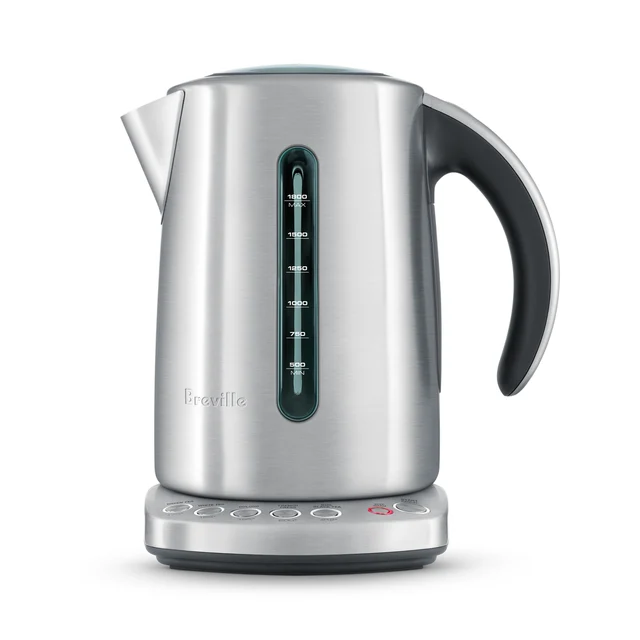
- Breville IQ Kettle (BKE820) - Buy. A fast, quiet everyday kettle with sensible presets and no glaring reliability flaw.
- Fellow Stagg EKG Pro - Buy. A precise gooseneck kettle built for pour-over coffee, not for filling the family pot.
- Cuisinart PerfecTemp Cordless Electric Kettle (CPK-17P1) - It depends. Capable and well-equipped for a mid-range price, but shadowed by long-term durability complaints.
- Zwilling Enfinigy Electric Kettle - Skip. A well-liked kettle undone by an active recall for a handle that can spill near-boiling water.
The verdict in 30 seconds
What mattered most
- Temperature control
- Power & boil speed
- Capacity
- Keep-warm hold
- Build & materials
- Best use
An electric kettle is a small purchase you touch every day, so the gap between a good one and a frustrating one is measured in years, not minutes. We focused on temperature control that is genuinely useful, materials that survive scale and heat, and the lid, handle, and spout mechanisms that tend to fail first. One popular model here is included only as a warning.
A fast, quiet everyday kettle with sensible presets and no glaring reliability flaw.
Best for: Most households that want fast, versatile everyday hot water for tea and French press
- 1.7-litre (7 cup) capacity and quick everyday heating, quieter than budget kettles
- Soft Top lid releases steam gently and eliminates splashing, with a 20-minute keep-warm
- Five fixed presets only, with no single-degree adjustment for light-roast pour-over
- The brushed finish shows fingerprints
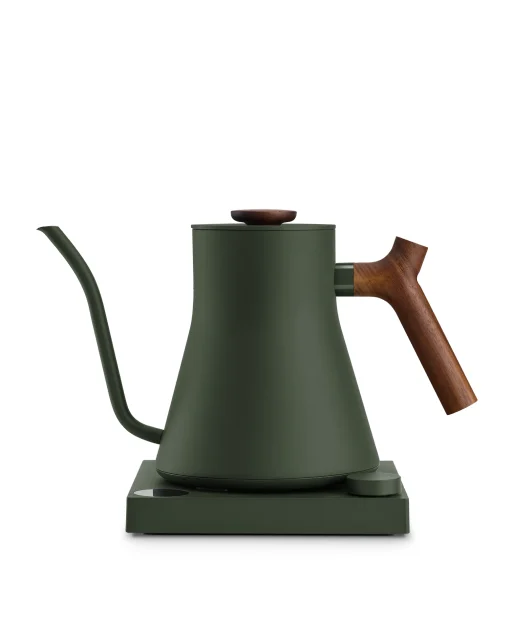
A precise gooseneck kettle built for pour-over coffee, not for filling the family pot.
Best for: Pour-over coffee drinkers who want precise, controlled pours and exact temperatures
- Temperature set in 0.5°F steps from 104°F to 212°F, with a counterbalanced handle and narrow gooseneck for a controlled pour
- Steel body with an optional walnut or maple handle, built-in scheduling, and a hold mode of up to 60 minutes
- 0.9-litre capacity holds far less than a standard kettle and the narrow spout is slow to fill and empty
- Sits at the top of the price range, and the scheduling feature feels more novelty than necessity
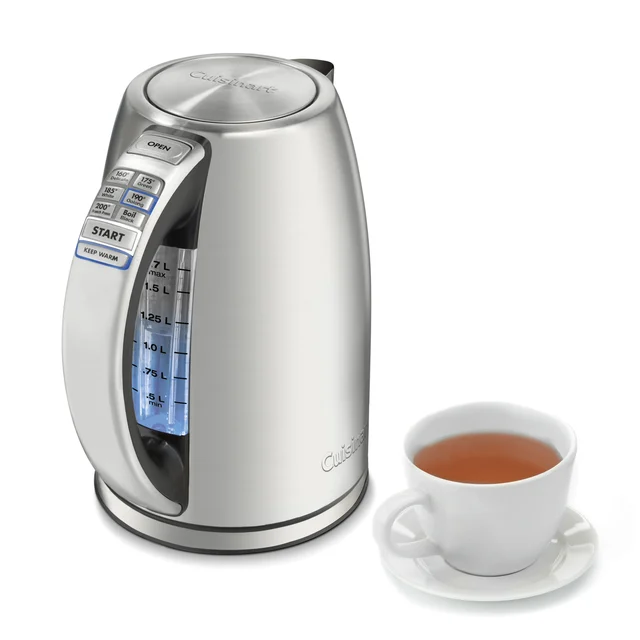
Capable and well-equipped for a mid-range price, but shadowed by long-term durability complaints.
Best for: Budget-minded buyers who want maximum features and accept a real chance of replacing it sooner
- 1500 watts, a 1.7-litre stainless body, six presets, a 3-year limited warranty, and a memory function that keeps its place for up to 2 minutes off the base
- 30-minute keep-warm and boil-dry protection make it flexible for tea and general use
- Owner reports of leaking gaskets, a lid button that stiffens and sticks after about a year, and a water-window that can crack if run empty
- Plastic lid interior sits in contact with hot water, which some owners would rather avoid
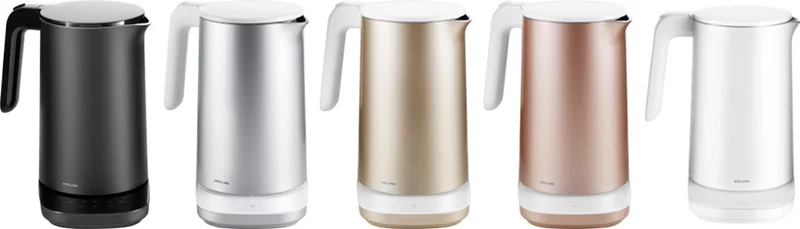
A well-liked kettle undone by an active recall for a handle that can spill near-boiling water.
Best for: No one right now, because it is under an active recall for a burn hazard
- Double-wall body stays cool to the touch and the seamless stainless interior keeps plastic away from the water
- Quiet operation with preset temperatures
- Under an active recall: the handle can loosen or separate and spill near-boiling water, with reported incidents including a second-degree burn
- Owners are advised to stop using it and seek a refund rather than a repair
| Criteria | Breville IQ Kettle (BKE820) Top pick | Fellow Stagg EKG Pro | Cuisinart PerfecTemp Cordless Electric Kettle (CPK-17P1) | Zwilling Enfinigy Electric Kettle |
|---|---|---|---|---|
| Verdict | Buy it | Buy it | It depends | Skip it |
| Best for | Most households that want fast, versatile everyday hot water for tea and French press | Pour-over coffee drinkers who want precise, controlled pours and exact temperatures | Budget-minded buyers who want maximum features and accept a real chance of replacing it sooner | No one right now, because it is under an active recall for a burn hazard |
| Price tier | $$$ · premium | $$$$ · flagship | $$ · mid-range | $$$ · premium |
| Temperature control | 5 fixed presets | 0.5°F steps, 104 to 212°F | 6 fixed presets | Presets (recalled) |
| Power & boil speed | Not published | 1200W, moderate | 1500W, fast | Recalled |
| Capacity | 1.7 L (7 cup) | 0.9 L (30 oz) | 1.7 L | 1.5 L |
| Keep-warm hold | 20 minutes | Up to 60 minutes | 30 minutes | Not published (recalled) |
| Build & materials | Brushed stainless, soft-open lid | Steel, optional wood handle | Stainless, plastic lid interior | Double-wall cool-touch |
| Best use | Everyday tea & coffee | Pour-over coffee | Budget everyday | Do not buy - recalled |
Which one is right for you?
- Most households that want fast, versatile everyday hot water for tea and French press Buy it Breville IQ Kettle (BKE820)
- Pour-over coffee drinkers who want precise, controlled pours and exact temperatures Buy it Fellow Stagg EKG Pro
- Budget-minded buyers who want maximum features and accept a real chance of replacing it sooner It depends Cuisinart PerfecTemp Cordless Electric Kettle (CPK-17P1)
- No one right now, because it is under an active recall for a burn hazard Skip it Zwilling Enfinigy Electric Kettle
How we judged the field
We do not run a lab. This comparison synthesizes independent expert teardowns and long-run owner reports, weighted toward the problems that surface after months of daily use rather than first-impression enthusiasm. For a kettle that comes down to four questions: is the temperature control accurate and actually useful, how fast and quietly does it heat, how do the materials cope with mineral scale and repeated thermal cycling, and do the handle, lid, and spout stay trouble-free over time. We screened out discontinued models, then deliberately kept one recalled kettle in the lineup so you know which one to leave on the shelf.
Two patterns shaped the verdicts. First, wattage matters less than the spec sheets suggest; most full-size kettles reach a rolling boil within about a minute of each other, so raw power rarely decides anything. Second, the failures owners genuinely regret are mechanical - a lid that stops opening, a gasket that starts to weep, a handle that works loose - not a degree or two of temperature drift. We rated durability accordingly.
Breville IQ Kettle (BKE820)
Buy itThe Breville is the one we would put in most kitchens. It heats a mug’s worth of water quickly and holds up to 1.7 litres (7 cups), and owners find it quieter than budget kettles that rattle toward the end. Five preset temperatures cover green, white, oolong, and black tea plus French press, and a 20-minute hold keeps water where you set it. What owners tend to like more is the Soft Top lid, which Breville says releases steam gently and eliminates splashing.
What they like less is the control scheme: five fixed presets only, with no single-degree adjustment, so light-roast pour-over drinkers lose the fine tuning they may want. The brushed finish also shows fingerprints. None of that undermines a kettle that simply works day after day.
Fellow Stagg EKG Pro
Buy itThe Stagg EKG Pro is a specialist, and within its niche it is the one to beat. Temperature is set in 0.5°F steps from 104°F to 212°F, the 1200-watt element is adequate rather than quick, and the counterbalanced handle plus narrow gooseneck spout give the slow, aimed pour that pour-over coffee depends on. The Pro adds built-in scheduling and a hold mode of up to 60 minutes; its app handles firmware updates only, not remote control. Reviewers consistently praise the build: steel body, a handle in plastic or optional walnut or maple, and a screen that reads clearly.
The trade-off owners like less is capacity: at 0.9 litres it holds far less than a standard kettle, and the narrow spout is slow to fill and slow to empty into anything but a coffee dripper. It also sits at the top of the price range, and scheduling feels more novelty than necessity. Buy it for coffee, not as a general-purpose kettle.
Cuisinart PerfecTemp (CPK-17P1)
It dependsThe PerfecTemp does a lot for a mid-range price: 1500 watts, a 1.7-litre stainless body, six preset temperatures, a 30-minute keep-warm, boil-dry protection, and a memory function that lets you lift the kettle off the base for up to 2 minutes without losing its place. On paper and in the first weeks it is hard to fault, and many owners are content for years.
The reason it lands at depends is a consistent thread in longer-term reports: gaskets that begin to leak, a lid button that grows stiff and eventually sticks after roughly a year, and a water-window that can crack if the kettle is switched on empty. The plastic lid interior also sits in contact with hot water, which some owners would rather avoid. If you want maximum capability for the money and accept a real chance of replacing it sooner than a sturdier model, it is defensible. If you want to buy once, look higher up.
Zwilling Enfinigy Electric Kettle
Skip itThis is the cautionary entry. Before its recall the Enfinigy earned goodwill for a double-wall body that stays cool to the touch, a seamless stainless interior with no plastic against the water, quiet operation, and preset temperatures. On daily performance there was little to complain about.
The problem is safety. The 1.5-litre Enfinigy and Enfinigy Pro are under an active recall, announced by Zwilling on April 20, 2026, because the handle can loosen or break off and spill hot water; Zwilling reports one case of second-degree burns. That is a disqualifying fault regardless of how good the rest of the kettle is. If you already own one, stop using it and pursue the refund rather than a repair. For anyone shopping now, there is no version of this recommendation that ends in buy.
Breville IQ Kettle vs Fellow Stagg EKG Pro: which should you buy?
These two win their categories, and they barely compete. The Breville is the everyday generalist: larger capacity, faster, versatile enough for a household that drinks tea in the morning and presses coffee at the weekend, and comfortable to use without thinking about it. The Fellow is a precision instrument for a single job. If your ritual is a hand-poured cup and you care about a steady stream and an exact temperature, its gooseneck and to-the-degree control are worth the premium and the small capacity. If you want one kettle that handles everything a kitchen throws at it, the Breville is the sounder choice. Most people should buy the Breville; dedicated pour-over drinkers should stretch for the Fellow.
What to look for
Start with what you drink. If it is mostly black tea, instant coffee, or hot water for cooking, you do not need single-degree control - a reliable kettle with a plain boil and one or two presets is enough. If you brew green or white tea or pour-over coffee, temperature control earns its place. Next, weigh capacity against counter space: a 1.7-litre kettle refills less often, while a compact one suits small kitchens and single drinkers. Then treat durability as a feature, not an afterthought - the lid mechanism, the gasket, and the handle joint are where kettles fail, so favour sealed interiors and simple, sturdy hardware over gadgetry. Finally, check for open safety actions before buying anything; a recall outranks every other spec.
Our final take
For most kitchens the Breville IQ Kettle is the sensible pick: quick, quiet, versatile, and free of any glaring reliability flaw. Pour-over drinkers should pay more for the Fellow Stagg EKG Pro and its precise gooseneck pour, accepting the small capacity that comes with it. The Cuisinart PerfecTemp is a capable mid-range option only if you accept its documented durability risks. And whatever you choose, skip the Zwilling Enfinigy while its recall stands.
Questions, answered
Do I really need variable temperature control?
If you drink mostly black tea, instant coffee, or hot water for cooking, no; a plain boil is fine. Variable control earns its place for green and white teas and for pour-over coffee, where water that is too hot scorches leaves or grounds and dulls the flavor.
Is a gooseneck kettle worth it if I do not brew coffee?
Probably not. The narrow spout exists to control a thin, steady pour for pour-over coffee. For filling mugs, French presses, or pots it is slower and holds less water, so a standard wide-spout kettle serves everyday use better and refills less often.
Is the Zwilling Enfinigy kettle safe to use?
No. It is under an active recall because the handle can loosen or break off and spill near-boiling water, and reported incidents include a second-degree burn. If you own one, stop using it and contact the maker for a refund rather than attempting a repair.
Do plastic parts inside a kettle matter?
Somewhat. Fully sealed stainless or glass interiors keep plastic away from hot water, which some owners prefer for taste and peace of mind. Many reliable kettles still use plastic lids or gauges, though; the bigger durability issue is usually the lid mechanism and gasket, not the material alone.
Does higher wattage mean a much faster kettle?
Not dramatically. Most full-size kettles cluster within about a minute of each other to a full boil, so a 1500-watt model is not meaningfully quicker in daily use than one rated slightly lower. Fill level and starting water temperature affect timing more than the wattage number.
Deciding between the top two? See our head-to-head: Breville IQ Kettle (BKE820) vs Fellow Stagg EKG Pro.
More Coffee & Espresso reviews
 The Best Espresso Distribution Tools: 4 Compared (and One to Skip)
  Best Beginner Espresso Machines: 3 Worth Buying (and 1 Popular One to Skip)
  The Best Espresso Tampers: 4 Compared (and One to Skip)
  The Best French Press Coffee Makers: 4 Compared (and One to Skip)
  The Best Home Coffee Roasters: 4 Compared (and One to Skip)
  The Best Manual Coffee Grinders: 4 Compared (and One to Skip)