Explained
Wireless Dog Fences, Explained
After reading, you'll know the difference between GPS and circular wireless fences, which specs actually matter for your yard and dog, and why training and fit make or break the whole system.
In this guide
A "wireless dog fence" keeps your dog in the yard using a collar and a boundary you set, no buried wire required. But the term now covers two very different technologies, GPS and circular radio, and the marketing rarely spells out which trade-offs come with each. The thing that trips up most first-time buyers isn't the tech at all: it's assuming the collar does the work on its own, when every one of these systems only works after real boundary training.
The 30-second version
- There are two kinds. True GPS fences let you draw any-shape boundary with no base unit; circular wireless fences project a fixed round bubble from a base station, and the two cost and behave very differently.
- The collar is only half the system. None of these fences work well without a couple of weeks or more of supervised boundary training using flags, no matter how good the hardware is.
- Watch for subscription strings. Some GPS systems contain your dog for free after purchase, while others require an ongoing paid plan just to keep the boundary active.
- Humane use is a setting, not luck. Look for a tone (and ideally vibration) warning before any static, adjustable levels, and proper collar fit, so most dogs learn the edge without ever feeling a correction.
- Match the tech to your yard. A simple round, open, flat yard rarely needs pricey GPS; large, irregular, or exclusion-heavy properties are exactly where GPS earns its cost.
The products this guide is about
Our verdict on each, with the full reasoning on the companion review.
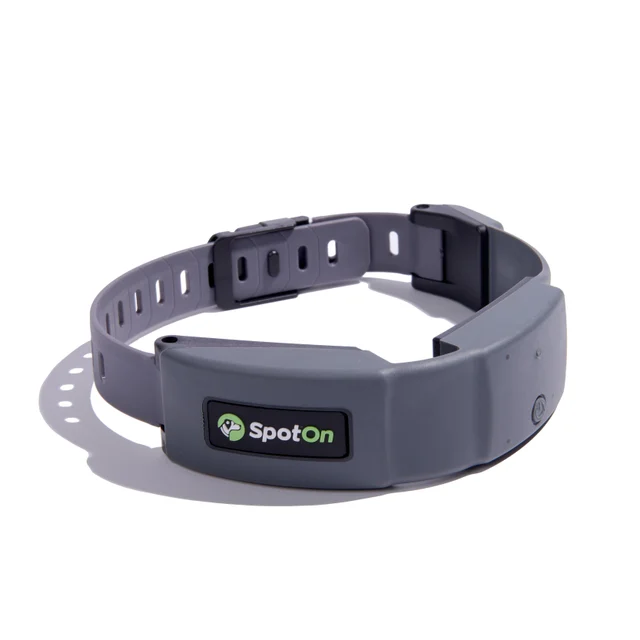
- Buy SpotOn GPS Dog Fence (Nova Edition) Highly rated wire-free containment with no monthly fee required to keep the fence working. Amazon
- Buy PetSafe Stay & Play Compact Wireless Fence The best-value wire-free fence for a simple round yard, with a rechargeable, waterproof collar. Amazon
- It depends Halo Collar 5 GPS fence, tracking, and training in one collar, with an ongoing membership cost to weigh. Amazon
- Skip PetSafe Wireless Pet Containment System (PIF-300) The category's original circular wireless kit, now outclassed by PetSafe's own newer Stay & Play. Amazon
What actually matters
- Containment technology (GPS vs. circular wireless) decides everything else. GPS uses satellite positioning for custom, any-shape boundaries; circular wireless broadcasts a round radio bubble from a base unit. Choose the tech that fits your property before comparing anything else.
- Boundary flexibility is whether you can shape the fence to your land, exclude a pool or driveway, and cover odd corners, or whether you're locked to a single circle centered on a base station.
- Total cost of ownership, not just the sticker, matters because some systems require a recurring membership to keep the fence working, while others are a one-time purchase.
- Collar comfort and power, meaning weight, size range, fit, and rechargeable versus throwaway batteries, determines whether the collar is humane to wear all day and cheap to keep running.
- Humane warning options like a tone and vibration cue before any static, adjustable correction levels, and a warning-only mode let you use the least aversive setting that still works.
- Real-world accuracy depends on your conditions. Tree canopy, tall buildings, slopes, and metal or electrical interference all move the boundary around, so performance in a review yard may not match yours.
- Training commitment is unavoidable. Budget a couple of weeks or more of short, positive, supervised sessions; skipping it is the single biggest cause of bad experiences and stressed dogs.
The specs, in plain English
Green flags vs red flags
Green flags
- A clear tone-and-ideally-vibration warning before any static, with adjustable levels and, better still, a warning-only mode
- A rechargeable, waterproof collar with a stated size and weight range that actually fits your dog
- Honest disclosure of whether the fence needs a subscription, and what a plan adds versus what works for free
- Included boundary flags and a real training program or guide, not just hardware in a box
- Coverage and boundary flexibility that comfortably match your yard's size and shape, with room to spare
- Owner reports from conditions like yours (trees, slopes, city lots) confirming the boundary holds steady
Red flags
- Marketing that implies you can just buckle it on with no training, or hides how much training is required
- A required paid membership buried in the fine print just to keep the basic fence active
- Throwaway (non-rechargeable) collar batteries you must keep buying, on an otherwise modern system
- A heavy, bulky collar pushed for a small or toy dog, or no clear minimum-size guidance
- No tone or vibration warning before static, or no way to lower the correction level
- Coverage or a fixed circle that barely fits your yard, leaving no margin for normal signal drift
Who's who: the brands
- SpotOn - GPS-only specialist offering custom any-shape fences and no subscription required to keep the fence working.
- Halo - Premium all-in-one GPS collar that bundles fencing, tracking, and guided training, but relies on an ongoing paid membership.
- PetSafe - Long-running containment brand spanning both modern rechargeable circular wireless kits and older legacy systems; broad size range and wide availability.
- Halo / SpotOn (GPS category) - The two mainstream true-GPS options most shoppers compare when they want wire-free, any-shape boundaries rather than a fixed circle.
How to read a listing without getting fooled
Start by pinning down which of the two technologies a listing is actually selling: the words "GPS" and "draw your own boundary" mean satellite-based and any-shape, while "wireless" paired with a base unit and an acreage cap almost always means a fixed circle. Next, find the subscription answer explicitly, a page that's coy about it usually means the fence needs a plan, so look for language like "membership required." Read the collar section for two things: whether it's rechargeable or eats replaceable batteries, and the stated size or weight range, because a collar built for a 60-pound dog can be genuinely uncomfortable on a 12-pound one. Treat coverage numbers as best-case in ideal open conditions and mentally discount them for trees, hills, and interference. Finally, confirm the warning sequence: a good listing states plainly that a tone (and ideally vibration) precedes any static and that levels adjust; if you can't find that, assume the humane options are limited.
How much should you spend?
Price tracks the technology more than the brand. Circular wireless kits are the affordable end and are genuinely all many owners of a simple round, flat yard need, so paying up for GPS there is money spent on flexibility you won't use. GPS systems cost substantially more, and that premium buys real things: satellite accuracy, any-shape boundaries, large or irregular coverage, and the ability to fence out a pool or driveway, so they're worth it when your property actually demands them. The trap to watch is ongoing cost: a lower hardware price paired with a required membership can quietly cost more over a couple of years than a pricier no-subscription system, so always weigh the sticker against whether the fence keeps working for free. Within circular wireless, favor a modern rechargeable model over an older battery-eating one even at similar cost, since throwaway batteries are a slow, recurring drain. The value sweet spot is the cheapest option that matches your yard's shape and your dog's size without forcing a subscription you don't want.
Questions, answered
Do wireless dog fences require training, or can I just put the collar on?
They require training, all of them. A boundary the dog doesn't understand is just an unpleasant surprise, and skipping training is the top reason owners are disappointed or end up with a stressed dog. Plan on a couple of weeks or more of short, positive, supervised sessions using the included boundary flags: walk the perimeter on a leash, let the dog hear the warning tone, and guide them back into the safe zone with praise and treats. The goal is a dog that learns to retreat at the tone and rarely, if ever, feels a correction.
How do I fit a containment collar humanely so it doesn't hurt my dog?
Fit is a key comfort factor. The contact points should touch the skin snugly enough to work, but you should still be able to slide two fingers between the strap and your dog's neck. Fit it high on the neck, check it against a groomed coat rather than thick fur, and reposition it every few hours so the same spot isn't under constant pressure. Follow the maker's limit on daily wear time, take it off overnight, and check the contact area regularly for redness or irritation, since pressure sores from an over-tight, never-moved collar are the most common problem. This is general product-use guidance; if your dog has skin issues or you're unsure, ask your vet or a professional trainer.
Can I use tone or vibration only instead of a static correction?
Often yes, and it's a sensible way to start. Systems we reviewed give an audible tone warning before static; vibration support varies by model, so check each maker's page. Many owners run warning-only first and find some dogs never need more. If you do use static, set it to the lowest level that gets a response and raise it only if necessary. Small, timid, or sound-sensitive dogs in particular often do well on warning-only modes. Note that a few products are training-oriented and static-first, so confirm a product supports the gentler mode you want before buying.
What's the real difference between a GPS fence and a wireless (circular) fence?
A GPS fence uses satellite positioning, so you can draw a boundary of almost any shape and size in an app with no wire and no base station, and carve out areas like a pool or driveway. A circular wireless fence uses a base unit that broadcasts a radio bubble, so the boundary is always a circle centered on the unit and is limited to a fraction of an acre. GPS is more flexible and accurate but costs much more; circular wireless is cheaper and perfectly fine for a simple round, open, flat yard.
Are invisible fences safe, and when won't they work?
Used with proper fit and training, they're a widely used containment tool, but they have real limits. They keep your dog in; they do not keep other dogs, wildlife, or people out, and a highly motivated dog can occasionally bolt through the boundary and then be reluctant to cross back. They're a poor fit for dogs with strong prey or escape drive, for very small yards, or as the only barrier near a busy road. GPS systems also need a reasonable view of the sky, so dense tree cover or tall buildings can reduce accuracy. For high-risk dogs, treat a wireless fence as a supplement to, not a replacement for, a physical fence.
Does the fence keep working after I buy it, or do I have to pay monthly?
It depends entirely on the system, which is why it's worth checking before you buy. Circular wireless kits are typically a one-time purchase with no ongoing fee. Among GPS systems, some keep the core fence working for free and only charge for extras like real-time off-property tracking, while others require a paid membership just to keep the boundary active. Read the product page for language like "membership required," and factor a couple of years of any required plan into your true cost.
Or jump to the head-to-head: SpotOn GPS Dog Fence (Nova Edition) vs PetSafe Stay & Play Compact Wireless Fence.