Explained
Aquarium Filters, Explained
After reading this, you'll understand how aquarium filters actually work, what the numbers on the box mean, and how to match a filter to your tank without overpaying.
In this guide
An aquarium filter isn't just a pump that pushes water around; its real job is to keep invisible chemistry stable so your fish stay healthy. First-time buyers usually fixate on the flow number printed on the box, but the things that matter most, like how much filter media the unit holds and what it costs to keep running, are rarely advertised. This guide decodes the jargon so you can compare filters on the things that count.
The 30-second version
- Media capacity beats flow rate. how much media a filter holds drives biological stability far more than a big gallons-per-hour number on the box.
- Cartridges are a recurring cost. filters built around disposable cartridges keep charging you and throw away beneficial bacteria every time you swap them.
- The two families are HOB and canister. hang-on-back filters clip over the rim for simplicity, while canisters sit under the tank for more capacity and less noise.
- Self-priming saves headaches. a filter that restarts itself after a power outage spares you from dead filters and mini-cycles.
- Right-size, then over-size a little. aim to turn over your tank several times an hour and lean larger for messy or planted setups.
The products this guide is about
Our verdict on each, with the full reasoning on the companion review.
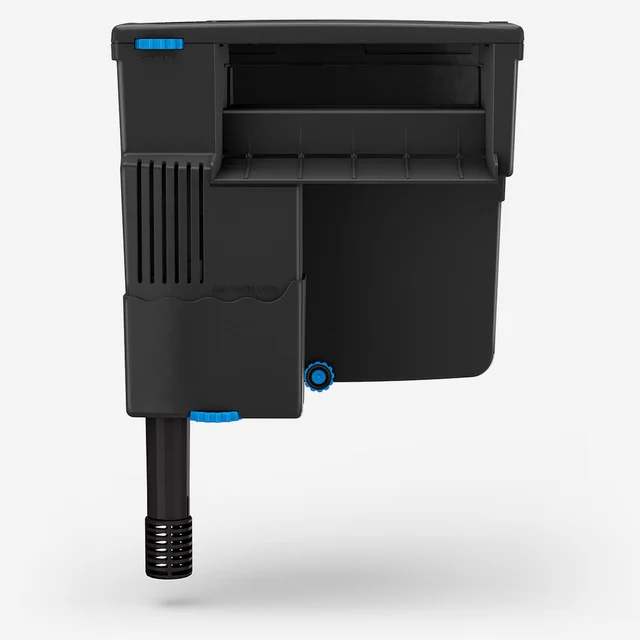
- Buy Seachem Tidal 75 Power Filter A genuinely self-priming hang-on-back filter with a huge open media basket and a surface skimmer built in. Amazon
- Buy Fluval 307 Performance Canister Filter The quiet, energy-sipping canister that hides the hardware and gives you the most media room of the group. Amazon
- It depends Fluval AquaClear 70 Power Filter A hobbyist favorite with an enormous refillable media basket, if you can live with manual priming and no skimmer. Amazon
- Skip Marineland Penguin 350 Bio-Wheel Power Filter The bio-wheel is clever, but proprietary cartridges and dated ergonomics make it hard to recommend today. Amazon
What actually matters
- Biological media capacity - the volume of media that houses beneficial bacteria is the single biggest driver of stable water chemistry; more media means a more forgiving tank.
- Running cost - a cheap filter that demands cartridges forever is rarely cheap in the long run, so reusable-media designs win over time.
- Self-priming and outage recovery - a filter that refills and restarts on its own after a power cut prevents dead filters and the bacterial die-off that follows.
- Noise - hum, splash, and rattle matter a lot when the tank lives in a bedroom or living room; owner reports tell you more than the spec sheet.
- Flow you can adjust - being able to dial flow down protects sensitive or slow-water species and small tanks from being blasted.
- Surface skimming - pulling the oily film off the top of the water improves oxygen exchange and keeps the surface clear.
- Setup and maintenance effort - how easy it is to prime, open, and clean determines whether you'll actually keep up with maintenance.
The specs, in plain English
Green flags vs red flags
Green flags
- A large, open media basket you can pack with reusable sponges and biomedia
- Self-priming with automatic restart after a power outage
- Adjustable flow so you can tune it to your fish and tank size
- Quiet operation described consistently by owners
- A built-in surface skimmer to clear the oily film off the top
- Easy-access clamps or baskets that make cleaning quick rather than a chore
Red flags
- Filtration built around proprietary disposable cartridges you must keep buying
- No way to customize or add biological media
- Repeated owner reports about motor failure in the first few months
- Splashing or rattling noise called out repeatedly by owners
- A big headline flow number paired with a tiny media chamber
- No self-priming and a tendency to stall after outages
Who's who: the brands
- Seachem - Known for water-chemistry expertise; its Tidal hang-on-back filters bring near-canister capability with self-priming and surface skimming.
- Fluval - A mainstream aquatics brand whose canisters are aimed at quiet, high-capacity filtration.
- AquaClear - A Fluval-family line popular with hobbyists for large, customizable hang-on-back media baskets.
- Marineland - A budget-friendly, widely available brand best known for its bio-wheel filters, though those rely on disposable cartridges.
- Eheim - A German maker of canister filters favored by serious keepers.
How to read a listing without getting fooled
Start by looking past the biggest number on the box. Manufacturers love to lead with a high gallons-per-hour rating and a 'rated up to X gallons' claim, but both are optimistic and neither tells you how much biological media the filter actually holds. Find the media capacity or basket volume, because that is what determines how stable and forgiving your tank will be. Next, check whether the media is an open basket you fill yourself or a slot for proprietary cartridges; the first keeps running costs low, the second is a subscription in disguise. Confirm whether the filter is self-priming and how it behaves after a power cut. Finally, read owner reports for the things spec sheets never mention: real-world noise, whether the motor lasts, and how annoying the thing is to clean.
How much should you spend?
Spend where it pays off over years, not just at checkout. The cheapest filters are often cartridge-based, and their low sticker price hides an ongoing cost that never stops, so a mid-range filter with a reusable open basket is often the better long-term value. The value sweet spot for most community tanks is a well-built hang-on-back unit that self-primes and takes any media you like; it does most of what a pricier canister does for far less. Stepping up to a canister is worth it when your tank is large, heavily stocked, or planted and you genuinely want quiet operation and lots of media room. Paying more buys you capacity, quietness, and convenience, but beyond your tank's actual needs those extras sit idle, so match the spend to the bioload rather than to the biggest model on the shelf.
Questions, answered
How big a filter do I need for my tank?
A common rule of thumb is to move at least four to five times your tank's volume through the filter every hour, and to err on the larger side for messy fish or planted tanks. Matching or slightly over-sizing the filter gives you cleaner water and more room for biological media, which makes the whole tank more stable.
Should I get a hang-on-back or a canister filter?
Choose a hang-on-back filter if you want the simplest setup and easy access; the best ones even self-prime and skim the surface. Choose a canister if you have a larger, heavily stocked, or planted tank and want quiet operation and lots of media room, and you don't mind hoses and a unit hidden in the cabinet.
Why do experienced keepers dislike cartridge-based filters?
Cartridges bundle mechanical and chemical media into a disposable pad you replace every few weeks. That is convenient, but it becomes a recurring expense and throws away colonies of beneficial bacteria each time. Basket-style filters let you reuse sponges and biomedia, so running cost stays low and biological filtration stays more stable.
What happens to my filter after a power outage?
Self-priming filters restart on their own when the power returns, which is a real advantage. Filters that need manual filling can stall if they run dry during an outage, so check them after any power interruption. If a filter sits off too long, the beneficial bacteria inside can start to die back, which is why quick restarts matter.
How often do I actually need to clean my filter?
Rinse the mechanical media, like sponges or floss, every few weeks when flow starts to drop, but do it in old tank water rather than tap water so you don't kill the beneficial bacteria. Biological media rarely needs replacing and should be disturbed as little as possible, since it houses the bacteria doing the most important work.
Or jump to the head-to-head: Seachem Tidal 75 Power Filter vs Fluval 307 Performance Canister Filter.