

Pet Supplies
The Best Aquarium Filters: 4 Compared (and One to Skip)
We compared four current canister and hang-on-back aquarium filters on filtration capacity, noise, setup, and long-term running cost.
The short version
For most freshwater tanks, the Seachem Tidal 75 is the smartest buy: it self-primes, skims the surface, and takes any media you want in a large open basket. If you run a heavily stocked or planted tank and want quiet, high-capacity setup, step up to the Fluval 307 canister. The AquaClear 70 is a great customizable HOB but needs manual priming and has no skimmer, so it only wins if tinkering is the point. Skip the Marineland Penguin 350: the bio-wheel is neat, but disposable cartridges keep costing you and the bio-wheel can add water noise. Best for: aquarists who want strong, low-maintenance filtration without paying for cartridges forever.
Our picks at a glance
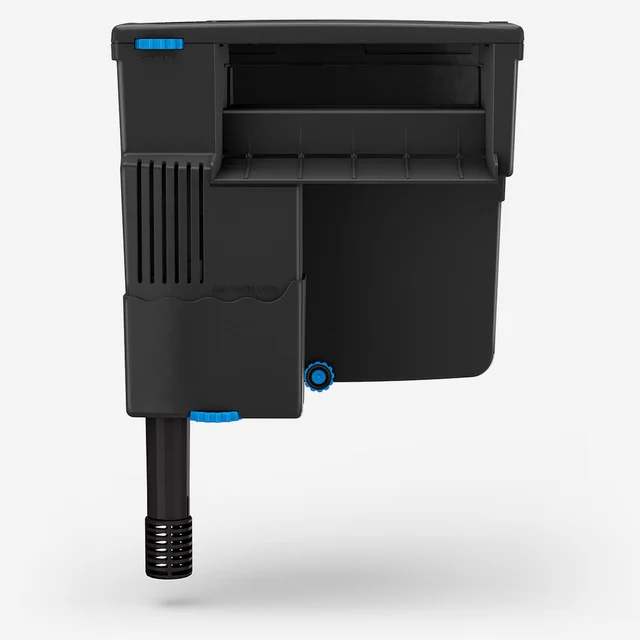
- Seachem Tidal 75 Power Filter - Buy. A genuinely self-priming hang-on-back filter with a huge open media basket and a surface skimmer built in.
- Fluval 307 Performance Canister Filter - Buy. The quiet, energy-sipping canister that hides the hardware and gives you the most media room of the group.
- Fluval AquaClear 70 Power Filter - It depends. A hobbyist favorite with an enormous refillable media basket, if you can live with manual priming and no skimmer.
- Marineland Penguin 350 Bio-Wheel Power Filter - Skip. The bio-wheel is clever, but proprietary cartridges and dated ergonomics make it hard to recommend today.
The verdict in 30 seconds
What mattered most
- Filter type
- Media capacity
- Self-priming
- Surface skimming
- Ongoing media cost
- Noise (owner reports)
A filter is the single most important piece of gear in a healthy aquarium, and the choice really comes down to two families: quiet, high-capacity canisters that sit under the tank, and simple hang-on-back (HOB) units that clip over the rim. We weighed one strong canister against three popular HOBs. Two earn a clear buy, one is a solid pick only if you want maximum media customization, and one is easy to skip because its running costs never stop.
A genuinely self-priming hang-on-back filter with a huge open media basket and a surface skimmer built in.
Best for: Anyone who wants canister-level flexibility and skimming without plumbing a canister under the stand.
- Self-priming pump restarts on its own after a power outage
- Large open basket takes any media you like, no proprietary cartridges
- Built-in surface skimmer and adjustable flow
- Maintenance-reminder indicator and self-cleaning impeller
- Intake and skimmer assembly takes a little fiddling to dial in
- Flow can be strong for very small or nano tanks even at the low setting
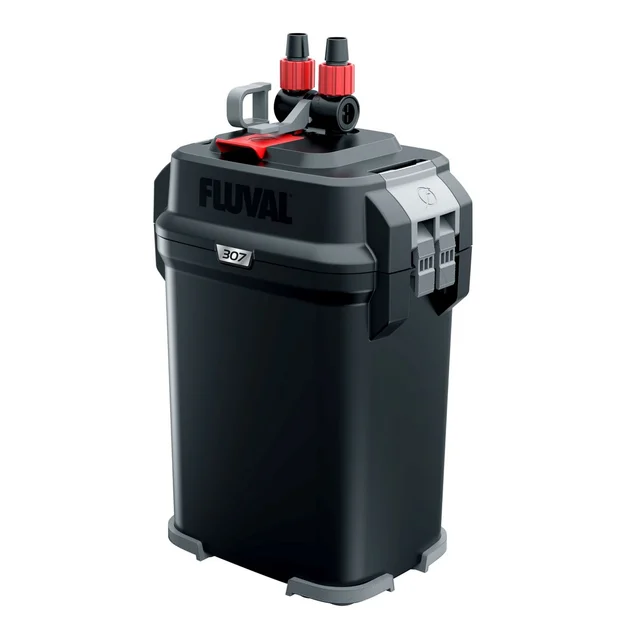
The quiet, energy-sipping canister that hides the hardware and gives you the most media room of the group.
Best for: Owners of larger or heavily stocked tanks who want quiet, high-capacity filtration and don't mind gear under the cabinet.
- Designed for quiet running as a canister
- Large stacked media baskets for heavily stocked or planted tanks
- Energy-efficient pump positioned by the maker for its output
- Stacked media baskets lift out for servicing
- Higher upfront cost than any hang-on-back option
- Priming and hose routing add setup steps HOBs don't have
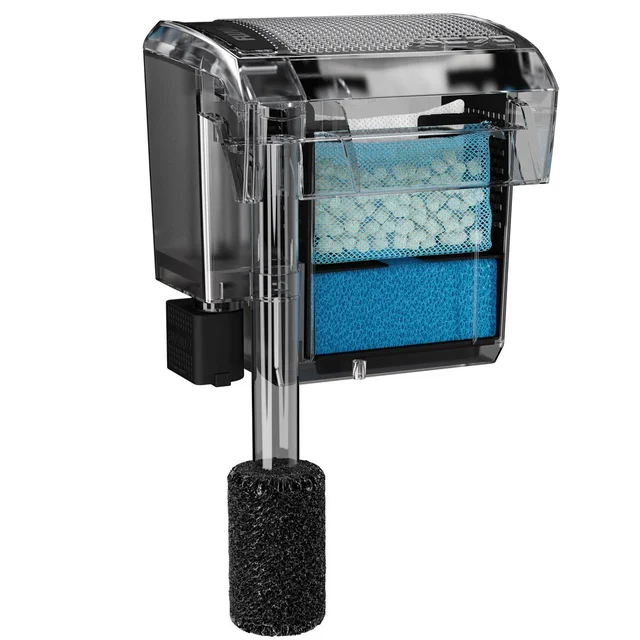
A hobbyist favorite with an enormous refillable media basket, if you can live with manual priming and no skimmer.
Best for: Tinkerers who want to pack and tune their own media and don't mind a more hands-on filter.
- A large media chamber for a hang-on-back filter
- Fully customizable media, so no locked-in cartridge costs
- Adjustable flow suits sensitive or slow-water species
- Not self-priming, so it needs filling and can stall after outages
- No built-in surface skimmer
- Some owners report motor trouble, so keep the warranty details handy
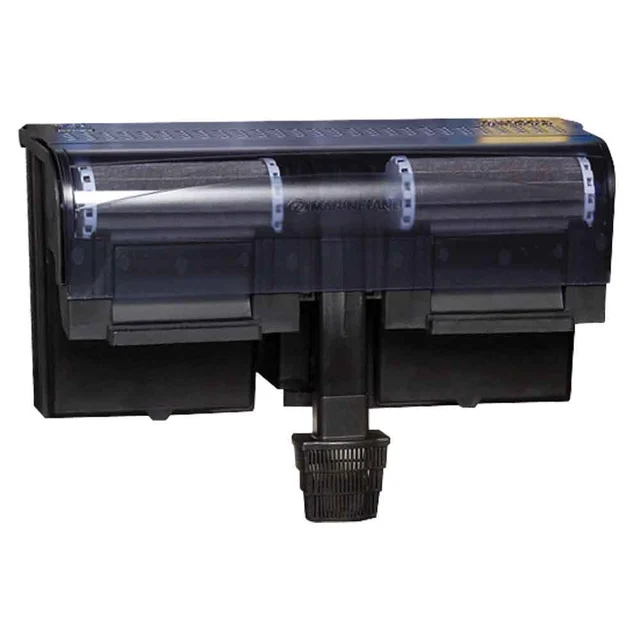
The bio-wheel is clever, but proprietary cartridges and dated ergonomics make it hard to recommend today.
Best for: Budget beginners who want the cheapest name-brand option and don't mind buying cartridges forever.
- Rotating bio-wheel adds well-oxygenated biological filtration
- Low sticker price and very widely available
- Simple slide-in cartridge setup for beginners
- Relies on disposable cartridges that add up over the filter's life
- The bio-wheel design can add splashing and water noise
- Little room to customize media compared with basket-style filters
| Criteria | Seachem Tidal 75 Power Filter Top pick Buy it Buy | Fluval 307 Performance Canister Filter Buy it Buy | AquaClear 70 Power Filter It depends Buy | Marineland Penguin 350 Bio-Wheel Power Filter Skip it Buy |
|---|---|---|---|---|
| Best for | Anyone who wants canister-level flexibility and skimming without plumbing a canister under the stand. | Owners of larger or heavily stocked tanks who want quiet, high-capacity filtration and don't mind gear under the cabinet. | Tinkerers who want to pack and tune their own media and don't mind a more hands-on filter. | Budget beginners who want the cheapest name-brand option and don't mind buying cartridges forever. |
| Price tier | $$ · mid-range | $$$ · premium | $$ · mid-range | $ · budget |
| Filter type | Hang-on-back | Canister (external) | Hang-on-back | Hang-on-back |
| Media capacity | Large open basket | Large (stacked baskets) | Large open basket | Small, cartridge-based |
| Self-priming | Yes, auto-restart | No (manual prime) | No (manual fill) | No (manual fill) |
| Surface skimming | Built-in skimmer | Not built in | None | None |
| Ongoing media cost | Low (reusable media) | Low (reusable media) | Low (reusable media) | High (buy cartridges) |
| Noise (owner reports) | Quiet | Designed to be quiet | Quiet | Bio-wheel splash noise |
| Best tank size | Up to 75 gal | Check maker rating | Check maker rating | Check maker rating |
| Price tier | $$ · mid-range | $$$ · premium | $$ · mid-range | $ · budget |
Which one is right for you?
- Anyone who wants canister-level flexibility and skimming without plumbing a canister under the stand. Buy it Seachem Tidal 75 Power Filter
- Owners of larger or heavily stocked tanks who want quiet, high-capacity filtration and don't mind gear under the cabinet. Buy it Fluval 307 Performance Canister Filter
- Tinkerers who want to pack and tune their own media and don't mind a more hands-on filter. It depends Fluval AquaClear 70 Power Filter
- Budget beginners who want the cheapest name-brand option and don't mind buying cartridges forever. Skip it Marineland Penguin 350 Bio-Wheel Power Filter
How we judged the field
We don’t run our own lab. Instead we compared manufacturer specifications and owner-reported behavior. For aquarium filters, a handful of things matter more than headline flow numbers: how much media the filter holds (which drives biological stability), how quiet it is in a living room, how painful setup and restarts are, and what it costs you to keep running. We weighted long-term running cost heavily, because a cheap filter that demands cartridges forever is rarely cheap in the end.
We compared one canister, the Fluval 307, against three hang-on-back (HOB) units so you can see the real trade-off between capacity and convenience.
Seachem Tidal 75 Power Filter
Buy itThe Tidal 75 is the HOB that behaves like a canister. Its pump sits in the tank and is genuinely self-priming, so there’s no reservoir to fill, no siphon to coax, and it restarts itself after a power outage, which Seachem describes as a self-priming pump. The large open basket takes whatever media you want, a dual intake with a surface skimmer pulls the oily film off the top of the water, and a maintenance indicator nudges you when flow drops. It is flexible for the price. It’s our top pick because it removes the two biggest HOB annoyances, priming and film, without asking you to plumb a canister.
Fluval 307 Performance Canister Filter
Buy itIf you want high capacity and quiet running, the 307 is the answer. As a canister it hides under the cabinet and holds more media than the HOBs here, stacked in lift-out baskets that make servicing cleaner. It is designed to run quietly. The trade-offs are the ones every canister carries: a higher price and a setup that involves hoses and priming. For a heavily stocked or planted tank, that’s a fair deal, and it’s our runner-up overall.
AquaClear 70
It dependsThe AquaClear 70 has a devoted following for one reason: a large, customizable media basket that lets you build exactly the filtration you want with reusable sponges and biomedia. Flow is adjustable, and there are no cartridges to buy. But it is not self-priming, has no surface skimmer, and some owners report motor trouble. If you enjoy tuning your own media stack, it’s excellent; if you want set-and-forget convenience, the Tidal does more for similar money.
Marineland Penguin 350 Bio-Wheel Power Filter
Skip itThe Penguin’s rotating bio-wheel is a genuinely clever idea for biological filtration, and the filter is cheap and everywhere. The problem is what comes after purchase: it’s built around disposable cartridges you replace every few weeks, so it keeps costing you and discards beneficial bacteria each time. The bio-wheel can add splashing and water noise, and there’s little room to customize media. For a beginner on a tight budget it works, but the alternatives here are more flexible and cheaper to run.
Seachem Tidal 75 vs Fluval 307: which should you buy?
This is really a question about how much filtration you need and how much gear you’re willing to hide. The Tidal 75 wins on convenience: it clips on the back, self-primes, skims the surface, and costs less. For the large majority of community tanks it’s more than enough, and it’s the one we’d hand a new aquarist. The Fluval 307 wins on capacity and quiet running. If your tank is heavily stocked, planted, or you simply want lots of biological media and a low hum in the room, the canister earns its higher price and extra setup. Put simply: start with the Tidal 75 unless your tank’s bioload pushes you toward the 307.
What to look for
- Reusable media, not cartridges. Open baskets you fill yourself keep running costs low and biology stable; disposable cartridge systems do the opposite.
- Self-priming and outage recovery. A filter that restarts itself after a power cut saves you from dead filters and mini cycles.
- Media volume over flow rating. Biological capacity, driven by how much media the filter holds, matters more than a big gallons-per-hour number.
- Surface skimming. Pulling the film off the top improves oxygen exchange and keeps the surface clear.
- Right-sizing. Aim to turn over your tank at least four to five times per hour and over-size slightly for messy or planted setups.
- Noise. Check owner reports for hum and splash if the tank lives in a bedroom or living room.
Our final take
For most people, the Seachem Tidal 75 is the filter to buy: it delivers near-canister capability and skimming with hang-on-back simplicity, and it never locks you into cartridges. Step up to the Fluval 307 when your tank’s size or bioload justifies a quiet, high-capacity canister. The AquaClear 70 remains a great choice for hands-on hobbyists who want to build their own media stack. The Marineland Penguin 350 is the one to skip, not because the bio-wheel is bad, but because everything around it, from ongoing cartridge cost to flexibility, has been done better by the others.
Questions, answered
Canister or hang-on-back, which should I get?
Choose a hang-on-back filter like the Seachem Tidal or AquaClear if you want the simplest setup and easy access; the Tidal even self-primes and skims the surface. Choose a canister like the Fluval 307 if you have a larger, heavily stocked, or planted tank and want quiet operation and lots of media room, and you don't mind hoses and a unit hidden in the cabinet.
How big a filter do I need for my tank?
A common rule of thumb is to filter at least four to five times your tank volume per hour, and to err on the larger side for messy fish or planted tanks. Check each maker's tank rating (the Tidal 75 is rated for tanks up to 75 gallons); matching or slightly over-sizing the filter to your tank gives you cleaner water and more room for biological media.
Why do reviewers dislike cartridge-based filters like the Penguin?
Cartridges bundle the mechanical and chemical media into a disposable pad you replace every few weeks, which is convenient but becomes a recurring expense and throws away beneficial bacteria each time. Basket-style filters let you reuse sponges and biomedia, so your running cost is far lower and your biological filtration stays more stable.
Do these filters need priming, and what happens after a power outage?
The Seachem Tidal is self-priming and will restart on its own after the power comes back, which is a real advantage. The AquaClear and Marineland Penguin need to be filled with water to restart, and if they run dry after an outage they can stall, so check them after any power interruption. The Fluval 307 canister needs priming at setup.
Are these safe for both freshwater and saltwater tanks?
All four are commonly used on freshwater aquariums, and Seachem lists the Tidal as suitable for both saltwater and freshwater. This is general product information rather than tailored advice; if you keep sensitive or specialized livestock, confirm flow and media choices for your specific system before buying.
Deciding between the top two? See our head-to-head: Seachem Tidal 75 Power Filter vs Fluval 307 Performance Canister Filter.
More in Pet Supplies
Aquarium Filters, Explained Plain-English guide → Seachem Tidal 75 Power Filter vs Fluval 307 Performance Canister Filter Head-to-head →  The Best Aquarium Gravel Vacuums: 4 Compared (and One to Skip)
  The Best Aquarium Heaters: 4 Compared (and One to Skip)
  The Best Aquarium Protein Skimmers: 4 Compared (and One to Skip)
  The Best Aquarium Substrates: 4 Compared (and One to Skip)