

Pet Supplies
The Best Aquarium Gravel Vacuums: 4 Compared (and One to Skip)
We compared four aquarium gravel vacuums and water change siphons on priming, flow control, substrate handling, reach, and where the dirty water goes.
The short version
For larger tanks, buy the Python No Spill Clean and Fill. It threads onto a faucet and runs water changes without buckets. For smaller tanks, the hygger Hand Operated 3-in-1 Water Changer is a hand-pumped, gravity siphon with extension tubes, so one cheap tool fits several tanks. The Qanvee Aquarium Gravel Vacuum is worth it only if you keep planted nanos or shrimp, where its gentle flow protects aquasoil and carpets. Skip the hygger HG-955 electric cleaner: it adds a pump, a power adapter, and a filter housing to clean, and still leaves you moving water. Best for: large tanks and multi-tank keepers go Python, everyone else starts with the hygger hand pump.
Our picks at a glance
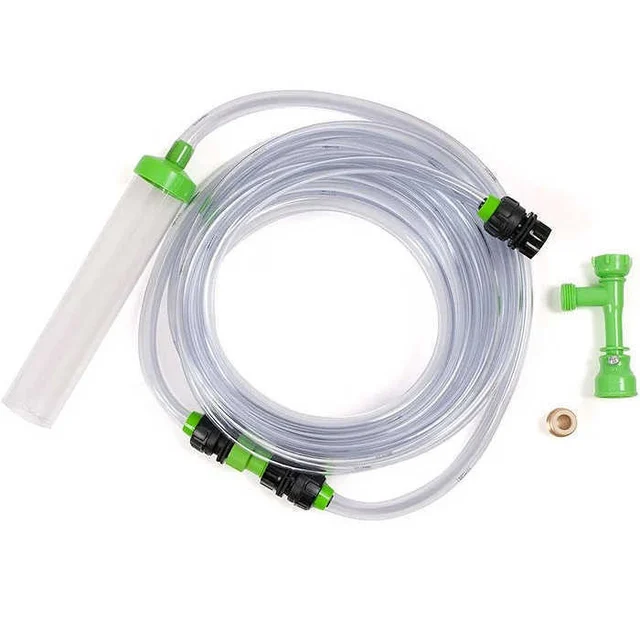
- Python Products Python No Spill Clean and Fill (25 ft) - Buy. Threads onto your faucet, drains to the sink, and refills the tank, so the bucket disappears entirely.
- hygger Hand Operated 3-in-1 Water Changer - Buy. A hand pump starts the siphon, and the extension tubes let one tool fit several tank depths.
- Qanvee Aquarium Gravel Vacuum - It depends. Deliberately gentle flow built for planted tanks, which is a feature in aquasoil and a liability everywhere else.
- hygger 5-in-1 Electric Aquarium Gravel Cleaner (HG-955) - Skip. A submersible pump, a mains cord, and five nozzles bolted onto a job that gravity already handles.
The verdict in 30 seconds
What mattered most
- How it moves water
- Bucket required
- Refills the tank
- Flow control
- Best substrate
- Reach
A gravel vacuum is the tool that decides whether you actually do weekly water changes or keep putting them off. The real differences are not cleaning power, since gravity does most of that work, but how the siphon starts, how finely you can throttle the flow, and whether you end up carrying buckets. We compared a faucet-driven system, two hand-primed siphons, and a powered electric cleaner. Two are easy recommendations, one suits a narrow audience, and one adds complexity without solving the actual problem.
Threads onto your faucet, drains to the sink, and refills the tank, so the bucket disappears entirely.
Best for: Anyone with a tank over roughly 40 gallons, multiple tanks, or a back that objects to buckets.
- Drains and refills without ever lifting a bucket
- Suction scales with how far you open the tap, so it is genuinely adjustable
- Wide gravel tube is designed to lift heavy mulm while gravel drops back
- UV-stabilized tubing made from FDA-approved materials, per the maker
- Needs a faucet with removable aerator threads, which rules out some sprayers and designer taps
- The venturi wastes tap water while it drains
- 25 feet of hose is bulky to coil and store
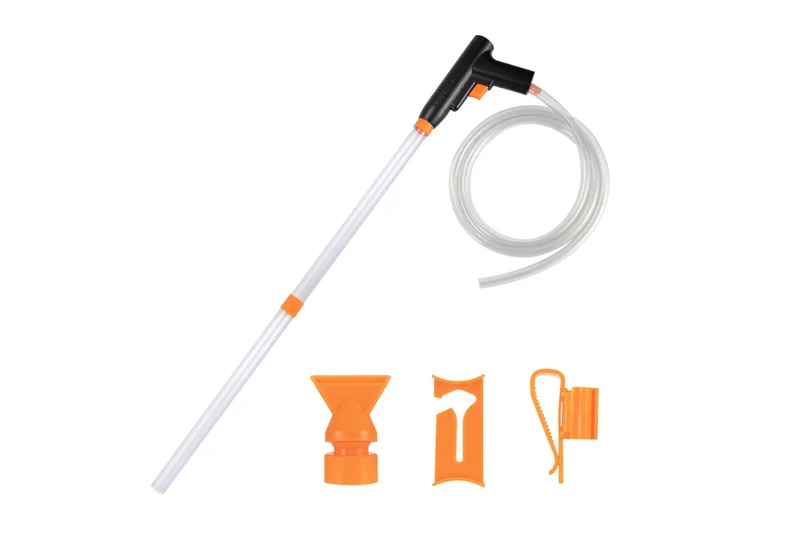
A hand pump starts the siphon, and the extension tubes let one tool fit several tank depths.
Best for: Small to mid size tanks, and anyone whose only faucet cannot take an adapter.
- Spliced extension tubes (16 or 31.4 inches before the head, per the maker) so one tool covers several tank depths
- Hand pump starts the siphon without mouth suction, and needs no electricity
- Includes a flow clamp, duckbill suction inlet, pipe clamp and a 79 inch outlet hose
- Compact to store and inexpensive
- You are still carrying buckets, which becomes the bottleneck on larger tanks
- The outlet must sit well below the tank (the maker says at least 19 inches) for the gravity siphon to work
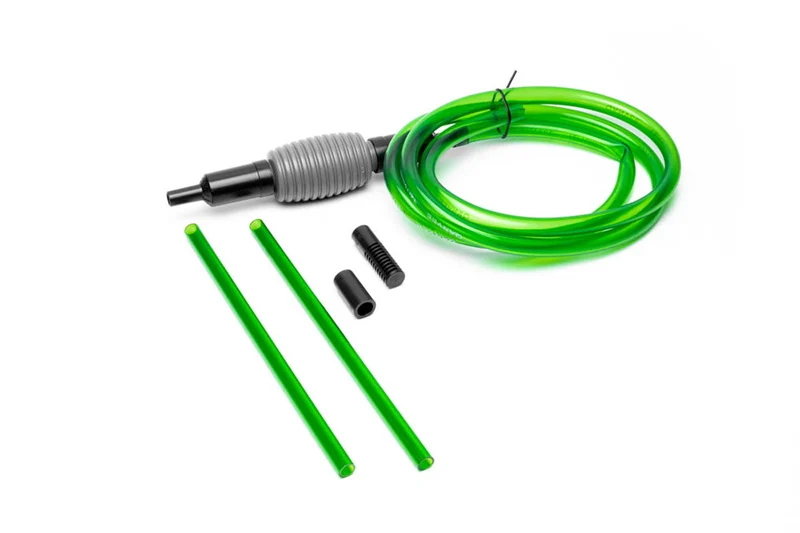
Deliberately gentle flow built for planted tanks, which is a feature in aquasoil and a liability everywhere else.
Best for: Planted nanos, shrimp tanks, and aquascapes where control matters more than speed.
- Gentle, controlled siphon lifts detritus without pulling up aquasoil or uprooting carpet plants
- Priming bulb starts flow without mouth siphoning
- Light, simple construction with a flexible hose
- Slow on coarse gravel and large tanks
- Short rigid tube means awkward angles in deep tanks
- Narrow hose clogs more easily on chunky debris
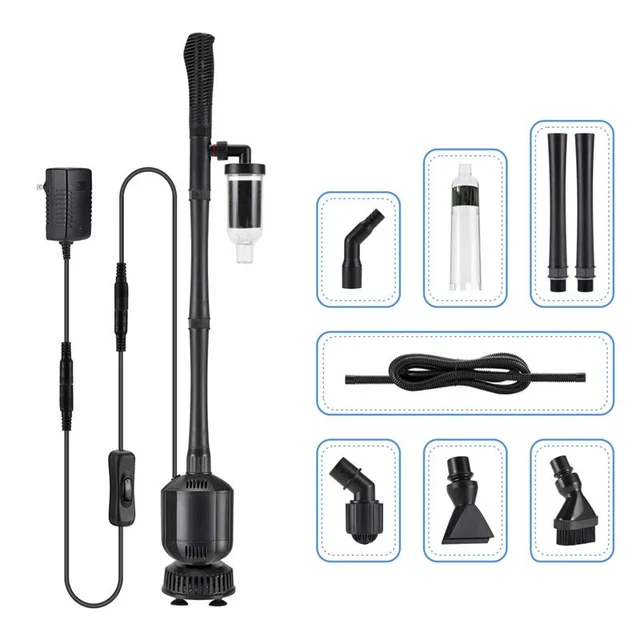
A submersible pump, a mains cord, and five nozzles bolted onto a job that gravity already handles.
Best for: Almost nobody. A faucet-driven system removes buckets more completely.
- Interchangeable heads cover gravel washing, sand washing, a duckbill inlet and a brush
- Adjustable extension tubes (the maker lists 11.4 to 40.5 inches) fit a range of tank depths
- Pumps water out without needing a height drop to the bucket, with two models at 360 and 396 GPH
- The pump body must stay submerged and the unit needs power at the tank
- The filter housing and sponge need rinsing and disassembly after use
- Reliability is not something we could confirm from the maker
- A mains power adapter near the tank, for a tool that still needs a bucket or floor drain
| Criteria | Python No Spill Clean and Fill (25 ft) Top pick | hygger Hand Operated 3-in-1 Water Changer | Qanvee Aquarium Gravel Vacuum | hygger 5-in-1 Electric Aquarium Gravel Cleaner (HG-955) |
|---|---|---|---|---|
| Verdict | Buy it | Buy it | It depends | Skip it |
| Best for | Anyone with a tank over roughly 40 gallons, multiple tanks, or a back that objects to buckets. | Small to mid size tanks, and anyone whose only faucet cannot take an adapter. | Planted nanos, shrimp tanks, and aquascapes where control matters more than speed. | Almost nobody. A faucet-driven system removes buckets more completely. |
| Price tier | $ · mid-range | $ · budget | $ · budget | $ · mid-range |
| How it moves water | Faucet venturi suction | Hand pump primed siphon | Priming bulb siphon | Submersible electric pump |
| Bucket required | No, drains to the sink | Yes | Yes | Yes, or a drain |
| Refills the tank | Yes, per the maker no buckets needed | No | No | No |
| Flow control | Tap opening controls suction | Flow clamp | Gentle by design | Pump output set by model |
| Best substrate | Coarse gravel and pebble | Gravel and coarse sand | Aquasoil, fine sand, planted carpets | Sand and fine gravel |
| Reach | 25 ft hose, long gravel tube | Extension tubes, 16 to 34 in per the maker | Short rigid tube | Adjustable extension tubes |
| Best tank size | Larger tanks and multi-tank setups | Small to mid size tanks | Nano and small planted tanks | Hard to justify |
| Price tier | $ · mid-range | $ · budget | $ · budget | $ · mid-range |
Which one is right for you?
- Anyone with a tank over roughly 40 gallons, multiple tanks, or a back that objects to buckets. Buy it Python Products Python No Spill Clean and Fill (25 ft)
- Small to mid size tanks, and anyone whose only faucet cannot take an adapter. Buy it hygger Hand Operated 3-in-1 Water Changer
- Planted nanos, shrimp tanks, and aquascapes where control matters more than speed. It depends Qanvee Aquarium Gravel Vacuum
- Almost nobody. A faucet-driven system removes buckets more completely. Skip it hygger 5-in-1 Electric Aquarium Gravel Cleaner (HG-955)
How we judged the field
Gravel vacuums are simple tools that fail in boring ways: they clog, they kink, they lose siphon halfway through a water change, or they pull your substrate up the tube along with the waste. We worked from manufacturer specifications rather than running our own lab.
Four things separated the good tools from the annoying ones.
Priming. Any vacuum that requires mouth-siphoning or repeated shaking gets old by week three. Self-priming bulbs, pump handles, and faucet-driven venturi systems all work, but they fail differently: bulbs crack, pump handles wear, and faucet systems depend on your tap.
Flow control. A vacuum with no valve is a blunt instrument. Coarse gravel tolerates full-bore suction. Sand, aquasoil, and planted carpets do not, and an adjustable valve is the difference between cleaning a planted tank and rebuilding it.
Tube diameter versus substrate. A wide tube lets gravel tumble and fall back while debris rises. A narrow tube is gentler on fine substrate but slower. Nobody makes one tube that is right for both a 75 gallon gravel tank and a 5 gallon shrimp bowl.
Where the dirty water goes. This is the single biggest quality-of-life factor. Buckets are free but heavy. Faucet-driven systems eliminate the bucket entirely at the cost of needing a threaded tap and wasting some tap water to drive the venturi.
This is the tool that changes how often people actually do water changes. It threads onto a faucet, uses the tap’s flow to create suction, and drains straight down the sink. Flip the switch and it refills the tank from the same hose. No buckets, no lifting, no sloshing across the floor.
The maker says the system cuts maintenance time in half and needs no buckets, siphons or tank tear-downs. The gravel tube is wide enough to lift heavy mulm out of coarse gravel while letting the gravel drop back, and suction scales with how far you open the tap.
The caveats are real. You need a faucet with removable aerator threads, which rules out some pull-out sprayers and many modern designer taps without an adapter. The suction wastes tap water while draining, which matters if you are on a meter or in a drought region. And 25 feet of hose is bulky to coil and store. For anyone with a big tank, multiple tanks, or a bad back, none of that outweighs the benefit.
This is the bucket-based pick, and it is the one most people should start with. A hand pump starts the siphon, and spliced extension tubes (16 or 31.4 inches before the head, per the maker) let the same tool reach different tank depths without you putting your arm in the water up to the shoulder.
The extension tubes are the underrated part, since many budget siphons ship with one fixed tube length. The kit includes a duckbill suction inlet for spot-cleaning around decor, a pipe clamp, a 79 inch outlet hose and a flow clamp so you can throttle suction for finer substrate. It works by gravity, so the outlet needs to sit well below the tank.
Its limits are the limits of every bucket siphon: you are still carrying water. On larger tanks the bucket trips become the bottleneck, not the vacuum.
Qanvee builds this for the planted tank crowd, and it shows. The intake is narrow, the flow is deliberately gentle, and the priming bulb starts a siphon without a violent inrush that would lift aquasoil. If your tank has a carpet of dwarf hairgrass or a shallow bed of fine soil, that restraint is exactly what you want, which suits pulling detritus off the substrate without cratering the layout.
That same restraint is the problem everywhere else. On coarse gravel in a large tank it is slow, and the thin hose drains slowly, which turns a big water change into a long sit. The tube is also short enough that deep tanks require awkward angles.
Buy it if you keep planted nanos or shrimp tanks and value control over speed. If your tank is a standard gravel community setup, one of the picks above will do the same job faster.
The pitch is appealing: a submersible pump pushes water out through a hose while interchangeable heads let one tool vacuum gravel, wash sand, and brush surfaces. In practice this is more machine than the job needs.
The pump body must stay submerged (the maker says it works in as little as 2 inches of water), and the unit needs rinsing and disassembly of the filter housing after use. It also needs a power adapter near the tank, which some keepers simply will not accept.
The deciding factor is the problem you are solving. If lifting buckets is the issue, a Python-style system removes them more completely.
Python No Spill Clean and Fill (25 ft) vs hygger Hand Operated 3-in-1 Water Changer: which should you buy?
These two are not really competing on cleaning ability. Both lift waste out of gravel effectively. They compete on where the water goes.
Pick the Python if your tank is large, if you keep more than one tank, or if carrying buckets is the reason you skip water changes. The requirement is a faucet you can thread an adapter onto within hose reach of the tank. Get the length that reaches with slack; a hose stretched taut is a hose that gets yanked off the tap.
Pick the hygger if your tank is small to mid size, if your only faucet is a sealed pull-out sprayer, or if you would rather not run a 25 foot hose through your home every week. It is cheaper, compact to store, and for a 20 gallon tank a single bucket finishes the job.
If you are genuinely torn, buy the hygger first. It is cheap enough that upgrading later costs you very little, and plenty of people keep one as a spot-cleaning tool even after they buy a faucet system.
What to look for
- A priming method you trust. Pump handle, squeeze bulb, or faucet venturi. Anything requiring mouth suction is a non-starter.
- An adjustable flow valve or clamp, especially with sand, aquasoil, or planted carpets.
- Tube diameter matched to your substrate. Wide tubes for coarse gravel so it tumbles and drops back; narrow tubes for fine sand so it does not disappear down the hose.
- Rigid tube length that actually reaches your bottom glass without submerging your shoulder. Telescoping tubes solve this across multiple tanks.
- Hose length with slack. Measure from tank to sink or bucket, then add a few feet.
- A bucket clip if you are going the bucket route. It stops the hose whipping out and soaking the floor.
- Serviceable parts. Replacement gravel tubes, washers, and hoses that you can buy separately mean the tool outlives its first failure.
- Fish safety. Wide tubes can still pull in small fish and shrimp; a pre-filter sponge or fine mesh over the intake is worth it in shrimp tanks.
Our final take
The best gravel vacuum is the one that removes the reason you put off water changes. For most people with a mid-size or large tank, that reason is buckets, and the Python No Spill Clean and Fill is the answer: it drains to the sink, refills from the sink, and it needs no buckets.
For smaller tanks, a good bucket siphon is not a compromise. The hygger Hand Operated 3-in-1 Water Changer starts a siphon with a hand pump, takes extension tubes to fit different tanks, and costs so little that there is no reason to suffer a bad one. Planted nano and shrimp keepers should look at the Qanvee for its gentler flow.
The one category we would leave alone is powered gravel cleaners like the hygger HG-955. They add a pump, a cord, and a clog point to a job that gravity already does well, and they still leave you moving water somewhere. A faucet-driven system makes the bucket problem go away.
Questions, answered
Do I really need a faucet-driven system, or is a bucket siphon enough?
It depends almost entirely on tank volume. A 20 percent change on a 20 gallon tank is one bucket, which nobody minds. The same change on a 75 gallon tank is several bucket trips each way, and that is the point where people quietly start skipping weeks. If your tank is large, or you keep several tanks, a faucet system pays for itself in consistency. Below that, a good hand-primed siphon is genuinely all you need.
How often should I vacuum aquarium gravel?
Most keepers vacuum during their regular water change, typically weekly or every other week, taking out 20 to 30 percent of the volume. You do not need to hit the entire substrate every time. Working through a third of the tank floor each session is common practice and keeps you from stripping too much beneficial bacteria at once. Heavily stocked or messy-fish tanks need more; lightly stocked planted tanks need much less.
Will a gravel vacuum work with sand?
Yes, but technique changes. With sand you hover the tube an inch or two above the surface rather than plunging it in, so the lighter waste lifts off while the sand stays put. Flow control matters far more here: a vacuum with no valve will happily send half your substrate down the hose. A narrower tube, a flow clamp, or a partly closed tap all work.
Can a gravel vacuum suck up fish or shrimp?
It can, and it usually is not fatal. Wide gravel tubes can pull in small fish, and they can often be returned to the tank if you catch them quickly. The real risk is baby fish and shrimplets, which are small enough to vanish before you notice. In a shrimp or breeding tank, stretch a piece of fine mesh or a pre-filter sponge over the intake.
Are electric or battery-powered gravel vacuums worth it?
They solve the priming problem, which gravity and a squeeze bulb already solve for far less money, and they introduce new ones: pumps that must stay submerged, intakes that clog on gravel, filter chambers to disassemble, and a power cord near water. Battery models that filter and return water to the tank do not perform a water change at all, they just move detritus into a bag. If the thing you actually want is to stop carrying buckets, a faucet-driven system addresses that directly.
Deciding between the top two? See our head-to-head: Python Products Python No Spill Clean and Fill (25 ft) vs hygger Hand Operated 3-in-1 Water Changer.
More Pet Supplies reviews
 The Best Aquarium Heaters: 4 Compared (and One to Skip)
  The Best Aquarium Protein Skimmers: 4 Compared (and One to Skip)
  The Best Aquarium Substrates: 4 Compared (and One to Skip)
  The Best Aquarium Water Test Kits: 4 Compared (and One to Skip)
  The Best Aquarium Thermometers: 4 Compared (and One to Skip)
  Best Automatic Pet Feeders: What Reviewers Actually Recommend (and One to Skip)