

Pet Supplies
The Best Aquarium Heaters: 4 Compared (and One to Skip)
We compared four submersible aquarium heaters for freshwater and saltwater tanks on temperature accuracy, build, safety, and corrosion resistance.
The short version
For most aquariums, a fully adjustable heater with a proven thermostat is all you need, and the Eheim Jäger TruTemp delivers that at a fair price. If you keep saltwater or just want belt-and-suspenders safety, the Finnex Titanium Heater & Controller Kit adds a corrosion-proof element and an external controller that shuts power off at your set temperature. The Chihiros Heater Pro is gorgeous and app-controlled but costs more than most tanks require. Skip the bare Finnex THD titanium element unless you already own a standalone controller, because on its own it has no thermostat and will heat until you unplug it. Whatever you choose, size the wattage to your tank volume, add a guard, and unplug before water changes. Best for: reliable, safe heating in freshwater and saltwater tanks alike.
Our picks at a glance
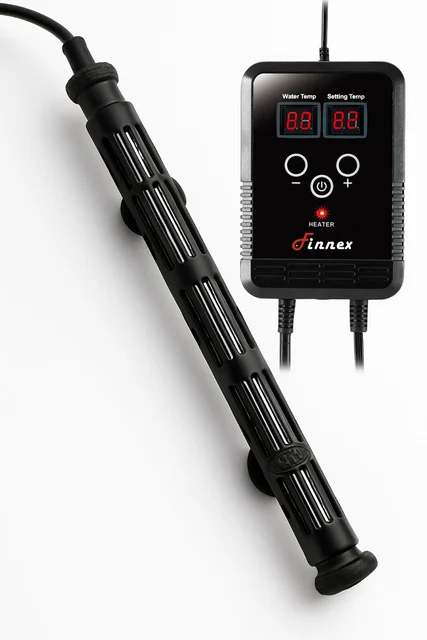
- Finnex Titanium Heater & Controller Kit (TH500W + 910M) - Buy. A corrosion-proof titanium element plus an external digital controller: the safest all-rounder here.
- Eheim Jäger TruTemp Submersible Aquarium Heater - Buy. A decades-proven adjustable glass heater that just works, for a sensible price.
- Chihiros Heater Pro - It depends. A beautiful app-controlled smart heater that is more than most tanks need.
- Finnex THD Titanium Heater Element - Skip. A bare titanium element with no thermostat: a trap unless you already own a controller.
The verdict in 30 seconds
What mattered most
- Temperature control
- Build / shatter resistance
- Saltwater suitability
- Safety features
- Display and ease of use
- Reliability track record
A heater is the one piece of aquarium gear that can quietly wipe out a whole tank if it fails, either by letting fish chill or by sticking on and cooking them. So we weighted temperature accuracy, fail-safe behavior, and build quality far above flashy features. Two of these earn an easy recommendation, one is a splurge that only some keepers need, and one is a component you should not buy on its own.
A corrosion-proof titanium element plus an external digital controller: the safest all-rounder here.
Best for: Saltwater and reef keepers, and anyone who wants external, controller-based temperature safety.
- Titanium element will not corrode, so it genuinely suits saltwater and reef tanks
- External digital controller shows water temp and set temp and cuts power at your target, adding a second layer of safety
- Shatterproof metal tube means no glass to crack against rock or glass
- Costs more than a simple glass heater
- The controller box and extra cabling add clutter, and you should confirm the probe placement and calibration on setup
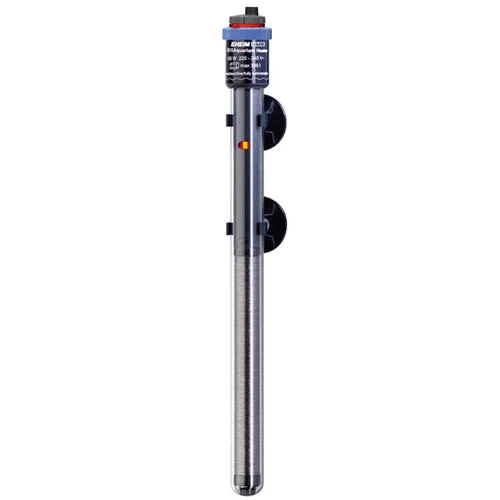
A decades-proven adjustable glass heater that just works, for a sensible price.
Best for: Most freshwater and community tanks, and keepers who want a proven, no-frills adjustable heater.
- Independent testing and long-run owner reports point to strong reliability and temperature accuracy
- Fully adjustable TruTemp dial can be recalibrated to correct for drift
- Runs in freshwater and saltwater, with a wide wattage lineup to size to any tank
- The laboratory-glass tube is break-resistant but can still crack if knocked against rock or glass
- No digital readout or external controller, so you rely on a separate thermometer to verify temperature
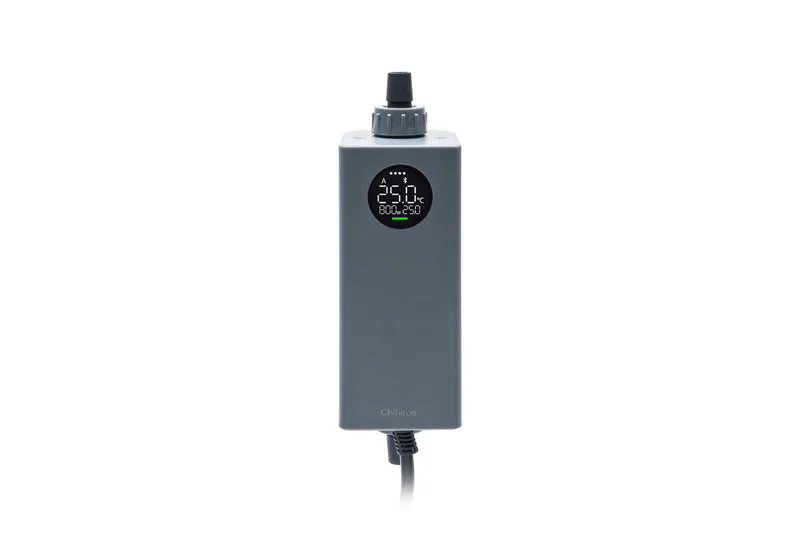
A beautiful app-controlled smart heater that is more than most tanks need.
Best for: Aquascapers and gadget-minded keepers who want app control and a display-worthy design.
- Crisp external OLED controller with app control and fine temperature precision
- Stainless (non-glass) tube and a tidy, modern design favored by aquascapers
- Real-time temperature display with adjustable safety limits
- You pay a premium for features many tanks will never use
- App and Bluetooth centric, and a newer entrant to heaters, so its long-term reliability record is still thin
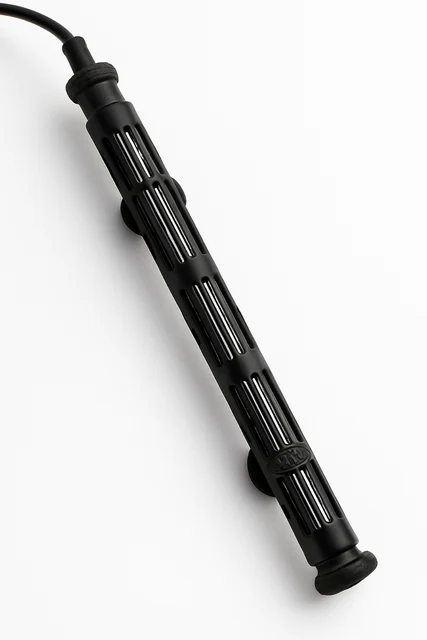
A bare titanium element with no thermostat: a trap unless you already own a controller.
Best for: Advanced keepers who already run a separate temperature controller, and nobody else.
- Corrosion-proof titanium build with a protective guard
- A cheap way to add heating capacity if you already run a standalone temperature controller
- It has no thermostat or controller of any kind, so on its own it heats at full power until you unplug it and can overheat a tank
- Easy to buy by mistake thinking it is a complete, self-regulating heater
| Criteria | Finnex Titanium Heater & Controller Kit (TH500W + 910M) Top pick | Eheim Jäger TruTemp Submersible Aquarium Heater | Chihiros Heater Pro | Finnex THD Titanium Heater Element |
|---|---|---|---|---|
| Verdict | Buy it | Buy it | It depends | Skip it |
| Best for | Saltwater and reef keepers, and anyone who wants external, controller-based temperature safety. | Most freshwater and community tanks, and keepers who want a proven, no-frills adjustable heater. | Aquascapers and gadget-minded keepers who want app control and a display-worthy design. | Advanced keepers who already run a separate temperature controller, and nobody else. |
| Price tier | $$$ · premium | $$ · mid-range | $$$ · premium | $ · budget |
| Temperature control | External digital controller, precise | Adjustable dial, accurate | App plus OLED, very precise | None - heats at full power only |
| Build / shatter resistance | Titanium, shatterproof | Break-resistant glass | Stainless, shatterproof | Titanium, shatterproof |
| Saltwater suitability | Excellent (titanium) | OK (glass, fully rated) | Good (stainless) | Excellent (titanium) |
| Safety features | Controller cutoff plus probe | Thermal run-dry shutoff | App alerts and set limits | None on its own |
| Display and ease of use | Dual LED display | Dial, no display | OLED plus app | No display or control |
| Reliability track record | Strong owner reports | Decades, well proven | Newer, limited history | N/A (component only) |
| Price tier | $$$ · premium | $$ · mid-range | $$$ · premium | $ · budget |
Which one is right for you?
- Saltwater and reef keepers, and anyone who wants external, controller-based temperature safety. Buy it Finnex Titanium Heater & Controller Kit (TH500W + 910M)
- Most freshwater and community tanks, and keepers who want a proven, no-frills adjustable heater. Buy it Eheim Jäger TruTemp Submersible Aquarium Heater
- Aquascapers and gadget-minded keepers who want app control and a display-worthy design. It depends Chihiros Heater Pro
- Advanced keepers who already run a separate temperature controller, and nobody else. Skip it Finnex THD Titanium Heater Element
How we judged the field
We do not run our own lab. Instead we synthesize independent testing, long-run owner reports, and manufacturer specifications, then weight them toward the things that actually protect livestock. A heater’s job is boring and critical: hold a stable temperature for years without either failing cold or sticking on and overheating the tank. So temperature accuracy and fail-safe behavior counted far more than displays or app tricks. We also looked hard at build material (glass versus titanium or stainless), suitability for saltwater, and whether the design encourages safe use, meaning a guard to keep fish off the hot tube and a thermostat or external controller to cut power at the set point. Prices are given only as broad tiers.
Finnex Titanium Heater & Controller Kit (TH500W + 910M) - buy
This is the setup we would trust with a full tank of fish. The heater itself is a titanium tube, so there is no glass to shatter and no corrosion worry in saltwater, and it pairs with an external digital controller that displays both the current water temperature and your set point. Because the controller switches the heater off once the water hits target, you get a genuine second layer of protection beyond the heating element alone. Owner reports are strong on both accuracy and longevity. The trade-offs are honest ones: it costs more than a plain glass heater, and the controller box plus its probe and cabling add clutter you have to tuck away. Verify the probe is well placed and the reading matches an independent thermometer when you first set it up.
Eheim Jäger TruTemp Submersible Aquarium Heater - buy
The Jäger is the heater a lot of experienced hobbyists quietly keep buying, and for good reason. Independent testing and years of owner feedback point to dependable accuracy, and the adjustable TruTemp dial can be recalibrated so you can dial out any drift over time. It runs happily in freshwater and saltwater and comes in a wide range of wattages, so you can size it precisely to your tank. It is still a glass heater, so it demands a little care around rockwork and during maintenance, and there is no digital display, which means you should always run a separate thermometer. But as a proven, no-drama, adjustable heater at a mid-range price, it is very hard to beat and is our value pick.
Chihiros Heater Pro - it depends
The Heater Pro is the most modern-feeling option here: a stainless heating tube with a sleek external controller that has a crisp OLED display and Bluetooth app control, plus adjustable safety limits and a real-time temperature readout. If you are an aquascaper who wants the tidy look and the ability to check and tweak temperature from your phone, it is a genuine pleasure to use. The catch is value and track record. You pay a premium for smart features many tanks will never need, the experience leans heavily on the app, and Chihiros is a newer entrant to heaters, so its long-term reliability history is still thin compared with the established names. Buy it for the features and the design, not because a basic tank requires it.
Finnex THD Titanium Heater Element - skip
This one is a warning as much as a review. The THD is just the titanium heating element and its guard, with no thermostat and no controller of any kind. Plug it into the wall on its own and it heats at full power continuously until you unplug it, which is exactly how tanks get cooked. It is a perfectly good component if you already run a standalone temperature controller and you know you are buying only the element, but it is dangerously easy to purchase by mistake, expecting a complete, self-regulating heater. For almost every reader, skip it and buy the Finnex kit above, which is this same style of element paired with the controller that makes it safe.
Finnex Titanium Heater & Controller Kit vs Eheim Jäger TruTemp: which should you buy?
These two cover the two most common needs. The Eheim Jäger TruTemp is the better default for a typical freshwater or community tank: it is accurate, proven over decades, adjustable, and costs less. If your tank is glass-safe and you are diligent about a separate thermometer, it will serve you for years. The Finnex kit earns the top spot when the stakes or the environment go up. In saltwater and reef tanks the titanium element sidesteps corrosion, and the external controller adds a real fail-safe by cutting power at your set temperature rather than trusting a single internal thermostat. Put simply: choose the Eheim to save money on a straightforward tank, and step up to the Finnex kit for saltwater or for the extra peace of mind of controller-based shutoff.
What to look for
- A real thermostat or external controller. The heater must cut its own power at a set temperature. A bare element with no control is not a complete heater.
- Build material. Titanium and stainless are shatterproof and corrosion-resistant, which matters most in saltwater; quality glass is fine for freshwater with a little care.
- Correct wattage for your volume. Size to the tank and the room temperature, and consider two smaller heaters on large tanks for redundancy.
- A guard. It keeps fish, shrimp, and snails from burning themselves on the tube and holds the element off the glass and substrate.
- Verifiable temperature. A display helps, but always cross-check with an independent thermometer.
- Fully submersible rating. So you can mount it low and horizontally near flow for even heat.
Our final take
Heating is not the place to gamble. For most freshwater tanks, the Eheim Jäger TruTemp gives you proven accuracy and adjustability at a fair price, and it is the easy recommendation. For saltwater, larger systems, or anyone who wants a genuine fail-safe, the Finnex Titanium Heater & Controller Kit is worth the extra outlay for its corrosion-proof element and external cutoff. The Chihiros Heater Pro is a lovely luxury if you want app control and a showpiece design, but it is a want rather than a need. And steer clear of the bare Finnex THD element unless you already own a controller, because a heater with no thermostat is exactly the failure mode the rest of this guide is trying to help you avoid. Whatever you pick, size it to your tank, fit a guard, and unplug before every water change.
Questions, answered
How many watts of heater do I need for my tank?
Size the heater to the water volume and to how cold the room gets. A common rule of thumb is roughly 5 watts per gallon for a tank in a normally heated room, and a bit more if the room runs cold or the tank is large. For big tanks, many keepers split the load across two smaller heaters placed at opposite ends, so no single unit can overheat the tank if it sticks on and the tank keeps some heat if one fails.
Do I need to unplug the heater during water changes?
Yes. Always unplug the heater before you drain water, and never let a powered heater sit exposed to air. Glass heaters in particular can crack or burn out when the hot tube is uncovered, and a hot tube can crack if cool water suddenly hits it. Unplug first, let the heater cool for several minutes, then do your water change, and only plug it back in once it is fully submerged again.
Should I use a heater guard and a separate temperature controller?
Both help. A guard keeps fish, shrimp, and snails from resting against the hot tube (which can cause burns) and holds the tube off the substrate or glass. A separate temperature controller, or a heater with a reliable built-in thermostat, cuts power at your set temperature so a stuck heater cannot keep cooking the tank. That redundancy is the single biggest safety upgrade you can make.
Are these heaters safe for both freshwater and saltwater?
Titanium and stainless heaters are the best choice for saltwater because they resist corrosion, while a fully submersible glass heater rated for marine use is fine for freshwater and generally acceptable for saltwater too. Whatever the material, make sure it is fully submersible, keep it clean, and check it periodically for cracks, salt creep, or a fogged tube.
Where should I place the heater in the tank?
Position the heater near water movement, such as a filter outflow or a powerhead, so heated water circulates evenly instead of pooling in one spot. Many submersible models can be mounted low and horizontally for better mixing. Always confirm the actual water temperature with an independent thermometer rather than trusting the heater's dial or display alone. This is general product information to help you shop, not a substitute for the manufacturer's instructions.
Deciding between the top two? See our head-to-head: Finnex Titanium Heater & Controller Kit (TH500W + 910M) vs Eheim Jäger TruTemp Submersible Aquarium Heater.
More Pet Supplies reviews
 The Best Aquarium Protein Skimmers: 4 Compared (and One to Skip)
  The Best Aquarium Substrates: 4 Compared (and One to Skip)
  The Best Aquarium Water Test Kits: 4 Compared (and One to Skip)
  The Best Aquarium Thermometers: 4 Compared (and One to Skip)
  Best Automatic Pet Feeders: What Reviewers Actually Recommend (and One to Skip)
  The Best Bird Cages: 4 Compared (and One to Skip)