Explained
Aquarium Heaters, Explained
After reading this you'll know exactly what wattage, thermostat, material, and controller specs mean, and how to pick a heater that keeps your fish safe.
In this guide
An aquarium heater has one boring but critical job: hold your tank at a steady temperature for years without failing cold or sticking on and cooking everything inside. The listings are full of watt ratings, thermostat claims, and material buzzwords that make it hard to tell a safe, complete heater from a bare component. This guide decodes all of it so you can shop with a clear head.
The 30-second version
- A heater must control its own power. so a real thermostat or an external controller that cuts power at a set temperature is the non-negotiable feature, not displays or app tricks.
- Size the wattage to your water volume and to how cold the room gets, roughly 5 watts per gallon as a starting rule, and consider two smaller heaters on big tanks for redundancy.
- Material decides saltwater fitness: titanium and stainless are non-glass and corrosion-resistant, while quality glass is fine for freshwater with a little care.
- Redundancy is the real safety upgrade. pairing the heater with a separate controller and a guard protects livestock better than most premium features.
- Never trust the dial alone. always cross-check the real water temperature with an independent thermometer.
The products this guide is about
Our verdict on each, with the full reasoning on the companion review.
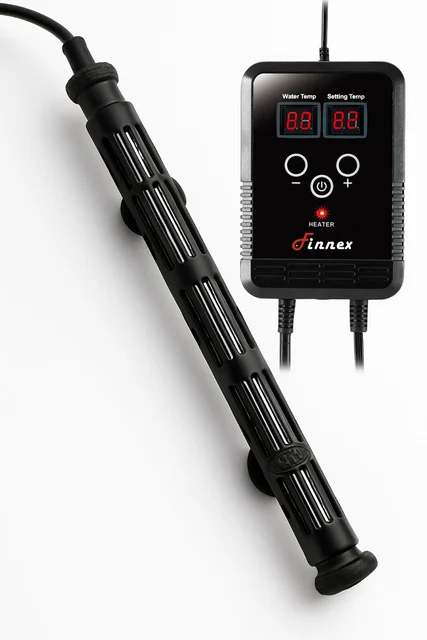
- Buy Finnex Titanium Heater & Controller Kit (TH500W + 910M) A corrosion-resistant titanium element plus an external digital controller: the safest all-rounder here.
- Buy Eheim Jäger TruTemp Submersible Aquarium Heater A long-running adjustable glass heater at a sensible price. Amazon
- It depends Chihiros Heater Pro A beautiful app-controlled smart heater that is more than most tanks need.
- Skip Finnex THD Titanium Heater Element A bare titanium element with no thermostat: a trap unless you already own a controller. Amazon
What actually matters
- A real thermostat or external controller - the heater has to shut its own power off at a target temperature. A bare heating element with no control heats at full power until you unplug it and can cook a tank.
- Correct wattage for your volume - too little and the tank never reaches temperature in a cold room; too much and a stuck heater overheats faster. Match watts to gallons and room conditions.
- Build material - titanium and stainless have no glass to shatter and resist corrosion, which matters most in saltwater; glass is cheaper and fine for freshwater if you handle it carefully.
- Fully submersible rating - so you can mount it low and horizontally near water flow for even heating instead of a hot pocket in one corner.
- A guard - keeps fish, shrimp, and snails from resting on the hot tube and burning themselves, and holds the element off the glass and substrate.
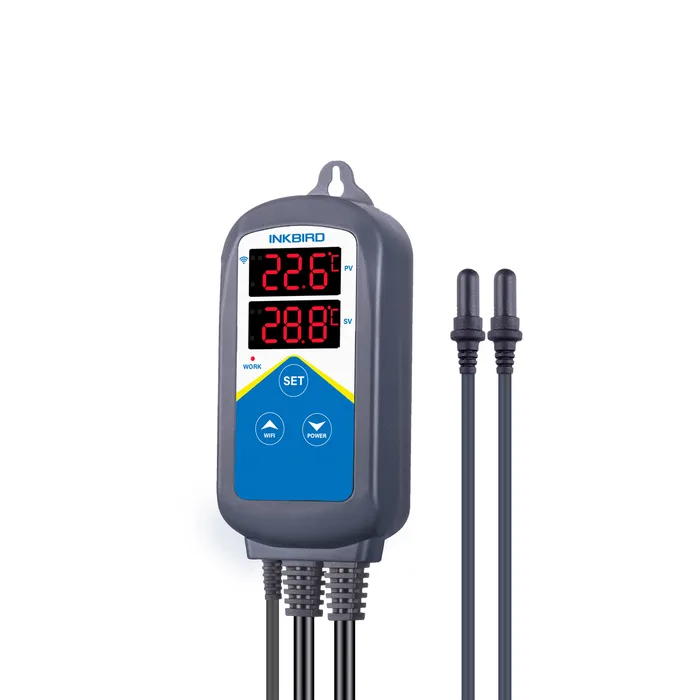
- Verifiable temperature - a display or controller readout helps, but the design should make it easy to confirm the true temperature with a separate thermometer.
- Track record - a heater guards live animals for years, so an established reliability record matters more than novelty.
The specs, in plain English
Green flags vs red flags
Green flags
- Has a genuine adjustable thermostat, or comes as a kit with an external controller that cuts power at your set point
- States it is fully submersible and comes with a mounting bracket and a guard
- Offers a wattage lineup so you can size precisely to your tank rather than one-size-fits-all
- Titanium or stainless element if you keep or plan to keep saltwater or reef
- An established track record of stable temperatures over years
Red flags
- It's a bare heating element with no thermostat or controller - that's a component, not a finished heater, and will heat until unplugged
- No mention of how it regulates temperature, or vague 'auto' claims with no adjustable set point
- Wattage far too low for your tank volume, or a single huge heater on a large tank with no redundancy
- Glass tube marketed for a rough setup with rockwork and no guard included
- A brand-new smart heater leaning entirely on an app, with little reliability history
Who's who: the brands
- Eheim - German maker whose Jäger line includes adjustable glass heaters aimed at freshwater and community tanks.
- Finnex - Known for titanium heaters and external digital controllers, with a dual-relay overheat protection design on its controllers, favored by saltwater and reef keepers.
- Chihiros - Aquascaping-focused brand making sleek app-controlled smart heaters; premium and modern, with a shorter track record on heaters.
- Fluval - Broad aquarium brand with a range of submersible glass and electronic heaters aimed at everyday freshwater hobbyists.
- Cobalt Aquatics - Maker of thermostatic submersible aquarium heaters; check the current model for its thermostat and body material.
How to read a listing without getting fooled
Start by confirming the listing describes a complete, self-regulating heater and not just a heating element: look for the words 'thermostat', 'adjustable', or 'controller', and be suspicious of anything that only advertises watts and a material. Match the wattage to your tank using roughly 5 watts per gallon, then nudge up if your room runs cold or the tank is large. Read the material line to judge saltwater fitness - titanium and stainless for marine, glass for freshwater on a budget - and check that it says fully submersible and ships with a bracket and ideally a guard. Treat app control, display screens, and 'smart' features as nice-to-haves, not safety features; the safety comes from the thermostat, the guard, and your own separate thermometer. Finally, weigh reliability history over flashy specs, because this is a device that has to work quietly for years.
How much should you spend?
What you pay mostly tracks two things: the heating material and how much temperature control is built in. An adjustable glass heater sits in the sensible middle and is all most freshwater tanks ever need, so that's the value sweet spot for the majority of keepers. Stepping up buys a corrosion-resistant titanium or stainless element and, in kit form, an external controller that adds a real fail-safe - money genuinely worth spending if you keep saltwater or a reef, or simply want belt-and-suspenders safety on a valuable tank. Paying top dollar for app control, displays, and smart alerts is a want, not a need; those features don't make a tank safer than a good thermostat plus a guard and a thermometer. The one place not to economize is control: a bare element with no thermostat may look cheap, but on its own it's a hazard, so budget for a complete, self-regulating heater every time.
Questions, answered
How many watts of heater do I need for my tank?
Size the heater to the water volume and to how cold the room gets. A common rule of thumb is roughly 5 watts per gallon for a tank in a normally heated room, and a bit more if the room runs cold or the tank is large. For big tanks, many keepers split the load across two smaller heaters at opposite ends, so no single unit can overheat the tank if it sticks on, and the tank keeps some heat if one fails.
Do I really need to unplug the heater before a water change?
Yes. Unplug the heater before you drain water and never let a powered heater sit exposed to air. Glass heaters in particular can crack or burn out when the hot tube is uncovered, and a hot tube can crack if cool water suddenly hits it. Unplug first, let it cool for several minutes, do your water change, and only plug it back in once it is fully submerged again.
Should I use a heater guard and a separate temperature controller?
Both help, and together they are a big safety upgrade. A guard keeps fish, shrimp, and snails from resting against the hot tube, which can cause burns, and holds the tube off the substrate and glass. A separate temperature controller, or a heater with a reliable built-in thermostat, cuts power at your set temperature so a stuck heater cannot keep cooking the tank. Also size the heater's wattage to your tank volume so it is never wildly over- or under-powered for the water it has to warm.
What size heater should I buy, and does bigger wattage mean safer?
Match wattage to your tank volume and room temperature, not to whatever is largest. An underpowered heater never reaches temperature in a cold room, but a wildly oversized one can overheat the water faster if its thermostat sticks. Use about 5 watts per gallon as a starting point, adjust for a cold room, and on large tanks favor two properly sized heaters over one huge one so a single failure can't cook everything.
Titanium, stainless, or glass - which should I choose?
For saltwater or reef tanks, choose titanium or stainless: they resist corrosion and have no glass to shatter. For a typical freshwater tank on a budget, a fully submersible glass heater rated for your volume is perfectly good, as long as you handle it carefully around rockwork and during maintenance. Whatever the material, make sure it is fully submersible, keep it clean, and check it periodically for cracks or salt creep.
Where should I place the heater, and can I trust its dial?
Position it near water movement, such as a filter outflow or powerhead, so heated water circulates evenly instead of pooling. Many submersible models mount low and horizontally for better mixing. Don't rely on the heater's dial or display alone - always confirm the actual water temperature with an independent thermometer. This is general product information to help you shop, not a substitute for the manufacturer's instructions.
Or jump to the head-to-head: Finnex Titanium Heater & Controller Kit (TH500W + 910M) vs Eheim Jäger TruTemp Submersible Aquarium Heater.