

Pets
The Best Aquarium Protein Skimmers: 4 Compared (and One to Skip)
We compared four saltwater protein skimmers on the maker's own bioload rating, pump and air figures, footprint and height clearance, sump water level requirements, and how you actually dial them in.
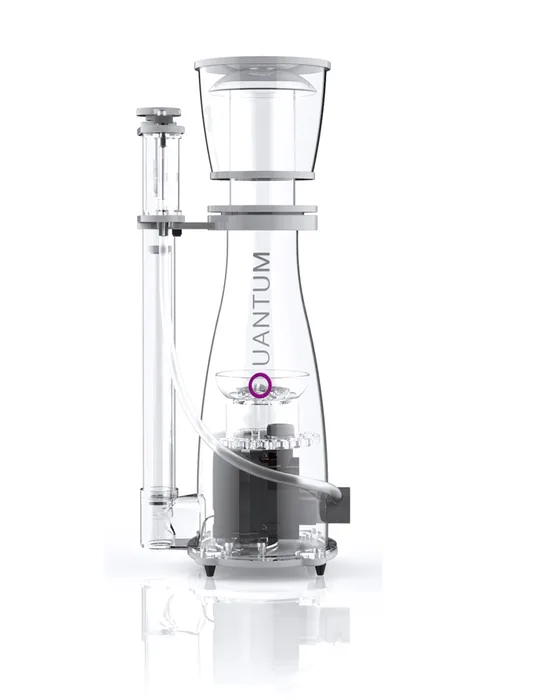
The short version
The NYOS Quantum 120 is our overall pick: a compact in-sump skimmer rated by NYOS for 100 to 500 litres (25 to 125 gallons) on 8 watts, with water level and air volume adjustable independently. The Reef Octopus Classic 110-INT is the value pick and the more transparent one on paper, because Reef Octopus publishes three separate bioload figures for it (130 gallons lightly stocked, 90 medium, 60 heavy, excluding the sump) instead of one flattering number. The TUNZE Comline DOC Skimmer 9004 is the depends pick: it mounts inside the display tank on a magnet, needs no sump at all, and draws 4 watts, but TUNZE rates it for only 60 to 250 litres of sea water and it is visible in your tank. Skip the Coralife Marine Filter with Protein Skimmer, a hang-on-back filter and skimmer combo listed at a single vague 30 gallons with no published pump wattage, no air draw figure and no bioload breakdown. Expect any new skimmer to behave strangely for the first few days; Coralife's own manual says a new skimmer may take up to 72 hours to settle, and that is the single most common new-owner panic. Size on bioload, not gallons, and check whether the maker's number includes your sump. Best for: saltwater and reef keepers who want to match a skimmer to their actual stocking level rather than the number on the box.
Our picks at a glance
- NYOS Quantum 120 - Buy. A small-footprint in-sump skimmer with a hybrid impeller and genuinely independent water and air adjustment, rated by NYOS for 100 to 500 litres.
- Reef Octopus Classic 110-INT - Buy. A straightforward acrylic in-sump skimmer whose maker publishes three honest bioload numbers instead of one optimistic headline figure.
- TUNZE Comline DOC Skimmer 9004 - It depends. An in-tank skimmer on a magnet mount that needs no sump and no plumbing, but is rated for a small marine tank and lives in plain sight.
- Coralife Marine Filter with Protein Skimmer - Skip. A hang-on-back filter and skimmer combo sold on one vague 30 gallon number, with no published pump wattage, no air figure and a cartridge you keep buying.
The verdict in 30 seconds
What mattered most
- Type
- Maker's rated volume
- Stocking caveat published
- Pump and bubble maker
- Power draw
- Footprint
Start with the thing that costs people the most money in this category: protein skimmers are saltwater equipment. Foam fractionation works because dissolved salts keep tiny air bubbles from merging back together, which is what gives you a stable, protein-carrying foam column, and every skimmer here is specified by its maker for sea water. If you keep a freshwater tank, nothing on this page is for you. For everyone with a reef or fish-only marine system, the real questions are how the maker states its tank rating, whether the body physically fits your sump, and how much clearance you need above the collection cup.
A small-footprint in-sump skimmer with a hybrid impeller and genuinely independent water and air adjustment, rated by NYOS for 100 to 500 litres.
Best for: A reef keeper with a tight sump who wants strong performance and fine control, and does not mind sizing conservatively themselves.
- NYOS rates it for 100 to 500 litres (25 to 125 gallons) while drawing only 8 watts.
- Water volume and air volume are set separately, with a water setting pipe for the rough level and a micro-adjustment screw for fine tuning.
- The 15 by 21 cm (5.9 by 8.3 inch) footprint and 46.5 cm (18.3 inch) height fit sumps that a wider skimmer will not.
- NYOS publishes a single volume range rather than separate lightly, moderately and heavily stocked figures, so you have to derate it yourself.
- The product page does not state a required sump water depth, so you need to check clearance and operating level before you commit.
- Body diameter is not published, only overall length, width and height.
- It sits at the premium end of the field for a skimmer in this size class.
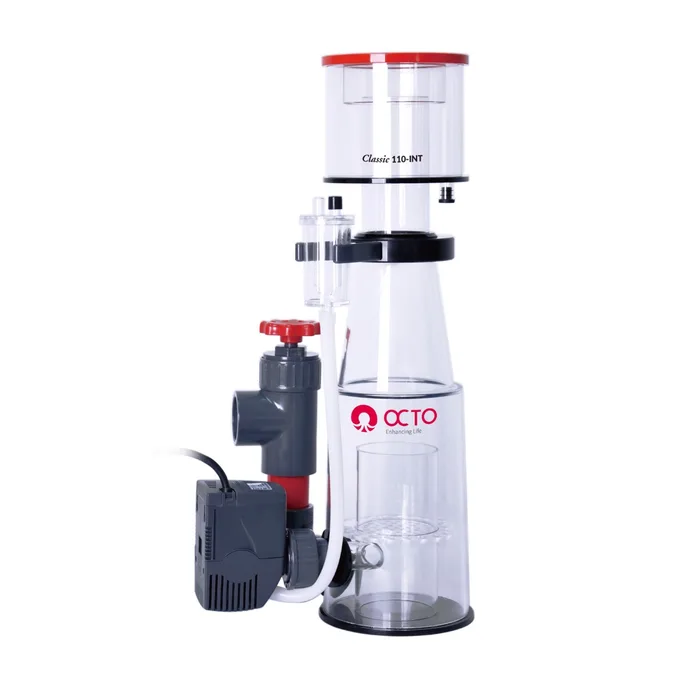
A straightforward acrylic in-sump skimmer whose maker publishes three honest bioload numbers instead of one optimistic headline figure.
Best for: Most saltwater keepers with a standard sump who want a skimmer sized against a real stocking level rather than a marketing number.
- Reef Octopus states 130 gallons lightly stocked, 90 gallons medium and 60 gallons heavily stocked, and says the figures exclude the sump.
- The full spec sheet is public: 5 inch body, 10.2 by 6.9 inch footprint, 2.4 inch neck, 19.70 inch total height, 6.5 inch output height.
- It calls for a 7 to 8 inch sump water height and adjusts through a gate valve on the output, which is easy to nudge in small steps.
- The 10.2 by 6.9 inch footprint is wide, and 19.70 inches of height plus cup removal clearance rules out shallow cabinets.
- The Aquatrance 1000s pump draws 9 watts, slightly more than the NYOS unit for a smaller rated volume.
- It is a fixed-speed AC pump, so there is no electronic flow control or ramping.
- Acrylic construction looks great when clean and shows every water mark when it is not.
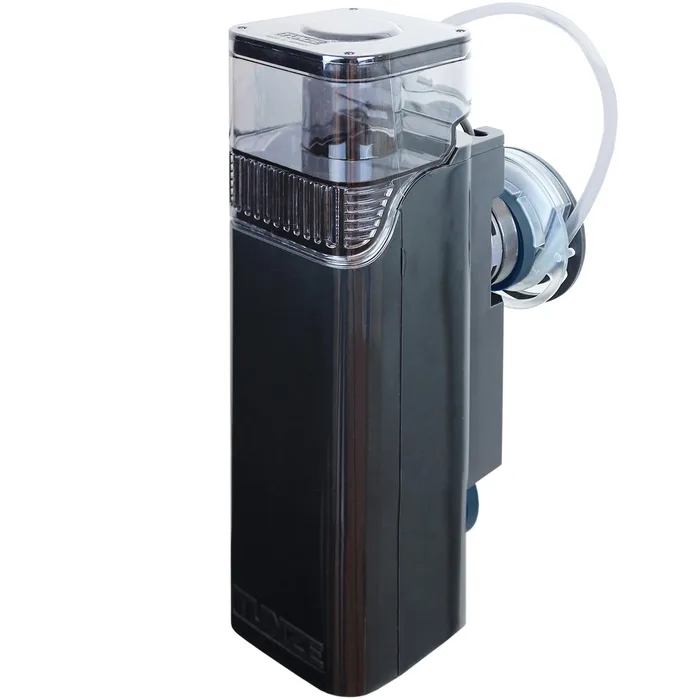
An in-tank skimmer on a magnet mount that needs no sump and no plumbing, but is rated for a small marine tank and lives in plain sight.
Best for: Someone running a nano or small marine tank with no sump who wants a self-contained, low-draw skimmer and can live with seeing it.
- No sump required: it mounts inside the aquarium on a magnet holder for glass up to 12 mm (half an inch).
- TUNZE publishes derating guidance by biotope, suggesting reductions of roughly 40, 60 or 70 percent as the system gets more sensitive and more heavily stocked.
- It draws 4 watts, moves about 150 litres of air per hour, and produces bubbles TUNZE measures at 0.1 to 0.3 mm.
- TUNZE recommends it for 60 to 250 litres (15 to 65 US gallons) of sea water, so it is out of its depth on a mid-size or large system.
- It occupies display space and needs 225 to 245 mm (8.9 to 9.7 inches) of immersion depth, which rules out shallow tanks.
- The collection cup holds only 0.2 litres, so on a well-fed tank you will be emptying it often.
- It works on a short-contact flash skimming principle rather than a tall foam column, which is a different design philosophy than everything else here.
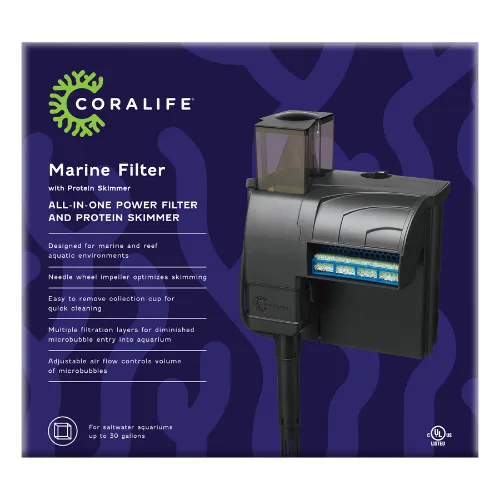
A hang-on-back filter and skimmer combo sold on one vague 30 gallon number, with no published pump wattage, no air figure and a cartridge you keep buying.
Best for: Almost nobody as a primary skimmer; at best a stopgap on a very small, very lightly stocked marine tank where a dedicated skimmer will not fit.
- It needs no sump and no plumbing, and the cartridge and phosphate pad give you mechanical and chemical filtration in the same box.
- Coralife is clear in the manual that it is for saltwater applications only, which is more than many budget listings manage.
- Air flow is adjustable through a dial, and the collection cup is designed to lift out for emptying.
- Coralife lists it at a flat 30 gallons with no lightly, moderately or heavily stocked breakdown, so you cannot size it against your bioload.
- No pump wattage and no air draw figure are published, which makes it impossible to compare against anything on this page.
- Coralife lists the item dimensions as 8.582 by 5.74 by 7.795 inches, so no dimension exceeds about 8.6 inches; the Classic 110-INT stands 19.70 inches for a reason, and foam needs a column to climb.
- The carbon cartridge is a recurring purchase Coralife suggests replacing every three to four weeks, and its own troubleshooting notes a clogged cartridge can back water up and overflow the collection cup.
| Criteria | Quantum 120 | Classic 110-INT | Comline DOC Skimmer 9004 | Marine Filter with Protein Skimmer |
|---|---|---|---|---|
| Verdict | Buy it | Buy it | It depends | Skip it |
| Best for | A reef keeper with a tight sump who wants strong performance and fine control, and does not mind sizing conservatively themselves. | Most saltwater keepers with a standard sump who want a skimmer sized against a real stocking level rather than a marketing number. | Someone running a nano or small marine tank with no sump who wants a self-contained, low-draw skimmer and can live with seeing it. | Almost nobody as a primary skimmer; at best a stopgap on a very small, very lightly stocked marine tank where a dedicated skimmer will not fit. |
| Price tier | $$$ · premium | $$ · mid-range | $$ · mid-range | $ · budget |
| Type | In-sump | In-sump | Internal, in-tank on magnet mount | Hang-on-back filter and skimmer combo |
| Maker's rated volume | 100 to 500 litres (25 to 125 gal) | 130 gal light, 90 gal medium, 60 gal heavy, sump excluded | 60 to 250 litres (15 to 65 gal) of sea water, load dependent | 30 gallons, single figure |
| Stocking caveat published | Range only, no stocking tiers | Yes, three bioload tiers | Yes, derating guidance by biotope | No |
| Pump and bubble maker | Quantum 1.0 with NYOS Hybrid Wheel | Aquatrance 1000s pinwheel | Comline Foamer, 0.1 to 0.3 mm bubbles | Needle wheel impeller, model not published |
| Power draw | 8 W | 9 W | 4 W | Not published |
| Footprint | 15 x 21 cm (5.9 x 8.3 in) | 10.2 x 6.9 in | 110 x 90 mm (4.3 x 3.5 in), inside the tank | Hangs on the rim; listed 8.582 x 5.74 x 7.795 in |
| Height and clearance | 46.5 cm (18.3 in) tall | 19.70 in tall, plus clearance to lift the cup | 305 mm (12 in) tall, 225 to 245 mm immersion depth | No dimension over about 8.6 in |
| Sump water level and adjustment | Level not published; water pipe plus micro-adjust screw, air set separately | 7 to 8 in recommended sump height; gate valve on output | No sump; set by immersion depth, air flow regulator and anti-overfoaming chamber | No sump; air flow dial only |
Which one is right for you?
- A reef keeper with a tight sump who wants strong performance and fine control, and does not mind sizing conservatively themselves. Buy it NYOS Quantum 120
- Most saltwater keepers with a standard sump who want a skimmer sized against a real stocking level rather than a marketing number. Buy it Reef Octopus Classic 110-INT
- Someone running a nano or small marine tank with no sump who wants a self-contained, low-draw skimmer and can live with seeing it. It depends TUNZE Comline DOC Skimmer 9004
- Almost nobody as a primary skimmer; at best a stopgap on a very small, very lightly stocked marine tank where a dedicated skimmer will not fit. Skip it Coralife Marine Filter with Protein Skimmer
How we judged the field
Five things decide whether a skimmer works out. First, whether it belongs on your tank at all: these are saltwater devices, and the fine bubbles they run on only stay fine because dissolved salts keep them from coalescing. Second, how the maker states its rating. A single gallon figure is close to useless, because the same tank can be lightly or heavily stocked and the skimmer sees completely different loads. Third, physical fit: footprint, total height, and the extra clearance you need above the cup to lift it out without dismantling half the cabinet. Fourth, the operating water level, since an in-sump skimmer performs to spec only in the water depth it was designed for. Fifth, the adjustment method, because you will be nudging the water level for weeks, and a gate valve or a calibrated screw makes that far less maddening than a stiff friction fit.
The field splits three ways. In-sump skimmers are the mainstream answer and where the good engineering lives, so two of our four picks are in-sump. Internal and hang-on-back units exist for people with no sump, and they trade rated volume and foam column height for that convenience. Then there are the combination filter and skimmer boxes aimed at beginners, which bundle a small skimmer into a hang-on filter and rarely publish enough spec to judge. We picked one premium in-sump unit, one mid-range in-sump unit whose maker publishes three bioload figures, one internal unit for people who genuinely cannot fit a sump, and one commonly bought combo that most people should walk past.
NYOS Quantum 120 - buy
The NYOS Quantum 120 is the one to buy if sump space is tight and you want fine control. NYOS rates it for 100 to 500 litres, which is 25 to 125 gallons, on 8 watts, and the whole thing occupies 15 by 21 cm of floor, about 5.9 by 8.3 inches, standing 46.5 cm or 18.3 inches tall. The bubble generator is what NYOS calls a Hybrid Wheel, a lattice base carrying very fine needles, driven by the Quantum 1.0 pump into a transparent reaction chamber. The part that matters day to day is the adjustment: water volume and air volume are set independently, with a coarse water setting pipe and a separate micro-adjustment screw for the last small moves. The catch is the rating format. NYOS gives you a range and leaves the derating to you, and it does not publish a required sump water depth or a body diameter, so measure carefully before you buy. For a reef keeper who wants performance in a small space and is happy sizing conservatively, it is the pick.
Reef Octopus Classic 110-INT - buy
The Reef Octopus Classic 110-INT wins on honesty. Instead of a headline number, Reef Octopus publishes three: 130 gallons lightly stocked, 90 gallons medium, 60 gallons heavily stocked, and it says outright that those figures exclude the sump. That single table tells you more about whether the skimmer suits your tank than any amount of marketing. The rest of the spec sheet is equally complete: a 5 inch body, a 10.2 by 6.9 inch footprint, a 2.4 inch neck, 19.70 inches of total height, a 1.25 inch output at 6.5 inches, and a recommended sump water height of 7 to 8 inches. The Aquatrance 1000s pinwheel pump draws 9 watts and Reef Octopus quotes 420 litres per hour of air. Adjustment is a gate valve on the output, which moves in small predictable steps. The trade-off is bulk. That footprint is wide, and once you add clearance to lift the collection cup you need real cabinet height. For most people with a standard sump, this is the sensible buy.
TUNZE Comline DOC Skimmer 9004 - it depends
The TUNZE Comline DOC Skimmer 9004 solves a specific problem: no sump, no plumbing, no room. It mounts inside the display tank on a magnet holder rated for glass up to 12 mm, draws 4 watts, and moves roughly 150 litres of air per hour through what TUNZE calls a Foamer, producing bubbles it measures at 0.1 to 0.3 mm. TUNZE is unusually straight about sizing, recommending 60 to 250 litres of sea water depending on tank load, then publishing separate guidance suggesting you cut the recommended volume by roughly 40 percent for a mixed LPS system, 60 percent for SPS, and 70 percent for a heavily stocked SPS tank. That is the most useful sizing advice on this page. The costs are real. It sits in your display where you can see it, it needs 225 to 245 mm of immersion depth so it will not work in a shallow tank, and the collection cup holds only 0.2 litres, which means frequent emptying. For a small sumpless marine tank, it is the right answer.
Coralife Marine Filter with Protein Skimmer - skip
The Coralife Marine Filter with Protein Skimmer is the one to skip, and not because it is cheap. It is a hang-on-back filter with a small skimmer built into it, and Coralife markets it at a flat 30 gallons with no lightly, moderately or heavily stocked breakdown, no pump wattage and no air draw figure, which leaves you nothing to size against. The listed item dimensions are 8.582 by 5.74 by 7.795 inches, so no dimension exceeds about 8.6 inches. Compare that with the Classic 110-INT’s 19.70 inches of height; foam needs a column to climb and dry out in, and a box this small cannot give it one. There is also a running cost: Coralife suggests replacing the carbon cartridge every three to four weeks, and its own troubleshooting warns that a clogged cartridge can back water up and overflow the collection cup, which ties your skimming to your filter maintenance. If a dedicated skimmer physically will not fit, this is a stopgap. Otherwise, buy a real one.
NYOS Quantum 120 vs Reef Octopus Classic 110-INT: which should you buy?
The NYOS Quantum 120 and the Reef Octopus Classic 110-INT overlap almost exactly on paper. NYOS quotes 25 to 125 gallons, Reef Octopus quotes 130 gallons lightly stocked down to 60 heavily stocked. Power draw is 8 watts against 9. Height is 18.3 inches against 19.70. The real difference is shape and information. The NYOS is narrow and deep at 5.9 by 8.3 inches; the Reef Octopus is wide at 10.2 by 6.9 inches. Measure your sump chamber before anything else, because on a lot of cabinets exactly one of these fits.
After that it comes down to how much you want the manufacturer to think for you. Reef Octopus gives you three bioload figures and a recommended 7 to 8 inch sump water height, so you can check your setup against the spec before you spend a penny. NYOS gives you a range and a smaller footprint, and expects you to derate for a heavy fish load yourself. If you are new to skimming or your tank is heavily stocked, take the Classic 110-INT: the numbers are plainer and the gate valve is forgiving. If your sump is narrow, your stocking is moderate, and you want the finer adjustment of independent water and air control, take the Quantum 120.
What to look for
- Saltwater only: these are marine devices, and the makers say so plainly, so if your tank is freshwater no skimmer on any list belongs on it.
- Bioload figures, not one gallon number: a maker that publishes lightly, moderately and heavily stocked ratings is telling you the truth, and a maker that publishes one big number is telling you a best case.
- Whether the rating includes the sump: Reef Octopus states its bioload figures exclude the sump, so check the convention before you compare two skimmers’ numbers against each other.
- Footprint and height together: measure your sump chamber in both directions, then add the extra clearance you need above the unit to lift the collection cup out for cleaning.
- The required water level: an in-sump skimmer is designed to run at a specific depth, and the Classic 110-INT for instance calls for 7 to 8 inches, so confirm your sump can hold that steadily.
- How you adjust it: a gate valve or a calibrated micro-adjustment screw lets you make tiny repeatable changes, which matters because you will be tuning this thing for days.
Our final take
Buy the skimmer that fits your sump and your stocking, in that order. The NYOS Quantum 120 is the pick when space is tight and you want independent water and air control, and the Reef Octopus Classic 110-INT is the one to buy when you would rather have the maker state clearly what happens under a heavy fish load. The TUNZE Comline DOC Skimmer 9004 earns its place for small sumpless marine tanks and nothing larger. Skip the Coralife combo unless nothing else physically fits. Whatever you choose, budget a few days of odd behaviour before it settles, adjust in small steps, and remember the rule that saves the most money here: no salt, no skimmer.
Questions, answered
Can I use a protein skimmer on a freshwater tank?
No, and this is the mistake that wastes the most money in this category. Skimming works by foam fractionation, and the fine, persistent bubbles it depends on only survive because dissolved salts stop bubbles merging back into big ones, an effect documented in the physical chemistry literature. Manufacturers scope their products accordingly: TUNZE specifies its DOC skimmers for sea water, and Coralife's manual for the Marine Filter with Protein Skimmer says on the cover that it is for saltwater applications only. Coralife's own troubleshooting even lists checking your salinity as the first fix when no microbubbles appear. If you keep freshwater, put the money into filtration, flow and water changes instead.
How do I size a skimmer for my tank?
Size on bioload, not on gallons. A tank with six small fish and soft corals produces a fraction of the waste of the same tank stuffed with tangs, and a skimmer rated for both is really only rated for the first. The honest makers publish this: Reef Octopus lists three separate figures for the Classic 110-INT, 130 gallons lightly stocked, 90 medium and 60 heavy. TUNZE goes further and tells you to cut its recommended volume by roughly 40, 60 or 70 percent as the system moves from leather corals to mixed LPS to demanding SPS with a heavy fish load. Read the number for the tank you actually keep, then check whether it includes your sump, because Reef Octopus states its figures exclude it.
My new skimmer is going crazy and overflowing. Is it broken?
Almost certainly not. A new skimmer needs a break-in period while surfactants from manufacturing wash off the plastic and the tank's own chemistry settles, and during that time it will overfoam, then sulk, then overfoam again. Coralife's manual puts a number on it and says a new skimmer may take up to 72 hours to adjust properly to the aquarium system, and larger units can take longer. The fix is patience plus small adjustments: close the air valve for a day if it is flooding, then restart, and change the water level in tiny increments rather than big swings. Resist the urge to keep fiddling, because you will never find the setting if you move it every hour.
Do I need a sump to run a skimmer?
No, but a sump gives you the best options. In-sump models like the NYOS Quantum 120 and the Reef Octopus Classic 110-INT sit in a stable water level, stay out of sight and have room for a tall foam column, which is why most serious reef keepers use them. Without a sump you have two routes: a hang-on-back unit on the tank rim, or an internal skimmer inside the display like the TUNZE Comline DOC Skimmer 9004, which mounts on a magnet holder for glass up to 12 mm. The trade-off is that internal and hang-on units are visible, generally smaller, and rated for less volume. Check clearance above the collection cup either way, because you have to lift it out to empty it.
Does a skimmer mean I can stop doing water changes?
No. A skimmer pulls organic waste out of the water before it breaks down, which is a genuinely different job from what a water change does. It does not replenish trace elements, it does not reset your salinity, and it is not a substitute for removing accumulated dissolved compounds a foam column will not grab. Coralife sells a separate phosphate removing pad alongside its combo unit, which tells you plainly that skimming is not the whole answer. Think of a skimmer as the thing that keeps your water from getting yellow and stale between changes, not the thing that replaces them.
More Pets reviews
 The Best Aquarium Substrates: 4 Compared (and One to Skip)
  The Best Aquarium Water Test Kits: 4 Compared (and One to Skip)
  The Best Aquarium Thermometers: 4 Compared (and One to Skip)
  Best Automatic Pet Feeders: What Reviewers Actually Recommend (and One to Skip)
  The Best Bird Cages: 4 Compared (and One to Skip)
  The Best Cat Litter Deodorizers: 4 Compared (and One to Skip)