

Pet Supplies
Best Automatic Pet Feeders: What Reviewers Actually Recommend (and One to Skip)
We compared four popular auto feeders for cats and dogs against independent expert testing to find the reliable picks.
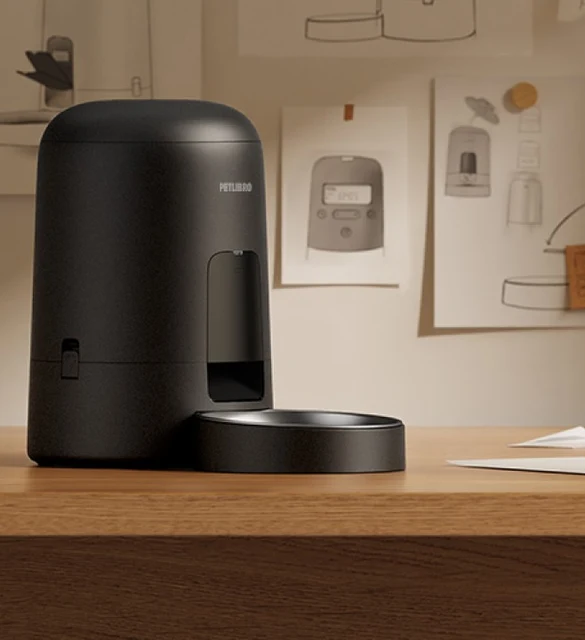
The short version
The Petlibro Air WiFi Feeder is the pick for most cats and small dogs: a slim, quiet unit with a rechargeable battery that keeps meals running for up to 30 days through outages, plus a sealed, spill-proof lid to keep kibble fresh. Choose the PetSafe Smart Feed (2nd Gen) if you have a bigger dog and want its 24-cup hopper and slow-feed mode. Skip the Arf Pets basic feeder, which has no app and fiddly on-unit programming. Best for owners who want reliable app scheduling without babysitting a hopper.
Our picks at a glance
- Petlibro Air WiFi Feeder - Buy. The compact, cordless WiFi feeder that is a standout for single-cat homes.
- PetSafe Smart Feed Automatic Dog & Cat Feeder (2nd Gen) - Buy. The long-running expert favorite for dogs, with a conveyor mechanism and a vet-friendly slow-feed mode.
- Whisker Feeder-Robot - It depends. A premium 32-cup feeder with genuine anti-jam engineering - great if you'll pay for it.
- Arf Pets Automatic Dog & Cat Feeder - Skip. A popular basic auger feeder that works only with 'compatible' kibble and jams on anything oddly shaped.
The verdict in 30 seconds
What mattered most
- Hopper capacity
- WiFi + app control
- Jam resistance
- Meals & portioning
- Power backup
- Price tier
An automatic feeder only earns its keep if it dispenses on schedule without jamming, and the app (if it has one) doesn't crash. Across independent expert testing, two names dominate: Petlibro for value and PetSafe for large or fast-eating dogs. Below are three feeders worth buying, one premium 'it depends,' and one popular basic feeder we'd steer most buyers away from.
The compact, cordless WiFi feeder that is a standout for single-cat homes.
Best for: One-cat or small-dog homes that want app control without a big countertop appliance.
- Rechargeable battery lasts ~30 days, so it keeps feeding through power cuts
- Reliable app scheduling (up to 10 meals/day) with low-food and battery alerts
- Small footprint and easy to disassemble for cleaning
- Only a 2L (about 8 cup) hopper - too small for multi-pet or big-dog households
- No built-in camera unlike Petlibro's pricier Granary models
- Petlibro no longer lists the Air on its US store, so availability now depends on retailers and regional Petlibro stores
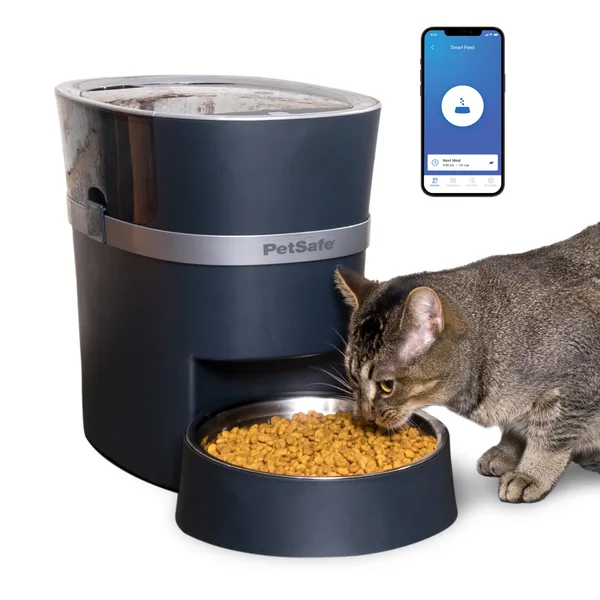
The long-running expert favorite for dogs, with a conveyor mechanism and a vet-friendly slow-feed mode.
Best for: Dog owners and larger pets who prioritize proven reliability and slow feeding.
- 24-cup hopper and up to 12 meals/day handles big or two-pet households
- Slow-feed mode dispenses over 15 minutes - good for fast eaters and bloat-prone dogs
- WiFi app plus Alexa control and low/empty food sensors
- Premium price for fewer app frills than some newer rivals
- Owners report jams with large or oddly shaped kibble, and PetSafe publishes no kibble size limit
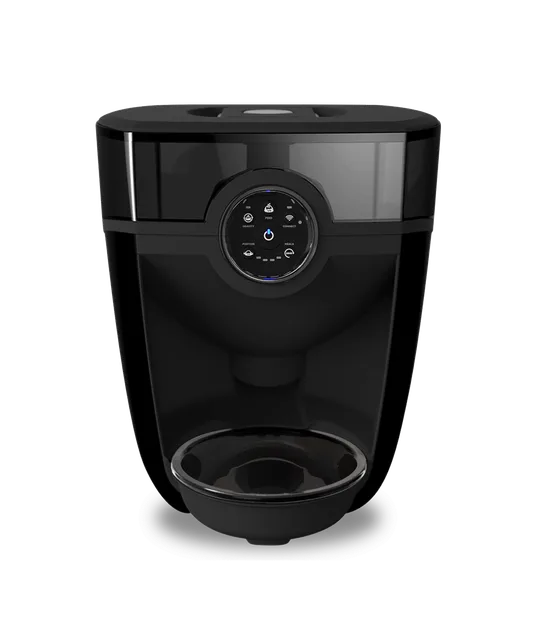
A premium 32-cup feeder with genuine anti-jam engineering - great if you'll pay for it.
Best for: Owners who want maximum capacity and jam-proof reliability and don't mind paying up.
- Anti-jam technology keeps feeding even offline; huge 32-cup capacity
- Tracks eating habits with real-time app notifications and low-food alerts
- 90-day in-home trial and 1-year coverage reduce buyer risk
- Costs roughly triple a capable Petlibro or basic feeder
- Large footprint is overkill for a single small cat
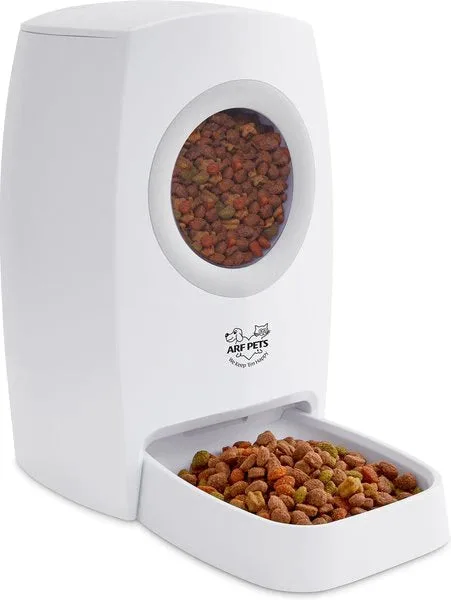
A popular basic auger feeder that works only with 'compatible' kibble and jams on anything oddly shaped.
Best for: Almost no one - a WiFi Petlibro or PetSafe at a similar price is a safer bet.
- Large hopper (Arf Pets publishes no cup figure) with voice-record call and magnetic-lock lid
- Dishwasher-safe food tray; battery backup with batteries sold separately
- Users repeatedly report oddly shaped or large kibble hanging up and jamming the auger
- No WiFi or app - you can't monitor or fix a missed meal remotely
- Only 4 meals/day; smart feeders near this price do more
- One of Arf Pets' own listings for this feeder is marked discontinued, so check which version is on sale
| Criteria | Air WiFi Feeder Top pick | Smart Feed Automatic Dog & Cat Feeder (2nd Gen) | Feeder-Robot | Automatic Dog & Cat Feeder |
|---|---|---|---|---|
| Verdict | Buy it | Buy it | It depends | Skip it |
| Best for | One-cat or small-dog homes that want app control without a big countertop appliance. | Dog owners and larger pets who prioritize proven reliability and slow feeding. | Owners who want maximum capacity and jam-proof reliability and don't mind paying up. | Almost no one - a WiFi Petlibro or PetSafe at a similar price is a safer bet. |
| Price tier | $ · budget | $$ · mid-range | $$$ · premium | $$ · mid-range |
| Hopper capacity | 2L (about 8 cups) | 24 cups | 32 cups (25 with hopper insert) | Not published |
| WiFi + app control | Yes (Petlibro app) | Yes (My PetSafe + Alexa) | Yes (Whisker app) | No - onboard buttons only |
| Jam resistance | Good with 2-15mm kibble | Very good (conveyor design) | Excellent (anti-jam, works offline; kibble up to 5/8 in) | Weak - jams on odd/large kibble |
| Meals & portioning | Up to 10/day, precise | Up to 12/day + 15-min slow feed | Up to 8/day + snacks | 4/day, teaspoons to several cups |
| Power backup | Up to 30-day rechargeable battery (5200mAh) | AC + optional 4 D-cell backup (not included) | AC; 12V backup battery sold separately | AC + battery backup (batteries not included) |
| Price tier | $ · budget | $$ · mid-range | $$$ · premium | $$ · mid-range |
Which one is right for you?
- One-cat or small-dog homes that want app control without a big countertop appliance. Buy it Petlibro Air WiFi Feeder
- Dog owners and larger pets who prioritize proven reliability and slow feeding. Buy it PetSafe Smart Feed Automatic Dog & Cat Feeder (2nd Gen)
- Owners who want maximum capacity and jam-proof reliability and don't mind paying up. It depends Whisker Feeder-Robot
- Almost no one - a WiFi Petlibro or PetSafe at a similar price is a safer bet. Skip it Arf Pets Automatic Dog & Cat Feeder
How we judged the field
The feeder that matters most is the one that dispenses the right amount, on time, without jamming or dying when the power blinks. We weighted portion accuracy, jam resistance, hopper or battery reliability, app scheduling, and how food stays fresh over ways brands market cameras and voice clips. Big cup counts mean little if the mechanism chokes on odd-shaped kibble. RBE does not run its own feeding trials; we synthesize independent testing and long-run owner reports, and weigh recurring complaints heavily. For most cats and small dogs the Petlibro Air WiFi Feeder is the pick, with the PetSafe Smart Feed (2nd Gen) the runner-up for larger dogs and bigger portions.
Petlibro Air WiFi Feeder
Buy itThe Petlibro Air is a slim, wire-free feeder aimed at cats and small dogs. It runs on a built-in 5200mAh rechargeable battery rated for up to 30 days, so a power cut or a missing outlet doesn’t stop scheduled meals, and a sealed, spill-proof rotor lid is designed to keep kibble fresh between fills. Scheduling and portion changes happen in the Petlibro app over 2.4GHz WiFi only, with up to 10 meals a day in 1/24-cup portions, kibble from 2 to 15mm, and low-food and low-battery alerts. What owners like more is the quiet, consistent dispensing and the ability to leave it running unplugged for weeks. What they like less is the modest 2L (roughly eight-cup) hopper, which suits one cat far better than a hungry household, and scattered reports of a unit failing within a couple of months paired with slow support. One more caveat: Petlibro’s US store no longer lists the Air (model PLAF108), although its Australian and Canadian stores still carry it, so in the US you are buying through retailers. It is the right feeder for a single cat or small dog owner who wants dependable app scheduling and freshness in a compact footprint; it is the wrong pick if you need a large hopper to cover a big dog or multiple pets for days.
PetSafe Smart Feed Automatic Dog & Cat Feeder (2nd Gen)
Buy itThe PetSafe Smart Feed (2nd Gen) trades compactness for capacity: a 24-cup hopper and a conveyor mechanism instead of an auger, which handles a wider range of dry and semi-moist food. The app schedules up to 12 meals a day from 1/8 cup to 4 cups, and a Slow Feed mode spreads any portion over 15 minutes for pets that gulp. Owners like the big hopper and the slow-feed pacing for dogs prone to bloat or vomiting. The trade-off owners flag is that the conveyor’s accuracy depends on hopper weight; let it run low and portions shrink below what you programmed, plus occasional jams with large or oddly shaped kibble and, after long use, an owner-reported F02 motor error on some units. It is the right feeder for a medium-to-large dog household that wants generous capacity and paced feeding; it is the wrong choice if you feed a tiny cat portion or want a battery-only unit for outages, since it leans on a wall outlet, with four D-cell batteries (not included) as an optional backup.
Whisker Feeder-Robot
It dependsThe Whisker Feeder-Robot, from the Litter-Robot maker, is the premium option: a tamper-resistant 32-cup hopper (25 cups with the hopper insert fitted) that takes kibble up to 5/8 inch, anti-jam dispensing in 1/8-cup steps up to 1/2 cup per meal, a chew-resistant power cable, and off-WiFi scheduling so meals continue if the network drops. The Whisker app is the strong point, reporting remaining food level and per-day and per-week feeding metrics. Owners like the build quality and the sheer capacity for leaving pets covered over long weekends. What holds it back is cost and caveats: the backup battery is sold separately rather than included, the app’s give-a-snack command sometimes fails to dispense until retried, and some units lost their app link after firmware updates and were hard to re-pair. It depends because you pay a clear premium for capacity and polish that most single-pet owners will not need. It suits multi-pet or big-dog homes that value hopper size, notifications, and the ecosystem, and are willing to pay up and buy the battery separately.
Arf Pets Automatic Dog & Cat Feeder
Skip itThe Arf Pets Automatic Dog & Cat Feeder is tempting for one reason: a large hopper at a low tier, with on-unit programming, a recorded voice message that plays at mealtime, and up to four meals a day in portions from a few teaspoons to several cups. Arf Pets publishes no hopper capacity on its own site (retail listings call it 18 cups), and one of its own listings for this feeder is marked discontinued. In practice the concrete skip reason is control and reliability. There is no WiFi or app, so every schedule change means stepping through fiddly on-unit buttons, and owners report jams and inconsistent portioning that you only discover after the fact, with no phone alert to warn you. The distribution tray can also hold stale food between meals. What owners do like is the capacity per dollar and the simple set-and-forget schedule when it behaves. It still suits a cost-focused owner who wants a large-capacity feeder on a fixed daily schedule, never plans to adjust it remotely, and will check it in person. For anyone who wants remote visibility or dependable portioning, the app-connected picks are worth the step up.
Sources
Specs in this review come from these pages.
- PETLIBRO Australia, Air Smart Feeder (PLAF108) specifications (au.petlibro.com)
- PETLIBRO blog, Smart, Cordless, Compact: the wireless feeder that does it all (Air) (petlibro.com)
- PetSafe, Smart Feed Automatic Dog and Cat Feeder, 2nd Generation (petsafe.com)
- PetSafe support, Smart Feed 2nd Generation product support (support.petsafe.net)
- Whisker, Feeder-Robot product page and FAQ (litter-robot.com)
- Arf Pets, Automatic Dog & Cat Feeder product page (arfpets.com)
Petlibro Air WiFi Feeder vs PetSafe Smart Feed (2nd Gen): which should you buy?
Both are reliable app feeders, so the split is size and power. The Petlibro Air is the better everyday choice for a cat or small dog: it runs unplugged for up to 30 days, seals the hopper against spills, and takes up little counter space, at the cost of a small 2L hopper. The PetSafe Smart Feed (2nd Gen) is built for bigger appetites, with a 24-cup hopper and a Slow Feed mode that paces gulpers, but it wants a wall outlet and its conveyor loses accuracy as the hopper empties. Choose the Petlibro Air if outage resilience, freshness, and footprint matter more than volume. Choose the PetSafe if you feed a medium-to-large dog, want to refill less often, and can keep the hopper topped up so portions stay accurate.
What to look for
Get the Petlibro Air if you feed one cat or a small dog and value a wire-free unit that survives outages, keeps kibble dry, and stays compact; its small hopper is fine when you refill every few days. Get the PetSafe Smart Feed (2nd Gen) instead if you feed a medium-to-large dog or want to refill less often, and you can commit to keeping the hopper above roughly half so the conveyor doses accurately; the Slow Feed mode is a real benefit for fast eaters. Consider the Whisker Feeder-Robot if you have multiple pets or a big dog, want the largest hopper and the best app reporting, and accept a premium plus buying the backup battery separately. Across all of them, match the feeder to your kibble: large, round, or oddly shaped pieces jam more, so test with your actual food before trusting it for a trip. Skip on-unit-only feeders like the Arf Pets if you ever want to change a schedule or check feeding from your phone.
Our final take
For most homes the Petlibro Air WiFi Feeder is the sensible pick: compact, quiet, freshness-minded, and able to run for weeks off its battery, provided one small hopper fits your pet. Step up to the PetSafe Smart Feed (2nd Gen) for a larger dog and paced portions, or the Whisker Feeder-Robot if capacity and app polish justify the premium. Skip the Arf Pets feeder unless you want cheap capacity and never plan to adjust or monitor remotely. Whichever you choose, test it with your own kibble before relying on it.
Questions, answered
How long do automatic feeders last before they jam or the motor fails?
Most last years with dry kibble and regular cleaning, but the moving parts wear. Owners of PetSafe's conveyor units have reported an F02 motor error after heavy use, and any auger can jam on large or oddly shaped food. Clean the mechanism monthly and match kibble size to reduce both risks.
Is a WiFi feeder worth it over a cheaper timer model?
For most owners, yes. App scheduling lets you adjust portions or feed remotely, and low-food and missed-dispense alerts tell you when something goes wrong, the exact failures a timer-only feeder hides until you get home to an unfed pet.
Does battery backup actually matter?
It matters if your power flickers or you place the feeder away from an outlet. The Petlibro Air runs up to 30 days on its battery, while outlet-dependent units like the PetSafe stop dispensing during an outage unless you add batteries. For medicated feeding schedules, backup is worth prioritizing.
How big a hopper do I really need?
Size it to your pet and refill habit, not the maximum. A single cat is well served by the Petlibro Air's 2L hopper refilled every few days; a large dog or a multi-day trip favors the PetSafe's 24 cups or the Whisker's 32. Bigger hoppers also let food sit longer, so refill in smaller batches if freshness matters.
Deciding between the top two? See our head-to-head: Petlibro Air WiFi Feeder vs PetSafe Smart Feed Automatic Dog & Cat Feeder (2nd Gen).
More Pet Supplies reviews
 The Best Bird Cages: 4 Compared (and One to Skip)
  The Best Cat Litter Deodorizers: 4 Compared (and One to Skip)
  The Best Cat Litter Mats: 4 Compared (and One to Skip)
  The Best Cat Nail Caps: 4 Compared (and One to Skip)
  The Best Cat Scratching Posts: 4 Compared (and One to Skip)
  The Best Cat Toys: 4 Compared (and One to Skip)