

Pets
The Best Cat Litter Deodorizers: 4 Compared (and One to Skip)
We judged litter box deodorizers on one thing above all: what the active ingredient actually is, and whether it is something a cat can safely stand in and groom off its paws. Fragrance-free adsorbents came out ahead of everything scented.
The short version
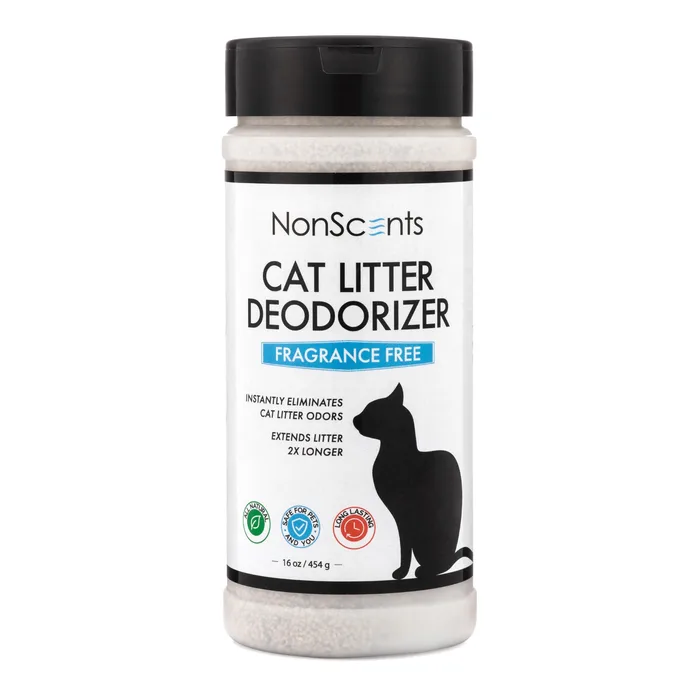
The additive we would buy is the NonScents Cat Litter Deodorizer, a fragrance-free zeolite granule that shakes over the litter and, per the maker, is free from chemical fragrance. The value answer is duller and cheaper: a bag of Arm & Hammer Pure Baking Soda, which is the same deodorizing active that Church & Dwight discloses in its own cat litter powder, minus the fragrance system. Zero Odor Litter Spray is a genuine option for a specific person, because it treats the box and the floor around it rather than sitting in the litter, but it has to be reapplied once or twice a day and its label says not to combine it with other deodorizers. Skip the Rocco & Roxie Litter Box Odor Eliminator: the maker says the odor-neutralizing work is done by a proprietary blend of essential oils, its FAQ lists cinnamon and wintergreen among them, and a litter box is a poor place for an oil blend given how sensitive cats are to phenolic compounds. Above all of these sits the boring fix, which is scooping at least once a day and running more boxes than you think you need. If a cat starts avoiding a box after you add something, take the additive out first and ask your vet. Best for: households that already scoop daily and want a fragrance-free way to take the edge off what is left.
Our picks at a glance
- NonScents Cat Litter Deodorizer - Buy. A fragrance-free zeolite granule you shake over the litter, and one of the few additives in this category with peer-reviewed chemistry behind it.
- Arm & Hammer Pure Baking Soda, 13.5 lb Resealable Bag - Buy. Plain sodium bicarbonate in a resealable bag, which is the same deodorizing active the brand discloses in its cat-specific powder, without the fragrance.
- Zero Odor Litter Spray Odor Eliminator, 16 oz - It depends. A sprayed liquid you mist onto soiled litter once or twice a day, from the product family used in a published feline litter box behavior study.
- Rocco & Roxie Litter Box Odor Eliminator, 12 oz - Skip. Absorbent corncob granules carrying what the maker calls a proprietary blend of essential oils, mixed into the exact material a cat digs in and then grooms off its paws.
The verdict in 30 seconds
What mattered most
- Active ingredient
- Fragrance
- Form
- Size verified
- How you apply it
- Sold for litter box use
Litter box deodorizers are one of the few pet categories where the product marketed hardest is the one veterinary guidance most warns against. The AAFP and ISFM house-soiling guidelines put it bluntly: cat litter is marketed to people, not to cats, and cats often find aromatic litter and litter deodorizers offensive. So we ignored the scent claims entirely and went looking for the actual active ingredient in each product, from the maker's own page or ingredient disclosure. What is left is a short field: mineral adsorbents, plain sodium bicarbonate, one sprayed liquid, and a lot of perfume.
A fragrance-free zeolite granule you shake over the litter, and one of the few additives in this category with peer-reviewed chemistry behind it.
Best for: Someone who already scoops daily, runs a covered or high-traffic box, and wants a fragrance-free additive rather than a perfume.
- The maker says it is free from chemical fragrance, which is the single thing feline behavior guidance asks for in a litter box.
- The active is natural zeolite, and odor control is the second largest domestic use of natural zeolite by tonnage in the US Geological Survey's 2026 figures.
- Shaker-style dosing: you scoop first, then sprinkle a thin layer over the litter.
- The maker's own technology page describes an active chlorine coating on the mineral, which the front of the jar does not spell out.
- The published work on chlorine-modified zeolite in cat litter was funded by Oxiscience LLC, the company behind NonScents.
- No full ingredient list on the jar, so you are trusting the description rather than reading a panel.
- Costs a lot more per pound than sodium bicarbonate for a job bicarbonate partly does.
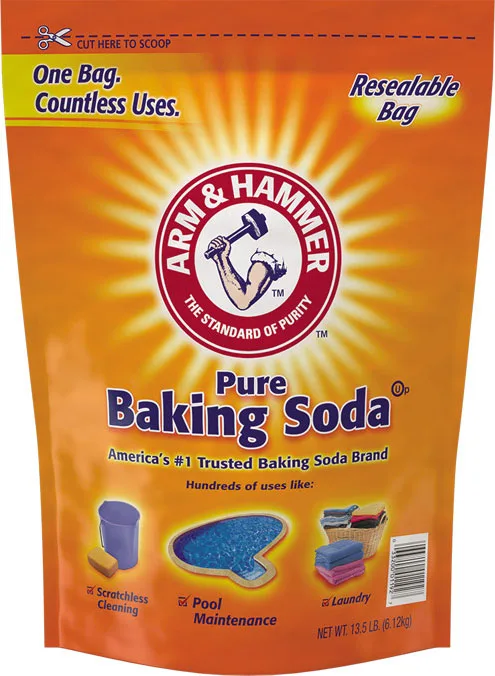
Plain sodium bicarbonate in a resealable bag, which is the same deodorizing active the brand discloses in its cat-specific powder, without the fragrance.
Best for: Anyone who wants to try a litter additive cheaply and does not mind measuring it out by hand.
- No fragrance at all, so nothing goes into the box that a cat can take against.
- Church & Dwight's own ingredient disclosure names sodium bicarbonate as the deodorizer in its cat litter powder, and here you buy that ingredient by itself.
- By far the cheapest way to test whether an additive changes anything in your house before spending more.
- Arm & Hammer does not market this bag for litter boxes and gives no dosing guidance for that use.
- Bicarbonate is better suited to acidic odors than to ammonia, so it will not flatten every litter box smell.
- Fine powder, so it can raise dust when a cat digs, and some cats dislike that.
- No shaker top; you scoop or pour it, which is messier over a full box.
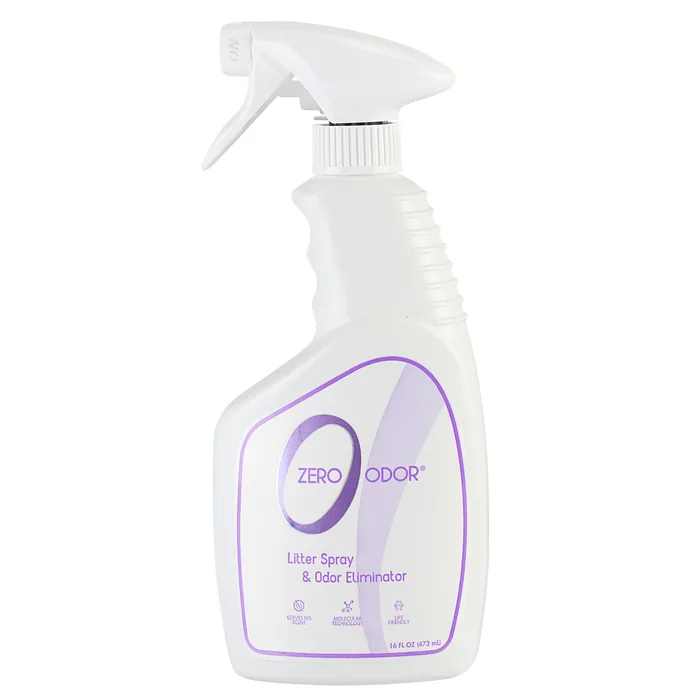
A sprayed liquid you mist onto soiled litter once or twice a day, from the product family used in a published feline litter box behavior study.
Best for: Someone whose problem is the smell around the box as much as in it, and who does not mind adding a daily spray step.
- The label says it leaves no scent behind, and the ingredient list carries only a tracer fragrance rather than a perfume.
- A Journal of Feline Medicine and Surgery study of a Zero Odor litter box spray found no box preference against the treated box and reported fewer eliminations outside the box.
- Treats the box, the floor around it and the trash it goes into, not just the litter itself.
- Has to be reapplied once or twice a day; nothing stays in the litter working between scoops.
- The label says it is not to be combined or used with deodorizers, so you cannot layer it on top of a powder.
- The active is listed only as a stabilized hydrated active complex, which tells a buyer nothing.
- Contains alcohol, and the label warns against spraying toward faces and notes floors may temporarily become slippery.
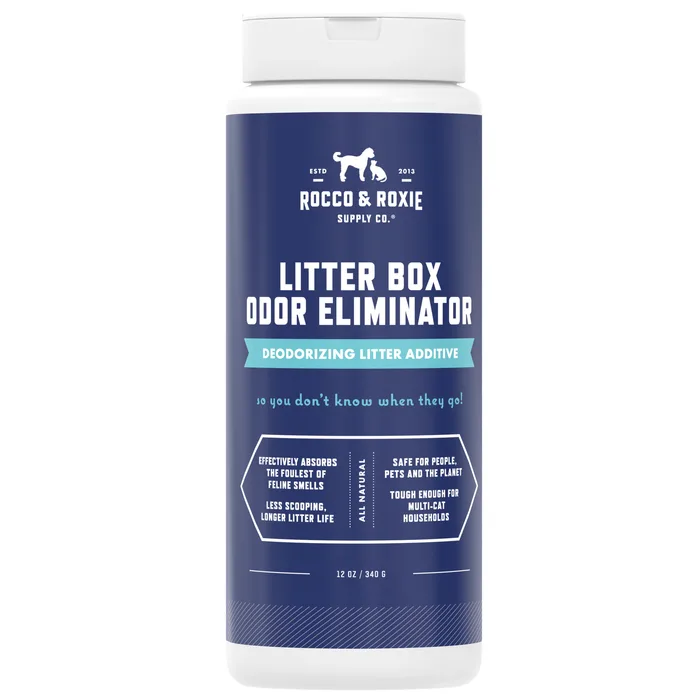
Absorbent corncob granules carrying what the maker calls a proprietary blend of essential oils, mixed into the exact material a cat digs in and then grooms off its paws.
Best for: Hard to justify for a cat household; if you want a corncob absorbent, pick one that names everything in it.
- The maker describes the corncob base as super-absorbent and biodegradable.
- Mixes into clay, clumping or natural litter without changing the texture much.
- Sold in a single and 2-pack from the maker.
- The maker credits a proprietary blend of essential oils, and its FAQ names cinnamon, wintergreen (methyl salicylate), eucalyptus, citrus, citronella and clove oils at under 0.1 percent of the formula.
- The Merck Veterinary Manual lists tea tree, cinnamon, cassia bark, pennyroyal and birch tar oils as hepatotoxic to pets, and cinnamon oil is on this maker's list.
- Merck also notes cats are deficient in the enzyme glucuronyl transferase and are very sensitive to phenol and phenolic compounds, which some oils contain, and that grooming adds a swallowing route on top of skin contact.
- AAFP and ISFM house-soiling guidance tells owners to avoid deodorizing powders and says cats often find litter deodorizers offensive.
| Criteria | Cat Litter Deodorizer Top pick | Pure Baking Soda, 13.5 lb Resealable Bag | Litter Spray Odor Eliminator, 16 oz | Litter Box Odor Eliminator, 12 oz |
|---|---|---|---|---|
| Verdict | Buy it | Buy it | It depends | Skip it |
| Best for | Someone who already scoops daily, runs a covered or high-traffic box, and wants a fragrance-free additive rather than a perfume. | Anyone who wants to try a litter additive cheaply and does not mind measuring it out by hand. | Someone whose problem is the smell around the box as much as in it, and who does not mind adding a daily spray step. | Hard to justify for a cat household; if you want a corncob absorbent, pick one that names everything in it. |
| Price tier | $$ · mid-range | $ · budget | $$ · mid-range | $$ · mid-range |
| Active ingredient | Natural zeolite with an active chlorine coating, per the maker | Sodium bicarbonate | Water plus an undisclosed stabilized hydrated active complex | Corncob granules plus a proprietary essential oil blend |
| Fragrance | Free from chemical fragrance, per the maker | None | Tracer fragrance listed on the label | Essential oil blend, oils named only in the FAQ |
| Form | Shaker jar of granules | Loose powder in a resealable bag | Trigger spray bottle | Shaker bottle of granules |
| Size verified | Jar; an 8 lb bag is also sold | 13.5 lb / 6.12 kg bag | 16 fl oz / 473 mL | 12 oz / 340 g |
| How you apply it | Sprinkle a thin layer over the litter | Scoop or pour over the litter; no dosing guidance given | Spray onto soiled litter once or twice a day | Mix through the litter |
| Sold for litter box use | Yes | No, sold as general purpose baking soda | Yes | Yes |
| Ingredient transparency | Partial; described on the site, not on the jar | Single ingredient | Partial; the active is proprietary | Partial; the oils are named only in the FAQ |
| Price tier | $$ · mid-range | $ · budget | $$ · mid-range | $$ · mid-range |
Which one is right for you?
- Someone who already scoops daily, runs a covered or high-traffic box, and wants a fragrance-free additive rather than a perfume. Buy it NonScents Cat Litter Deodorizer
- Anyone who wants to try a litter additive cheaply and does not mind measuring it out by hand. Buy it Arm & Hammer Pure Baking Soda, 13.5 lb Resealable Bag
- Someone whose problem is the smell around the box as much as in it, and who does not mind adding a daily spray step. It depends Zero Odor Litter Spray Odor Eliminator, 16 oz
- Hard to justify for a cat household; if you want a corncob absorbent, pick one that names everything in it. Skip it Rocco & Roxie Litter Box Odor Eliminator, 12 oz
How we judged the field
Five things decide whether a litter deodorizer is worth buying. First, what the active ingredient actually is, verified from the maker’s own page or ingredient disclosure rather than the front of the pack, because half this category is fragrance with a mineral carrier. Second, whether it is fragrance free, since the AAFP and ISFM house-soiling guidelines say cats often find aromatic litter and litter deodorizers offensive and advise avoiding deodorizing powders altogether. Third, whether anything in it is a known hazard to cats specifically, which in practice means essential oils and phenolic compounds, because cats are deficient in the enzyme glucuronyl transferase and cannot clear those compounds the way most mammals do. Fourth, physical form: granule size, dust, and whether the dispenser lets you dose a full box without making a mess. Fifth, whether the chemistry has any independent basis at all, or is just a claim.
The field splits cleanly into three groups. There are mineral adsorbents, mainly zeolite and sodium bicarbonate, which physically hold odor molecules and add no smell of their own. There are sprayed liquids, which treat the box and its surroundings but do nothing between applications. And there is the large fragranced group, which includes both perfume-based powders and essential oil blends, and which is where almost all the marketing money goes. We picked one product from each of the first two groups, added the cheapest honest version of the mineral approach, and included the best-selling essential oil additive we could verify so we could say plainly why we would not put it in a litter box.
NonScents Cat Litter Deodorizer
Buy itNonScents is a shaker jar of pale zeolite granules that you sprinkle across the top of the litter. Zeolite is a genuine odor-control material rather than a marketing word: the US Geological Survey’s 2026 mineral commodity summary lists odor control as the second largest domestic use of natural zeolites by tonnage, ahead of water purification and pet litter, and clinoptilolite is mined for exactly this in five states. The maker says it is free from chemical fragrance, which matters more here than any performance claim, though some reviewers note a faint chlorine smell when it is first applied. Two caveats keep it honest. The company’s own technology page says the mineral carries an active chlorine coating, and the front of the jar does not spell that out. And the peer-reviewed work showing chlorine-modified zeolite outperforming commercial litters on the sulfur compound behind litter box smell was funded by Oxiscience LLC, which is the company behind NonScents. It is still the first additive we would try, for a household that already scoops daily and wants no fragrance in the box.
Arm & Hammer Pure Baking Soda, 13.5 lb Resealable Bag
Buy itThe runner-up is a bag of baking soda, and that is not a joke pick. Church & Dwight’s own ingredient disclosure for the Arm & Hammer Cat Litter Deodorizer names sodium bicarbonate as the deodorizer, with hydrated silica as a flow aid and a fragrance system on top. Buy the 13.5 lb resealable bag of Pure Baking Soda and you are buying that active on its own, with no perfume and no premium for a cat picture. The trade-offs are real. Arm & Hammer does not market this bag for litter boxes, so there is no dosing guidance and no shaker top; you scoop or pour. Bicarbonate is a mild base, which suits it to acidic odors more than to ammonia, so it takes the edge off rather than clearing the room. And it is a fine powder, so it can dust up when a cat digs, which some cats object to more than others. For a first, cheap test of whether an additive helps in your house, nothing beats it.
Zero Odor Litter Spray Odor Eliminator, 16 oz
It dependsZero Odor Litter Spray is the odd one out: a trigger bottle you mist directly onto soiled litter once or twice a day. It earns its place because it is the only product here connected to published feline behavior work. A Journal of Feline Medicine and Surgery study of a Zero Odor litter box spray ran a two-box preference test and found no significant avoidance of the treated box, then reported reductions in dissatisfied litter box behavior and in eliminations outside the box across two follow-up phases. The label backs the fragrance-free positioning, listing only a tracer fragrance rather than a perfume. The reasons it is a conditional pick rather than a straight buy are practical. The active is described only as a stabilized hydrated active complex. It has to be reapplied daily, so nothing works between scoops. And the label explicitly says not to combine it with deodorizers, which rules out layering it over a powder. Right for someone fighting the smell around the box, not just in it.
Rocco & Roxie Litter Box Odor Eliminator, 12 oz
Skip itRocco & Roxie’s Litter Box Odor Eliminator is a shaker bottle of corncob granules, and the absorbent part of the pitch is fine: corncob does wick moisture and it is biodegradable. The problem is what the maker says does the actual deodorizing, which is a proprietary blend of essential oils, neutralizing odors at the molecular level. The maker’s FAQ names the oils (cinnamon, wintergreen, eucalyptus, citrus, citronella and clove) and puts them below 0.1 percent of the formula, but the front of the pack does not. That is still a questionable combination in a litter box, because the Merck Veterinary Manual lists birch tar, cassia bark, cinnamon, pennyroyal and tea tree among oils considered hepatotoxic to pets, notes that cats are deficient in the enzyme glucuronyl transferase and so are very sensitive to phenol and phenolic compounds that some oils contain, and points out that grooming converts paw and coat contact into a swallowed dose. None of that means this product has hurt cats, and the low stated concentration counts in its favor. It still puts essential oils in the one place a cat is guaranteed to stand and then lick itself clean. For most cat owners, skip it.
Sources
Specs in this review come from these pages.
- Merck Veterinary Manual: Toxicoses From Essential Oils in Animals (merckvetmanual.com)
- Pet Poison Helpline: Tea Tree Oil (petpoisonhelpline.com)
- AAFP and ISFM Guidelines for Diagnosing and Solving House-Soiling Behavior in Cats, Journal of Feline Medicine and Surgery (pmc.ncbi.nlm.nih.gov)
- Robins et al., Control of Felinine-Derived Malodor in Cat Litter, Journal of Feline Medicine and Surgery (pmc.ncbi.nlm.nih.gov)
- US Geological Survey, Mineral Commodity Summaries 2026: Zeolites (Natural) (pubs.usgs.gov)
- Church & Dwight Ingredient Disclosure: ARM & HAMMER Cat Litter Deodorizer (churchdwight.com)
NonScents Cat Litter Deodorizer vs Arm & Hammer Pure Baking Soda, 13.5 lb Resealable Bag: which should you buy?
The choice between NonScents and a bag of Arm & Hammer Pure Baking Soda is really a choice between chemistry and thrift. Zeolite is a microporous mineral with a strong affinity for ammonium, which is why it turns up in water filters and in a US Geological Survey use table where odor control accounts for roughly a sixth of domestic sales tonnage. Sodium bicarbonate works by a different and blunter route, and being a mild base it is better matched to acidic odors than to the alkaline ammonia most people are complaining about. In a small, well-scooped box with one cat, the difference between them is unlikely to be dramatic. In a covered box, a multi-cat house, or anywhere the litter sits longer than it should, the mineral is the better bet.
The practical test is cheap, so run it in that order. Buy the baking soda first, dose a thin layer with each litter change for two weeks, and see whether it is enough. If it is, you are done and you have spent very little. If it is not, move to NonScents, which gives you a shaker-style granule and an active with a stronger claim on the ammonia side. Whichever you pick, introduce it gradually rather than dumping it in, and watch how your cat enters the box for the first week. A cat balancing on the rim with two feet in is telling you something, and the right response is to take the additive out.
What to look for
- Named active ingredient: if the label or the maker’s site will not tell you what does the deodorizing, treat that as the answer rather than a gap.
- Fragrance free, not just unscented: fragrance free should mean no perfume was added, while unscented can mean a masking scent was used to cover a base smell, so read the ingredient list rather than the front of the pack.
- No essential oils in the box: cats cannot clear phenolic compounds the way most mammals do, and a litter additive is the one product they are guaranteed to stand in and then groom off.
- Granule size over powder: granules are less likely to cloud when a cat digs, while fine powders can be unpleasant for a cat with any respiratory sensitivity.
- A dispenser that suits your box: a shaker top with a wide aperture doses a large box in seconds, whereas a bag means scooping and spilling.
- Evidence you can actually check: company-funded studies still count for something, but they should be labeled as such, and a vague molecular level claim with no named mechanism counts for nothing.
Our final take
The honest hierarchy in this category runs downhill fast. Scoop at least once a day, run more boxes than you think you need, and use a fine unscented clumping litter, because that is what the veterinary guidelines actually recommend and it removes the source rather than covering it. If a smell survives all that, add an unscented mineral: NonScents if you want the better ammonia chemistry, plain baking soda if you want to spend almost nothing finding out whether an additive helps at all. Zero Odor is worth it if the problem is the area around the box. Anything selling you a scent, and especially anything selling you an essential oil blend, belongs last or not at all.
Questions, answered
Are essential oil litter deodorizers really a risk to cats, or is that overblown?
It is a real issue, and it is worth stating precisely rather than dramatically. The Merck Veterinary Manual notes that cats are deficient in the enzyme glucuronyl transferase, which leaves them very sensitive to phenol and phenolic compounds that some essential oils contain, and it lists birch tar, cassia bark, cinnamon, pennyroyal and tea tree or melaleuca among oils considered hepatotoxic to pets. It also flags that oils are absorbed through skin and mucous membranes, and that grooming turns a coat or paw contamination into an oral dose. Concentration matters: Pet Poison Helpline says pet products containing less than 1 to 2 percent tea tree oil are generally considered non-toxic when used as labeled, while higher concentrations are toxic. The practical problem with a litter additive is that the front of the label often says only proprietary blend of essential oils, and you have to hunt for the identity and concentration. That is enough reason to pick something that names what is in it. If your cat has been exposed and is drooling, unsteady, vomiting or lethargic, call your vet or a poison control line rather than waiting.
Should I just buy Arm & Hammer's own Cat Litter Deodorizer Powder instead of plain baking soda?
We would not. Church & Dwight publishes the ingredient disclosure for that product, and the deodorizer in it is sodium bicarbonate, alongside hydrated silica as a flow aid and a fragrance system with sixteen fragrance components listed at or above 100 ppm, including linalool, geraniol, citronellol and coumarin. The product page also describes a moisture-activated scent that refreshes every time your cat uses the box, which is the design goal working exactly as intended. If you want the deodorizing active, you can buy sodium bicarbonate on its own for much less per pound. If you want the perfume, understand that a scent released each time the cat digs is the thing behavior guidance singles out as a cause of box avoidance. Those fragrance components are not the same thing as neat essential oils, and this is not a poisoning warning, it is a behavior one.
Can a deodorizer actually make my cat stop using the litter box?
It can, and that outcome is much worse than the smell you were trying to fix. The AAFP and ISFM house-soiling guidelines say cat litter is marketed to people rather than to cats, that cats often find aromatic litter and litter deodorizers offensive, and they tell owners outright to avoid deodorizing powders. A 2019 review in the Journal of Feline Medicine and Surgery makes the same point about a specific popular scent, noting that citrus fragrance is very popular with people but is aversive from a feline perspective. The tell to watch for is a cat perching on the rim with only one or two feet inside the box, which the guidelines describe as a possible sign of aversion to the substrate. If that starts after you add something, remove the additive, go back to the litter your cat was using, and talk to your vet if the avoidance continues. House soiling can also be a medical sign, so it is not something to manage purely as a preference problem.
Does baking soda or zeolite work better on the ammonia smell?
They work on different things, and neither is a complete answer. Sodium bicarbonate is a mild base, so it is better matched to acidic odor molecules than to ammonia, which is itself alkaline. Zeolites are microporous minerals with a strong affinity for ammonium ions, which is why the US Geological Survey lists odor control and water purification among the largest domestic uses of natural zeolite. There is also a second smell most people blame on ammonia but should not: cat urine contains felinine, and microbes break it down into sulfur compounds, principally 3-mercapto-3-methyl-1-butanol, which is the distinctive tomcat note. A 2022 Journal of Feline Medicine and Surgery study found that a chlorine-modified clinoptilolite zeolite left no detectable amount of that compound in the headspace above treated litter, while the eight commercial litters tested all showed measurable levels. Note that the study was funded by a company that sells this chemistry.
How often do I have to scoop if I want to skip additives entirely?
At least once a day, which is the floor the AAFP and ISFM guidelines set: remove waste a minimum of once a day, top up litter as needed, and wash the box every one to four weeks. The same guidance recommends a fine, sand-like, unscented clumping litter at a depth of at least 1.25 inches, and it says a single-cat household should still have two boxes in two separate locations, with multi-cat households running at least one more box than there are cats. Doing those things properly removes most of the smell, because you are taking the source out rather than covering it. An additive is what you reach for after the basics are in place, not instead of them. If you are scooping daily with enough boxes and the smell is still bad, that is worth mentioning to your vet, because urine odor can change with illness.
Deciding between the top two? See our head-to-head: NonScents Cat Litter Deodorizer vs Arm & Hammer Pure Baking Soda, 13.5 lb Resealable Bag.
More Pets reviews
 The Best Cat Litter Mats: 4 Compared (and One to Skip)
  The Best Cat Nail Caps: 4 Compared (and One to Skip)
  The Best Cat Scratching Posts: 4 Compared (and One to Skip)
  The Best Cat Toys: 4 Compared (and One to Skip)
  The Best Cat Trees: 4 Compared (and One to Skip)
  The Best Cat Window Perches: 4 Compared (and One to Skip)