

Pet Supplies
The Best Cat Trees: 4 Compared (and One to Skip)
We compared four current cat trees on height, stability, sisal quality, perch and condo layout, build quality, and looks.
The short version
The Feandrea 56.3-inch tower is the best all-around cat tree: tall, stable, loaded with sisal, and cheap enough to replace when it wears. The Catit Vesper High Base is the standout modern piece, trading lounging spots for a durable laminate look that survives a living room. The Yaheetech is a fine multi-cat budget option if you accept that it is smaller and thinner than the photos suggest. The Tuft + Paw Frond is beautiful but short on features and carries a flagship price plus real quality-control complaints. Best for: most homes, start with the Feandrea and step up to the Vesper only if aesthetics matter more than lounging space.
Our picks at a glance
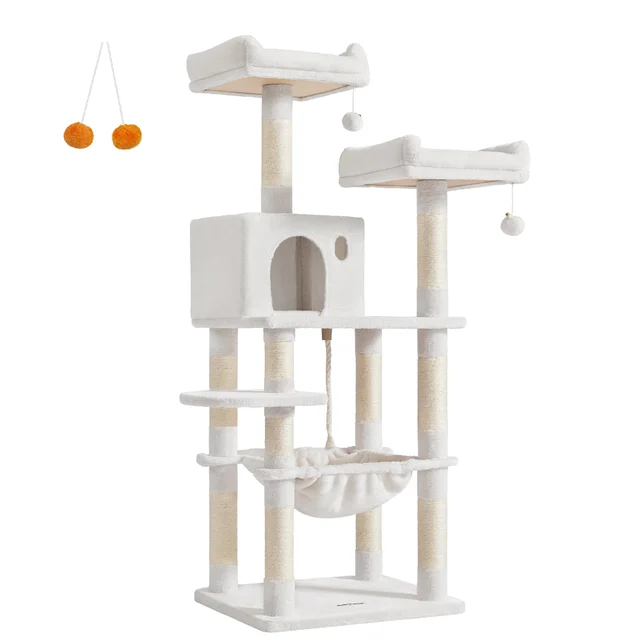
- Feandrea 56.3-Inch Multi-Level Cat Tree (UPCT15) - Buy. The value benchmark: a stable, sisal-heavy plush tower that cats treat as home base.
- Catit Vesper High Base - Buy. The modern piece that looks like furniture and is built to keep looking that way.
- Yaheetech 54-Inch Multi-Level Cat Tree with Double Condo - It depends. A cheap, condo-rich tower that works if you go in with realistic expectations.
- Tuft + Paw Frond Cat Tree - Skip. A sculptural showpiece whose price outruns what your cat actually gets.
The verdict in 30 seconds
What mattered most
- Height
- Stability
- Sisal quality
- Perch & condo layout
- Build quality
- Aesthetics
A cat tree lives in your living room for years, so it has to satisfy the cat and survive your taste. We weighed a plush budget tower, a modern laminate design, a sculptural designer piece, and a tall multi-cat rig against the criteria that actually matter over time: how stable it stays, how good the scratching surfaces are, and whether cats use every level. Two earn a clear buy, one is a maybe, and one is beautiful but hard to recommend.
The value benchmark: a stable, sisal-heavy plush tower that cats treat as home base.
Best for: Anyone who wants the most usable height, scratching, and lounging space per dollar.
- Loaded with sisal: multiple full-height wrapped posts give heavy scratchers plenty of legitimate targets
- Well-distributed layout with a condo, a hammock, two padded perches, and mid-level platforms so multiple cats can spread out
- Wide base plus an anti-tip wall strap keep it steady under a launching adult cat
- Thick plush and generous perches that reviewers and owners often call comfortable for the price
- Particleboard-and-plush construction will not age as gracefully as hardwood over many years
- Plush and neutral colorways read as functional pet gear rather than furniture
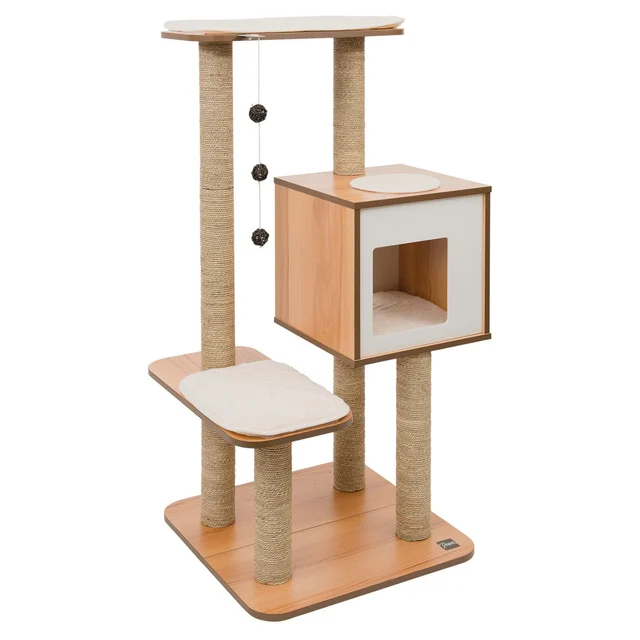
The modern piece that looks like furniture and is built to keep looking that way.
Best for: Design-conscious owners who refuse a carpeted tower but still want something cats use daily.
- MDF with a wood-look laminate finish that resists cat hair and cleans up far better than plush over the years
- Genuinely handsome in walnut, oak, or black, so it earns a place in a visible room instead of a spare corner
- Extra-long seagrass posts plus a sisal scratching pad, with removable memory-foam cushions held by hook-and-loop tape
- Owner reports point to solid, low-wobble assembly and long service life
- Fewer lounging spots than a plush tower at a much higher price
- Some cats prefer sisal over seagrass for scratching
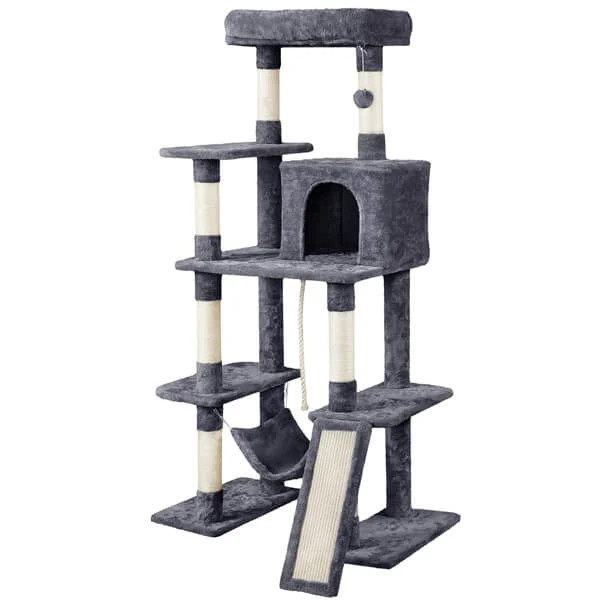
A cheap, condo-rich tower that works if you go in with realistic expectations.
Best for: Multi-cat or kitten households that want maximum hideaways for the least money.
- Two enclosed condos plus a hammock and a sisal scratch-board ramp give timid or bonded cats multiple hideaways
- Sisal-wrapped posts and a wall-anchor strap at an entry-level price
- Multi-level layout suits a household juggling more than one cat on a tight budget
- Owners note it looks larger and plusher in product photos than in person; platforms and posts are on the small, thin side
- Plush sheds early and the structure can loosen over time without periodic re-tightening
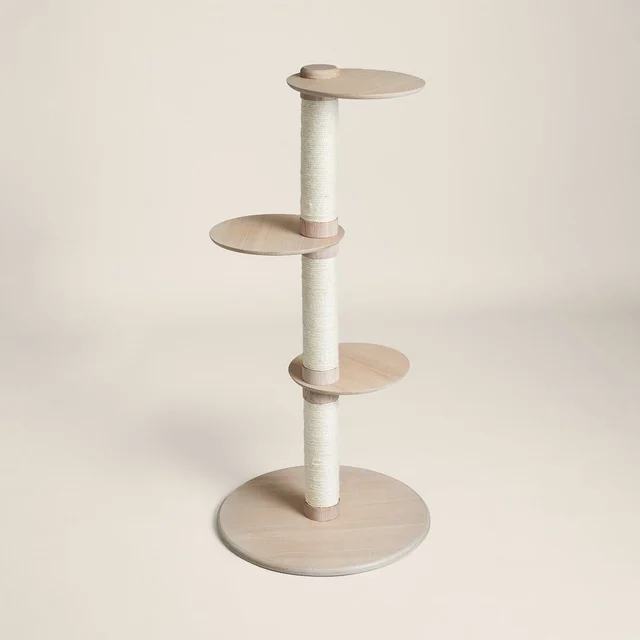
A sculptural showpiece whose price outruns what your cat actually gets.
Best for: A single cat in a design-forward home where looks outrank features and budget is no object.
- Striking, minimalist design in ash veneer and natural sisal that looks like intentional decor
- A sisal-wrapped central column doubles as a scratching post
- Space-saving footprint for small modern apartments
- Only three small oval perches and no condo, so lounging and hiding capacity is low for the money
- Shorter than the plush towers here, and owner reports flag wobble as well as warped or mismatched wood panels on arrival
| Criteria | Feandrea 56.3-Inch Multi-Level Cat Tree (UPCT15) Top pick | Catit Vesper High Base | Yaheetech 54-Inch Multi-Level Cat Tree with Double Condo | Tuft + Paw Frond Cat Tree |
|---|---|---|---|---|
| Verdict | Buy it | Buy it | It depends | Skip it |
| Best for | Anyone who wants the most usable height, scratching, and lounging space per dollar. | Design-conscious owners who refuse a carpeted tower but still want something cats use daily. | Multi-cat or kitten households that want maximum hideaways for the least money. | A single cat in a design-forward home where looks outrank features and budget is no object. |
| Price tier | $ · budget | $$$ · premium | $ · budget | $$$$ · flagship |
| Height | Tall (~56 in) | Mid (~48 in) | Mid (~54 in) | Short (~49 in) |
| Stability | Good; wide base + anti-tip strap | Good; owners report low wobble | Fair; can loosen over time | Mixed; wobble reported by some owners |
| Sisal quality | Many sisal-wrapped posts | Good; seagrass posts plus a sisal pad | Fair; standard sisal posts | Good; one long sisal column |
| Perch & condo layout | Condo, hammock, 2 perches, mid platforms | Cube den, observation platforms | 2 condos, hammock, ramp | 3 oval perches, no condo |
| Build quality | Solid for particleboard/plush | Furniture-grade MDF laminate | Entry-level; thinner parts | Premium materials, inconsistent QC |
| Aesthetics | Functional plush | Modern, room-ready | Basic plush | Designer statement piece |
| Price tier | $ · budget | $$$ · premium | $ · budget | $$$$ · flagship |
Which one is right for you?
- Anyone who wants the most usable height, scratching, and lounging space per dollar. Buy it Feandrea 56.3-Inch Multi-Level Cat Tree (UPCT15)
- Design-conscious owners who refuse a carpeted tower but still want something cats use daily. Buy it Catit Vesper High Base
- Multi-cat or kitten households that want maximum hideaways for the least money. It depends Yaheetech 54-Inch Multi-Level Cat Tree with Double Condo
- A single cat in a design-forward home where looks outrank features and budget is no object. Skip it Tuft + Paw Frond Cat Tree
How we judged the field
We do not run a lab. Instead we synthesize independent testing, expert commentary, and aggregated owner reports into a single read on each tree, then weight the criteria that decide whether a cat tree is still standing and still used two years in.
The factors that mattered most:
- Stability: base width, overall weight, and whether an anti-tip wall strap is included, because a wobbly tower is one a cat abandons.
- Sisal quality: how much genuine scratching surface you get and how well it is wound, since this is what redirects claws away from your sofa.
- Perch and condo layout: enough separated levels and hideaways for the cats in your home.
- Build quality: materials and how consistently the piece arrives and holds together.
- Height and aesthetics: vertical territory for the cat, and a look you can live with in the room where it will actually sit.
Feandrea 56.3-Inch Multi-Level Cat Tree (UPCT15)
Buy itThis is the tree most other budget towers are measured against, and it earns that status. It concentrates a lot of full-height sisal posts into one structure, which is exactly what you want if you are trying to steer a compulsive scratcher away from furniture. The layout is sensible rather than gimmicky: an enclosed condo, a slung hammock, two padded top perches, and mid-level platforms, so two cats can occupy it without crowding. A wide base and a wall strap keep it steady when a full-grown cat launches onto the top perch, and owners often describe the plush as thick and the perches as roomy for the price. The caveats are that particleboard and plush will not last like hardwood, and the look is unmistakably pet gear. For the money, nothing here beats it on usable space.
Catit Vesper High Base
Buy itThe Vesper exists for the owner who has refused every carpeted tower because it clashes with the room. Built from MDF with a wood-look laminate in walnut, oak, or black, it resists cat hair and cleans up far better than plush across years of use. It pairs extra-long seagrass posts with a sisal scratching pad, adds a cubed den with two entrances, and finishes surfaces with removable memory-foam cushions. Owner reports generally praise the solid, low-wobble assembly and longevity. It is a real trade, though: you get fewer lounging spots than a plush tower at a premium price, and a minority of cats ignore seagrass in favor of sisal. If aesthetics carry weight and you want something that lasts, it is worth the step up.
Yaheetech 54-Inch Multi-Level Cat Tree with Double Condo
It dependsThe Yaheetech is the classic cheap multi-cat tower: two enclosed condos, a hammock, sisal posts, and a scratch-board ramp, all at an entry-level price, with a wall strap included. For a household with more than one cat or a litter of kittens on a tight budget, that is a lot of hideaways for the money. The reason it lands at “it depends” is expectation management. Owners repeatedly note that it looks bigger and plusher in the product photos than it does in the living room; platforms and posts run small and thin, the plush sheds early, and the structure can loosen over time unless you re-tighten it. Go in clear-eyed and it is a reasonable buy; expect a flagship experience and you will be disappointed.
Tuft + Paw Frond Cat Tree
Skip itThe Frond is the best-looking tree in this comparison and the hardest to recommend. Its ash-veneer platforms and sisal-wrapped central column make it read as intentional decor, and that column doubles as a scratching post. But you are paying a flagship price for three small oval perches and no condo, so the actual lounging and hiding capacity is low. It is also shorter than the plush towers here, and owner reports flag both wobble and quality-control problems, including warped or mismatched wood panels on arrival. For a single cat in a design-first home with money to spend it can make sense, but as a value proposition it does not hold up.
Feandrea UPCT15 vs Catit Vesper High Base: which should you buy?
These two are the head-to-head worth having, because they represent the two honest ways to buy a good cat tree. The Feandrea wins on raw function and value: more height, more sisal, more perches and a condo and a hammock, all for a budget price, and stable enough that cats commit to it. Its weakness is longevity and looks. The Vesper wins on materials and the room: laminate that shrugs off hair, a design you will not want to hide, and build quality that owners trust for the long haul, at the cost of fewer places to lounge and a much higher price. Buy the Feandrea if you want the most cat tree for your money and do not mind replacing it down the line. Buy the Vesper if the tree has to look like furniture and survive years in a visible space.
What to look for
- A wide, heavy base and a wall-anchor strap - the single biggest factors in whether the tree stays upright.
- Full-height sisal posts, tightly wound - the scratching surface cats actually prefer; more is better.
- Separated levels and at least one hideaway - especially if more than one cat will use it.
- Materials matched to the room - plush for cozy, hidden corners; wood-look laminate for visible spaces and easy cleaning.
- Realistic dimensions - check the listed platform sizes rather than trusting the hero photo, which often flatters the scale.
- Washable or removable cushions - a small feature that meaningfully extends a tree’s usable life.
Our final take
For most homes the decision is simple: start with the Feandrea 56.3-inch tower. It gives you the most stable height, the best scratching, and the most lounging space per dollar, and it is cheap enough to replace once it wears. Step up to the Catit Vesper High Base only when the tree has to double as furniture, and know you are paying for looks and durability rather than more perches. The Yaheetech is a fair budget pick for multi-cat households that read the fine print on size, and the Tuft + Paw Frond is a beautiful object that most cats and most budgets are better off without.
Questions, answered
How tall should a cat tree be?
Cats value vertical territory, so aim for something that lets them perch well above eye level; roughly four to five feet works for most rooms. Taller towers like the Feandrea give more climbing and lookout options, while shorter designer pieces such as the Frond prioritize looks over reach. Whatever the height, a wide base and a wall-anchor strap matter more for safety than raw inches.
Is sisal or seagrass better for scratching posts?
Many cats prefer tightly wound sisal rope, which is why the Feandrea's many sisal posts score well. Seagrass, used on the Catit Vesper, is more subtle in a modern room and holds up fine, but some cats scratch it less enthusiastically. If your cat is a committed scratcher, prioritize full-height sisal posts and expect to re-wrap or replace them eventually.
How do I keep a cat tree from wobbling?
Assemble on a hard, level floor and fully tighten every bolt, then re-check them after a few weeks since posts settle. Use the included wall strap on any tall tower. A heavy, wide base helps most; wobble complaints tend to cluster around lighter designs and slim footprints, which is one reason the Frond draws mixed stability feedback.
Are plush or wood-laminate cat trees easier to keep clean?
Wood-look laminate like the Catit Vesper wipes clean and does not trap hair, which is a real advantage in a visible living space over several years. Plush towers are cozier and cheaper but shed, mat, and fade; look for machine-washable or removable cushions to extend their life. Your choice usually comes down to whether the tree lives in a hidden corner or on display.
Can one cat tree work for multiple cats?
Yes, if it offers separate levels and hideaways so cats are not forced to share a single perch. The Yaheetech's two condos, hammock, and ramp are aimed squarely at multi-cat homes, and the Feandrea's spread of platforms works well too. This is general product information, not behavioral advice; if cats are fighting over territory, consult a veterinarian or a qualified feline behavior professional.
Deciding between the top two? See our head-to-head: Feandrea 56.3-Inch Multi-Level Cat Tree (UPCT15) vs Catit Vesper High Base.
More Pet Supplies reviews
 The Best Cat Window Perches: 4 Compared (and One to Skip)
  The Best Deshedding Tools for Dogs and Cats: 4 Compared (and One to Skip)
  The Best Dog Beds: 4 Compared (and One to Skip)
  The Best Dog Blow Dryers: 4 Compared (and One to Skip)
  The Best Dog Boots: 4 Compared (and One to Skip)
  The Best Dog Car Seat Covers: 4 Compared (and One to Skip)