Explained
Cat Trees, Explained
After reading this you will know exactly which specs make a cat tree stable, scratch-worthy, and worth the money, and which marketing terms to ignore.
In this guide
A cat tree is furniture your cat rules and you have to look at for years, so the buying decision juggles feline instincts and human taste at once. First-time buyers usually get tripped up by product photos that flatter the scale, by posts wrapped in the wrong scratching material, and by tall towers that wobble because the base is too narrow. This guide decodes the specs so you can tell a genuinely good tower from one that just looks good online.
The 30-second version
- Stability beats height. A wide, heavy base and an included anti-tip wall strap matter far more than raw inches, because a wobbly tower is one your cat quietly abandons.
- Sisal is the scratching material cats prefer. Full-height, tightly wound sisal posts redirect claws away from your sofa; seagrass and carpet are distant second choices for committed scratchers.
- Match the material to the room. Plush is cozy and cheap but sheds and fades, while wood-look laminate wipes clean and reads as furniture in a visible space.
- Read dimensions, not hero photos. Listed platform and post sizes tell the truth; the staged photo often makes the tower look bigger and plusher than it is.
- More cats need more separated levels. Multiple perches, condos, and hideaways let cats spread out instead of fighting over a single top spot.
The products this guide is about
Our verdict on each, with the full reasoning on the companion review.
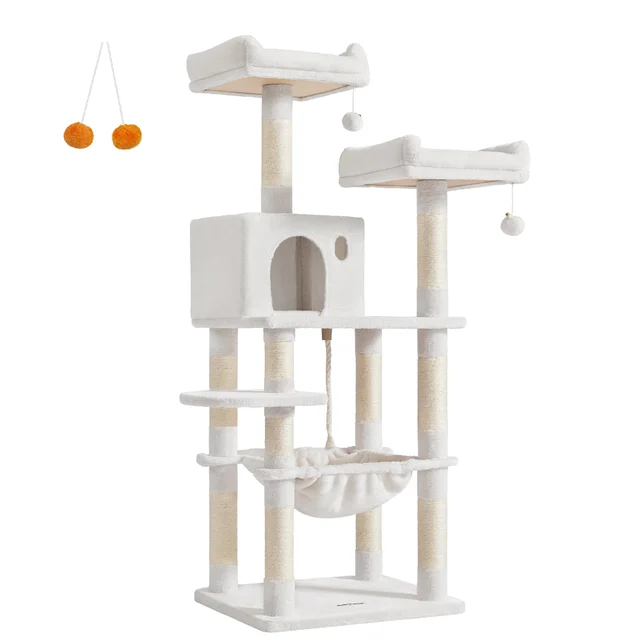
- Buy Feandrea 56.3-Inch Multi-Level Cat Tree (UPCT15) The value benchmark: a stable, sisal-heavy plush tower that cats treat as home base. Amazon
- Buy Catit Vesper High Base The modern piece that looks like furniture and is built to keep looking that way. Amazon
- It depends Yaheetech 54-Inch Multi-Level Cat Tree with Double Condo A cheap, condo-rich tower that works if you go in with realistic expectations. Amazon
- Skip Tuft + Paw Frond Cat Tree A sculptural showpiece whose price outruns what your cat actually gets.
What actually matters
- Stability - base width, total weight, and whether an anti-tip strap is included; this decides whether a full-grown cat can launch onto the top perch without the tower rocking.
- Scratching surface - how much genuine sisal you get and how tightly it is wound, since this is the single feature that saves your furniture.
- Layout and capacity - the count and separation of perches, condos, and hammocks, which determines whether one cat or several will actually use every level.
- Build quality and materials - particleboard and plush versus MDF laminate or solid wood, which drives how gracefully the tower ages and how consistently it arrives intact.
- Height and vertical territory - enough elevation for a cat to perch above eye level, balanced against a footprint your room can spare.
- Aesthetics and cleaning - whether the finish resists hair and suits a visible room, plus removable or washable cushions that extend usable life.
The specs, in plain English
Green flags vs red flags
Green flags
- A wide, heavy base paired with an included anti-tip wall strap
- Multiple full-height posts wrapped in tightly wound sisal
- Separated levels with at least one enclosed condo or hideaway
- Removable or machine-washable cushions and pads
- Listed platform and post dimensions that match the photos
- Owner reports describing low-wobble assembly and long service life
Red flags
- A narrow or lightweight base on a tall tower with no wall strap
- Thin, short posts or only a small patch of scratching surface
- Product photos that look far larger and plusher than the listed dimensions
- Slick perches with nothing to grip, which some cats slide off
- Repeated owner complaints of wobble, loosening bolts, or warped panels on arrival
- A flagship price justified by looks alone, with few perches and no condo
Who's who: the brands
- Feandrea - Budget plush towers known for stacking a lot of sisal, perches, and usable height into one stable, affordable structure.
- Catit - Maker of the Vesper line of modern wood-look laminate trees built to double as furniture and survive a visible room.
- Yaheetech - Entry-level towers with condo-rich, multi-cat layouts; a lot of hideaways for the money if you accept smaller, thinner parts.
- Tuft + Paw - Design-forward, flagship-priced sculptural pieces that prioritize looks over lounging capacity, with mixed quality-control reports.
How to read a listing without getting fooled
Start with the specs the listing would rather you skip. Check the base width and total weight against the overall height: a tall tower on a small, light base is a wobble risk no matter how good it looks. Read the scratching material carefully, since "scratching posts" can mean full-height sisal or a token pad of seagrass or carpet. Count the actual perches, condos, and hammocks rather than trusting the word "multi-level," and confirm the listed platform dimensions instead of judging scale from a staged hero photo that often flatters the tower. Finally, look for an included anti-tip strap and removable cushions, and skim owner reports for recurring words like wobble, loosening, or warped, which reveal problems a spec sheet hides.
How much should you spend?
You do not need to spend heavily to get a good cat tree; the value sweet spot sits with a budget plush tower that is tall, sisal-heavy, and stable, cheap enough that you can replace it without regret once the plush wears. Stepping up in price buys durability and looks rather than more perches, so the premium is worth it only when the tree must live in a visible room and read as furniture, using wipe-clean laminate that resists hair. The worst value is at the very top, where a flagship price can buy a sculptural showpiece with few lounging spots, no condo, and inconsistent quality control. Spend more for materials and a finish you can live with, not for a taller number or a designer silhouette your cat cannot appreciate.
Questions, answered
How tall should a cat tree be?
Cats value vertical territory, so aim for something that lets them perch well above eye level, roughly four to five feet for most rooms. Taller towers give more climbing and lookout options, but a wide base and a wall-anchor strap matter more for safety than raw inches.
Is sisal or seagrass better for scratching?
Most cats prefer tightly wound sisal rope, which is why sisal-heavy towers tend to satisfy committed scratchers. Seagrass is more subtle in a modern room and holds up fine, but some cats scratch it less enthusiastically, so if your cat is a serious scratcher, prioritize full-height sisal posts.
How do I keep a cat tree from wobbling?
Assemble it on a hard, level floor and fully tighten every bolt, then re-check them after a few weeks because posts settle. Use the included wall strap on any tall tower; a heavy, wide base helps most, and wobble complaints cluster around lighter designs with slim footprints.
Are plush or wood-laminate cat trees easier to keep clean?
Wood-look laminate wipes clean and does not trap hair, a real advantage in a visible room over several years. Plush is cozier and cheaper but sheds, mats, and fades, so look for machine-washable or removable cushions to extend its life; the choice usually comes down to whether the tree lives in a hidden corner or on display.
Can one cat tree work for multiple cats?
Yes, if it offers separate levels and hideaways so cats are not forced to share a single perch. Condo-rich layouts and a spread of platforms work well for multi-cat homes. This is general product information, not behavioral advice; if cats are fighting over territory, consult a veterinarian or a qualified feline behavior professional.
Or jump to the head-to-head: Feandrea 56.3-Inch Multi-Level Cat Tree (UPCT15) vs Catit Vesper High Base.