Explained
Dog Car Seat Covers, Explained
After reading this you will be able to look at any dog seat cover listing and tell whether it will stay put, keep liquid off your upholstery, and suit the way your car is actually used.
In this guide
A dog car seat cover has two jobs: stay exactly where you put it, and stop everything your dog brings home from reaching the upholstery. Most covers are sold on the second job and quietly fail the first, which is why sliding, bunching and sagging are the complaints that repeat across brands and price tiers. The specs that predict success are not the ones printed largest on the box, so this guide decodes the ones that matter.
The 30-second version
- Retention decides everything. A cover that slides or bunches gets straightened at every stop and then stops being installed. Anchors that push into the seat crease plus a grippy backing are what keep a cover in place, not headrest straps alone.
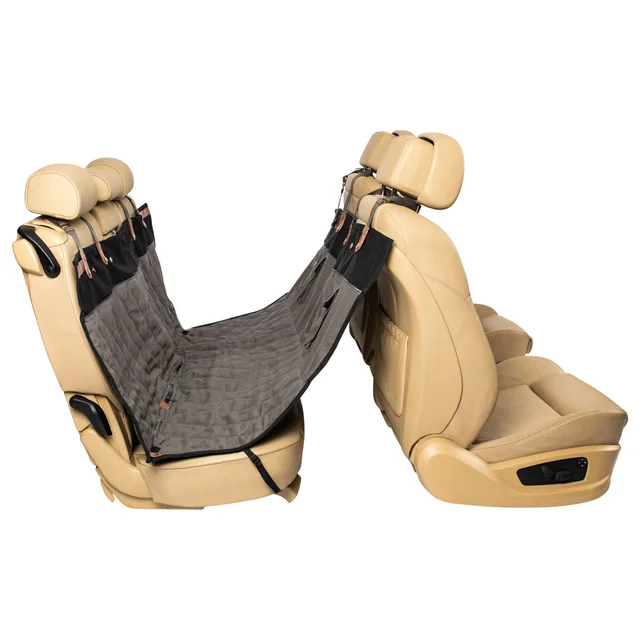
- Style follows who else uses the back seat. A hammock protects the bench, the seat backs and the footwell but takes the floor away from passengers. A bench cover leaves the floor clear and folds aside in seconds. Cargo liners are for wagons, SUVs and dogs that ride in the boot.
- Denier tells you about toughness, not waterproofing. It measures how heavy the yarn is. Water protection comes from the coating or laminate on the back, so a listing that shouts about denier and says nothing about backing is answering the wrong question.
- The surface is a trade-off, not a feature. Slick coated faces wipe clean fastest but give a dog nothing to brace against on corners. Quilted and twill faces grip better and suit older or arthritic dogs, at the cost of holding more hair and drying slower.
- A cover is not a restraint. It protects upholstery, not your dog. Real crash protection comes from a crash-tested harness anchored to the seat belt, or a crash-tested crate, with the cover underneath.
The products this guide is about
Our verdict on each, with the full reasoning on the companion review.
- Buy PetSafe Happy Ride Quilted Hammock Seat Cover The most complete rear-seat package here: padded waterproof twill, real anchors and full footwell coverage. Amazon
- Buy Kurgo Rover Bench Seat Cover The bench cover to buy when humans still need the back seat, and it has the best anchoring system in this group. Amazon
- It depends Ruffwear Dirtbag Dog Car Seat Cover The best fabric and the fastest cleanup of the four, sold at a premium and in a single size. Amazon
- Skip Active Pets Waterproof Hammock Car Seat Cover (Standard) A cheap Oxford hammock that photographs well and then slides, bunches and needs re-tugging on every drive. Amazon
What actually matters
- Anchoring into the seat crease. Headrest straps hold the top of the cover and nothing else. Anchor tubes, cleats or an underseat strap that pin the cushion section into the gap between cushion and seat back are what stop a cover creeping forward every time a dog jumps in.
- Backing grip. A laminated, rubberised or tacky coated underside resists migration on both cloth and leather. A plain fabric back will creep, and it creeps fastest on faux leather, which is exactly where owners least want a cover moving around.
- Waterproof backing versus a water-resistant face. A repellent finish on the face beads a splash. Only a coated or laminated backing stops a soaked dog putting liquid through to the seat. If your dog swims, this is the single spec to check.
- Coverage. Decide what you are protecting: the bench only, or the bench plus the footwell plus the backs of the front seats. Side flaps that shield the door sills and piped or raised edges that trap spills instead of letting them run off are the details that separate real protection from a mat.
- Belt, latch and centre openings. Confirm the cover leaves your seat belt buckles usable, that latch or ISOFIX points stay reachable if you carry child seats, and that there is a centre opening if you clip a dog harness to the middle belt. Openings are cut to generic positions and may not line up with your car.
- Cleaning method. Machine washable covers get washed. Hand wash only covers get hosed down and put back damp. Be realistic about which one you will actually live with after a muddy weekend.
- Size and width options. Standard widths target sedans and mid-size SUVs. One-size covers are a gamble in narrow benches and full-size trucks alike, so a model offering standard and extended widths is worth more than one that hopes.
The specs, in plain English
Green flags vs red flags
Green flags
- Retention comes from three things together: headrest straps, anchors that push into the seat crease, and a grippy backing
- The listing names the backing material (TPE, TPU or laminate) rather than only saying waterproof
- Machine washable, with a stated wash temperature and drying method
- Standard and extended widths offered, so the cover can actually match your bench
- Belt and latch openings including a centre opening, plus side flaps for the door sills
- Raised, piped or elasticated edges that hold a spill on the cover instead of letting it run onto the carpet
Red flags
- Headrest straps are the only anchoring mentioned anywhere in the listing
- Waterproof claimed with no backing described, or a repellent face finish presented as if it were a barrier
- One size only, with no guidance on which benches it fits
- Denier used as the headline durability claim while the coating goes unmentioned
- Product details and construction claims that change between sizes or sellers within the same listing family
- Marketing that implies the cover keeps a dog safe in a crash
Who's who: the brands
- PetSafe - Broad pet travel range, best known here for quilted hammock covers that combine machine washability with real crease anchors.
- Kurgo - Dog travel specialist with a reputation for multi-point anchoring, belt and latch access, and long guarantees against manufacturing defects.
- Ruffwear - Outdoor dog gear brand that leans on technical fabrics, coated backings and hardware sourced from the outdoor industry, at premium pricing.
- 4Knines - Vehicle cover specialist with bench, hammock and cargo versions.
- Active Pets - Value-tier Oxford hammocks and bench covers sold mainly online, where construction detail varies more than the listings suggest.
- Orvis - Traditional sporting brand that sells quilted covers and cargo liners aimed at sporting dog owners.
How to read a listing without getting fooled
Start at the bottom of the listing, not the top. Find the underside: what is the backing made of, and does the description of it use a material name or just the word waterproof? Then find every word about how it stays put, and count the anchor points. If headrest straps are all you can find, the cover will move. Next, treat denier as a claw and abrasion number only, and ignore it entirely when judging leaks. Check the dimensions against a tape measure across your own bench rather than trusting the vehicle list, because those lists are aspirational and a cover that runs short is a cover that bunches. Read the care label before the feature list, since hand wash only quietly turns into never washed. Finally, discount photos: every cover looks flawless draped over a clean seat in a studio. Look instead for pictures of the anchors, the openings and the reverse side, and for owner reports written a season in rather than in the first week, because early reviews in this category capture how a cover looks, not whether it stays put.
How much should you spend?
Budget covers buy you a barrier and little else: thin single-layer fabric, a coating that fades, and retention that rests on headrest straps. They are defensible for occasional trips and a poor bet as a daily solution. The mid range is where this category makes sense, because that is the point at which crease anchors, a genuine laminated backing, belt and latch openings, and machine washability all appear together, and those four things are what determine whether a cover is still in the car six months later. Spending beyond that buys better fabric and faster cleanup rather than more coverage: technical face fabrics that shed mud, tacky backings, and hardware that survives years of clipping. That premium pays off for a dog that arrives genuinely wet and filthy every week, and is largely wasted on a dog that is mostly dusty and shedding. Two upgrades are almost always worth paying for regardless of tier: proper anchoring, and a size that actually fits your bench. Two rarely are: an extra colourway, and a longer feature list on a cover that still only straps to the headrests.
Questions, answered
Hammock or bench: which one should I get?
Answer one question first, does anyone else use that back seat. If no, take a hammock: it covers the bench, the backs of the front seats and the footwell, and the hanging panel keeps a dog from dropping into the footwell under hard braking. If yes, take a bench cover, because it leaves the floor clear and folds out of the way in seconds. Convertible covers exist, but converting usually means unclipping straps and re-hanging the panel, so pick based on the mode you will use most days.
Does a seat cover make my dog safer in a crash?
No. A cover protects your upholstery, not your dog. A hammock panel does stop a dog sliding into the footwell during hard braking, which is genuinely useful, but it does nothing in a real collision. If safety is the goal, use a harness that has passed independent crash testing and is anchored to the seat belt, or a crash-tested crate, and put the cover underneath. Be sceptical of any cover marketed as a safety product.
Is a higher denier number better?
Only for toughness, and only up to a point. Denier is the weight of the yarn, so a higher number generally means thicker, more abrasion resistant fabric that stands up better to claws. It tells you nothing about whether liquid gets through, because that depends on the coating or laminate bonded to the back. A 300D fabric with a good backing beats a 600D fabric without one.
Waterproof or water resistant: what is the actual difference?
Water resistant usually means a repellent finish on the face fabric, which beads a splash and then wets through under a soaked dog. Waterproof should mean a coated or laminated backing that blocks liquid regardless of what the face does. Marketing uses both words loosely, so judge by the backing material named in the specs. Washing wears repellent finishes down over time, which is why several brands specify cold gentle cycles or hand washing.
How do I stop the cover sliding around?
Retention comes from three things working together: straps over the headrests, anchors pushed into the seat crease, and a grippy backing underneath. Buy a cover that has all three. On installation, push the anchors deep into the gap between cushion and seat back rather than leaving them resting on top, tighten the underseat strap if there is one, and re-tension after the first week once the fabric has settled. If a cover still creeps, the problem is usually a slick seat surface, and a non-slip mat or shelf liner underneath is a cheap fix.
Will it work with my seat belts and child seat anchors?
Most decent covers include slits, zips or hook-and-loop openings for buckles and for latch points, but those openings are cut to generic positions and may not line up with your car. If you clip a dog harness to the centre belt, check there is a centre opening and not just outboard ones. It is also worth confirming the cover does not sit over a side airbag deployment seam on the outboard seat backs.
Or jump to the head-to-head: PetSafe Happy Ride Quilted Hammock Seat Cover vs Kurgo Rover Bench Seat Cover.