Explained
Dog Doors, Explained
After reading, you'll know which of the three main dog-door types fits your home and how to judge sealing, sizing, and security without getting fooled by a spec sheet.
In this guide
Dog doors look simple, but they split into three very different products that are not interchangeable: flaps you cut into a door, panels that drop into a sliding-glass track with no cutting, and electronic doors that only open for your own pet. Most first-time buyers pick on price and later regret it, either because they cut a hole they can't undo or because a cheap single flap turns their home drafty every winter. The right choice depends far more on your home, your climate, and your dog's size than on the sticker.
The 30-second version
- Match the type to your home first. a renter with a sliding patio door wants a totally different door than a homeowner cutting through an exterior wall, so decide install type before you compare brands.
- Sealing is the spec that separates good from bad. double flaps and magnet-and-spring single flaps hold heat in; plain soft single flaps leak, and that's the number-one long-term complaint owners report.
- An electronic door is how you keep wildlife and strays out. passive flaps let animals push through, so if raccoons or neighborhood cats are the problem, you need selective entry.
- Size for your biggest dog, then check the ceiling. electronic doors have their own weight limits, so confirm the flap opening fits before you fall for the features.
- Reversible beats permanent when you're unsure. a sliding-panel insert lifts back out when you move; a cut door or wall is forever, so renters and cautious buyers should start with an insert.
The products this guide is about
Our verdict on each, with the full reasoning on the companion review.
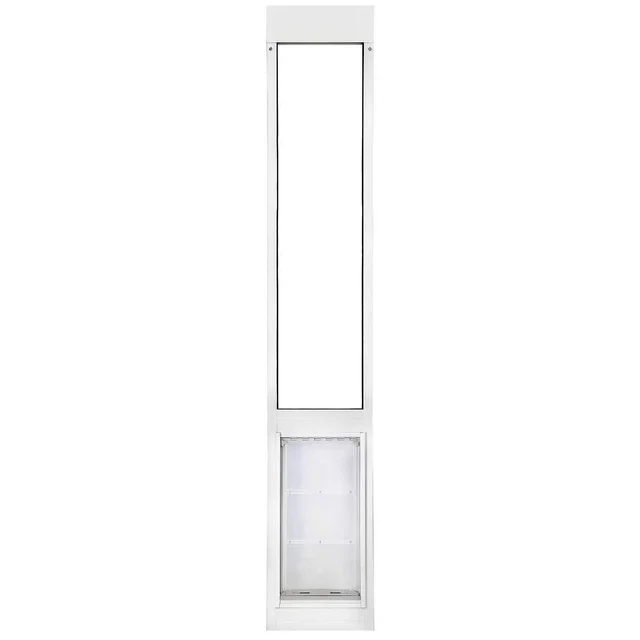
- Buy Endura Flap Thermo Panel 3e The best-sealing, no-cut option for anyone with a sliding patio door, renters included. Amazon
- Buy PetSafe Wall Entry Pet Door The pick when you'd rather cut a wall than give up a door, with a well-insulated double flap. Amazon
- It depends SureFlap Microchip Pet Door Keeps strays and wildlife out by reading your pet's own microchip, but the maker sizes it for large cats and small dogs only.
- Skip PetSafe Freedom Aluminum Pet Door A cheap, easy door-mount flap that's fine in mild weather but drafty everywhere else. Amazon
What actually matters
- Install type - Sliding-panel inserts require no cutting and are reversible; through-wall and door-mount doors are permanent construction. This single choice drives everything else, so pick the type that suits your home and your commitment level before comparing models.
- Weather sealing - The most common regret is a drafty, energy-leaking flap. Look for double flaps or single flaps with magnets and spring tension; avoid a lone soft vinyl flap if you have real winters.
- Selective entry - If keeping raccoons, opossums, and stray cats out is the point, an electronic or RFID door is the answer. Passive flaps offer no gatekeeping.
- Dog size range - Measure your dog and confirm the flap opening fits with room to spare. Check the stated weight limit on electronic doors, since the largest size may not suit giant breeds.
- Locking and security - A dog door is a permanent opening in your home. Good ones include a closing/locking panel, a lockable slide, or an electronic lock so you can seal it when you travel.
- Durability and frame material - Aluminum frames outlast all-plastic ones, and flap material determines both sealing and how long the door survives an enthusiastic dog.
- Dog-friendliness - Stiffer and double flaps insulate better but intimidate timid dogs, so factor in a training period when you choose a heavier-sealing door.
The specs, in plain English
Green flags vs red flags
Green flags
- A double flap, or a single flap that combines magnets, spring tension, and edge sealing
- An aluminum (not all-plastic) frame for longevity
- A height-adjustable insert that fits standard sliding doors without custom work
- An included closing/locking panel or lockable slide for security
- A clearly stated flap opening size and a size chart that fits your dog with clearance
- Selective (RFID/electronic) entry if wildlife or strays are your specific problem
Red flags
- A single soft vinyl flap sold on price alone, especially if you have cold winters
- No closing or locking panel of any kind
- Vague or missing flap-opening measurements, or a size range that barely fits your dog
- An electronic door whose largest size stops below your dog's dimensions
- Battery-only power with owner reports of dead-battery lockouts and no manual override
- A permanent cut-in door chosen before you've confirmed you own the home or want it forever
Who's who: the brands
- Endura Flap (Patio Pacific) - Premium maker known for the no-cut Thermo Panel insert that renters can install in a sliding door.
- PetSafe - A broad mainstream brand covering many types: door flaps, through-wall units, and electronic RFID doors.
- Ruff-Weather / Ideal Pet Products - Value-focused lines offering flap doors and sliding-glass inserts at a lower tier, common in home-improvement stores.
- Hale Pet Door - Higher-end, made-to-order door and wall units favored when fit and finish matter and cost is secondary.
- SureFlap / Sure Petcare - Best known for microchip-reading selective-entry doors, mostly cat-scale; its Microchip Pet Door is sized for large cats and small dogs.
How to read a listing without getting fooled
Start at the top of the listing and find the install type, because it decides whether the door even fits your situation: 'sliding-glass insert' means no cutting and reversible, while 'wall' or 'door mount' means a permanent hole. Next, ignore the frame dimensions and hunt for the flap opening (sometimes called rise and width) plus the recommended dog weight or shoulder height, then compare those to your own dog with a couple of inches to spare. Read the flap description carefully: 'double flap' or 'magnetic, spring-loaded' signals good sealing, while a bare 'soft flap' with no mention of magnets or springs usually means drafts. Confirm a closing or locking panel is included rather than sold separately. For electronic doors, check whether it reads a collar key or an implanted microchip, what powers it, and whether there's a manual lock or override for when the battery dies. Marketing photos won't tell you any of this; the spec table will.
How much should you spend?
Think in tiers rather than dollars. The cheapest doors are single soft-flap door mounts, and they're genuinely fine in mild climates where insulation doesn't matter, but their draftiness is exactly why buyers in cold regions regret them. The value sweet spot is the mid tier: a well-insulated through-wall unit or a double-flap door buys you sealing and durability that pay for themselves in comfort and energy, and the step up from budget to properly sealed is usually modest. Premium spending goes to top-sealing sliding-panel inserts and made-to-order doors; it's worth it if you rent (reversibility has real value), face harsh winters, or want the best draft control, and it's not worth it if you live somewhere temperate and just need a simple exit. Electronic doors carry a features premium that only pays off when selective entry is your actual problem, not a nice-to-have.
Questions, answered
Which type should I choose: door-mount, wall-mount, or sliding-panel insert?
Match it to your home. If you have a sliding patio door, an insert panel is the easiest win because it needs no cutting and is reversible, which makes it ideal for renters. If you own the home and want the door on an exterior wall, a through-wall unit works well but is a permanent construction job. A traditional door-mount flap is the cheapest and simplest to cut in, but you give up part of that door forever.
Will a dog door make my house drafty and cold?
It can, and this is where products separate most. Single-flap budget doors leak noticeably in cold climates, according to owner reports. Double-flap designs and tightly sealed single flaps with magnets and spring tension do far better. If you live somewhere with real winters, prioritize sealing over price; the difference in comfort and energy loss is larger than the difference in cost.
Can a dog door keep raccoons and stray cats out?
An electronic or selective-entry door is the way to do it. Passive flaps let animals push through. An RFID electronic door opens only for a pet wearing its collar key, which keeps out wildlife and neighbor pets that lack the key. Be aware some dog versions read a collar-worn key rather than an implanted microchip, so the key has to stay on the collar to work.
What size dog door do I need?
Measure your dog's width at the shoulders and height at the shoulder, then choose a flap opening a couple of inches larger than each, with the top of the opening at or above shoulder height. When in doubt, size up, and always confirm the largest dog in the house fits, since electronic doors have their own weight limits.
Are dog doors a security or break-in risk?
A large opening is worth thinking about, so look for security features: closing or locking panels, a lockable slide, or electronic locking. Place the door where an intruder can't easily reach a nearby latch or lock, and use the closing panel when you travel. For most homes a properly placed, lockable dog door is a manageable trade-off.
Do electronic dog doors need much maintenance?
Mainly batteries. Owner reports flag dead-battery lockouts and the occasional read-range or reliability hiccup, so favor a model with a low-battery warning or a manual override, keep spare batteries on hand, and make sure the collar key stays clean and attached.
Or jump to the head-to-head: Endura Flap Thermo Panel 3e vs PetSafe Wall Entry Pet Door.