

Pet Supplies
The Best Dog Doors: 4 Compared (and One to Skip)
We compared a wall-mount flap, a no-cut sliding-door panel, an electronic microchip door, and a budget flap on sealing, install, and security.
The short version
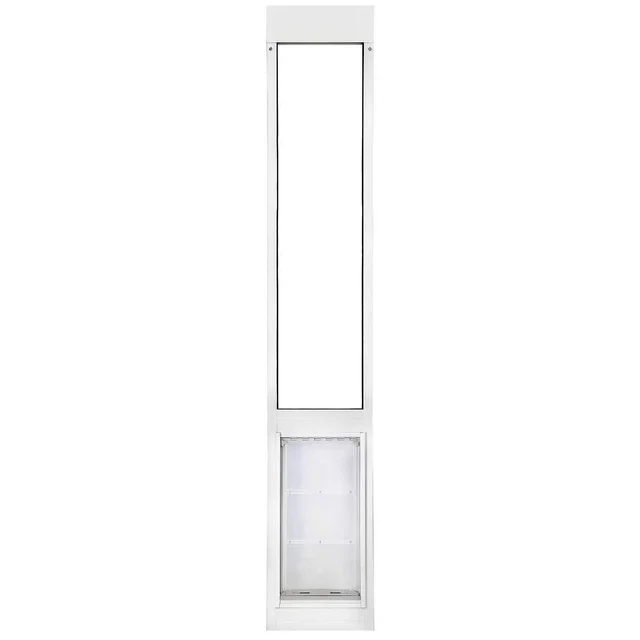
Most people should start with the Endura Flap Thermo Panel 3e: it drops into a sliding-glass door with no cutting, seals better than almost anything else, and is removable, which makes it perfect for renters and easy to undo. If you have no sliding door and want a permanent exit, the PetSafe Wall Entry Pet Door and its insulating double flap is the runner-up. The SureFlap Microchip Pet Door is worth it only if you need to keep wildlife or strays out and your dog is small enough for a door the maker sizes for large cats and small dogs. Skip the PetSafe Freedom Aluminum Pet Door unless you're on a tight budget in a mild climate, because its single flap is drafty. Best for: renters and sliding-door homes wanting top sealing with zero remodeling.
Our picks at a glance
- Endura Flap Thermo Panel 3e - Buy. The best-sealing, no-cut option for anyone with a sliding patio door, renters included.
- PetSafe Wall Entry Pet Door - Buy. The pick when you'd rather cut a wall than give up a door, with a well-insulated double flap.
- SureFlap Microchip Pet Door - It depends. Keeps strays and wildlife out by reading your pet's own microchip, but the maker sizes it for large cats and small dogs only.
- PetSafe Freedom Aluminum Pet Door - Skip. A cheap, easy door-mount flap that's fine in mild weather but drafty everywhere else.
The verdict in 30 seconds
What mattered most
- Install type
- Weather sealing
- Keeps out wildlife/strays
- Renter-friendly / reversible
- Dog size range
- Power required
Dog doors split into a few very different products: flaps you cut into a door or wall, insert panels that drop into a sliding-glass track with no cutting, and electronic doors that only open for your own pet. They are not interchangeable, so the 'best' one depends heavily on your home and climate. Below we line up four current, buyable models, name a clear top pick and runner-up, flag one that only makes sense in narrow cases, and point out the budget flap most buyers should walk past.
The best-sealing, no-cut option for anyone with a sliding patio door, renters included.
Best for: Renters or homeowners with a sliding patio door who want top-tier sealing without altering the house.
- Installs in a sliding-glass-door track with no cutting and lifts out when you move, which makes it the standout choice for renters
- Owner reports consistently rate its flap, with magnets along three sides, among the best for weatherproofing and draft control
- Height-adjustable aluminum frame (custom heights offered for sliders outside the standard range), with multiple flap sizes
- Premium price, and custom sizing pushes it higher
- It occupies one side of the slider, so you lose part of your door's full opening width
Own the Endura Flap Thermo Panel 3e? Tell us how it held up.
Thanks. Counted, and shown once enough owners have weighed in.
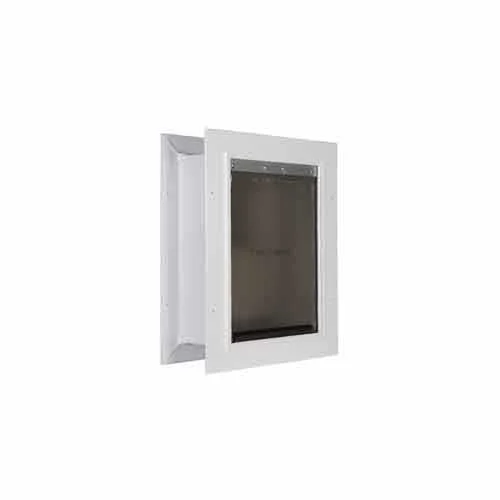
The pick when you'd rather cut a wall than give up a door, with a well-insulated double flap.
Best for: Homeowners who don't want to sacrifice a door and want a permanent, well-insulated exit.
- Goes through an exterior wall, so you can place it wherever it makes sense instead of being limited to a door
- Dual flap system built for resistance to the elements, which owners note in colder climates
- Included slide-in closing panel controls entry and exit and cuts drafts when the door is not in use
- It is a permanent, harder-to-reverse job that involves cutting and framing an exterior wall
- Semi-rigid flaps can intimidate timid dogs at first and usually need a few training sessions
Own the PetSafe Wall Entry Pet Door? Tell us how it held up.
Thanks. Counted, and shown once enough owners have weighed in.
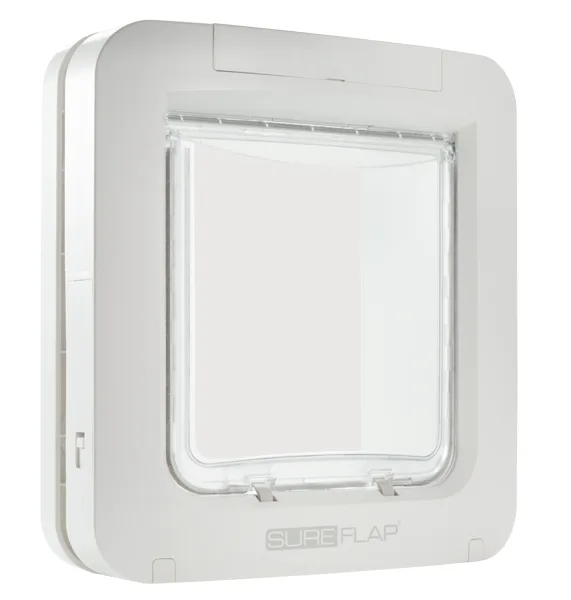
Keeps strays and wildlife out by reading your pet's own microchip, but the maker sizes it for large cats and small dogs only.
Best for: Small-dog homes fighting wildlife or stray cats that want entry tied to the dog's own microchip.
- Reads your pet's implanted microchip, and includes one RFID collar tag for a pet that isn't chipped
- Stays locked to unregistered animals, which keeps out stray cats and wildlife
- Curfew mode, a manual lock and an in-only setting, with up to 32 pets stored in memory
- Up to 12 months of battery life with a low battery indicator, per the maker
- Designed for large cats and small dogs, with a flap opening of 7.5 x 6 11/16 inches
- Runs on 4 C cell batteries, which are not included
- The reader sits on the exterior side only, so any animal inside can push its way out
Own the SureFlap Microchip Pet Door? Tell us how it held up.
Thanks. Counted, and shown once enough owners have weighed in.
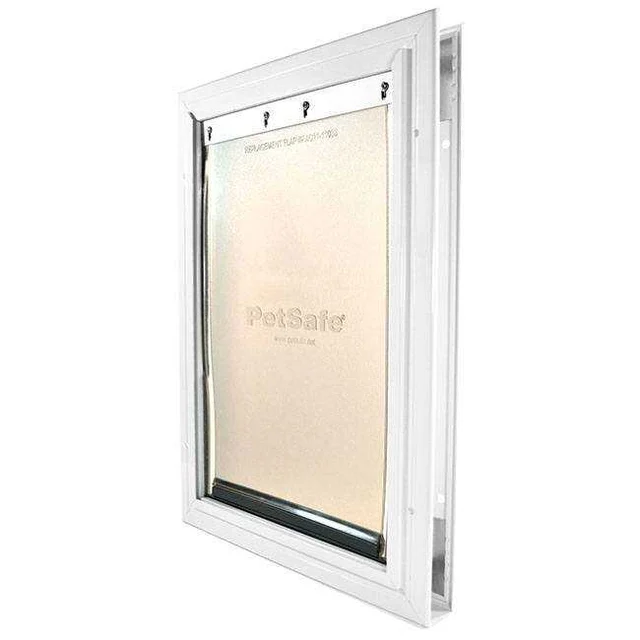
A cheap, easy door-mount flap that's fine in mild weather but drafty everywhere else.
Best for: Tight budgets in mild climates where insulation genuinely isn't a concern.
- Inexpensive and one of the easiest flaps to fit into a standard interior or exterior door
- Aluminum frame holds up better than the all-plastic budget doors it competes with
- Comes with a closing panel for when you want the opening sealed off
- The single vinyl flap has a magnetic closure and weather stripping, yet owners in cold or windy climates repeatedly report drafts and flap flutter
- For only a modest step up in price, the sealing and durability of the doors above make it hard to recommend outside mild climates
Own the PetSafe Freedom Aluminum Pet Door? Tell us how it held up.
Thanks. Counted, and shown once enough owners have weighed in.
| Criteria | Endura Flap Thermo Panel 3e Top pick Buy it Buy | PetSafe Wall Entry Pet Door Buy it Buy | SureFlap Microchip Pet Door It depends Buy | PetSafe Freedom Aluminum Pet Door Skip it Buy |
|---|---|---|---|---|
| Best for | Renters or homeowners with a sliding patio door who want top-tier sealing without altering the house. | Homeowners who don't want to sacrifice a door and want a permanent, well-insulated exit. | Small-dog homes fighting wildlife or stray cats that want entry tied to the dog's own microchip. | Tight budgets in mild climates where insulation genuinely isn't a concern. |
| Price tier | $$$ · premium | $$ · mid-range | $$ · mid-range | $ · budget |
| Install type | Sliding-door insert (no cutting) | Through-wall (cutting required) | Door, wall or glass mount (cutting required) | Door mount (cutting required) |
| Weather sealing | Excellent (magnet-sealed flap) | Very good (double flap) | Not listed on the maker page | Poor per owner reports (single magnetic vinyl flap) |
| Keeps out wildlife/strays | No | No | Yes (microchip or RFID collar tag) | No |
| Renter-friendly / reversible | Yes (lifts out) | No (permanent) | No (permanent) | No (permanent) |
| Dog size range | Multiple flap sizes | Small to large, up to 100 lbs | Large cats and small dogs (7.5 x 6 11/16 in opening) | Small to extra large |
| Power required | None | None | Battery (4 x C cells) | None |
| Locking / security | Locking cover plus C-clamp lock | Slide-in closing panel | Curfew, manual lock and in-only modes | Closing panel |
| Price tier | $$$ · premium | $$ · mid-range | $$ · mid-range | $ · budget |
Which one is right for you?
- Renters or homeowners with a sliding patio door who want top-tier sealing without altering the house. Buy it Endura Flap Thermo Panel 3e
- Homeowners who don't want to sacrifice a door and want a permanent, well-insulated exit. Buy it PetSafe Wall Entry Pet Door
- Small-dog homes fighting wildlife or stray cats that want entry tied to the dog's own microchip. It depends SureFlap Microchip Pet Door
- Tight budgets in mild climates where insulation genuinely isn't a concern. Skip it PetSafe Freedom Aluminum Pet Door
How we judged the field
We don’t run a lab. Instead we synthesize independent testing, long-run owner reports, and manufacturer specs, then weigh them against what actually goes wrong with dog doors over years of use. Four things mattered most. First, install fit: a dog door is only ‘best’ if it suits your home, so we treated sliding-panel inserts, through-wall units, and door-mount flaps as distinct tools rather than ranking them head to head on price alone. Second, weather sealing, because the single most common owner complaint is drafts and energy loss from a poorly sealed flap. Third, security and selective entry: whether the door can be locked, and whether it can keep wildlife and strays out. Fourth, durability and dog-friendliness: frame material, flap stiffness, and how easily a nervous dog learns to use it. We deliberately included one budget door and one electronic door so the trade-offs are visible.
Endura Flap Thermo Panel 3e
Buy itThis is the one we’d point most people toward first, and it’s our top pick. It’s an insert panel that stands in the track of a sliding-glass patio door, so there’s no cutting and no permanent change to your home, which makes it the rare dog door a renter can install. The flap itself is where it earns its reputation: a flap with magnets along three sides, which owners repeatedly rank at or near the top for weatherproofing. The aluminum frame is height-adjustable, with custom heights offered, and the flap comes in multiple sizes. The catch is cost, especially in custom sizes, and the fact that it takes over part of your slider’s opening. For the majority of homes with a patio door, none of that outweighs the no-cut convenience and the sealing.
PetSafe Wall Entry Pet Door
Buy itWhen there’s no sliding door to use, or you simply don’t want to sacrifice a door, this is the runner-up. It installs through an exterior wall and PetSafe lists a standard wall thickness range of 4 3/4 to 7 1/4 inches, so you can put the door wherever it makes practical sense. It uses a dual flap system, and owners in colder regions note that the twin flaps insulate meaningfully better than a single flap. A slide-in closing panel is included and lets you seal the opening when needed. The honest downsides are that this is permanent construction, not a weekend flap swap, and the semi-rigid flaps can spook a timid dog until it’s trained. For a committed, well-insulated, tidy-looking install, it’s an easy recommendation.
SureFlap Microchip Pet Door
It dependsThis one is excellent at exactly one job, and only for smaller dogs. If your real problem is raccoons, opossums, or the neighbor’s cat strolling in through a passive flap, the SureFlap fixes it: it reads your pet’s existing microchip (an RFID collar tag is included for pets that aren’t chipped) and stays locked to every animal it doesn’t recognize. It adds a curfew mode, a manual lock, and an in-only setting, and it can be fitted in a door, a wall, or glass. The limits are on the maker’s own page. SureFlap designs it for large cats and small dogs, and the flap opening is 7.5 x 6 11/16 inches, so most medium and large dogs simply won’t fit. It runs on 4 C cell batteries (not included), and the reader sits on the outside only, so any animal that is already indoors can push its way out. Buy it if selective entry is your priority and your dog is small; otherwise a better-sealed passive door will serve you longer with less to break.
PetSafe Freedom Aluminum Pet Door
Skip itThere’s nothing broken about the Freedom. It’s cheap, it’s easy to cut into a standard door, and its aluminum frame outlasts the all-plastic doors in its price class. But it’s built to a budget. PetSafe gives the single vinyl flap a magnetic closure and weather stripping, yet owners in cold or windy climates consistently report drafts and flap flutter, and the sealing simply doesn’t compete with the doors above. Because the step up in price to a much better-sealing door is modest, we can’t recommend the Freedom to most buyers. It earns a place only for tight budgets in mild climates where insulation truly doesn’t matter.
Sources
Specs in this review come from these pages.
Endura Flap Thermo Panel 3e vs PetSafe Wall Entry: which should you buy?
These are the two we’d actually hand money over for, and the choice is mostly about your house and your commitment level. The Thermo Panel 3e wins on flexibility: it needs no cutting, it’s reversible, and it’s the only one here a renter can take to the next apartment. It also has the edge on flap sealing. Its limits are price and that it lives in a sliding door you must already have. The Wall Entry wins if you have no slider or want the door somewhere a door mount can’t go, and its dual flap system is built for resistance to the elements. But it’s permanent, it’s a real construction task, and undoing it means patching a wall. Rule of thumb: have a sliding patio door or rent? Take the Thermo Panel 3e. Own the home, no slider, and want it permanent? The Wall Entry is the better fit.
What to look for
- Match the install to your home first. Sliding door and/or renting favors an insert panel; a committed homeowner without a slider is the case for through-wall or door-mount.
- Prioritize flap sealing if you have real winters. Double flaps or magnet-and-spring-sealed single flaps beat plain soft flaps by a wide margin.
- Size for your biggest dog. Measure shoulder width and height; pick an opening a couple inches larger, and double-check the size limit on electronic doors.
- Decide whether you need selective entry. An electronic/RFID door is the way to keep wildlife and strays out; passive flaps let animals push through.
- Check the locking method. Closing panels, locking covers, and key-only electronic modes all exist; make sure the door can be secured when you’re away.
- Factor in training. Stiffer or double flaps insulate better but take a nervous dog longer to accept.
Our final take
For most buyers, the Endura Flap Thermo Panel 3e is the smartest dog door on this list: it seals beautifully, requires no cutting, and lifts back out when you move, which covers renters and cautious homeowners alike. If a sliding-door insert isn’t an option for you, the PetSafe Wall Entry Pet Door is the well-insulated permanent runner-up. Reach for the SureFlap Microchip Pet Door only when keeping wildlife or strays out is the whole point and your dog is small enough for a door sized for large cats and small dogs. And unless you’re spending as little as possible in a mild climate, skip the PetSafe Freedom Aluminum Pet Door and put that near-identical money toward a door that won’t leave you feeling a draft every winter.
Questions, answered
Door-mount, wall-mount, or sliding-panel: which install should I choose?
Match it to your home. If you have a sliding patio door, an insert panel like the Endura Flap Thermo Panel 3e is the easiest win because it requires no cutting and is reversible. If you own the home and want the door placed on an exterior wall, a through-wall unit like the PetSafe Wall Entry works well but is a permanent construction job. A traditional door-mount flap is the cheapest and simplest to cut in, but you give up part of that door forever.
Will a dog door make my house drafty and cold?
It can, and this is where the products separate most. Single-flap budget doors like the PetSafe Freedom leak noticeably, according to owner reports in cold climates. Double-flap designs (PetSafe Wall Entry) and tightly sealed single flaps with magnets (Endura Flap Thermo Panel 3e) do far better. If you live somewhere with real winters, prioritize sealing over price.
Can a dog door keep raccoons and stray cats out?
An electronic or selective-entry door is the way to do it. Passive flaps let animals push through. The SureFlap Microchip Pet Door reads your pet's implanted microchip (or an included RFID collar tag) and stays locked to unregistered animals, which keeps out wildlife and neighbor pets. The catch for dog owners is size: the maker designs it for large cats and small dogs, and the reader works on entry only, so any animal can exit.
What size dog door do I need?
Measure your dog's width at the shoulders and their height at the shoulder, then choose a flap opening a couple of inches larger than each, with the top of the opening at or above shoulder height. When in doubt, size up. Also confirm the largest dog in the house fits, since electronic doors have their own size limits.
Are dog doors a security or break-in risk?
A large opening is a consideration, so look for the security features these models include: closing/locking panels (Freedom and Wall Entry), a locking cover and clamp lock (Thermo Panel), and curfew, manual lock and in-only modes (SureFlap). Place the door where an intruder can't easily reach a nearby lock, and use the closing panel when you travel.
Deciding between the top two? See our head-to-head: Endura Flap Thermo Panel 3e vs PetSafe Wall Entry Pet Door.
More in Pet Supplies
Dog Doors, Explained Plain-English guide → Endura Flap Thermo Panel 3e vs PetSafe Wall Entry Pet Door Head-to-head →  The Best Dog Food Storage Containers: 4 Compared (and One to Skip)
  Best Dog GPS Trackers: Which One Actually Finds Your Dog
  The Best Dog Grooming Clippers: 4 Compared (and One to Skip)
  The Best Dog Harnesses: 4 Compared (and One to Skip)