

Pet Supplies
The Best Dog Harnesses: 4 Compared (and One to Skip)
We compared four popular no-pull and everyday dog harnesses on pulling control, comfort, fit, and durability.
The short version
For most dogs and most owners, the Ruffwear Front Range Harness is the one to buy: padded where it matters, built to last years, and equipped with both front and back leash clips. If your dog pulls hard and you're actively training better leash manners, the 2 Hounds Design Freedom No-Pull Harness is the more effective tool, with a tightening back loop and front clip that trainers consistently recommend. The Rabbitgoo Classic Fit No-Pull delivers a surprising amount of that feature list at a budget price, but long-term durability and sizing are less certain. Skip the Julius-K9 IDC Powerharness for everyday no-pull walking - it has no front clip, its chest strap can restrict shoulder movement, and owners report escapes. Best for: everyday walkers wanting comfort and longevity (Ruffwear), dedicated no-pull training (2 Hounds), or tight budgets (Rabbitgoo).
Our picks at a glance
- Ruffwear Front Range Harness - Buy. The everyday benchmark: padded, durable, dual-clip, and comfortable enough for all-day wear.
- 2 Hounds Design Freedom No-Pull Harness - Buy. The trainer favorite: a dual-clip design with a tightening back loop that meaningfully reduces pulling.
- Rabbitgoo Classic Fit No-Pull Dog Harness - It depends. The budget vest that delivers most of the premium feature list - if you nail the sizing.
- Julius-K9 IDC Powerharness - Skip. A tough working-dog harness that is the wrong tool for everyday no-pull walking.
The verdict in 30 seconds
What mattered most
- Leash attachment points
- No-pull effectiveness
- Padding & comfort
- Adjustability & fit
- Durability (owner reports)
- Visibility & extras
A good harness makes daily walks easier on your dog's neck and your shoulders - and the right no-pull design can genuinely take the edge off a determined puller. We synthesized independent testing and thousands of owner reports on four of the most popular harnesses you can buy in 2026: two earn a clear buy, one is a solid budget option with caveats, and one famous name is best skipped for everyday walking.
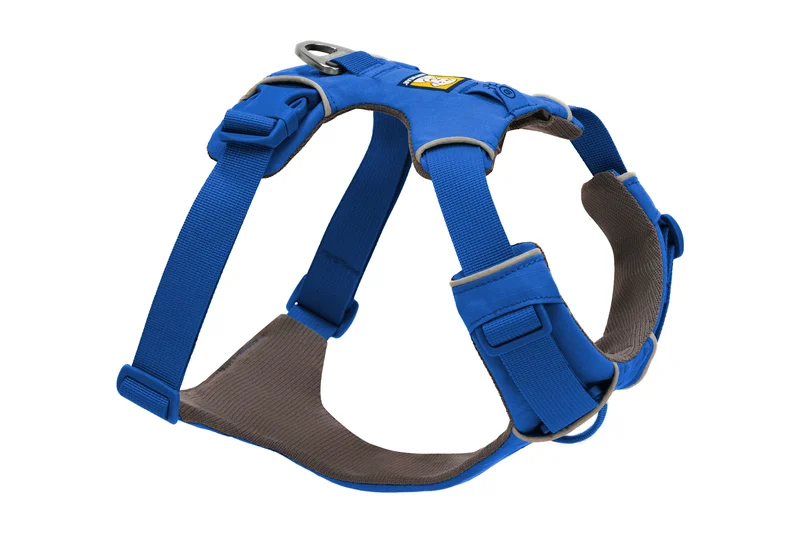
The everyday benchmark: padded, durable, dual-clip, and comfortable enough for all-day wear.
Best for: Active owners who walk or hike daily and want one comfortable harness that lasts years
- Foam-padded chest and belly panels that resist chafing on long walks
- Front and back leash attachments, with a sturdy aluminum V-ring on top
- Owners consistently report multi-year durability, even with strong pullers
- Extensive reflective trim and four adjustment points for a dialed-in fit
- Costs several times what budget harnesses do
- Front clip is a light webbing loop, less robust than the rear hardware for hard pullers
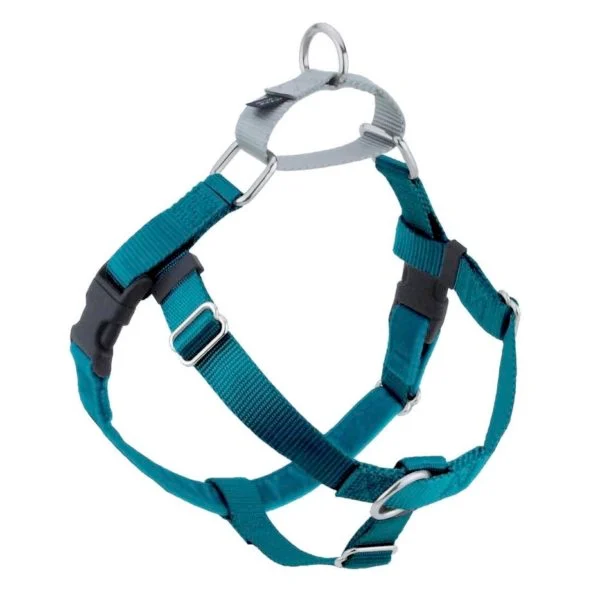
The trainer favorite: a dual-clip design with a tightening back loop that meaningfully reduces pulling.
Best for: Owners actively working on leash manners with a moderate-to-strong puller
- Patented martingale-style back loop plus front clip give real leverage over hard pullers
- Velvet-lined girth strap protects sensitive skin behind the front legs
- Heavy-duty webbing and stainless-steel hardware, made in the USA
- Frequently recommended by force-free trainers for leash training
- Strap-style design can still rub some dogs on long outings despite the velvet lining
- Front strap sits low on some body shapes and can brush the shoulder
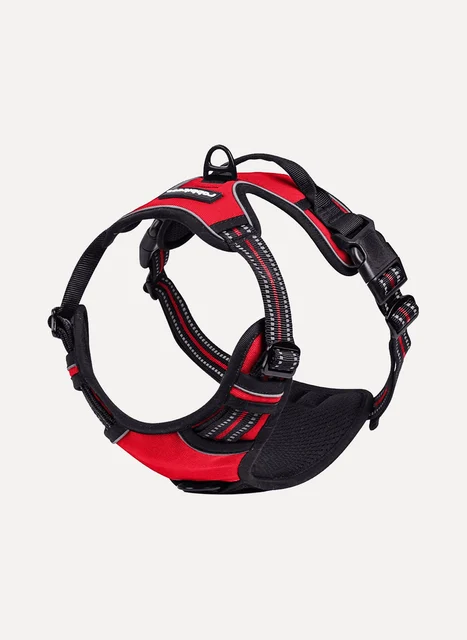
The budget vest that delivers most of the premium feature list - if you nail the sizing.
Best for: Budget shoppers and multi-dog households with mild-to-moderate pullers
- Front and back clips, padded vest, grab handle, and reflective stitching at a budget price
- Owner reports at massive scale skew strongly positive for the money
- Five adjustment points accommodate a wide range of body shapes
- Long-term durability is inconsistent - some owners report fraying or buckle failures with heavy use
- Sizing runs tricky; a poor fit undermines both comfort and pull control
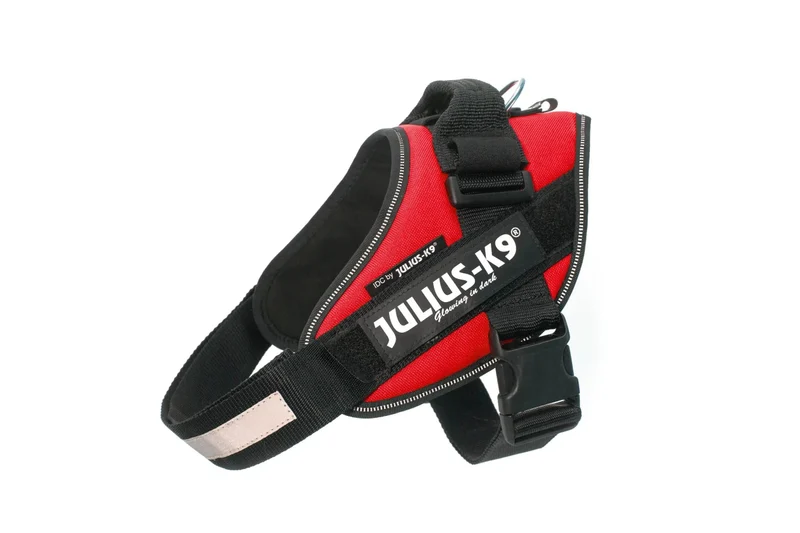
A tough working-dog harness that is the wrong tool for everyday no-pull walking.
Best for: Handlers who need a grab-handle working harness, not owners fighting pulling
- Extremely rugged construction with a sturdy top handle and glow-in-the-dark customizable labels
- Quick on-off design popular with service and working-dog handlers
- No front leash attachment, so there is no built-in no-pull mechanism
- Horizontal chest strap can restrict shoulder movement, a common criticism in independent testing
- Owners report some dogs can back out of it when pulling against the leash
- Newer versions moved some hardware from metal to plastic
| Criteria | Ruffwear Front Range Harness Top pick Buy it Buy | 2 Hounds Design Freedom No-Pull Harness Buy it Buy | Rabbitgoo Classic Fit No-Pull Dog Harness It depends Buy | Julius-K9 IDC Powerharness Skip it Buy |
|---|---|---|---|---|
| Best for | Active owners who walk or hike daily and want one comfortable harness that lasts years | Owners actively working on leash manners with a moderate-to-strong puller | Budget shoppers and multi-dog households with mild-to-moderate pullers | Handlers who need a grab-handle working harness, not owners fighting pulling |
| Price tier | $$$ · premium | $$ · mid-range | $ · budget | $$$ · premium |
| Leash attachment points | Front loop + reinforced back V-ring | Front ring + martingale back loop | Front ring + back ring | Back ring only |
| No-pull effectiveness | Good - front clip redirects pulling | Excellent - dual-clip leverage, trainer favorite | Good - front clip works with consistent training | Poor - no front clip; pulling is unchecked |
| Padding & comfort | Excellent - foam-padded chest and belly panels | Moderate - strap style with velvet-lined girth | Good - padded vest, breathable mesh lining | Good on top, but chest strap can dig when pulling |
| Adjustability & fit | 4 adjustment points, broad size range | 4 adjustment points, many size/color options | 5 adjustment points, sizing needs care | 2 main adjustments, fit is less forgiving |
| Durability (owner reports) | Multi-year, even with strong dogs | Heavy webbing, stainless hardware | Inconsistent - fine for most, failures reported | Rugged, though newer plastic parts draw complaints |
| Visibility & extras | Extensive reflective trim, light loop, ID pocket | Reflective options; training leash often bundled | Reflective stitching, top grab handle | Reflective chest strap, glow labels, top handle |
| Escape resistance | Good when fitted snug | Very good - back loop tightens if the dog backs up | Good with correct sizing | Weaker - back-out escapes reported under leash tension |
| Price tier | $$$ · premium | $$ · mid-range | $ · budget | $$$ · premium |
Which one is right for you?
- Active owners who walk or hike daily and want one comfortable harness that lasts years Buy it Ruffwear Front Range Harness
- Owners actively working on leash manners with a moderate-to-strong puller Buy it 2 Hounds Design Freedom No-Pull Harness
- Budget shoppers and multi-dog households with mild-to-moderate pullers It depends Rabbitgoo Classic Fit No-Pull Dog Harness
- Handlers who need a grab-handle working harness, not owners fighting pulling Skip it Julius-K9 IDC Powerharness
How we judged the field
We don’t run a harness lab. What we do is synthesize the two sources that actually matter: independent testing by reviewers who put harnesses on real dogs over months of walks, and aggregated owner reports - tens of thousands of them across retailers - that reveal how these products hold up after the honeymoon period. We weighted five things: how effectively each design discourages pulling, comfort and freedom of movement, fit and adjustability across body shapes, durability under daily use, and escape resistance. All four harnesses here are current models you can buy in 2026.
Ruffwear Front Range Harness
Buy itThe Front Range is the harness everything else in the category gets measured against, and the consensus is remarkably stable: it simply does everything well. The chest and belly panels use closed-cell foam padding rather than a token layer of fabric, and owners of deep-chested, hard-charging dogs report the same harness surviving three to five years of daily use. You get four adjustment points, generous reflective trim, a small pocket for ID tags, and two leash attachments - a light webbing loop at the chest for redirecting a puller, and a burly aluminum V-ring on the back for normal walks. Independent testing notes the front loop is the design’s one modest point: it’s fine for training moments, but a relentless heavyweight puller will stress it more than the rear hardware. The other real objection is price - it costs a multiple of the budget vests. But amortized over the years it lasts, most owners conclude it’s the cheaper harness. If you want one harness for everything from neighborhood loops to weekend trails, this is it.
2 Hounds Design Freedom No-Pull Harness
Buy itIf your primary problem is pulling, the Freedom is the sharper tool. Its signature is a patented martingale-style loop on the back: when the dog surges, the loop tightens gently across the chest, which most dogs find self-limiting, and it also cinches if a dog tries to back out - making it one of the more escape-resistant designs here. Combine that with a front chest ring (many owners run a double-ended leash to both points) and you have the setup force-free trainers recommend over and over. Construction is a cut above the price class: automotive-grade webbing, stainless-steel hardware, and a velvet-lined girth strap to protect the thin skin behind the front legs. It’s made in the USA with a wide range of sizes and colors. The honest caveats: it’s a strap harness, not a padded vest, so some dogs with sensitive skin still get rub marks on long outings, and on certain body shapes the front strap rides low enough to brush the shoulders. For everyday comfort the Ruffwear is plusher - but for actually fixing leash manners, the Freedom earns its name.
Rabbitgoo Classic Fit No-Pull Dog Harness
It dependsThe Rabbitgoo is one of the best-selling harnesses on the planet, and the reason is obvious: it offers the full modern feature list - front and back clips, padded vest construction, a grab handle, reflective stitching, five adjustment points - for a fraction of what the premium brands charge. Aggregated owner reports at enormous scale skew clearly positive, and independent testing found the front clip genuinely helps with moderate pullers. So why “it depends”? Two things. First, durability is a lottery at the margins: most owners get solid service, but a meaningful minority report frayed stitching around the D-rings or cracked buckles within months, especially with big, powerful dogs. Second, the fit is unforgiving - with five straps to dial in, a rushed setup leaves gaps that cause chafing or, worse, let a determined dog wriggle free. If you measure carefully, adjust patiently, and your dog is a mild-to-moderate puller, this is terrific value. If you have a 90-pound freight train or want a buy-it-once purchase, spend up.
Julius-K9 IDC Powerharness
Skip itThe Julius-K9 looks the part - the tactical styling, the top handle, the customizable glow-in-the-dark labels - and its rugged build has earned it a real following among working-dog and service-dog handlers. But for the job this guide is about, everyday walking and pull reduction, it’s the wrong tool. There is no front leash attachment, so it offers zero mechanical discouragement for pulling; a strong dog simply leans into the chest plate and tows you. That horizontal chest strap is the second problem: independent testing and canine-movement specialists repeatedly note it crosses the shoulder and can restrict the natural reach of the front legs, which is why Y-front designs like the other three here are generally preferred for active dogs. Owners also report that some dogs can back out of it when they pull against the leash, and longtime fans grumble that newer production swapped some metal hardware for plastic. If you specifically need a grab-handle harness for a trained working dog, it remains a legitimate choice. As an everyday no-pull harness, skip it.
Ruffwear Front Range Harness vs 2 Hounds Design Freedom No-Pull Harness: which should you buy?
This comes down to what problem you’re solving. Buy the Ruffwear Front Range if you want the most comfortable, most durable everyday harness: its padded panels are kinder on long walks and active dogs, owners report it outliving multiple cheaper harnesses, and its front clip is perfectly adequate for occasional pulling. Buy the 2 Hounds Freedom if pulling is the problem: its tightening back loop plus front ring gives you real mechanical leverage the Ruffwear can’t match, it’s more escape-resistant when a dog balks, and it costs less. Comfort-wise the Ruffwear wins; training-wise the Freedom wins. Households with a settled walker should default to the Front Range; households mid-way through leash training should start with the Freedom and treat the Ruffwear as the graduation present.
What to look for
- A front clip if your dog pulls. It’s the single design feature with the biggest effect on walk quality, redirecting the dog sideways instead of letting them tow you.
- A Y-shaped chest. Y-front designs leave the shoulders free; horizontal chest straps can restrict the front legs’ natural stride.
- Padding where straps meet skin. Behind the front legs and across the chest are the chafe zones - look for padding or lining there.
- Four or more adjustment points. Dogs are shaped differently; more adjusters mean a snugger, safer, more comfortable fit.
- Measure, don’t guess. Chest girth at the widest point beats weight-based sizing every time, and charts vary by brand.
- Reflective elements if you walk at dawn or dusk.
- Metal hardware at load-bearing points for strong dogs - plastic buckles are the usual failure point in owner reports.
Our final take
The everyday harness category has a clear order in 2026. The Ruffwear Front Range Harness is the best all-rounder - comfortable, durable, and versatile enough that most owners never need anything else. The 2 Hounds Design Freedom No-Pull Harness is the better pick for the specific, common problem of pulling, and it’s the one trainers keep reaching for. The Rabbitgoo Classic Fit proves you don’t need to spend much to get the modern feature set, provided you size it carefully and accept some durability risk with powerful dogs. And the Julius-K9 IDC Powerharness, for all its rugged charm, belongs on working dogs with trained handlers - not on your daily no-pull walk.
Questions, answered
Do no-pull harnesses actually stop a dog from pulling?
They reduce it rather than stop it. A front-clip harness redirects a pulling dog sideways, which makes pulling awkward and gives you leverage - but owners and trainers consistently note that lasting change comes from pairing the harness with reward-based leash training. Think of the harness as a management tool that makes training easier, not a cure on its own.
Front clip or back clip - which should I use?
Use the front clip for training walks and for dogs that pull; it turns the dog toward you when tension builds. Use the back clip for relaxed walks with dogs that already have decent leash manners, since it's more comfortable and doesn't interfere with gait. Dual-clip harnesses like the Ruffwear, 2 Hounds, and Rabbitgoo let you switch, and some trainers use both at once with a double-ended leash.
How do I know a harness fits correctly?
You should be able to slide two fingers flat under any strap, the neck opening shouldn't press on the throat, and the girth strap should sit a couple of finger-widths behind the front legs to avoid chafing the armpits. Measure the widest part of the chest before ordering rather than guessing by weight - sizing charts differ significantly between brands, and a loose harness is both an escape risk and a chafing risk.
Are harnesses better than collars for walking?
For most dogs, yes for everyday walks: a harness spreads leash force across the chest instead of the neck, which matters especially for small breeds, flat-faced breeds, and any dog that pulls. Many owners keep a flat collar for ID tags and use the harness for the leash. Dogs with a history of neck or trachea issues in particular are usually walked on a harness on a veterinarian's advice.
Why do some trainers criticize the Julius-K9 style of harness?
The criticism centers on the horizontal chest strap, which crosses in front of the shoulder and can restrict the natural reach of the front legs - independent testing and canine-fitness practitioners generally prefer Y-shaped chest designs for unrestricted movement. It also lacks a front clip, so it provides no mechanical discouragement for pulling, and some owners report dogs backing out of it under leash tension.
Deciding between the top two? See our head-to-head: Ruffwear Front Range Harness vs 2 Hounds Design Freedom No-Pull Harness.
More in Pet Supplies
Dog Harnesses, Explained Plain-English guide → Ruffwear Front Range Harness vs 2 Hounds Design Freedom No-Pull Harness Head-to-head →  The Best Dog Leashes: 4 Compared (and One to Skip)
  The Best Dog Life Jackets: 4 Compared (and One to Skip)
  The Best Dog Muzzles: 4 Compared (and One to Skip)
  The Best Dog Nail Grinders: 4 Compared (and One to Skip)