

Pet Supplies
The Best Dog Leashes: 4 Compared (and One to Skip)
We compared standard, hands-free, slip and retractable dog leashes on control, hardware strength, comfort and everyday safety.
The short version
Buy the Ruffwear Front Range Leash if you want one leash that handles everything. Buy the Kurgo Quantum Leash 2.0 if you run, hike or want waist and crossbody modes some days and a normal lead the rest of the time. The Mendota Slip Leash is excellent for trained dogs and grab-and-go trips, but the slip action makes it a poor daily choice for a puller or a puppy. Skip retractable leashes, including the well-built flexi New Classic: veterinary accounts tie them to line burns, finger injuries and neck jolts, and they quietly train dogs to pull. If you want your dog to range and sniff, use a long line on a harness instead. Best for: owners who want one strong everyday leash, plus a long line for open space, and nothing that reels.
Our picks at a glance
- Ruffwear Front Range Leash - Buy. The default everyday leash: comfortable webbing, a genuinely strong clip and very little that can fail in your hand.
- Kurgo Quantum Leash 2.0 - Buy. A multi-mode leash, and the waist and crossbody modes are the reason runners keep recommending it.
- Mendota Pet Mendota Slip Leash - It depends. A single piece of braided rope that has outlasted every gadget leash in shelters and gundog kennels, with one real caveat.
- flexi New Classic Retractable Leash - Skip. The best-built retractable on the market, and still the leash veterinarians and trainers spend the most time warning people about.
The verdict in 30 seconds
What mattered most
- Leash type
- Working length
- Hands-free use
- Hardware
- Control when the dog lunges
- Safety concerns
A leash is the one piece of dog gear you touch every single day, and the differences between types matter more than the price gap between them. We looked at a padded everyday webbing leash, a convertible hands-free leash, a minimalist rope slip lead and the retractable design that trainers keep warning people about. Three of the four earn a place in a normal household. One of them we would leave on the shelf.
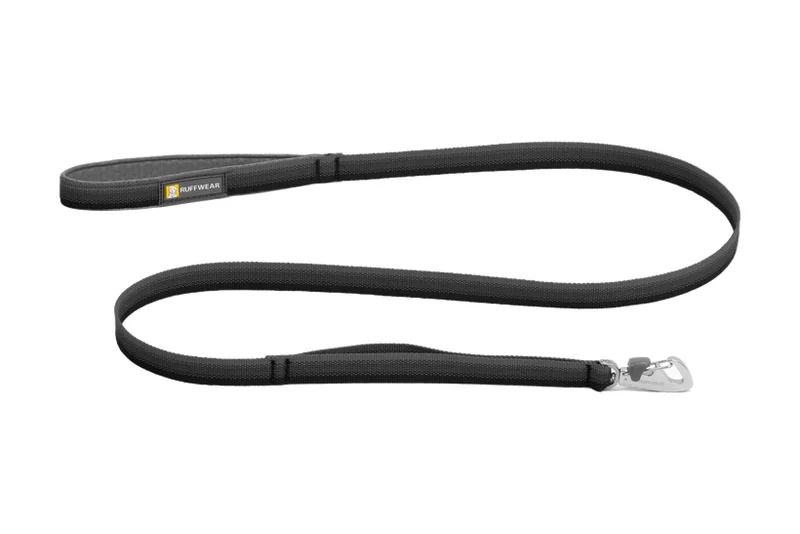
The default everyday leash: comfortable webbing, a genuinely strong clip and very little that can fail in your hand.
Best for: Anyone who wants one leash to cover neighborhood walks, vet trips and trail days without thinking about it again.
- Padded, tubular webbing handle stays comfortable even when a dog surges, which cheap flat nylon does not
- The aluminum clip is the part reviewers often single out: light, one-hand operable and far stronger than the stamped swivel snaps on discount leashes
- Traffic handle gives a quick short grip when you need the dog close
- Accessory loop on the padded handle lets you clip poop bags or a light without adding a dangling gadget
- Standard walking length only, so it is no substitute for a long line when you want a dog to range and sniff
- Webbing picks up mud and dog slobber and needs an occasional wash to stop smelling like a wet dog
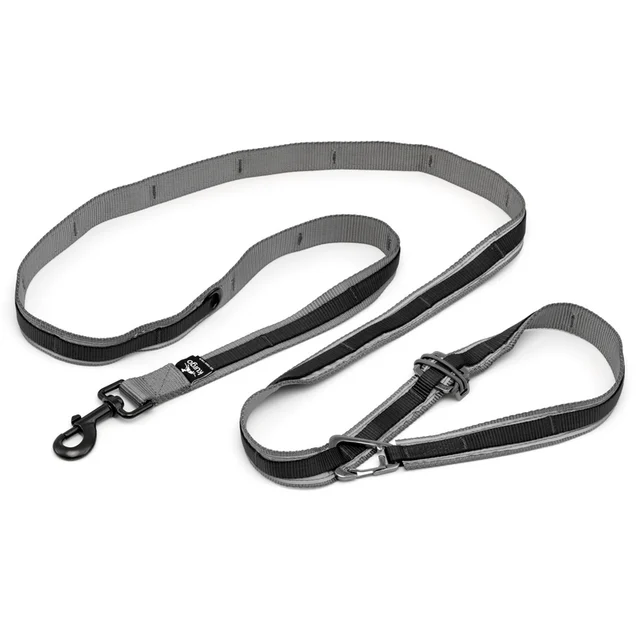
A multi-mode leash, and the waist and crossbody modes are the reason runners keep recommending it.
Best for: Runners, hikers and anyone who wants hands free some days and a normal leash the rest of the week.
- Converts between a full-length lead, a short traffic lead, waist-worn and crossbody hands-free modes, a double-dog setup and a café tether
- Ladder-style loops along the webbing make length changes instant, with no sliding buckle to fight
- Owners running with mid-size and large dogs report the webbing and stitching holding up over years of use
- Padded handle comes standard rather than as an upgrade
- Reviewers repeatedly flag the accessory carabiner as the weak link and swap it for a sturdier one
- Most people settle into two or three of the configurations, so you are paying for versatility you may not use
- Waist mode transfers a hard lunge straight to your body, which is unpleasant with a dog that has not learned to walk politely
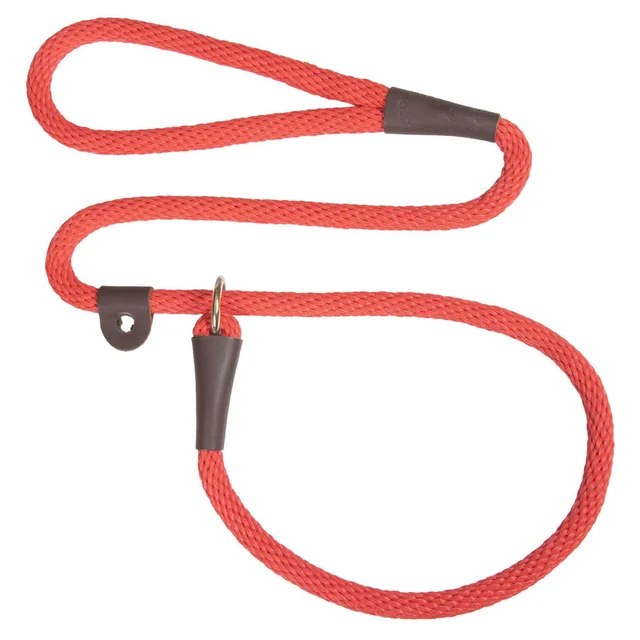
A single piece of braided rope that has outlasted every gadget leash in shelters and gundog kennels, with one real caveat.
Best for: Trained dogs, quick trips and anyone who wants a grab-and-go leash by the door. Skip it for a puller or a puppy still learning.
- Leash and collar in one, so it goes on in about two seconds with no buckles or clips to fumble
- Braided rope with leather splices has almost nothing to break: no snap hook, no plastic, no spring
- Rope stays soft in the hand and does not hold water the way flat nylon does
- The long-standing favorite of trainers, groomers and rescue volunteers who put leashes on strange dogs all day
- It tightens when the dog pulls, so it is a poor everyday choice for a dog that has not learned loose-leash walking
- No D-ring for tags or a separate collar, which matters if the dog slips loose
- Not appropriate for dogs with tracheal or neck issues, or for very flat-faced breeds
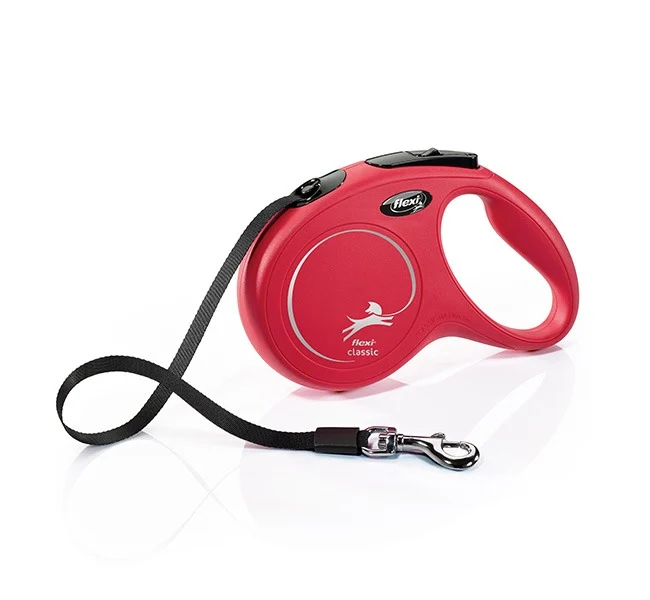
The best-built retractable on the market, and still the leash veterinarians and trainers spend the most time warning people about.
Best for: Almost nobody as a primary walking leash. If you want distance, a long line on a harness does the same job without the hazards.
- Genuinely well made compared to no-name retractables: smooth reel, a brake that engages reliably and a solid casing
- The tape versions are far more visible and less cutting than thin cord, which is the safer of the two formats
- Useful in narrow situations, such as letting a dog relieve itself on a wide grass verge without you stepping off the path
- Veterinarians report rope burns, deep lacerations and finger injuries from owners grabbing the line, and the cord versions are the worst offenders
- A dog that hits the end of an extended line at speed takes the full jolt in the neck, which is why trainers advise against pairing one with a collar
- Constant light tension actively teaches a dog that pulling makes the leash get longer, which is the opposite of what you want
- You have almost no real control at distance, and the thin line is hard for other people and cyclists to see
| Criteria | Ruffwear Front Range Leash Top pick | Kurgo Quantum Leash 2.0 | Mendota Slip Leash | flexi New Classic Retractable Leash |
|---|---|---|---|---|
| Verdict | Buy it | Buy it | It depends | Skip it |
| Best for | Anyone who wants one leash to cover neighborhood walks, vet trips and trail days without thinking about it again. | Runners, hikers and anyone who wants hands free some days and a normal leash the rest of the week. | Trained dogs, quick trips and anyone who wants a grab-and-go leash by the door. Skip it for a puller or a puppy still learning. | Almost nobody as a primary walking leash. If you want distance, a long line on a harness does the same job without the hazards. |
| Price tier | $ · mid-range | $ · mid-range | $ · budget | $ · budget |
| Leash type | Standard padded webbing | Convertible webbing, hands-free capable | Rope slip lead (leash and collar in one) | Retractable reel, tape or cord |
| Working length | Standard walking length | Adjustable from traffic-lead short to full length | Standard walking length | Extended length varies by model |
| Hands-free use | No | Yes, waist and crossbody modes | No | No, and it needs a firm grip at all times |
| Hardware | Aluminum clip, reviewers rate it a standout | Snap clip plus a carabiner owners often upgrade | Minimal, just a sliding ring, which is the point | Plastic housing, spring reel and brake button |
| Control when the dog lunges | Strong, short and direct | Strong in hand, jarring in waist mode | Strong, but tightens on the neck | Weak, and the line can be hard to stop |
| Safety concerns | Few | Few, if you match the mode to the dog | Neck pressure on pullers, no tag ring | Line burns, finger injuries and neck jolts are widely reported |
| Everyday comfort | Padded handle, comfortable for long walks | Padded handle, bulkier hardware | Soft rope, no padding | Bulky handle, awkward with bags or a phone |
| Price tier | $ · mid-range | $ · mid-range | $ · budget | $ · budget |
Which one is right for you?
- Anyone who wants one leash to cover neighborhood walks, vet trips and trail days without thinking about it again. Buy it Ruffwear Front Range Leash
- Runners, hikers and anyone who wants hands free some days and a normal leash the rest of the week. Buy it Kurgo Quantum Leash 2.0
- Trained dogs, quick trips and anyone who wants a grab-and-go leash by the door. Skip it for a puller or a puppy still learning. It depends Mendota Pet Mendota Slip Leash
- Almost nobody as a primary walking leash. If you want distance, a long line on a harness does the same job without the hazards. Skip it flexi New Classic Retractable Leash
How we judged the field
We do not run a lab. What we do is read across veterinary and trainer commentary, and the large pile of owner reports that accumulate around leashes sold in the hundreds of thousands. Leashes are unusually easy to evaluate this way, because the failure modes are consistent and loud: clips that snap open, stitching that pulls, handles that burn your palm, and mechanisms that jam.
Four things drove the ranking. First, hardware, since the clip is the part that fails first on almost every leash and the part budget brands cut hardest. Second, control at the moment a dog lunges, which is the only moment a leash really has to work. Third, comfort over a long walk, because an unpadded thin leash on a surging dog is genuinely painful. Fourth, whether the design teaches good behavior or quietly undermines it. That last criterion is what separates our top picks from the retractable.
We deliberately included one of each major type: a padded everyday webbing leash, a convertible hands-free leash, a rope slip lead and a retractable. Comparing four near-identical nylon leashes would tell you nothing useful.
This is the leash we would hand to someone who asked for one recommendation and no follow-up questions. The tubular webbing has enough body that it does not cut into your hand, the handle padding is real rather than a token strip, and the aluminum clip is the piece reviewers keep calling out. On cheaper leashes the clip is a stamped swivel snap with a thin spring gate, and that is the component that opens when a dog spins or that corrodes shut after a wet winter. Ruffwear’s is light, works one-handed, and holds up.
The traffic handle is a small design choice you notice after a month: one grab shortens the leash at a crossing. The accessory loop on the handle holds bags or a light clip so they stay out of the way instead of swinging against your wrist.
The limits are real but minor. It is a standard walking length and nothing more, so it will not let your dog range in a field. Owners note the webbing needs an occasional wash. Neither is a reason to buy something else.
The Quantum’s pitch is many configurations from one leash, including full length, short traffic lead, waist-worn, crossbody, double-dog, and tether. In practice most owners report settling into two or three, usually full length, short, and one hands-free mode. That is still a good outcome, because those three cover a normal week.
The ladder of sewn loops along the webbing is the clever part. Instead of a sliding buckle that creeps under load, you clip into whichever loop gives the length you want and it stays there. A padded handle comes standard. Owners running with mid-size and large dogs describe years of use with no stitching failures.
The consistent complaint is the accessory carabiner, which reviewers describe as the weak point and frequently replace with a sturdier one. That is a small fix but an irritating one on a mid-range leash. The other caveat is behavioral rather than mechanical: waist mode transmits a lunge directly into your body, so it belongs on a dog that already walks politely.
There is a reason this style dominates shelters, grooming tables and gundog kennels. It is one piece of braided rope with leather splices, and it goes over a dog’s head in about two seconds. There is no snap hook to fail, no spring, and no plastic. Rope stays soft in the hand and does not soak up water the way flat nylon does. As a leash by the front door for quick trips, it is close to perfect.
The catch is in the name. It slips, which means it tightens when the dog pulls. For a dog that walks on a loose leash, that is a non-issue and the pressure never arrives. For a puller or a puppy still learning, it is steady pressure on the throat all walk long, and it is not a fit for dogs with tracheal issues or flat-faced breeds. There is also no D-ring, so tags live on a separate collar, and if the loop comes over the head your dog has nothing on.
Buy it as a second leash and a training tool. Do not buy it as your only leash for a dog that has not learned to walk yet.
We want to be fair here: as retractables go, this is the good one. The reel is smooth, the brake engages reliably, and the casing is more solid than the no-name versions crowding the shelf. If you are going to own a retractable, it should be this rather than a generic one that jams.
That still does not make it a leash we would recommend. The injury pattern is consistent across veterinary and clinical accounts: rope burns and deep lacerations when someone grabs a moving line, and finger injuries severe enough to be permanent. Thin cord versions are the worst offenders because the line acts like a wire under load. Tape versions are meaningfully safer, though not safe.
The second problem is what it does to the dog. Extended to 20 feet and attached to a collar, it means a dog that spots a squirrel takes the full stop in the neck. Trainers advise against pairing one with a collar for exactly this reason. And because the reel keeps light tension on the line at all times, the dog gets a continuous lesson that pulling produces more leash. That is the opposite of what every training method is trying to build.
If what you actually want is distance, buy a 20 or 30 foot long line and clip it to a harness. It costs less, gives more real freedom, and nothing about it can retract into your hand.
Ruffwear Front Range Leash vs Kurgo Quantum Leash 2.0: which should you buy?
Both are well built at a similar price tier, and either would serve most dogs well for years. The split is about how you walk.
The Front Range is the better pure leash. It is lighter in hand, the clip is a class above, and the padded tubular webbing is more comfortable across a long walk than the Quantum’s flatter webbing and heavier hardware. If your walking is sidewalks, parks and the occasional trail, and you never intend to strap a dog to your waist, the Front Range does that job with less bulk and fewer parts.
The Quantum wins on flexibility. Being able to shorten to a traffic lead at a crosswalk, then switch to waist-worn for a run, then back to full length, is a genuine daily benefit for active owners. It also handles a second dog. The costs are the accessory carabiner that many owners replace, more hardware jangling on the leash, and a hands-free mode that only makes sense once your dog walks politely.
One leash, in-hand, all the time: Front Range. Runners, hikers and multi-mode households: Quantum.
What to look for
- Check the clip first. It is the part that fails. Look for cast or machined metal with a gate that operates smoothly one-handed, not a thin stamped snap.
- Insist on a padded or tubular handle. Flat unpadded nylon is fine until a 60 pound dog lunges, and then it is not.
- Match length to purpose. Four to six feet for streets and stores, a separate 15 to 30 foot long line for open space. One leash cannot do both well.
- Buy reflective if you walk in the dark. Trim along the full length usually beats a single patch.
- Match the leash to the dog’s training level. Slip leads and waist-worn hands-free modes both assume a dog that does not lunge.
- Clip to a harness for long lines and pullers. Collar attachment concentrates every jolt on the throat.
- Inspect the stitching every few months. Bar tacks at the handle and the clip wear out long before the webbing does.
Our final take
The Ruffwear Front Range Leash is the pick for most households. It is comfortable, the hardware is a genuine step up, and there is very little on it to fail. If your week includes runs or hikes, the Kurgo Quantum Leash 2.0 gives you the same build quality plus real hands-free modes, provided you accept that the accessory carabiner is the one part worth upgrading.
The Mendota Slip Leash is a great second leash and a poor only leash. Keep it by the door for a trained dog and it will outlast everything else you own.
And the retractable stays on the shelf. The flexi New Classic is the best-executed version of a design that trainers, veterinarians and injury reports all point the same direction on. If you want your dog to have room to explore, a long line on a harness gives you more of it with none of the hazards.
Questions, answered
Are retractable leashes really that dangerous, or is that overblown?
The risk is real and well documented. Veterinarians and emergency clinicians report rope burns, deep cuts and finger injuries from people grabbing a moving line, plus neck and trachea injuries when a dog hits the end of an extended lead at speed. Better-built models like the flexi New Classic reduce the failure rate of the mechanism itself, but they do not change the physics. The core problem is that 15 or 20 feet of thin line gives you almost no control at the moment you need it.
How long should an everyday dog leash be?
Roughly four to six feet is the sweet spot for sidewalks, shops and vet waiting rooms. Shorter than that and you have no slack for a dog to move naturally. Longer and you are managing loose line in traffic. If you want your dog to sniff and range, buy a separate long line of 15 to 30 feet and use it in open space, clipped to a harness rather than a collar.
Is a hands-free leash safe if my dog pulls?
Waist-worn modes are best suited to dogs that already walk reasonably well. A hard lunge from a strong dog goes straight into your hips and can pull you off balance, which is how most hands-free injuries happen. A bungee section helps absorb the shock. If your dog is still learning, use the same leash in hand-held mode and switch to the waist belt once loose-leash walking is reliable.
Rope, flat webbing or biothane: does the material matter?
It changes how the leash feels more than how strong it is. Rope is soft in the hand and sheds water well. Flat webbing is light, takes reflective trim and washes easily, though thin unpadded nylon can burn your palm. Coated biothane wipes clean and shrugs off mud and swamp water, which is why it dominates long lines. All three are strong enough when the stitching and hardware are good, and the clip is usually the first thing to fail on a cheap leash.
Should I clip the leash to a collar or a harness?
A harness for anything with pulling potential, a long line, or a flat-faced or small-necked dog, because it spreads the load across the chest rather than the throat. A collar is fine for a trained dog on a short everyday leash. Whatever you use, keep ID tags on a collar even when you walk on a harness, and check the leash stitching and clip every few months since those wear out long before the webbing does.
Deciding between the top two? See our head-to-head: Ruffwear Front Range Leash vs Kurgo Quantum Leash 2.0.
More Pet Supplies reviews
 The Best Dog Life Jackets: 4 Compared (and One to Skip)
  The Best Dog Muzzles: 4 Compared (and One to Skip)
  The Best Dog Nail Grinders: 4 Compared (and One to Skip)
  The Best Dog Raincoats: 4 Compared (and One to Skip)
  The Best Dog Seat Belts and Car Harnesses: 4 Compared (and One to Skip)
  The Best Dog Shampoos: 4 Compared (and One to Skip)