Explained
Dog GPS Trackers, Explained
After reading, you will understand how dog trackers locate a pet, why the technology inside matters more than the price, and which specs to check before you buy.
In this guide
A dog GPS tracker has one real job: telling you where your dog is the instant it goes missing. The trouble is that devices sold as "trackers" work in wildly different ways, and some cannot follow a moving dog at all. The biggest thing that trips buyers up is confusing a Bluetooth tag with a true GPS tracker, and overlooking the subscription that quietly decides the long-term cost.
The 30-second version
- The tracking technology is the whole decision. GPS plus a cellular link follows a running dog anywhere with signal, while a Bluetooth tag only reports its spot when someone else's phone passes nearby.
- Most good trackers need a subscription. Cellular collars carry their own SIM and do nothing without an active plan, so read the plan terms before you fall in love with the hardware.
- Battery claims are best-case, not typical. Live, continuous tracking drains any collar far faster than the advertised figure, so treat headline battery numbers as a ceiling.
- Match the technology to where your dog roams. Cellular trackers rule cities and suburbs; radio-based handhelds are the only thing that keeps up off-grid, where cell coverage disappears.
- Geofencing is the everyday feature that earns its keep. A virtual fence that alerts you the moment your dog leaves a safe zone catches an escape before it becomes a search.
The products this guide is about
Our verdict on each, with the full reasoning on the companion review.
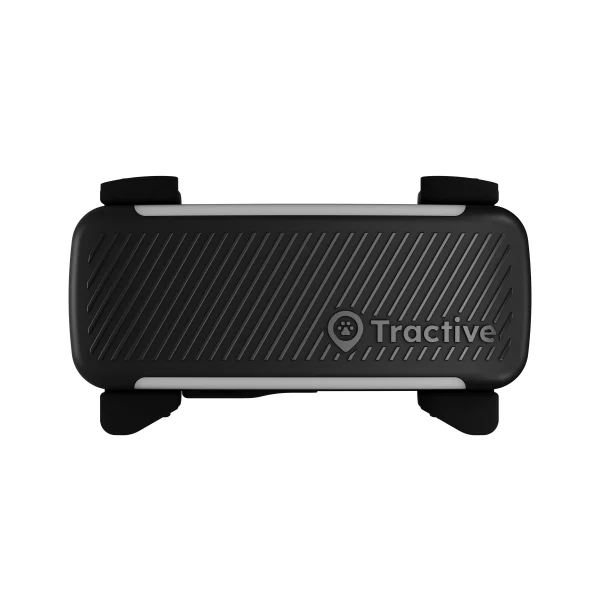
- Buy Tractive DOG 6 Unlimited cellular tracking and health data at the lowest ongoing cost, the sensible default for most dogs.
- Buy Fi Series 3+ The longest battery and toughest build here, aimed squarely at escape artists, if you accept the membership lock-in. Amazon
- It depends Garmin Alpha 200i Subscription-free radio tracking with serious range, built for hunting and off-grid, overkill for a backyard pet. Amazon
- Skip Apple AirTag A Bluetooth tag with no GPS, cheap and subscription-free, but it cannot track a moving dog. Amazon
What actually matters
- Location technology decides everything else. GPS with a cellular link can track a moving dog across town; a Bluetooth-only tag cannot, because it depends on other people's phones drifting past.
- Live-tracking range is how far away you can still watch your dog move in real time. Cellular models are effectively unlimited wherever there is signal; radio handhelds reach several miles line-of-sight; Bluetooth reaches only across a room or street.
- Subscription terms often cost more over time than the collar itself. Check whether a plan is mandatory, whether there is an activation fee, and whether the best rate demands a multi-year commitment.
- Battery life determines how often you are tethered to a charger, and how likely the collar is to die unnoticed the one night your dog bolts.
- Geofencing and escape alerts turn a passive locator into an early-warning system that pings your phone the moment your dog crosses a boundary.
- Durability and fit matter for chewers and hard-charging dogs; a chew-resistant module that survives rough play beats a sleek one that cracks.
- Health and activity tracking is a genuine bonus on some collars, adding step, sleep, and heart-rate data, but it should never outrank reliable location.
The specs, in plain English
Green flags vs red flags
Green flags
- True GPS combined with a cellular link, so the collar tracks a moving dog rather than waiting for a passing phone
- A clearly stated subscription price with the plan terms and any activation fee spelled out up front
- Geofencing with instant escape alerts to your phone
- A rugged, chew-resistant module if your dog is a chewer or escape artist
- Honest battery figures that acknowledge live tracking drains the collar faster
Red flags
- Marketed as a dog tracker but actually a Bluetooth tag with no GPS or cellular radio
- Subscription cost, activation fee, or multi-year lock-in that is hidden until after purchase
- Battery claims quoted only at their absolute best case with no mention of live-tracking drain
- Locked to a single phone ecosystem when your household uses a different one
- No geofencing or escape alerts, so you only learn your dog is gone by checking manually
Who's who: the brands
- Tractive - Cellular GPS collars known for unlimited worldwide tracking and health data at a comparatively gentle subscription.
- Fi - Rugged, long-battery cellular collars aimed at escape artists, with a mandatory membership and community search features.
- Garmin - Radio-based handheld tracking systems built for hunting and off-grid use, with serious range and no tracking subscription.
- Apple - Maker of the AirTag, a Bluetooth Find My tag popular in dog-collar accessories but not a true GPS pet tracker.
How to read a listing without getting fooled
Start by finding the words "GPS" and "cellular" or "LTE" together; that combination is what lets a tracker follow a moving dog anywhere with signal. If a listing leans on "Bluetooth" or "Find My" and never mentions GPS, it is a proximity tag, not a tracker, no matter how it is marketed. Next, hunt for the subscription: whether a plan is required, how much it costs, whether there is a one-time activation fee, and whether the cheapest rate is tied to a multi-year commitment. Read battery figures as a best case and assume real life will be shorter once live tracking kicks in. Finally, check that range claims specify "line-of-sight," which is a signal that real-world coverage will be lower once hills and buildings get in the way.
How much should you spend?
Think in terms of total cost over a year or two, not the sticker on the collar. The hardware is rarely the real expense; for cellular trackers the subscription is, so a cheaper collar tied to a heavier plan can cost more in the end than a pricier one with a modest plan. The value sweet spot for most owners is a mainstream cellular collar with a low, predictable monthly plan, which covers everyday urban and suburban dogs well. Spending more is genuinely worth it for escape artists and chewers, where longer battery and rugged, chew-resistant hardware prevent expensive failures, and for off-grid or hunting owners, where a subscription-free radio system justifies its higher upfront cost by working where no cell network reaches. Spending more is not worth it when the extra buys range or ruggedness a backyard pet will never use, and paying almost nothing for a Bluetooth tag is a false economy if you actually need to recover a running dog.
Questions, answered
What is the difference between a GPS tracker and a Bluetooth tag like an AirTag?
A GPS tracker uses satellites to find your dog and a cellular link to send that location to your phone, so it can follow a dog that is actively running. A Bluetooth tag has neither; it only reports its position when someone else's compatible phone happens to pass nearby and relay it. In a quiet or rural area that may be hours later, or never, which is why a Bluetooth tag cannot reliably recover a moving dog.
Do dog GPS trackers require a monthly subscription?
Most cellular ones do, because they use their own SIM card and need an active plan to send location data at all. Radio-based handheld systems typically need no subscription for tracking, and Bluetooth tags carry none but also offer no live GPS. Always confirm the plan cost, any activation fee, and any multi-year commitment before buying.
How long does a dog GPS tracker battery last?
It varies widely, from roughly two weeks on some cellular collars to several weeks or a couple of months on the longest-lasting ones. Continuous live tracking drains any of them much faster than the advertised figure, so treat headline battery numbers as a best case rather than what you will see every day.
Does a dog GPS tracker work without cell service?
Cellular models do not, since they rely on a mobile signal and go quiet in true dead zones. For off-grid areas, a radio-based handheld system tracks your dog directly over the airwaves for several miles line-of-sight with no cell network needed, which is why hunters and rural owners favor that approach.
Which dog GPS tracker is best for an escape artist?
Look for the longest battery life so the collar does not die between charges, a chew-resistant module that survives rough play, and geofencing with instant escape alerts. Some collars add a lost-dog mode and a community search feature for faster recovery. The trade-off is usually a mandatory membership and sometimes an activation fee. For our head-to-head picks, see the companion review linked from this guide.
Or jump to the head-to-head: Tractive DOG 6 vs Fi Series 3+.