Explained
Dog Nail Grinders, Explained
After reading this you'll understand the specs on any dog nail grinder listing and know which ones actually predict a calm, safe trim.
In this guide
A dog nail grinder is a small rotary tool that files your dog's nails smooth with a spinning sanding drum instead of cutting them like a clipper. The pitch is safety: because it removes nail gradually, it's far harder to hit the sensitive "quick" and cause pain or bleeding. What trips people up is that listings shout about speeds and grinding power, but the thing that actually decides whether the tool gets used is how much noise and vibration it makes, because a grinder that scares your dog is worthless no matter how strong it is.
The 30-second version
- Noise and vibration matter more than power for most dogs. the quietest, lowest-vibration models are the ones anxious dogs actually tolerate, so treat quiet as a top spec, not a nice-to-have.
- Match motor power to your dog's size. small motors file small and medium nails fine but stall on thick large-breed nails, so bigger dogs need a genuinely strong grinder.
- Rechargeable beats disposable batteries. a USB or built-in lithium cell is cheaper to live with and ready when you are, while disposable-AA models mean ongoing replacements and no charge-and-go.
- Guards and speed control prevent over-grinding. a paw guide, guard, and variable or usable speeds let you take off a little at a time instead of too much at once.
- Introduce it slowly no matter what you buy. the best tool still needs a few sessions of treats and short trims before a nervous dog relaxes with the whirring.
The products this guide is about
Our verdict on each, with the full reasoning on the companion review.
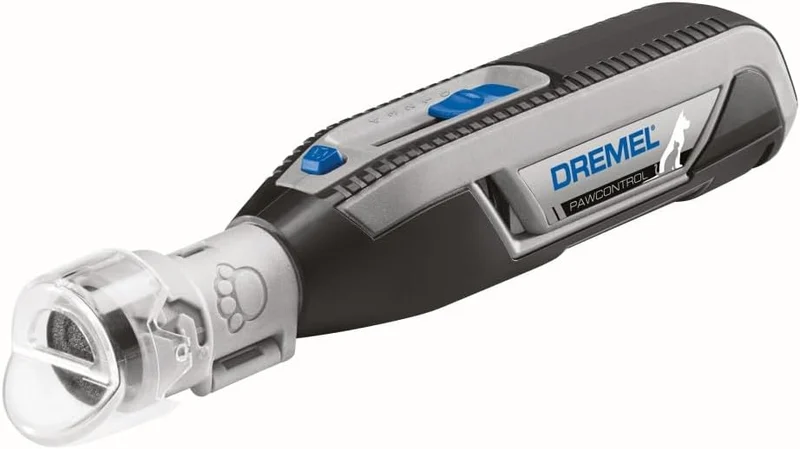
- Buy Dremel PawControl 7760-PGK The most powerful, best-controlled grinder here, and the one reviewers hand to owners of thick-nailed big dogs. Amazon
- Buy Casfuy Dog Nail Grinder (2-Speed) A whisper-quiet, USB-rechargeable grinder that punches far above its budget price. Amazon
- It depends oneisall Dog Nail Grinder (2-Speed) Genuinely quiet and cheap, but the modest motor means it suits smaller dogs best. Amazon
- Skip FURminator Nail Grinder A trusted grooming name attached to a grinder that owners find loud, underpowered, and fiddly.
What actually matters
- Noise and vibration - the single biggest predictor of whether your dog will sit through a trim; a loud grinder defeats the whole reason to grind instead of clip.
- Motor power (torque) - decides whether the drum keeps spinning through thick large-breed nails or bogs down; underpowered grinders stall on the dogs that need them most.
- Speed settings - variable speed lets you start gentle for a nervous dog and step up only for a stubborn nail; two fixed speeds are fine if the low isn't uselessly weak.
- Power source - rechargeable (USB or built-in lithium) is convenient and cheap to run; disposable batteries add ongoing cost and can't be topped up on the fly.
- Safety and control features - guards, protective sleeves, and a paw guide help you see the nail and avoid taking off too much or catching loose fur.
- Grinding ports and grit - the size and coarseness of the opening you press the nail into should match your dog; multiple ports add versatility for different nail sizes.
- Ergonomics and one-handed use - you're holding a squirming paw with your other hand, so controls that are easy to reach and a body that balances well make a real difference.
The specs, in plain English
Green flags vs red flags
Green flags
- Owner reports consistently describe it as quiet and low-vibration, not just the marketing copy
- Motor power is clearly matched to (or exceeds) your dog's nail thickness
- Rechargeable via USB or a built-in lithium cell rather than disposable batteries
- Includes a guard or paw guide and either variable or genuinely usable multi-speed control
- A large, consistent track record of satisfied owners over time, not a brand-new listing with a handful of reviews
- Replacement grinding bands are inexpensive and easy to buy
Red flags
- Frequent owner complaints that it's loud enough to startle or scare dogs
- Underpowered motor that stalls on thick nails even at its top speed
- A low speed so weak it's effectively useless, forcing you to always run high
- Runs only on disposable batteries with no rechargeable option
- A grinding cartridge or drum that slips loose or needs constant readjustment mid-use
- Spotty durability or battery life reported after a few months of use
Who's who: the brands
- Dremel - The rotary-tool maker whose PawControl pet grinders are the go-to for power and control, especially on thick large-breed nails.
- Casfuy - A pet-accessory brand known for quiet, USB-rechargeable grinders that punch above their budget price.
- oneisall - Budget pet-grooming brand offering very quiet, inexpensive grinders best suited to small and medium dogs (and cats).
- FURminator - A trusted grooming name from its de-shedding tools, though its nail grinder is widely reported as loud and underpowered.
How to read a listing without getting fooled
Read a grinder listing from the dog's point of view, not the spec sheet's. Big numbers for speed (RPM) and multiple settings look impressive, but the questions that actually matter are: How loud is it in real use, and is the low speed strong enough to be useful? A listing that leads with noise figures or emphasizes low vibration is signaling the thing anxious dogs care about most. Check the power source, because "long battery life" often quietly means disposable AA batteries you'll keep buying. Match the motor to your dog: phrases like "for small and medium dogs" or "for cats" usually mean the torque will struggle on a big dog's thick nails. Finally, weigh the volume and consistency of owner reports over marketing claims: a huge base of steady, positive feedback tells you more than a bold spec, and repeated complaints about noise, stalling, or a drum that slips loose are the warnings that matter.
How much should you spend?
You don't need to spend at the top to get a good dog nail grinder, but the cheapest ones make real trade-offs. Budget-tier grinders can be excellent for small and medium dogs and often win on quiet, so if you have a little dog and noise is your main worry, a well-reviewed budget model is a smart buy. What you're paying more for as you move up is torque and control: a stronger motor that powers through thick large-breed nails, variable speed instead of two fixed settings, and a paw guide for over-grinding protection. That step up is worth it if you have a big dog, thick or fast-growing nails, or you simply want the most margin for error. It's not worth it if your dog is small and calm, where the extra power just sits unused. Beware the false economy of a disposable-battery model that looks cheap upfront but costs you in ongoing batteries and convenience, and be skeptical of a familiar brand name commanding a premium if owner reports say the tool itself underperforms.
Questions, answered
Are nail grinders actually safer than clippers?
For many owners, yes. Because a grinder files the nail down gradually, it's much harder to accidentally cut into the sensitive quick the way a clipper can, and it leaves a smoother edge with no sharp corners. The trade-offs are that grinding is slower and makes a whirring noise and vibration your dog has to get used to. Plenty of people keep clippers for a fast bulk trim and use a grinder to smooth and finish.
Will the noise scare my dog?
It can at first, which is exactly why quiet, low-vibration models matter so much. Whatever you buy, introduce it gradually: let your dog hear it running near them without touching a nail, pair it with treats, and grind just a nail or two per session at the start. A dog that's eased into it slowly usually settles down within a few sessions.
How do I know if a grinder is powerful enough for my dog?
Go by nail thickness, which tracks with size. Small and medium dogs (and cats) are fine with modest, quiet motors. Large breeds with thick, fast-growing nails need genuine torque, or the drum will stall and the job drags on. If you have a big dog, prioritize power; if the listing frames the tool around small pets, it will probably struggle on a large one.
Do these run on rechargeable or disposable batteries, and does it matter?
Both exist. Many grinders are USB-rechargeable or use a built-in lithium cell you top up; some run on disposable AA batteries. It matters for cost and convenience: rechargeable models are cheaper over time and always ready to charge, while disposable-battery models mean ongoing purchases and no quick top-up. If you dislike buying batteries, choose a rechargeable one.
How short should I grind my dog's nails?
Grind a little at a time until the nail is just clear of the floor when your dog is standing, stopping before you reach the quick, the pink area you can see inside light-colored nails (it's harder to spot on dark nails, so go slowly and check often). This is general product and pet-care information, not veterinary or medical advice. If your dog has a nail injury or infection, or you're unsure how short is safe, consult a veterinarian or professional groomer.
Or jump to the head-to-head: Dremel PawControl 7760-PGK vs Casfuy Dog Nail Grinder (2-Speed).