Explained
Dog Winter Coats, Explained
After reading, you'll understand how to tell a waterproof coat from a water-resistant one, what insulation numbers mean, and how to measure your dog for the right size.
In this guide
Most first-time buyers pick a dog coat by looks and a size letter, then find it gaping at the chest or soaked through after one wet walk. The trouble is that listings mix measurable specs with marketing words, and each brand sizes differently. A few numbers, when the maker publishes them, tell you far more than the photos. This guide explains those numbers and what to do when they are missing.
The 30-second version
- Waterproof needs a number, so look for a water column in millimetres and taped seams, not just the word water-resistant.
- Insulation is easier to judge with a weight, such as the 250 g Ruffwear lists, or a temperature range like the one Hurtta publishes.
- Sizing systems differ by brand, with some using chest girth and others back length, so measure for the exact coat.
- Harness access is a practical must, because a coat with no leash opening forces you to clip to the collar.
- Coverage keeps heat in, and sleeves, belly panels or leg loops stop a coat from riding up on the move.
The products this guide is about
Our verdict on each, with the full reasoning on the companion review.
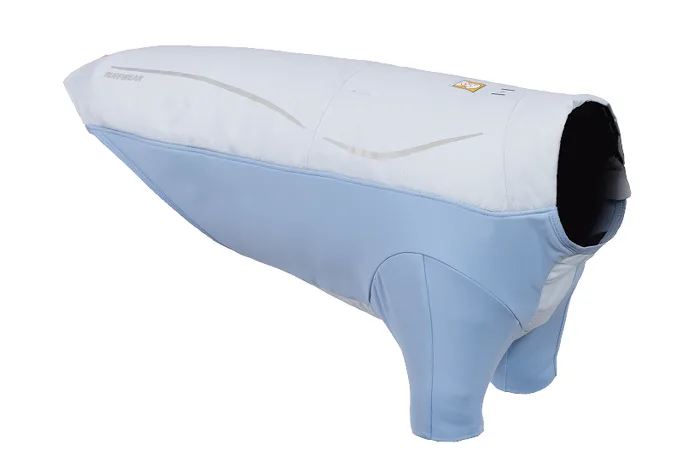
- Buy Ruffwear Powder Hound Waterproof Insulated Jacket A sleeved, fully waterproof insulated jacket with the most complete spec sheet in the group.
- Buy Kurgo Loft Dog Jacket A cheap, reversible, water-resistant everyday jacket that works with a harness underneath.
- It depends Hurtta Expedition Parka II A heavily adjustable parka with a stated temperature range, sized by back length.
- Skip Canada Pooch Eco+ True North Parka Marketed as the brand's warmest parka, but the page backs that up with almost no specs.
What actually matters
- Weather protection - Wet insulation loses most of its warmth, so the shell matters as much as the fill. A published water column and taped seams are the clearest evidence.
- Insulation - Fill weight in grams is the most comparable warmth figure. When a maker gives neither weight nor temperature range, warmth claims cannot be checked.
- Fit and sizing system - A coat that gapes lets cold air in at the chest and belly. Use the maker's own chart, since chest-girth and back-length systems are not interchangeable.
- Harness compatibility - Leash portals, zips or snap slots let the coat sit over a harness. Without one, you either clip to a collar or cut a hole yourself.
- Coverage - Sleeves and belly panels keep the core warm and the coat in place. Leg loops are a lighter way to stop the hem flapping.
- Closure - Zips seal well but take longer to put on, while velcro is quick but can clog with snow and fur. Buckled belts sit between the two.
- Care - Coats get muddy, so washability matters. Check whether tumble drying or fabric softener is ruled out, as Hurtta does for its parka.
The specs, in plain English
Green flags vs red flags
Green flags
- A water column figure and taped seams are stated on the product page.
- Insulation weight or a temperature range is published.
- There is a leash portal, zip or slot for harness use.
- The size chart names exactly which measurement sets the size.
- Reflective trim or a light attachment point is listed.
Red flags
- Warmest or extreme cold claims with no fill weight or temperature range.
- A coat sold for snow whose sole weather claim is water-resistant.
- No mention of how the coat works with a harness.
- Sizing given only as letters or numbers, with no measurement chart.
- Sleeves or full coverage offered only in some sizes, without saying so near the buy button.
Who's who: the brands
- Ruffwear - Outdoor dog gear maker known for detailed material and spec listings on its jackets.
- Hurtta - Dog apparel brand that publishes temperature, water column and adjustability figures for its coats.
- Kurgo - Known for car safety and walking harnesses, with budget jackets designed around harness access.
- Canada Pooch - Fashion-led dog apparel brand with a wide range of parkas, puffers and raincoats.
How to read a listing without getting fooled
Start at the materials section, not the photos. Look for the shell fabric and a water column in millimetres, then check whether the seams are taped. Next, find the insulation line and see if it gives a weight or only a fibre type. Then open the size chart and note which measurement it uses, because some coats size by chest girth and others by back length, and between sizes most makers advise going up. Finally, scan the features list for harness access and reflective trim, and the care section for washing limits.
How much should you spend?
Budget coats usually give you a water-resistant shell, an unnamed fill weight and simple velcro or hook and loop adjusters, which is fine for short, dry walks. The mid-range adds better adjustability, more sizes and sometimes published weather ratings, as with Hurtta. Premium coats tend to pair a waterproof rated shell with stated insulation, sleeves and harness portals. Spending more makes sense if your winters are wet or your dog is out for long periods.
Questions, answered
What is the difference between a dog coat and a dog raincoat?
A raincoat is mostly a waterproof shell with little or no insulation, built for wet but mild weather. A winter coat adds insulation for warmth, and the better ones keep a waterproof shell too. If your dog only needs to stay dry, a raincoat is lighter and cooler. If your winters are cold, the insulation is what you are paying for.
Should a dog coat cover the belly?
Belly coverage helps keep core heat in and stops snow balling up underneath. Ruffwear puts insulation in the belly panel, and Hurtta uses a wide belly flap. The trade-off is that belly coverage on male dogs needs to sit far enough forward to stay clean. Check the maker's photos and fit advice before buying.
Is velcro or a zip better on a dog coat?
Velcro is quick to fasten and suits dogs that will not stand still, but it can clog with snow and fur over time. A full zip seals better and stays closed, though it takes longer to get on. Buckled belts, as on the Hurtta parka, sit in between. Pick based on how patient your dog is at the door.
Can I put a dog coat in the dryer?
Only if the label allows it, and most of the coats we looked at say hang or air dry. Hurtta explicitly says do not tumble dry and do not use fabric softener. Heat can damage membranes and coatings. Let the coat dry fully before the next walk.
Or jump to the head-to-head: Ruffwear Powder Hound Waterproof Insulated Jacket vs Kurgo Loft Dog Jacket.