Explained
Pet Carriers, Explained
After reading this, you'll know exactly which carrier features matter for flights, car rides, and vet trips - and which marketing claims to ignore.
In this guide
A pet carrier looks like a simple bag, but the category is full of claims that mean less than they sound - 'airline approved' chief among them. The real differences hide in structure, mesh density, zipper design, and whether a carrier has genuine crash-test credentials. First-time buyers usually shop by looks and price, then discover at the gate or in the parking lot which corners were cut.
The 30-second version
- 'Airline approved' is not a certification. Every airline sets its own under-seat dimensions and rules, so the phrase mostly means 'soft-sided and roughly the right size' - always check your specific airline before booking.
- Structure is the number-one failure point. Budget carriers with unstructured tops sag onto the pet the moment you lift them; a frame that holds its shape when carried is worth paying for.
- Crash-test certification is rare and real. Only a handful of carriers are independently certified for car use - a seat-belt loop alone is not the same thing.
- Cats are the toughest test. Escape reports cluster around thin mesh and free-sliding zipper pulls; if you own a determined cat, locking zippers and dense mesh are non-negotiable.
- Empty weight counts against you. Many airlines weigh pet plus carrier together, so a heavy premium bag can push a mid-size cat over the combined limit.
The products this guide is about
Our verdict on each, with the full reasoning on the companion review.
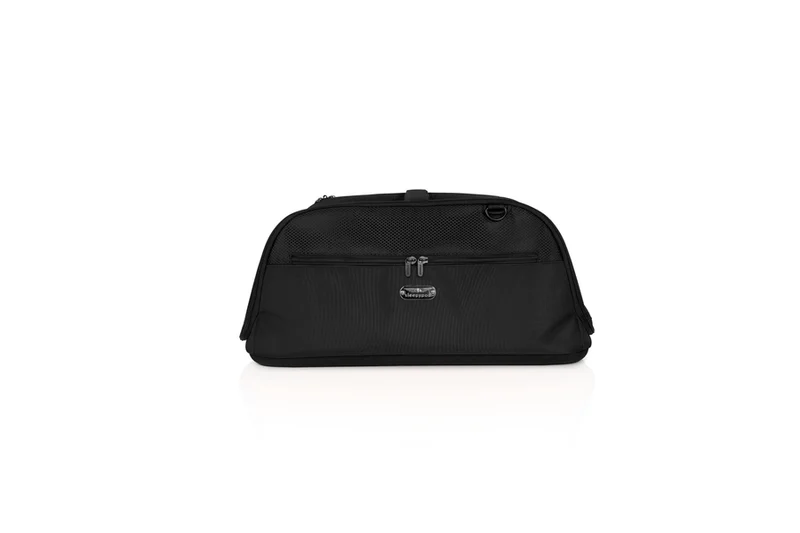
- Buy Sleepypod Air In-Cabin Pet Carrier The crash-tested flagship that compresses to fit under any airline seat, then expands so your pet can actually stretch out. Amazon
- Buy Sherpa Original Deluxe Travel Pet Carrier The default airline carrier for good reason: a spring-wire frame that squeezes under seats, backed by a guaranteed-on-board program. Amazon
- It depends Away The Pet Carrier A gorgeous, crash-test-certified luggage-brand carrier that is genuinely excellent - if you can justify premium money for one size.
- Skip Amazon Basics Soft-Sided Mesh Pet Travel Carrier Fine as a cheap vet-trip tote, but owner reports of sagging tops, torn mesh, and failing zippers make it a poor travel bet. Amazon
What actually matters
- Under-seat compressibility - fixed dimensions are a gamble across airlines and aircraft; frames that squeeze down (spring-wire or compressible ends) adapt to whatever seat you end up under.
- Structural integrity when lifted - the top should not collapse onto your pet mid-carry; this is the single most common complaint in owner reports about cheap carriers.
- Escape resistance - locking zippers and dense, tightly woven mesh stop cats from clawing through or forcing openings; free-sliding zipper pulls are the classic weak point.
- Crash-test certification - if the carrier will also ride on a car seat, look for independent certification, not just a strap that threads a seat belt.
- Ventilation - multiple mesh panels keep air moving for anxious pets in warm cabins, but there's a trade-off: more mesh usually means less structure and durability.
- Entry points - a wide top opening makes lowering a reluctant cat far easier than pushing one through a side door; top plus side entry is the ideal combination.
- Washability - accidents happen in transit; removable machine-washable liners or wipe-clean water-repellent interiors save the trip and the bag.
The specs, in plain English
Green flags vs red flags
Green flags
- A frame or structure that visibly holds its shape when you pick the carrier up with weight inside
- Zipper pulls that lock or clip together, paired with dense mesh you can't easily stretch with a finger
- Independent crash-test certification if car travel is part of your plan
- Both a top opening and a side entry, so you can load a reluctant pet from above
- A removable, machine-washable liner or a wipe-clean water-repellent interior
- Published dimensions and a clear weight ceiling, so you can check fit against your airline and your pet
Red flags
- An unstructured, floppy top - owner reports consistently describe these sagging onto the pet mid-carry
- 'Airline approved' as the headline claim with no published dimensions to verify it
- Thin, loosely woven mesh a cat could claw through, especially near seams
- Free-sliding zipper pulls with no locking mechanism on a carrier marketed for cats
- A 'car safety' claim based only on a seat-belt strap, with no independent certification named
- One fixed size with a high weight ceiling - tall pets end up hunched even when under the weight limit
Who's who: the brands
- Sleepypod - Safety-first specialist known for crash-tested carriers that double as car seats; premium pricing, gear-grade durability.
- Sherpa - The long-running airline-carrier default; spring-wire frames and a guaranteed-on-board program at mid-range prices.
- Away - Luggage brand whose pet carrier brings crash certification and suitcase-matching style, in a single size.
- Amazon Basics - House-brand budget option; fine as a cheap vet-trip tote, but owner reports flag structure, mesh, and zipper failures for travel.
- Petmate - Broad-line pet gear maker best known for hard-sided kennels and crates, the alternative when soft-sided isn't the right tool.
How to read a listing without getting fooled
Start with the numbers, not the adjectives. A listing that publishes exact exterior dimensions, empty weight, and a pet weight ceiling is giving you what you need to check against your airline's under-seat rules; a listing that leads with 'airline approved' and hides the dimensions is asking you to trust the vibe. Next, look at how the structure is described - 'spring-wire frame' and 'compressible' are specific, verifiable design features, while 'sturdy' and 'durable' are just words. Treat safety claims the same way: a named, independent crash-test certification means something, while 'seat-belt attachment included' only means there's a strap. Finally, read owner reports for the failure patterns rather than the star average - in this category the tells are sagging tops, clawed-through mesh, and zippers forced open, and those complaints repeat verbatim on weak carriers.
How much should you spend?
Price in this category tracks structure and certification more than looks. The budget tier gets you a light mesh tote that's adequate for calm pets on short car trips, but the money is saved exactly where travel carriers fail - frame, mesh, and zippers. The mid-range is the value sweet spot for most owners: a proven compressible frame, locking zippers, and a washable liner cover everything an occasional flyer actually needs. Spending up to the premium and flagship tiers buys crash-test certification, tougher materials, and clever airline adaptations - worthwhile if you fly with your pet several times a year or want one bag that also secures your pet in the car, since durability turns the higher outlay into reasonable cost per trip. Spending more purely for styling is a lifestyle choice, not a functional one.
Questions, answered
What does 'airline approved' actually mean on a pet carrier?
Almost nothing official. There is no universal certification - each airline publishes its own under-seat dimensions, ventilation expectations, and rules. The phrase generally signals the carrier is soft-sided, ventilated on multiple sides, and sized in the right ballpark. Before any flight, look up your specific airline's published dimensions and compare them to the carrier's actual measurements, and favor carriers with compressible frames that adapt to different aircraft.
Do I really need a crash-test certified carrier?
Only if car travel is part of the plan - but if it is, certification matters. An unsecured or uncertified carrier becomes a projectile in a collision, and a simple seat-belt loop hasn't been proven to hold. Certified carriers are independently tested to restrain and protect a pet in a crash. If your carrier's life is airport-to-cabin only, certification is a nice-to-have; if it rides on your back seat regularly, it's the feature worth paying up for.
Soft-sided carrier or hard plastic crate - which should I buy?
For in-cabin air travel, soft-sided: airlines require carriers that flex to fit under the seat, and soft carriers weigh less against combined pet-plus-carrier limits. Hard crates win for checked cargo transport, long car journeys with larger dogs, and pets who chew. For a cat or small dog riding in the cabin or on the back seat, a quality soft carrier is the right tool.
How do I size a carrier for my cat or small dog?
Fit is about length and height more than weight. Your pet should be able to turn around and lie down comfortably inside. Makers publish weight ceilings, but a tall or long pet can be miserable in a carrier it technically 'fits' by weight. If your pet is at the upper edge of a carrier's limits, size up or reconsider the travel setup - an over-stuffed soft carrier is uncomfortable and may be refused at the gate.
Why do cats keep escaping from cheap carriers?
Two engineering shortcuts: thin mesh and free-sliding zippers. Determined cats probe every weak point - they claw at mesh until it tears and nose zipper pulls until the opening spreads. Owner reports on budget carriers describe exactly these failures. The fixes are simple and cheap for makers to include, which is why dense mesh and locking zipper pulls are among the clearest quality signals in the category.
How do I get my pet comfortable with a new carrier before a trip?
Start weeks early. Leave the carrier open at home with familiar bedding and treats inside so it stops signaling 'vet visit'. Feed meals progressively closer to, then inside, the carrier, and take short practice car rides before any flight. Carriers that double as everyday pet beds have a built-in advantage, because your pet ends up traveling in the same spot it already sleeps in.
Or jump to the head-to-head: Sleepypod Air In-Cabin Pet Carrier vs Sherpa Original Deluxe Travel Pet Carrier.