Explained
Pet Water Fountains, Explained
After reading this you will know which fountain specs actually keep water clean and your pet drinking, and which ones are just marketing.
In this guide
A pet water fountain circulates and filters your animal's drinking water to keep it fresh and to encourage reluctant drinkers, but the category is crowded with feature lists that hide the two things that really decide whether you keep using it: how hygienic the bowl stays and how easily it comes apart to clean. First-time buyers usually over-index on capacity and flashy modes and under-index on material and part count. This guide decodes the jargon so you can read a listing and predict how the fountain will behave a month in.
The 30-second version
- Material beats features. Stainless steel and ceramic resist the micro-scratches where slime and bacteria take hold, so they stay hygienic far longer than plastic no matter how long the feature list is.
- The fountain you clean easily is the one you keep clean. Fewer parts and no cramped tubes matter more than extra stream modes, because a fussy assembly is one you will scrub less often.
- Quiet is a requirement, not a luxury. A noisy pump is one your pet avoids and one you unplug at night, so a submerged pump rated quiet is worth prioritizing.
- Size the reservoir to the household. One cat needs far less capacity than a multi-pet or big-dog home, and buying too big just adds water to change and parts to wash.
- Filters are an ongoing commitment. Carbon filters need regular swapping, so check that replacements are cheap and easy to find before you buy.
The products this guide is about
Our verdict on each, with the full reasoning on the companion review.
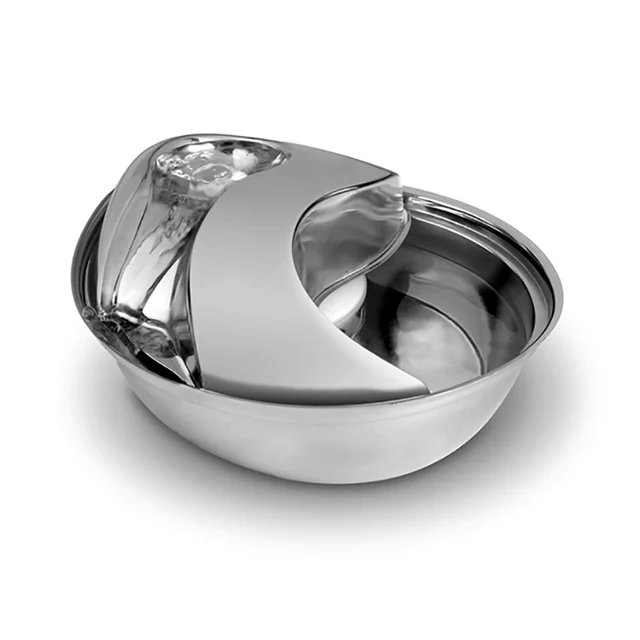
- Buy Pioneer Pet Raindrop Stainless Steel Fountain A two-piece stainless bowl that is quiet, hard for slime to colonize, and the quickest in the group to clean. Amazon
- Buy PetSafe Drinkwell 360 Stainless Steel Fountain A 128-ounce circular stainless fountain built for multiple pets or a big dog, with drink-from-anywhere access. Amazon
- It depends Catit PIXI Stainless Steel UV-C Drinking Fountain A feature-loaded fountain with a whisker-friendly top and water-level window that demands frequent washing. Amazon
- Skip PetSafe Drinkwell Platinum Pet Fountain A large-capacity plastic fountain that scratches and harbors slime faster than the stainless options. Amazon
What actually matters
- Bowl material is the single biggest hygiene factor. Stainless steel and all-ceramic surfaces stay smooth and resist biofilm; plastic etches under an abrasive tongue and grows slime that ordinary washing cannot remove.
- Ease of cleaning determines real-world hygiene. Count the parts and look for open, wipeable surfaces rather than narrow spouts and towers a sponge cannot reach.
- Pump noise decides whether your pet actually uses the fountain. A submerged (underwater) pump runs quieter than one that pushes water through the air, and low noise keeps it running overnight.
- Capacity should match your household. Bigger reservoirs mean fewer refills and a buffer during power outages, but also more water to keep fresh and more surface to clean.
- Filtration shapes taste and clarity. Carbon filters improve taste, foam or mesh filters trap hair and debris, and ion-exchange resin softens hard tap water, but every filter is a recurring cost.
- Flow design affects whether shy drinkers approach. Adjustable flow and whisker-friendly wide basins help nervous cats, while tall free-falling streams draw some drinkers but can splash and add noise.
- Power and safety matter for daily living. A submerged pump should be rated to run continuously, and a low-water shutoff protects the pump from burning out if the bowl runs dry.
The specs, in plain English
Green flags vs red flags
Green flags
- An all-stainless or all-ceramic bowl, not just a steel top over a plastic base
- A short parts list with open surfaces that wipe clean without swabs
- A submerged pump explicitly rated as quiet or low-noise
- Widely available, reasonably priced replacement filters
- Adjustable flow or a wide whisker-friendly basin for nervous drinkers
- A low-water shutoff to protect the pump
Red flags
- ABS or molded plastic construction marketed on capacity and features rather than material
- Many small parts, tubes, or a tower that a sponge cannot reach
- Reviews mentioning a loud or rattling pump, especially as it ages
- Proprietary or hard-to-find filters that lock you into pricey refills
- A steel top hiding a plastic reservoir where water actually sits
- No mention of pump cleaning access, a common cause of noise and slime
Who's who: the brands
- Pioneer Pet - Known for simple, durable stainless and ceramic fountains that prioritize easy cleaning over gadgetry.
- PetSafe (Drinkwell) - A broad line spanning large-capacity plastic and stainless models; the stainless versions are the ones worth attention.
- Catit - Design-forward fountains with features like water-level windows and multiple drinking modes, often with plastic reservoirs under a steel top.
- Veken - Popular budget-friendly fountains, mostly plastic, that compete on price and capacity rather than long-term hygiene.
- PetKit - Tech-oriented brand offering smart, app-connected fountains with filtration and monitoring features.
How to read a listing without getting fooled
Read a fountain listing from the material up, not the feature list down. First find out what the bowl and the reservoir are actually made of: watch for phrasing like "stainless steel top" that quietly hides a plastic basin where the water really sits. Next, count the parts in the exploded diagram, because every spout, tray, and tube is another surface to scrub and another place slime hides. Treat capacity as a match to your household rather than a virtue in itself, and read the pump description for the word "submerged" and any noise rating. Finally, hunt down the filter section: note the type, the swap interval, and whether replacements are cheap and easy to find, since a locked-in proprietary filter is a recurring cost the sticker price hides.
How much should you spend?
Spend where it changes daily life, which means material and pump quality, not feature count. The value sweet spot is a simple, well-made stainless or ceramic fountain sized to your household; paying up for solid material pays back in a bowl that stays hygienic and lasts years rather than months. A cheap plastic fountain looks like a bargain but scratches, grows slime, and needs replacing sooner, so the apparent savings evaporate. Spending more is worth it for genuine stainless construction, a quiet submerged pump, and easy-to-find filters. Spending more is usually not worth it for extra stream modes, app connectivity, or oversized capacity you do not need, since those add cost and cleaning without improving hygiene. Remember to budget for the recurring cost of replacement filters, which is the real ongoing expense regardless of the upfront price.
Questions, answered
Are stainless steel fountains really better than plastic?
For most owners, yes. Stainless resists the micro-scratches where biofilm and pink slime take hold, so it stays hygienic longer and cleans up faster. Plastic is cheaper and lighter, but an abrasive tongue etches it within weeks, and it needs replacing sooner. Ceramic offers similar hygiene benefits but is heavier and can chip.
Will a fountain actually make my pet drink more?
Often, yes. Many cats and some dogs prefer moving water and drink more from a fountain than a still bowl, which supports hydration. Results vary by animal, though; a shy drinker may need a low-flow setting and a few days to get used to it. This is general information, not veterinary advice. If you are concerned about your pet's hydration or health, consult a veterinarian.
How often do I need to clean a pet fountain?
A common rhythm is to rinse and refill every couple of days, do a full disassembly wash weekly, and deep-clean the pump about monthly, swapping carbon filters every few weeks. Skipping the pump clean is the most common cause of noise and slime buildup, so it matters more than people expect.
Do pet fountains keep working during a power outage?
The bowl still holds standing water, so your pet can drink, but circulation and filtration stop until power returns. Larger-capacity models keep more water available during an outage. Once power comes back, the pump resumes on its own without any reset.
What is the difference between a submerged and an above-water pump?
A submerged pump sits underwater, so the water muffles the motor and it runs quieter. An above-water pump pushes water up through the air and tends to be louder. Since a noisy fountain is one pets avoid, a quiet submerged pump is usually the better choice.
Or jump to the head-to-head: Pioneer Pet Raindrop Stainless Steel Fountain vs PetSafe Drinkwell 360 Stainless Steel Fountain.