Explained
Reptile Terrariums, Explained
After reading, you'll understand why enclosure material and vent placement matter more than gallon count, and how to read a listing well enough to tell a real spec from marketing.
In this guide
First-time buyers almost always start from the wrong end: a budget, a shelf, and a gallon number. The enclosure is a climate machine, and the material of its walls decides how much work you have to do to keep temperature and humidity where your species needs them. The second trap is sizing charts, which tend to describe the smallest box an animal can survive in rather than one it can behave normally in. The third is assuming every enclosure can take every heat source, which is not true and is the part that causes burns.
The 30-second version
- The species picks the enclosure, so look up adult dimensions and humidity needs before you look at any product.
- Material sets your workload, with PVC panels holding a climate, glass shedding heat and moisture, and screen deliberately holding nothing.
- Front-opening is the modern default, because reaching in from the side is generally less stressful for a ground-dwelling animal than a hand from above.
- Minimum size charts are a floor, not a target, and veterinary guidance pairs its minimums with advice to go as large as you can.
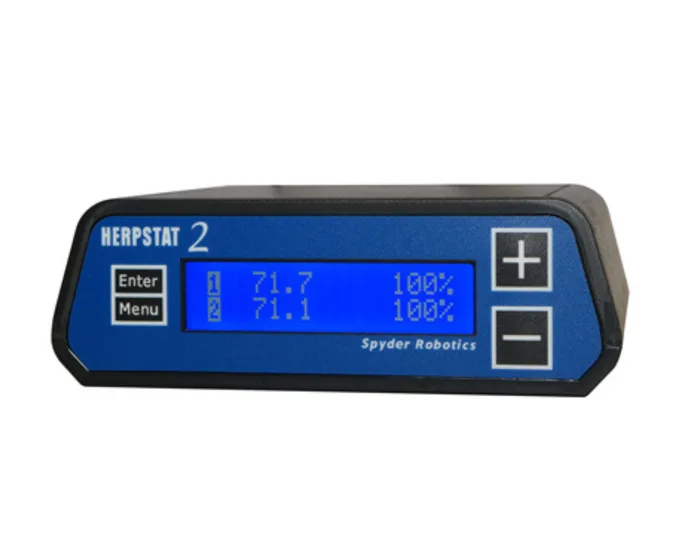
- Heat compatibility is a stated spec, so check whether the maker clears the enclosure for an under-tank heater or an overhead fixture before you buy either.
The products this guide is about
Our verdict on each, with the full reasoning on the companion review.
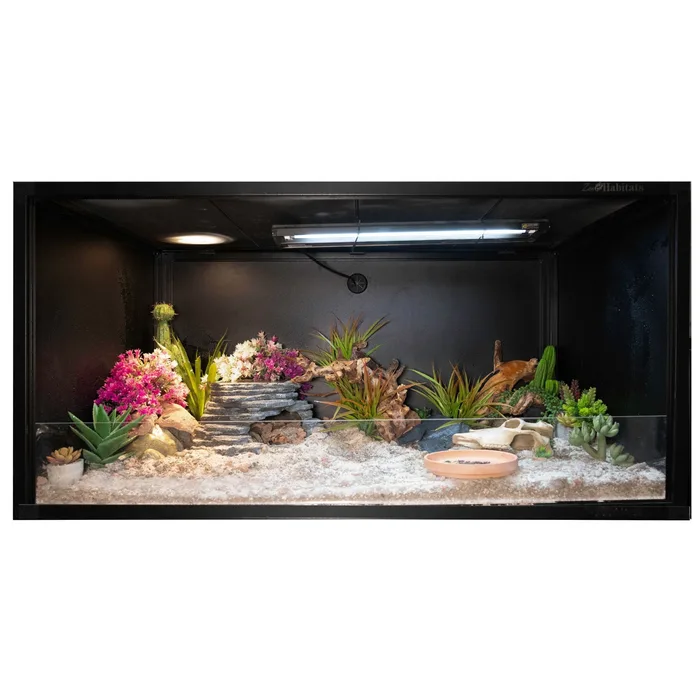
- Buy Zen Habitats 4'x2'x2' Reptile Enclosure (The Zen Habitat 3.0), PVC panels A front-opening PVC panel enclosure that holds a climate instead of bleeding it out through the walls.
- Buy Exo Terra Natural Terrarium Large Wide (PT2613) The standard front-opening glass terrarium, and the version of a glass tank that actually thinks about ventilation.
- It depends Zoo Med ReptiBreeze Open Air Aluminum Screen Cage An all-screen aluminum cage that is close to perfect for chameleons and close to useless for anything that needs held humidity. Amazon
- Skip Zoo Med 20 Gallon ReptiHabitat Bearded Dragon Kit (NT-B21) A complete-looking box that puts a growing bearded dragon in a 30 by 12 by 12 inch top-opening tank. Amazon
What actually matters
- Wall material - PVC and wood panels insulate, glass does not, and screen is open by design. The Merck Veterinary Manual notes that glass is a poor insulator and that the resulting temperature swings are a genuine husbandry problem.
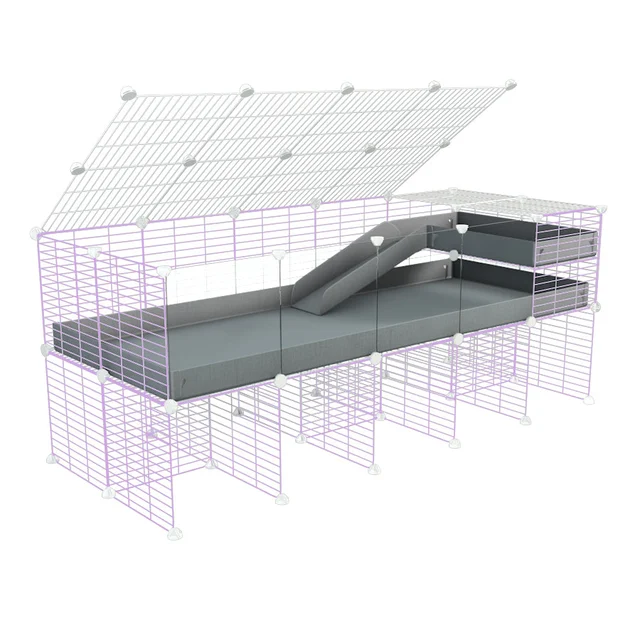
- Floor area - Ground-dwelling species use floor, not volume, so two enclosures with the same gallon rating can be very different homes. Compare length by width first and treat height as a separate question for arboreal animals.
- Opening direction - Front-opening lets you approach from the side and makes daily maintenance quicker. Top-opening means every interaction starts with a hand descending over the animal.
- Ventilation placement - Air moves when there is an inlet low and an outlet high. A screen lid alone gives you far less exchange than a low front vent paired with a top vent, and Merck warns against restricting ventilation to hold temperature and humidity.
- Heat source rating - Some enclosures are cleared for an under-tank heater and some explicitly are not. Merck advises heaters be thermostat controlled, screened from the animal, and placed at one end to create a gradient.
- Humidity range stated - A maker that publishes a supported humidity range is telling you which species the build suits. Absence of a stated range is not the same as unlimited tolerance.
- Lighting mounting provisions - Support bars, removable screen tops, and cord inlets decide whether your UVB and basking fixtures can sit where they need to sit. This is where a cheap enclosure quietly costs you later.
The specs, in plain English
Green flags vs red flags
Green flags
- The maker publishes a supported humidity range and says which build option suits which environment.
- There is a written statement about whether an under-tank heater or an overhead fixture is safe with that enclosure.
- Exact exterior dimensions in both inches and centimetres, plus a clear description of how the doors open.
- Ventilation is described by location, not just as a feature, for example a front inlet plus a screen top.
- Provision for lighting is spelled out, whether that is internal support bars, a removable top, or closable cord inlets.
Red flags
- The listing sells a gallon figure as though it were a species recommendation.
- Dimensions appear only as a nominal size with no interior measurement or usable height.
- The enclosure is described as suitable for a long list of unrelated species with no mention of humidity or airflow differences.
- Nothing on the page addresses heat sources, so you have no idea whether a heat mat is safe under it.
- A starter kit bundles a small top-opening tank with a compact fluorescent UVB lamp and loose sand and calls it complete.
Who's who: the brands
- Zen Habitats - Known for PVC and wood panel enclosures with front-opening doors, published humidity ratings, and a five year warranty on its 4'x2'x2'.
- Exo Terra - A Rolf C. Hagen brand whose front-opening glass terrariums set the format that most backgrounds, hoods, and accessories are built to fit.
- Zoo Med - A broad US line covering screen cages, glass terrariums, lighting, and boxed starter kits.
- Dubia.com - Better known as a feeder insect supplier, it also sells PVC enclosures.
How to read a listing without getting fooled
Read a listing in this order. Find the exterior dimensions, then look for an interior or usable measurement, because framing and substrate dams eat into both. Identify the wall material and whether there is a choice between options, since a single product name can cover a PVC version and a wood version with very different capabilities. Find the ventilation description and note where the vents physically are rather than whether the word vented appears. Look for an explicit statement about heat sources, either an under-tank heater clearance or a note about mounting overhead fixtures, and treat silence as a reason to ask rather than as permission. Only then look at gallon equivalents, which are useful for comparing volume between two enclosures and useless as a species recommendation on their own.
How much should you spend?
Budget tier buys you a screen cage or a boxed starter kit built around a small glass tank, and the trade is real: you are getting either a specialist tool or a temporary setup, not a general-purpose enclosure. Mid-range is where front-opening glass terrariums sit, and for small species that is genuinely all you need, with the accessory ecosystem being a real part of the value. Premium is panel enclosures in PVC or wood, and what the extra money buys is insulation, a stated humidity range, written heat-source compatibility, and a longer warranty. A useful way to think about it is total cost over the animal's life: a mid-range enclosure you replace in a year can cost more than the premium one you keep for ten, and lighting and heating are a substantial separate line either way.
Questions, answered
Do I need a bigger enclosure than the caresheet says?
Probably, and the guidance itself hints at this. The Merck Veterinary Manual gives minimum space figures by reptile group but pairs them with advice to provide the largest enclosure possible. Many keepers now regard the older pet-trade tank size charts as too small for normal behaviour. Treat any published minimum as the floor below which you should not go, then buy larger if the room allows.
Can I convert an old fish tank into a reptile enclosure?
You can, and plenty of people do, but understand what you are accepting. A glass aquarium opens from the top, insulates poorly, and vents only through the lid, which is the combination Merck flags as causing dramatic temperature swings and hampered ventilation. It also gives your animal a fully transparent box with no visual retreat unless you background three sides. For a temporary setup it is workable; as a long-term home for a mid-sized terrestrial species it is a downgrade from a purpose-built enclosure.
Why do chameleon keepers use screen cages when everyone else avoids them?
Because chameleons and similar arboreal species need continuous air exchange, and stagnant air in a sealed enclosure is commonly linked to respiratory problems in them. Zoo Med markets the ReptiBreeze for small Old World chameleons and other arboreal lizards for exactly this reason. The cost is that humidity does not stay put, so keepers compensate with scheduled misting or fogging. Applying the same cage to a species that needs held humidity is where it goes wrong.
How do I know a heat lamp is safe in the enclosure I bought?
Check three things. First, whether the maker describes provision for mounting fixtures, such as internal support bars or a screen top rated to carry a hood. Second, whether the heat source is screened so the animal cannot contact it, since Merck notes burns are generally associated with unscreened heat sources. Third, whether it is on a thermostat, which Merck treats as standard practice rather than an upgrade. If the product page says nothing about heat at all, that absence is itself information.
Or jump to the head-to-head: Zen Habitats 4'x2'x2' Reptile Enclosure (The Zen Habitat 3.0), PVC panels vs Exo Terra Natural Terrarium Large Wide (PT2613).