Explained
Slow-Feeder Dog Bowls, Explained
After reading, you'll know how a slow feeder actually slows a gulper, how to match maze difficulty and material to your dog, and the one problem it can't solve.
In this guide
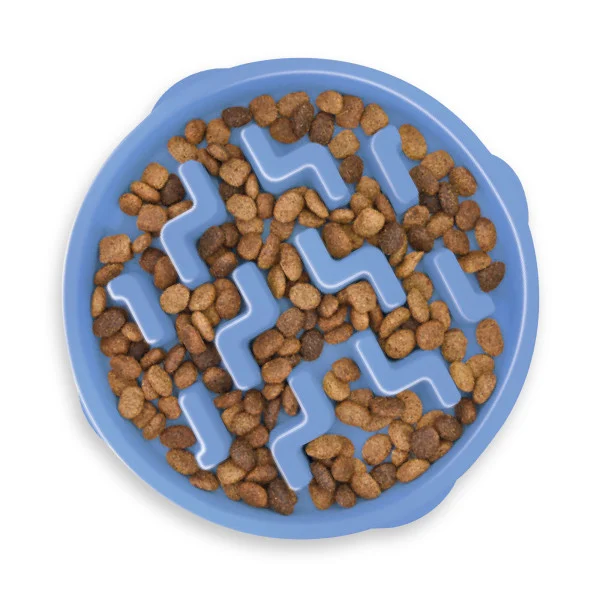
A slow-feeder bowl is just a food dish with a maze of ridges molded into the bottom, so a dog that inhales its dinner has to work for each bite instead of gulping the whole meal at once. The idea is simple, but the shelf is full of shallow, slippery bowls that a determined eater plows straight through in seconds. The trick is matching the maze depth, material, and base to your specific dog, and knowing what a slow feeder can and can't do.
The 30-second version
- The maze is the whole point. A deep, twisting pattern turns a 30-second inhale into a few minutes of nose-work; a shallow ridge bowl barely slows a fast eater at all.
- It curbs gulping, not bloat. Slowing a gulper reduces gulped air, choking, and eat-too-fast vomiting, but a slow feeder is not a treatment or preventive for bloat (GDV) — that's a vet conversation.
- Difficulty trades off against cleanability. The hardest, deepest mazes slow the dog most but are the biggest pain to scrub, so don't buy more challenge than your dog actually needs.
- Material decides hygiene and durability. Quality plastic molds the deepest mazes but can scratch; stainless never scratches or holds odor; cheap thin plastic scuffs fast and harbors bacteria.
- It has to stay put. A fast dog shoves a light bowl across the floor, so a non-slip or weighted base is what separates a working bowl from a chase toy.
The products this guide is about
Our verdict on each, with the full reasoning on the companion review.
- Buy Outward Hound Fun Feeder Slo Bowl The default recommendation for good reason: a genuinely challenging maze, sold in a range of difficulty levels and sizes.
- Buy Neater Pets Non-Tip Stainless Steel Slow Feed Bowl The hygienic, stays-put pick: a stainless maze in a weighted, non-skid base that a pushy dog can't shove around.
- It depends Messy Mutts Interactive Slow Feeder A gentler melamine flower-maze that suits moderate eaters and dogs the fiendish bowls frustrate — but not an extreme gulper.
- Skip Aspen Pet Skid Stop Slow Feeder Dog Bowl Cheap and light, with a shallow ridge pattern that a fast eater plows straight through.
What actually matters
- Maze depth and difficulty — this is the one thing that decides whether the bowl works. Deep, tightly-twisting ridges force a gulper to nose out each bite; shallow bumps let a determined dog clear the bowl almost as fast as a flat dish. Match the difficulty to how fast and how clever your dog is.
- Material and hygiene — food-grade silicone or quality BPA-free plastic is safe and molds deep mazes; stainless steel never scratches or absorbs odor and is the most sanitary; cheap thin plastic scratches quickly, and those scratches trap bacteria and smell.
- Cleanability — narrow maze channels are where wet or raw food gets stuck. Look for dishwasher-safe (usually top-rack) bowls, and accept that the fiendish deep mazes take a brush to get fully clean.
- Non-slip / weighted base — a rubber ring or a heavy base keeps a pushy dog from shoving or flipping the bowl. Without it, a fast eater just pushes the maze around until the food spills out.
- Size and capacity — the bowl should hold your dog's normal portion with the maze still doing its job. Too small and you're refilling mid-meal; too big and a small dog can't reach the food.
- Snout-friendly / flat-face design — flat-faced (brachycephalic) breeds like pugs and bulldogs can't reach into a deep, narrow maze. A shallower, more open pattern lets them actually get the food.
- Versatility — many slow feeders double for wet food or work as a lick mat for spreads, which stretches a meal or a treat into a longer, calming activity.
The specs, in plain English
Green flags vs red flags
Green flags
- A genuinely deep, twisting maze — not shallow bumps — that visibly forces the dog to work for each bite
- Sold in multiple difficulty levels and sizes so you can match it to your dog
- Food-grade material clearly stated: BPA/PVC/lead/phthalate-free plastic, food-grade silicone, or stainless steel
- A solid non-slip or weighted base that keeps the bowl planted
- Dishwasher safe, with a shape you can actually get a brush into
- A flat-face version offered if you have a snub-nosed breed
Red flags
- Shallow ridges that a fast eater can plow straight through — the maze is decorative, not functional
- Thin, light plastic that slides or flips when a pushy dog leans on it
- Cheap plastic that scratches quickly, holds odor, and traps bacteria in the scuffs
- No mention of food-grade or BPA-free material
- A one-size, one-difficulty design with no way to match it to your dog
- Marketed as a bloat or GDV preventive — a claim no bowl can honestly make
Who's who: the brands
- Outward Hound - The category's default name; its Fun Feeder line offers deep mazes in escalating difficulty levels, multiple sizes, and a flat-face version.
- Neater Pets - Known for stainless steel slow feeders in weighted, non-tip bases — the hygienic, stays-put option.
- Messy Mutts - Makes gentler melamine flower-maze feeders that resist stains and odor and suit moderate or flat-faced eaters.
- Aspen Pet - A budget staple; its slow feeders are cheap and light but tend to have shallow patterns that don't do much for a real gulper.
- LickiMat - The best-known maker of textured silicone lick mats for spreadable food and enrichment rather than full-meal slowing.
How to read a listing without getting fooled
Ignore how 'busy' the bowl looks in the photo and hunt for the depth of the maze — deep, twisting channels slow a dog; shallow decorative bumps don't. Check that the material is spelled out (food-grade or BPA-free plastic, food-grade silicone, or stainless) rather than just 'durable plastic,' which is often the cheap, scratch-prone kind. Confirm there's a non-slip or weighted base if your dog is a shover, and look for a difficulty level and a size that fit your dog rather than assuming one shape works for everyone. If a listing leans on bloat or GDV prevention as a selling point, treat that as a marketing red flag, not a feature — and if you have a flat-faced breed, make sure a snout-friendly version exists before you buy.
How much should you spend?
Slow feeders are inexpensive across the board, so the real question isn't how little you can spend — it's not spending on the wrong thing. The cheapest bowls are usually the shallow, thin plastic ones that don't actually slow a fast eater and scuff within weeks, which makes them a false economy for the exact dog you bought a slow feeder for. The value sweet spot is a mid-priced, deep-maze plastic bowl from a line that offers difficulty levels and sizes, so you can match it to your dog. Paying more for stainless steel is worth it if you have a chewer that destroys plastic, you feed raw and want the most sanitary surface, or you're simply tired of replacing scratched bowls — you trade a little maze depth for a bowl that lasts effectively forever and never holds odor. Spending up beyond that mainly buys nicer looks, not better function.
Questions, answered
Do slow-feeder bowls actually slow a fast eater?
Yes, when the maze is deep enough and matched to the dog. Independent testing and owner reports agree a genuinely challenging pattern can stretch a rushed meal from seconds into several minutes. A shallow, decorative ridge bowl barely registers, though. If your dog empties one instantly, step up the difficulty rather than assuming slow feeders don't work.
Will a slow feeder prevent bloat (GDV)?
No, and this is the most important thing to be clear on. Slowing a gulper reduces the gulped air, choking, and vomiting that come from eating too fast, and adds a little mental enrichment. But a slow feeder is not a treatment or a reliable preventive for bloat (GDV), which is a life-threatening emergency. If you have a deep-chested or otherwise bloat-risk breed, that's a conversation with your veterinarian — not something a bowl fixes. This is general product information, not veterinary advice; consult your vet.
Which material is best — plastic, stainless, or silicone?
It's a hygiene-versus-maze-depth tradeoff. Quality food-grade plastic molds the deepest, most challenging mazes but can scratch over the years, and scratches harbor bacteria, so replace it once it's visibly scuffed. Stainless steel never scratches or holds odor and is the most hygienic and durable, but its ridges are shallower so it slows a gulper a little less. Food-grade silicone is easy to clean and odor-resistant and shows up mostly in lick mats and travel bowls. Avoid cheap, thin plastic that scuffs and smells fast.
How do I clean the tight channels in a maze bowl?
Most quality slow feeders are top-rack dishwasher safe, which handles everyday cleaning. For wet or raw food stuck in narrow channels, a bottle brush or an old toothbrush gets into the grooves. This is a real reason not to over-buy difficulty: the most fiendish deep mazes slow the dog most but are the biggest pain to scrub.
My dog is flat-faced (brachycephalic) — will a slow feeder work?
Yes, but you need a snout-friendly design. Flat-faced breeds like pugs and bulldogs can't reach into a deep, narrow maze, so pick a shallower, more open flat-face version made for their shape. It'll still slow them down without leaving them unable to reach the food.
Can I use a slow feeder for wet or raw food?
Yes. Many maze bowls work for wet and raw food, and some people use them as a lick mat by spreading food across the ridges to stretch a meal into a longer, calming activity. Just clean the channels well afterward, since wet and raw food is more likely to get stuck and go off in the grooves than dry kibble.
Or jump to the head-to-head: Outward Hound Fun Feeder Slo Bowl vs Neater Pets Non-Tip Stainless Steel Slow Feed Bowl.