Explained
Small Animal Cages, Explained
You will be able to work out whether a cage is big enough for the animal it claims to house, using a tape measure and two minutes of arithmetic instead of the species name on the box.
In this guide
Small animal cages are marketed by species: rabbit cage, guinea pig cage, hamster habitat. That label is a marketing claim, not a specification, and it is the single most misleading thing in the category. Check the advertised floor area against the space guidance rescues and species societies publish for that animal and most of the shelf disqualifies itself, including plenty of cages with glowing reviews. What actually decides whether a cage works is horizontal floor area, what the animal stands on, whether it can slip through the bars, and how deep the bedding can go.
The 30-second version
- The species on the box is the least reliable number. Cages are sized to retail shelf depth and to what a shopper can carry to a car, so most models sold as suitable for a species sit well under the floor area welfare guidelines rescues and species societies publish for it.
- Buy floor area first and accessories second. A plain enclosure with the right footprint beats a feature packed one that is too small, and no wheel, tube or hammock compensates for a floor the animal cannot move around on.
- Only the ground floor counts. Lofts, shelves and balconies stacked over the same footprint are enrichment, not living space, and welfare standards measure unbroken ground floor rather than combined area.
- Every surface the animal stands on should be solid. Wire mesh floors and wire ramps cause sore hocks, known as pododermatitis, and the damage builds quietly over months before an owner connects it to the cage.
- Bar spacing has to match the smallest animal in the cage. Dwarf hamsters, mice and young rats get through spacing that comfortably contains a rabbit, and an escape or a head trapping incident is usually a spacing problem, not a behaviour problem.
The products this guide is about
Our verdict on each, with the full reasoning on the companion review.
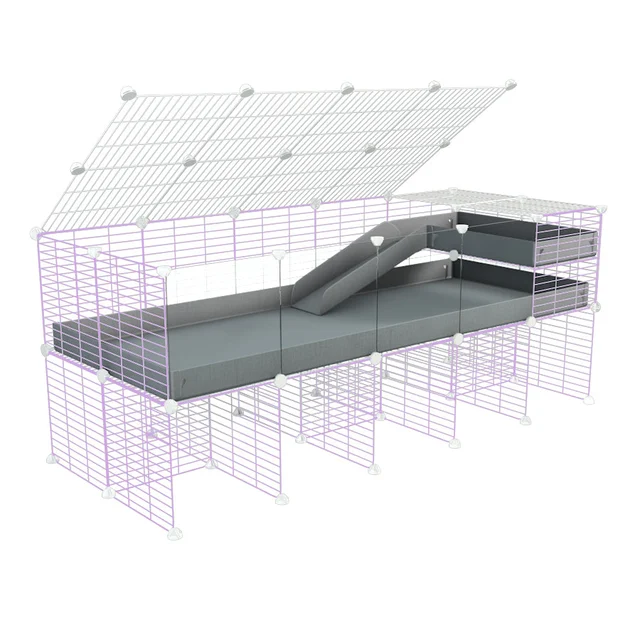
- Buy Kavee C&C Habitat 5x2 The modular grid and coroplast setup rescues have recommended for years, sold as a finished kit that actually clears the floor area guidance. Amazon
- Buy MidWest Homes for Pets Guinea Habitat Plus Eight square feet of open, wire free floor for a fraction of premium money, and two units lock together into sixteen. Amazon
- It depends MidWest Homes for Pets Hamster Nation Jumbo The best conventional hamster cage on the mainstream shelf, and still under the floor area standard experienced keepers work to. Amazon
- Skip Kaytee CritterTrail One Level Habitat About 230 square inches of floor sold as a hamster home, with an add-on tube system that adds travel rather than space. Amazon
What actually matters
- Usable horizontal floor area. This is the number that decides everything else. If a listing does not state it, multiply the internal length by the internal width yourself, ignore the external dimensions, and compare the result against the published guidance for the species rather than the name on the box.
- Floor surface. Coroplast, PVC lined canvas, solid plastic pan or bedding over a solid base are all fine. A wire grate sitting over a pull out tray is the pattern to avoid, because the animal spends its whole life on that grate.
- Bar spacing. Around a quarter inch or less for hamsters, dwarf species, mice and young rats, or use a solid walled enclosure instead. Roughly an inch is fine for guinea pigs and rabbits and ventilates better.
- Base wall depth. Burrowing species need substrate they can actually tunnel through. A wide cage with a shallow tray cannot hold enough bedding to matter, so check for a base wall of several inches before you look at anything else.
- Expandability. Modular grid systems and cages that lock together let you fix an undersized setup by adding to it rather than replacing it, which is the difference between one purchase and three.
- Cleaning access. Lift off tops and single piece bases take minutes a week. Tube networks, stacked pods and cages held together with a dozen clips take an hour, which means the clean gets skipped.
- Ventilation. Airflow matters for respiratory health, and enclosed plastic habitats and tube systems move far less air than an open barred or open topped enclosure of the same size.
The specs, in plain English
Green flags vs red flags
Green flags
- The listing states usable internal floor area in square feet or square inches, not just external dimensions
- Every surface the animal walks on is solid: coroplast, PVC lined canvas, solid plastic or a solid pan under bedding
- Bar spacing is stated as a number and matches the smallest animal you plan to house
- Base walls are several inches deep, so bedding stays in and burrowing species can tunnel
- The design is modular or units lock together, so you can add floor area later
- The top lifts off or opens wide, making a full bedding change a short job
Red flags
- The size claim is a species name rather than a measurement, or the headline area silently includes shelves and lofts
- A wire grate sits over a pull out tray, or the ramps between levels are wire
- Bar spacing is not stated anywhere, which usually means it is generous
- The base is a shallow tray on a cage marketed to a burrowing species
- Tubes and pods are presented as the answer to a small footprint
- The listing leads with the included accessory bundle: wheel, bottle, hut, dishes, rather than with dimensions
Who's who: the brands
- Kavee - Sells the C and C grid and coroplast format as a finished kit, with tighter grid holes than generic panels and fully enclosed loft floors.
- MidWest Homes for Pets - Open floor guinea pig habitats with washable fabric bottoms and no wire underfoot, plus the deeper based hamster cages in the mainstream range.
- Kaytee - The colourful tube and pod habitats stocked almost everywhere. Well built for what they are, and far too small as permanent housing.
- Ferplast - European maker of plastic based rodent and rabbit cages, often multi level. Check the ground floor measurement rather than the advertised total.
- Prevue Pet Products - Wire enclosures and rat cages at accessible prices, with a range that varies widely on bar spacing and on whether shelves are wire or solid.
- Niteangel - Focused on deep bedding hamster and gerbil setups, including tanks and hybrid enclosures built around substrate depth.
How to read a listing without getting fooled
Start at the dimensions and ignore everything above them. If the listing gives external measurements, subtract for the frame and the base lip; if it gives a combined area across levels, find the ground floor figure or measure it from the photo dimensions yourself. Multiply internal length by internal width, then compare that single number to the published guidance for the species you are actually keeping, not the species in the product name. Next, look at the flooring in the photos rather than the copy: any mesh under the animal's feet, or a wire ramp between levels, is a problem regardless of what the description says about easy cleaning. Then find the bar spacing, and if it is not stated anywhere, assume it is too wide for a small rodent. Finally, check the base wall height for burrowing species and the number of parts you will have to take apart every week. Accessory bundles, coloured plastic and species branding tell you nothing; a stated internal floor area, a solid floor and a stated bar spacing tell you almost everything.
How much should you spend?
Cost in this category tracks materials, footprint and modularity rather than features. The cheapest cages are small plastic and wire boxes whose price reflects how little enclosure you are getting, and expanding one with add on modules typically costs more than a correctly sized enclosure would have in the first place. The value sweet spot is a plain, open, solid floored habitat with real floor area and no accessories worth mentioning, and buying two of those and joining them usually beats a single fancier cage of the same total outlay. Paying up is justified for a modular grid system you can reshape or extend for years, for a genuinely deep base if you keep a burrowing species, and for build quality at the joints if a rabbit will lean on it. Paying up is not justified for included wheels and bottles, which are frequently undersized or leaky, for extra levels that do not add ground floor, or for a designer finish on a cage that is still too small. Set the budget by the floor area you need, then spend whatever is left on bedding and enrichment.
Questions, answered
Why is the cage labelled for my species still too small?
Because the label is a marketing category, not a measurement. Cages are designed around retail shelf depth, shipping box size and what a shopper will carry to a car. Compare the advertised floor area with the space guidance rescues and species societies publish and most of the shelf falls short, including popular, well reviewed models. Treat the species name as a hint about bar spacing at best, and measure the floor yourself.
Is a multi level cage as good as one big single level?
Not for rabbits or guinea pigs. Neither species climbs, so a second storey built over the same footprint adds enrichment rather than living space, even though manufacturers routinely advertise the combined area as if it counted. Hamsters and rats do use height, but welfare standards still measure the unbroken ground floor. Buy the footprint first and treat levels as a bonus.
Is wire flooring ever acceptable?
Not for any surface the animal stands on for long periods. Wire mesh floors and wire ramps are a well documented cause of sore hocks, also called pododermatitis, in rabbits and guinea pigs, and the damage builds quietly over months. A wire grate above a pull out tray is the pattern to avoid. Coroplast, PVC lined canvas, solid plastic and bedding over a solid pan are all fine. This is general product information rather than veterinary advice, so if you see redness or hair loss on the feet, see a vet who treats small animals.
What bar spacing do I need?
Match it to the smallest animal that will live in the cage, not the largest. Hamsters, dwarf species, mice and young rats need spacing around a quarter inch or a solid walled enclosure such as a tank or a wooden hybrid. Guinea pigs and rabbits are safe at roughly an inch, and the wider spacing ventilates better. If the listing does not state a figure, assume it is too wide for a small rodent.
What is wrong with hamster tube systems?
Tubes add distance travelled, not floor area, and they bring problems of their own: poor airflow inside the tubing, waste and bedding packing into sections that are awkward to reach, and Syrian hamsters wedging in tubes sized for dwarf species. Weekly cleaning turns into dismantling and rinsing many separate pieces, which is why it stops happening. Buying more modules to expand a tube habitat usually costs more than a correctly sized enclosure would have.
Can I just buy a bigger cage later?
You can, and many owners do, which is why the modular formats are worth the attention. A grid based habitat or a pair of cages that lock together lets you widen the setup instead of replacing it, so an undersized start is fixable. A sealed plastic shell or a tube habitat is not, and the upgrade path there means buying a second cage outright. If the budget is tight now, choose the format that expands.
Or jump to the head-to-head: Kavee C&C Habitat 5x2 vs MidWest Homes for Pets Guinea Habitat Plus.