Explained
Squirrel-Proof Bird Feeders, Explained
After reading, you'll understand how each squirrel-proof design works, which birds it lets in and what placement it needs.
In this guide
First-time buyers often treat squirrel proof as a yes or no label, when it is really a mechanism with conditions attached. A weight-activated feeder needs tuning, a cage limits which birds can feed, and a baffle only works with space around it. Many failures come from placement rather than the feeder. This guide covers the terms and what to check before you buy.
The 30-second version
- Squirrel proof describes a mechanism, not a guarantee, and makers list exceptions.
- Weight-activated designs serve perching birds, but need their spring set correctly.
- Cages and grids need no tuning, and they favor small clinging birds.
- Baffles stop climbing, so they need an open spot squirrels cannot jump into.
- Placement matters as much as design, so check the clearance the maker asks for.
The products this guide is about
Our verdict on each, with the full reasoning on the companion review.
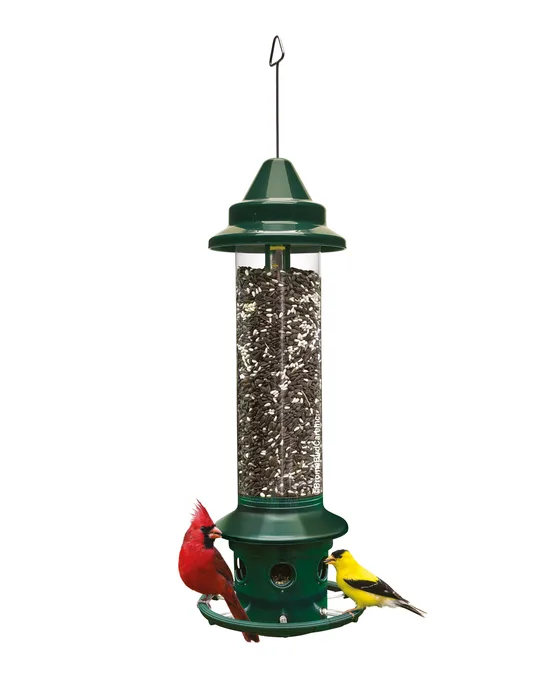
- Buy Brome Squirrel Buster Plus A large weight-activated tube feeder whose shroud closes the ports when a squirrel climbs on.
- Buy Duncraft Squirrel Blocker A stainless mesh tube inside an outer grid that keeps squirrel paws and noses away from the seed.
- It depends Birds Choice Squirrel Proof Classic Bird Feeder with Pole and Squirrel Baffle A complete pole system: a polycarbonate seed tube sitting on a steel baffle that squirrels cannot climb past.
- Skip Perky-Pet Squirrel-Be-Gone II Home Style Wild Bird Feeder (Model 339) A cheap, charming 8 lb metal hopper whose squirrel defense depends on spring tuning and placement.
What actually matters
- Mechanism - Shroud, perch, cage or baffle decides how a feeder fails. Pick the one whose weakness your yard does not expose.
- Bird access - Designs that block squirrels can also block cardinals and jays. Check the species the maker lists.
- Adjustability - A tunable spring lets you match the trigger to your squirrels. Without it you live with the factory setting.
- Materials - Squirrels chew plastic. Metal on exposed parts lasts longer.
- Capacity - Bigger reservoirs mean fewer refills. They also mean more seed sitting in the tube between cleanings.
- Cleaning - A feeder that comes apart by hand is easier to keep clean. Look for tool-free disassembly.
- Stated limits - Good makers say what the feeder will not stop. That makes the claim easier to judge.
The specs, in plain English
Green flags vs red flags
Green flags
- Metal or chew-proof materials on every part squirrels touch.
- An adjustable trigger weight.
- Tool-free disassembly for cleaning.
- A clear list of birds the feeder suits.
- A stated list of animals it will not stop.
Red flags
- A 100 percent squirrel proof promise with no conditions.
- Plastic roofs, lids or ports within reach of teeth.
- No way to adjust the trigger on a weight-activated design.
- Reviews on the maker's own site reporting squirrels still feeding.
- Mounting hardware that is not included or not stated.
Who's who: the brands
- Brome - A Quebec maker known for its Squirrel Buster line of weight-activated shroud feeders and Lifetime Care support.
- Duncraft - A bird feeding retailer that also sells its own exclusive feeders, including the Squirrel Blocker grid tube.
- Birds Choice - Sells pole feeders, baffles and recycled-plastic feeders, including a classic pole-and-baffle feeder it says has been sold for over 30 years.
- Perky-Pet - A mass-market feeder brand known for its Squirrel-Be-Gone line of weight-activated feeders.
How to read a listing without getting fooled
Start with the mechanism and find the sentence that explains exactly what closes, moves or blocks. Then look for the bird species the maker lists, which tells you whether the design is built for perching or clinging birds. Check capacity and dimensions, then the materials list for any plastic on exposed parts. Read any disclaimer or placement rule closely, because it is where the maker states the conditions behind the squirrel-proof claim. Finally, read the low-star reviews on the maker's own site; on weight-activated feeders they usually concern spring tension or placement.
How much should you spend?
Budget squirrel-proof feeders are mostly weight-activated hoppers and simple caged tubes, and they work best with careful placement and tuning. Mid-range buys a well-made grid tube or a smaller shroud feeder with better materials. The premium tier covers large shroud feeders with chew-proof parts and long support, and complete pole-and-baffle systems where the pole is part of the price. Spending more mostly buys materials and capacity, not a different law of squirrel physics, so match the mechanism to your yard first.
Questions, answered
Do squirrel-proof feeders hurt squirrels?
The designs here block access rather than harm. Brome states its shroud foils squirrels but does not harm them in any way. Cages and baffles simply keep squirrels away from the seed. Avoid adding grease or sticky products to poles, which can harm birds and animals.
Why do squirrels still get into my weight-activated feeder?
Usually the spring is set too loose or the squirrel can reach the ports from something nearby without putting weight on the feeder. Makers point to tension and clearance first. Tighten the setting a step at a time and move the feeder away from branches, railings and roofs.
Can I add a baffle to a feeder I already own?
Often, yes. Pole baffles fit below a feeder on a pole, and dome baffles hang above a hanging feeder. A baffle only stops climbing, so it still needs space around it.
How often should I clean a squirrel-proof feeder?
Perky-Pet recommends cleaning at least every two weeks and checking seed for insects and mold. Feeders that come apart by hand, like the Brome, make that easier. Bigger reservoirs hold seed longer, so fill them only as much as your birds eat between cleanings.
Or jump to the head-to-head: Brome Squirrel Buster Plus vs Duncraft Squirrel Blocker.