

Pet Supplies
The Best Small Animal Cages: 4 Compared (and One to Skip)
Four rabbit, guinea pig and hamster habitats compared on real floor area, flooring surface, bar spacing and bedding depth against published welfare guidance.
The short version
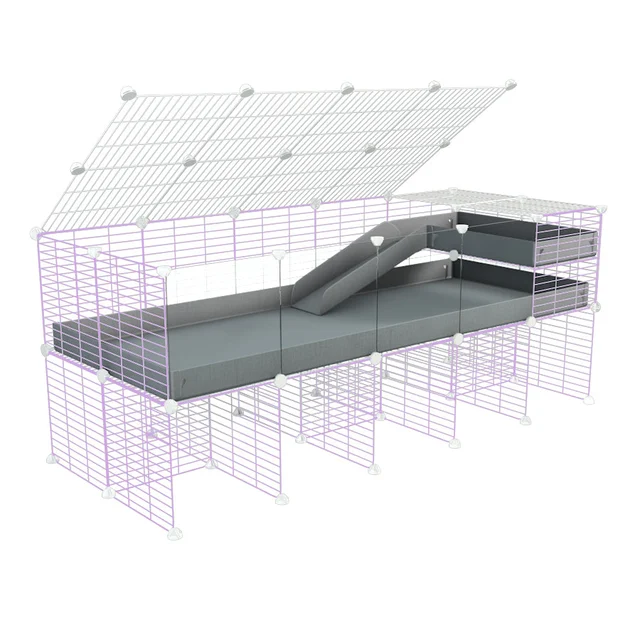
Buy the Kavee C&C Habitat 5x2 if you have the room and the budget: about thirteen square feet of unbroken floor, a loft with a fully enclosed coroplast base, tighter grid spacing than generic panels, and a modular design you can extend rather than replace. Buy the MidWest Guinea Habitat Plus if you want the same welfare logic for far less money, and buy two units if you keep a pair, since one gives eight square feet and they lock together into sixteen. The MidWest Hamster Nation Jumbo is the best conventional hamster cage on the mainstream shelf thanks to its six inch deep base, but at 676 square inches it still sits under the floor area standard experienced keepers work to, so take the Jumbo over the Large and treat it as a starting point. Skip the Kaytee CritterTrail One Level Habitat, which offers around 230 square inches and a tube system that adds travel rather than space. The single most useful habit when shopping this category is to ignore the species on the box and multiply the internal length by the internal width yourself. Best for: owners who want to buy floor area first and accessories second, whether that means one premium modular habitat or two inexpensive ones joined together.
Our picks at a glance
- Kavee C&C Habitat 5x2 - Buy. The modular grid and coroplast setup rescues have recommended for years, sold as a finished kit that actually clears the floor area guidance.
- MidWest Homes for Pets Guinea Habitat Plus - Buy. Eight square feet of open, wire free floor for a fraction of premium money, and two units lock together into sixteen.
- MidWest Homes for Pets Hamster Nation Jumbo - It depends. The best conventional hamster cage on the mainstream shelf, and still under the floor area standard experienced keepers work to.
- Kaytee CritterTrail One Level Habitat - Skip. About 230 square inches of floor sold as a hamster home, with an add-on tube system that adds travel rather than space.
The verdict in 30 seconds
What mattered most
- Usable floor area, one unit
- Species on the label
- Versus published floor guidance
- Floor surface
- Bedding depth possible
- Expandable
Small animal cages are sold by the species printed on the box, and that is the least reliable number in the category. Check advertised floor area against the space guidance rescues and species societies publish and most of the shelf disqualifies itself, including several cages with excellent reviews. We compared four current habitats on the criteria that actually decide welfare: horizontal floor area, solid versus wire flooring, bar spacing and how deep the bedding can go. Two are worth buying, one is worth understanding before you commit, and one is a hard skip.
The modular grid and coroplast setup rescues have recommended for years, sold as a finished kit that actually clears the floor area guidance.
Best for: Two or three guinea pigs, in a permanent spot where you want one setup that stays right for years.
- About thirteen square feet of unbroken floor (175 x 70 cm), past the pair guideline for guinea pigs
- Loft floor is fully enclosed coroplast with no wire gaps, so the second level is safe to stand on
- Tighter grid holes than generic C&C panels, which closes the escape and head trapping risk
- Fully modular: widen it, reshape it or join it to another habitat instead of replacing it
- Snap together assembly with no tools, tape or glue, and a base that wipes clean in minutes
- The most expensive option here, and the stand and loft push it higher again
- Large finished footprint that needs measuring before you order
- Connectors have to be pushed fully home or panels can bow under a determined animal
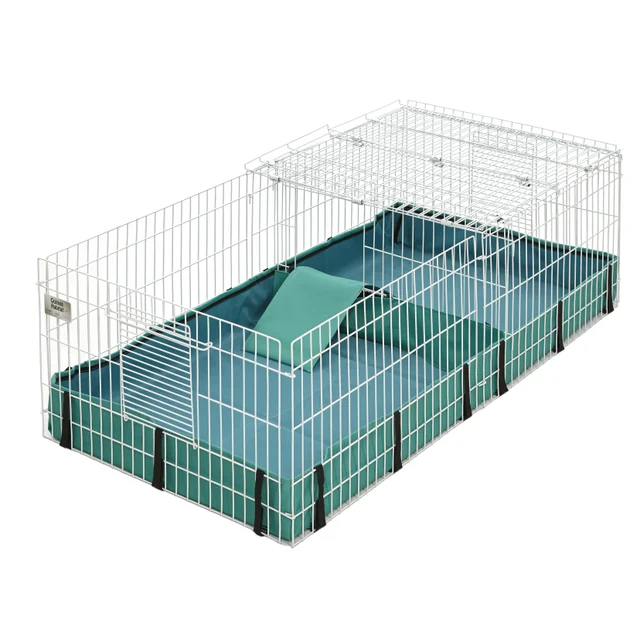
Eight square feet of open, wire free floor for a fraction of premium money, and two units lock together into sixteen.
Best for: First time guinea pig owners, and anyone who would rather spend the budget on floor area than on finish.
- Eight square feet of open floor on a washable PVC lined canvas bottom, no wire underfoot
- Units lock together and the connecting doors double as ramps, taking you to sixteen square feet
- Top and divider panels are sold as add-ons for introductions or separation
- Fourteen inch sides contain bedding and still let you reach the whole cage
- Sets up in minutes without tools
- One unit meets the single guinea pig guideline but falls short for a pair, so plan on two
- Wire panels feel wobbly at the joints and most owners end up zip tying them
- Canvas bottom stains over time and a determined chewer can puncture it
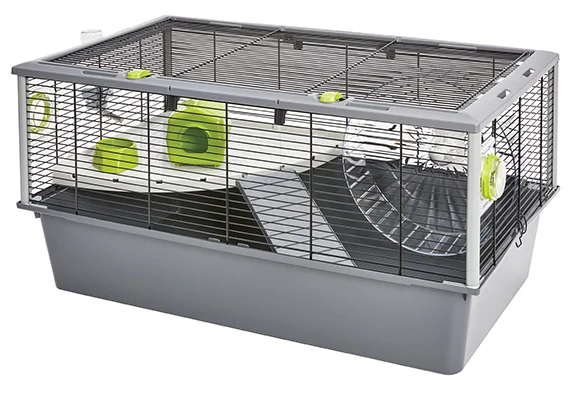
The best conventional hamster cage on the mainstream shelf, and still under the floor area standard experienced keepers work to.
Best for: Dwarf hamsters, gerbils and mice, or a Syrian whose cage is one part of a larger setup with regular supervised floor time.
- Six inch deep base holds enough substrate for real burrowing, which few cages at this price manage
- Large included exercise wheel, around eleven inches across
- Height adjustable shelves with wide ramps
- Lift off top makes a full bedding change a two minute job
- Good ventilation compared with enclosed plastic habitats
- 676 square inches of floor sits under the roughly 775 square inch standard for a single hamster
- The Large size is a long way under it, so the Jumbo is the only version worth considering
- Multi level layout counts shelf area that a hamster cannot use as floor
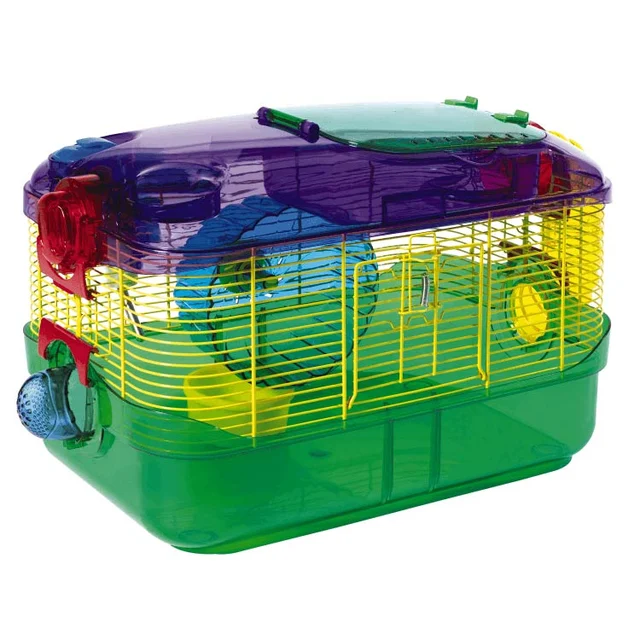
About 230 square inches of floor sold as a hamster home, with an add-on tube system that adds travel rather than space.
Best for: Nobody as a permanent home. Useful only as a carrier or a temporary isolation box.
- Narrow bar spacing that genuinely contains dwarf hamsters and mice
- Solid plastic base with no wire underfoot
- Cheap, widely stocked and fine as a carrier or short term quarantine box
- Around 230 square inches of floor, under a third of the standard for one hamster
- Tubes add travel, not floor area, and ventilate poorly
- Syrian hamsters can wedge in sections sized for dwarf species
- Waste and bedding pack into pods and corners, so weekly cleaning means dismantling many pieces
- Expanding it with more modules costs more than a properly sized enclosure would have
| Criteria | Kavee C&C Habitat 5x2 Top pick | MidWest Homes for Pets Guinea Habitat Plus | MidWest Homes for Pets Hamster Nation Jumbo | Kaytee CritterTrail One Level Habitat |
|---|---|---|---|---|
| Verdict | Buy it | Buy it | It depends | Skip it |
| Best for | Two or three guinea pigs, in a permanent spot where you want one setup that stays right for years. | First time guinea pig owners, and anyone who would rather spend the budget on floor area than on finish. | Dwarf hamsters, gerbils and mice, or a Syrian whose cage is one part of a larger setup with regular supervised floor time. | Nobody as a permanent home. Useful only as a carrier or a temporary isolation box. |
| Price tier | $$ · premium | $ · mid-range | $ · mid-range | $ · budget |
| Usable floor area, one unit | About thirteen sq ft, plus a loft | Eight sq ft, sixteen if two are joined | 676 sq in, about 4.7 sq ft | About 230 sq in, about 1.6 sq ft |
| Species on the label | Guinea pigs, up to three | Guinea pigs | Syrian and dwarf hamsters | Hamsters, gerbils, mice |
| Versus published floor guidance | Clears the guinea pig pair figure | Meets the single figure, short for a pair alone | Under the roughly 775 sq in hamster standard | Far under any published hamster minimum |
| Floor surface | Solid coroplast, loft fully enclosed | PVC lined canvas, no wire underfoot | Solid plastic pan, wide ramps | Solid plastic pan |
| Bedding depth possible | Several inches, base walls contain it | Modest, canvas walls are low | Six inch base, real burrowing depth | Minimal, shallow base |
| Expandable | Yes, fully modular grid system | Yes, units lock together | Limited, accessory tubes sold separately | Only by bolting on more tubes and pods |
| Weekly cleaning | Wipe the coroplast, nothing to strip | Canvas wipes clean, hinged top helps | Lift off top gives full access | Tubes and pods trap waste, tedious |
| Price tier | $$ · premium | $ · mid-range | $ · mid-range | $ · budget |
Which one is right for you?
- Two or three guinea pigs, in a permanent spot where you want one setup that stays right for years. Buy it Kavee C&C Habitat 5x2
- First time guinea pig owners, and anyone who would rather spend the budget on floor area than on finish. Buy it MidWest Homes for Pets Guinea Habitat Plus
- Dwarf hamsters, gerbils and mice, or a Syrian whose cage is one part of a larger setup with regular supervised floor time. It depends MidWest Homes for Pets Hamster Nation Jumbo
- Nobody as a permanent home. Useful only as a carrier or a temporary isolation box. Skip it Kaytee CritterTrail One Level Habitat
How we judged the field
We do not run a lab. What we do is read across independent testing, manufacturer specifications and aggregated owner reports, then check one thing the marketing never checks itself: how the advertised floor area compares to the space guidance that rescues and species societies publish for the animal named on the box.
That comparison is where most of this category falls apart. A wire box can be sold as a rabbit cage while offering a small fraction of the combined living and exercise space rabbit welfare groups ask for. Guinea pig cages are routinely sold as suitable for a pair at well under the widely used figure of about ten and a half square feet. Hamster cages are the worst offenders, with mainstream models landing at a quarter or less of the roughly 775 square inches of unbroken floor that the European standard hamster keepers use asks for. Species labelling on a small animal cage is a marketing claim, not a specification.
Four criteria decided the ranking.
Real horizontal floor area came first. Guinea pigs and rabbits do not climb. A second level stacked over the same footprint adds enrichment, not living space, and manufacturers count it as if it were the same thing.
Floor surface came second. Wire mesh flooring and wire ramps cause sore hocks (pododermatitis) in rabbits and guinea pigs, and reviewers and owners report the damage long before most buyers connect it to the cage. Anything the animal stands on all day has to be solid: coroplast, PVC canvas, plastic pan, or bedding over a solid base.
Bar spacing and bedding depth came third. Hamsters and dwarf species slip through anything much wider than a quarter inch, and they need enough substrate depth to burrow, which rules out shallow pans no matter how wide the footprint looks in photos.
Build quality and cleaning came fourth. Grid joints that flex, pans that crack at the corners and tube systems that trap waste all turn into weekly problems.
Price only broke ties.
This is the modular grid and coroplast approach that guinea pig rescues have recommended for years, sold as a finished kit rather than a parts list. The 5x2 layout is 175 by 70 cm, about thirteen square feet of unbroken floor, which clears the pair guideline with room left over, and the included loft adds height without stealing from that footprint.
The details that matter are handled correctly. The loft floor is fully enclosed coroplast with no wire gaps, which is the difference between a useful second level and a sore hocks generator. Kavee uses smaller grid holes than the generic C&C grids sold loose, which closes the escape and head trapping risk for animals past a few weeks old. The coroplast base wipes down in a couple of minutes and takes fleece liners if you prefer that to loose bedding.
Assembly is snap connectors and pre creased coroplast, no tools or tape, and Kavee says most owners finish in under thirty minutes, though some reviewers find it fiddly. Because it is modular, you can widen it later, reshape it around furniture, or join it to a second habitat rather than replacing the whole thing. The same grid system can be expanded with extra grids and bases, which very few boxed cages allow.
The catches are real. It is the most expensive option here, the loft and stand push it higher again, and the finished footprint is genuinely large, so measure your room before you order. Owners also note that grid setups need the connectors pushed fully home or panels can bow under a determined animal.
The value pick, and the one most people should start with. A single unit gives eight square feet of open floor on a washable PVC lined canvas bottom, with fourteen inch sides that keep bedding in and let you reach the whole cage without contortions. A top panel and a divider panel are sold as add-ons, which is what you want for introductions, post surgery separation, or splitting feeding.
Eight square feet meets the common single guinea pig guideline and sits under the pair figure, so the buying advice is simple: if you have two, plan on two units. They lock together and the connecting doors double as ramps, which takes you to sixteen square feet for less than most single premium cages cost. No wire underfoot anywhere, which is the main reason this beats the multi level pet shop cages sold at similar money.
Owner reports converge on two complaints. The wire panels can feel wobbly at the joints, and many owners zip tie the connections as a matter of course. And the canvas bottom, while genuinely washable, will eventually stain and can be punctured by a determined chewer, so treat it as a consumable on a multi year timeline.
This is the best mainstream hamster cage in the category and still not quite enough on its own, which is exactly why it lands here rather than in the buy column.
What it gets right is unusual. The base is six inches deep, so you can actually load enough substrate for a hamster to tunnel rather than scratch at a plastic floor, and that design choice puts it ahead of much of what is sold beside it. The included wheel is around eleven inches across, the shelves are height adjustable with wide ramps, and the top lifts clean off the base so a full bedding change is a two minute job instead of a wrestling match.
The problem is the number. The Jumbo gives 676 square inches of floor, and the Large gives 417. Both sit under the roughly 775 square inch unbroken floor standard that experienced hamster keepers work to, and the Large is a long way under it. For a dwarf hamster, gerbil pair or mouse group, or for a Syrian whose cage is one part of a larger setup with regular supervised floor time, the Jumbo is a reasonable and well built home. For a Syrian hamster that will live in it full time with nothing else, buy the Jumbo rather than the Large and treat it as a floor, not a ceiling.
Buy it if you want a conventional cage that ventilates well, cleans quickly and takes deep bedding. Skip it if you are willing to go to a large wooden or glass enclosure instead, where clearing the floor area standard is straightforward.
The colourful tube habitat is the most recognisable small animal cage on any shelf and the one to walk past. The floor measures about twenty inches by eleven and a half, which works out around 230 square inches, under a third of the standard for a single hamster and well under even the more permissive figures in circulation. The bar spacing is fine and the plastic base is solid, so the build is not the issue. The size is.
The add-on tube and pod system is sold as the fix, and it is not. Tubes add travel, not floor, and owners commonly report the same problems: poor ventilation inside the tubes, waste and bedding packing into corners that are awkward to reach, Syrian hamsters getting wedged in sections sized for dwarfs, and a cleaning routine that means dismantling many pieces every week. Reviewers who keep hamsters are blunt about the mismatch between the marketing and the animal.
Buying more modules to expand it costs more than a properly sized enclosure would have. If it is what you already own, use it as a carrier or a temporary quarantine box and put the animal somewhere with real floor space.
Kavee C&C Habitat 5x2 vs MidWest Homes for Pets Guinea Habitat Plus: which should you buy?
Both clear the bar that most of this category fails, so this comes down to budget, room and how much you want to fiddle.
The Kavee is the better habitat. More floor in one piece, a loft that is safe to stand on, tighter grid spacing, a base you can reshape or extend without buying a whole new cage, and a finish that does not look like laboratory housing in a living room. If you keep three guinea pigs, or you want one setup that will still be right in five years, it is worth the premium.
The MidWest is the better first purchase. It delivers most of the welfare benefit for a fraction of the outlay, sets up without tools, and two units joined together give you more total floor than a single Kavee 5x2. The trade offs are cosmetic and structural rather than ethical: wobbly joints you will zip tie, a canvas floor that stains, and a look that is unapologetically functional.
Rule of thumb: one guinea pig and a tight budget, take the MidWest. Two or three animals, a permanent spot and room to spend, take the Kavee. Either way, buy the floor area first and the accessories second.
What to look for
- Check floor area against the species guideline, not the label. Guinea pigs need roughly seven and a half square feet for one and around ten and a half for a pair. Rabbits need a combined living and exercise area far larger than any boxed cage provides. Hamsters need in the region of 775 square inches of unbroken floor. If the listing does not state floor area, multiply the internal length by the width yourself.
- Count only the ground floor. Lofts, shelves and balconies are enrichment. They do not substitute for footprint, and no rabbit or guinea pig uses vertical space the way the product photo implies.
- Insist on solid flooring. Wire mesh floors and wire ramps cause sore hocks. Coroplast, PVC canvas, solid plastic or a solid pan under bedding are all fine. A wire grate over a pull out tray is not.
- Match bar spacing to the animal. Hamsters, dwarf species and young rats need spacing around a quarter inch or a solid walled enclosure. Guinea pig and rabbit grids around an inch are fine and ventilate better.
- For burrowing species, check base depth before anything else. A wide cage with a shallow tray cannot hold enough substrate to matter. Look for a base wall of several inches.
- Prefer expandable over final. Modular grid systems and cages that lock together let you fix an undersized setup later without replacing it.
- Think about the weekly clean. Lift off tops and single piece bases take minutes. Tube networks, stacked pods and cages with a dozen clips take an hour and get skipped.
- Skip the accessory bundle. Included wheels are often too small, included bottles often leak, and the cost of the bundle is usually better spent on a bigger enclosure.
Our final take
The most misleading spec in this category is the species printed on the box. Once you check advertised floor area against published welfare guidance, most of the shelf disqualifies itself, and the choice narrows to a handful of products that were designed around the animal rather than around the retail shelf depth.
The Kavee C&C Habitat 5x2 is the one we would buy. It gives more unbroken floor than anything else here, keeps every surface the animal stands on solid, and grows with you rather than getting replaced. The MidWest Guinea Habitat Plus is the value answer and a genuinely good cage, especially bought as a pair of units. The Hamster Nation Jumbo is the best conventional hamster cage on the mainstream shelf and still worth understanding as a starting point rather than a finished answer. The CritterTrail is the one to skip, not because it is badly made, but because no amount of tubing turns 230 square inches into a home.
Questions, answered
How much floor space does a guinea pig actually need?
The figure rescues and species societies use most often is around seven and a half square feet for a single guinea pig and around ten and a half for a pair, with more again for three. Almost every cage sold in a pet shop as a guinea pig cage sits below the single figure, and many sold as suitable for two are less than half the pair figure. Measure the internal length by the internal width yourself rather than trusting the species name on the box.
Why are pet shop rabbit cages so much smaller than the guidance says?
Because they are sized to retail shelf depth and to what people will carry to a car, not to the animal. Rabbit welfare guidance asks for a combined living and exercise area far larger than any boxed indoor cage provides, with the shelter section alone long enough for a rabbit to take several hops. The practical answer indoors is a modular pen or grid system with a solid floored shelter inside it, plus daily free roaming time, rather than a cage that claims to be complete.
Are multi level cages better than one big single level?
For rabbits and guinea pigs, no. Neither species climbs, and a second level built over the same footprint adds enrichment rather than living space, though manufacturers routinely advertise the combined area as if it counted. Hamsters and rats do use height, but even then the ground floor is what the welfare standards measure. Buy the footprint first and treat levels as a bonus.
What is wrong with hamster tube systems?
Tubes add distance travelled, not floor area, and they introduce problems of their own: poor airflow inside the tubing, waste and bedding packing into sections that are awkward to reach, and Syrian hamsters wedging in tubes sized for dwarf species. Owners also report that weekly cleaning turns into dismantling and rinsing many separate pieces. Expanding a tube habitat with more modules usually costs more than buying a correctly sized enclosure in the first place.
Is wire flooring ever acceptable?
Not for any surface the animal stands on for long periods. Wire mesh floors and wire ramps are a well documented cause of sore hocks, also called pododermatitis, in rabbits and guinea pigs, and the damage builds quietly over months. A wire grate above a pull out tray is the pattern to avoid. Coroplast, PVC lined canvas, solid plastic and bedding over a solid pan are all fine. This is general product information rather than veterinary advice, so if you see redness or hair loss on the feet, see a vet who treats small animals.
Deciding between the top two? See our head-to-head: Kavee C&C Habitat 5x2 vs MidWest Homes for Pets Guinea Habitat Plus.
More Pet Supplies reviews
 The Best Squirrel-Proof Bird Feeders: 4 Compared (and One to Skip)
  The Best Wireless & GPS Dog Fences: 4 Compared (and One to Skip)
  The Best Cat Litter Boxes: 4 Compared (and One to Skip)
  The Best Dog Ramps and Stairs: 4 Compared (and One to Skip)
  The Best Aquarium Lights: 4 Compared (and One to Skip)
  The Best Aquarium Air Pumps: 4 Compared (and One to Skip)