

Pet Supplies
The Best Wireless & GPS Dog Fences: 4 Compared (and One to Skip)
We compared four buyable wireless and GPS dog fences on containment accuracy, boundary flexibility, subscription cost, collar comfort, and honest value.
The short version
Wireless and GPS dog fences fall into two groups: true GPS systems that draw any-shape boundaries with no buried wire, and cheaper circular radio systems that project a round bubble. The SpotOn GPS Dog Fence is our top pick for custom boundaries and no required subscription. The Halo Collar 5 packs fencing, tracking, and training into one collar, but comes with an ongoing membership cost, so it's a 'depends.' The PetSafe Stay & Play Compact is the value buy for a round, open yard. Skip the older PetSafe PIF-300, which sits in a similar price tier but uses replaceable collar batteries. Best for: dog owners who want to keep a pet in the yard without digging a wire, matched to their yard shape and budget.
Our picks at a glance
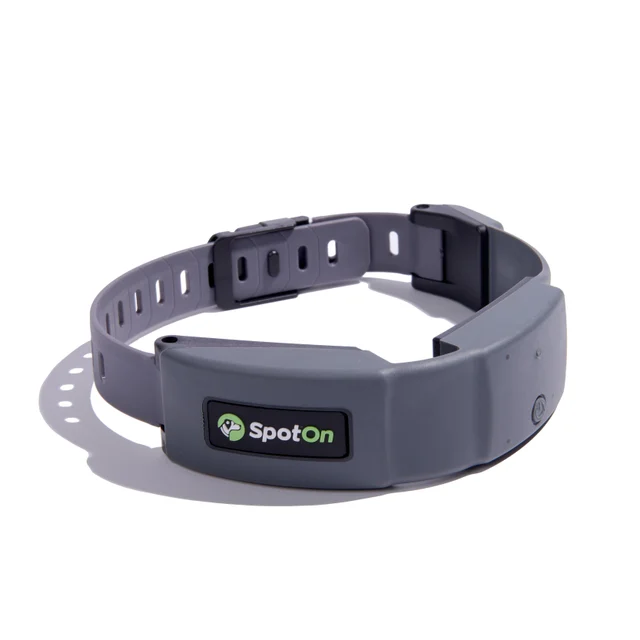
- SpotOn GPS Dog Fence (Nova Edition) - Buy. Highly rated wire-free containment with no monthly fee required to keep the fence working.
- Halo Collar 5 - It depends. GPS fence, tracking, and training in one collar, with an ongoing membership cost to weigh.
- PetSafe Stay & Play Compact Wireless Fence - Buy. The best-value wire-free fence for a simple round yard, with a rechargeable, waterproof collar.
- PetSafe Wireless Pet Containment System (PIF-300) - Skip. The category's original circular wireless kit, now outclassed by PetSafe's own newer Stay & Play.
The verdict in 30 seconds
What mattered most
- Containment tech
- Boundary shape
- Max coverage
- Subscription
- Collar power
- Warning before static
"Invisible" dog fences now split into two camps: true GPS systems that let you draw a boundary of any shape with no buried wire, and older circular radio systems that project a round bubble from a base unit. We weighed a GPS flagship, a GPS-plus-training collar, a solid budget wireless kit, and one legacy system that newer options have quietly outclassed. Two are easy recommendations, one depends entirely on whether you'll pay a subscription, and one is a skip.
Highly rated wire-free containment with no monthly fee required to keep the fence working.
Best for: Owners of larger properties or irregular yards who want a flexible wire-free fence and no ongoing fee.
- True GPS: draw custom-shaped boundaries of nearly any size or layout in the app, no buried wire or base station
- Owners rate its boundary accuracy highly, though GPS accuracy can still dip near dense cover
- Core containment works with no required subscription (optional plan only adds real-time off-property tracking)
- A tone warning starts inside the boundary before any static, with adjustable levels
- Flagship pricing that's a real investment
- Large, chunky collar best suited to medium and larger dogs; battery needs regular charging
- Dense tree canopy, deep canyons, or tight urban lots can still nudge the boundary
Own the SpotOn GPS Dog Fence (Nova Edition)? Tell us how it held up.
Thanks. Counted, and shown once enough owners have weighed in.
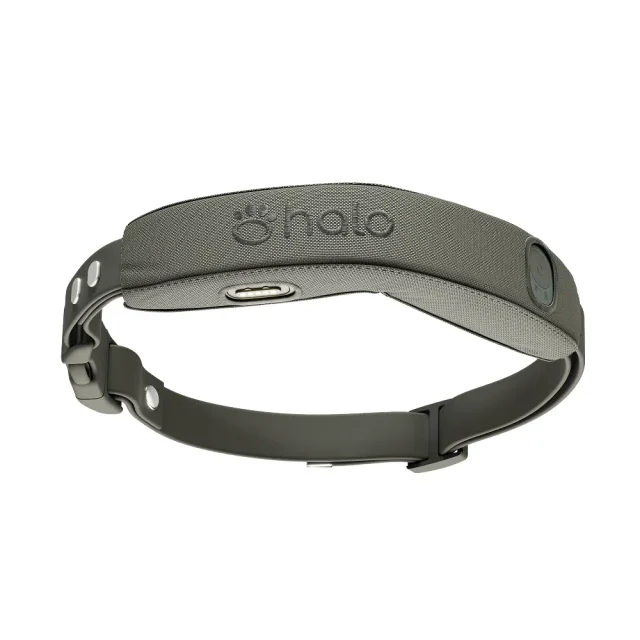
GPS fence, tracking, and training in one collar, with an ongoing membership cost to weigh.
Best for: Hands-on owners who want fencing, tracking, and training together and don't mind a subscription.
- Combines a GPS boundary, GPS tracking, and training feedback in a single collar
- App-drawn custom fences plus built-in training programs and guidance
- Collar designed with multiple band options
- Halo says a membership plan is required to keep the collar active, an ongoing cost on top of the hardware
- Like other GPS collars, the boundary can drift near buildings or heavy cover
- Best results demand you actually follow the training plan, not treat it as set-and-forget
Own the Halo Collar 5? Tell us how it held up.
Thanks. Counted, and shown once enough owners have weighed in.
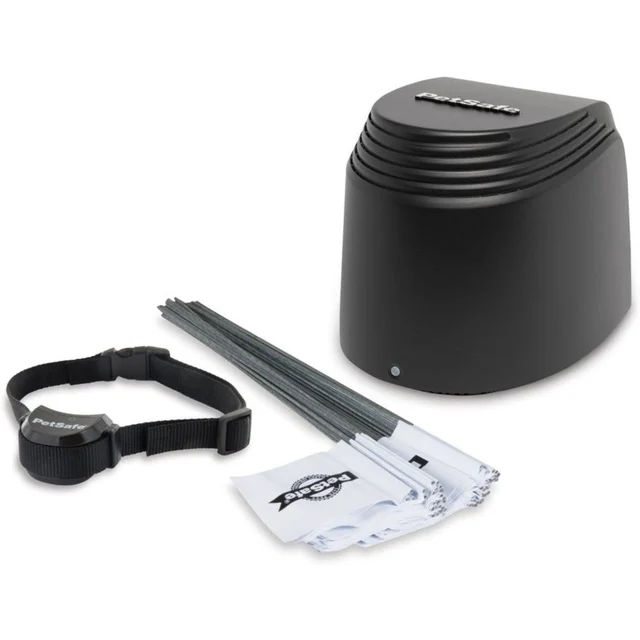
The best-value wire-free fence for a simple round yard, with a rechargeable, waterproof collar.
Best for: Budget-minded owners with a roughly round, open, flat yard who don't need custom boundaries.
- Typically cheaper than a GPS system and set up in an afternoon with no wire to bury
- Rechargeable, waterproof collar that is designed for a range of dog sizes; check the maker's weight limits
- Portable base unit travels well to a cabin or vacation home; tone warning precedes static
- Boundary is a fixed circle only; you can't exclude a driveway, pool, or shape it to the property
- Radio signal can flex with slopes, large metal objects, and interference, so the edge may not be perfectly steady
- Coverage is limited to a fixed circle, roughly three-quarters of an acre by the maker's figure
Own the PetSafe Stay & Play Compact Wireless Fence? Tell us how it held up.
Thanks. Counted, and shown once enough owners have weighed in.
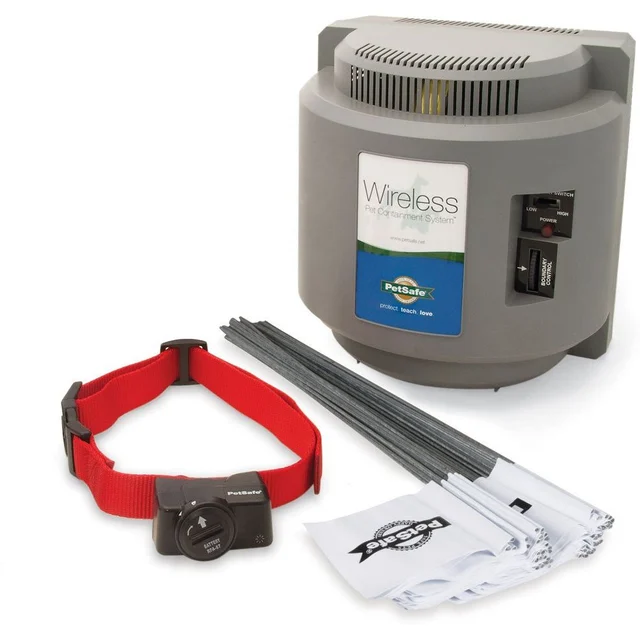
The category's original circular wireless kit, now outclassed by PetSafe's own newer Stay & Play.
Best for: Almost no one at today's price; existing owners replacing parts are the main case.
- Long-proven, simple circular wireless design that many owners have used for years
- No wire to bury and a portable base unit
- Collar runs on replaceable batteries you must keep buying rather than recharging
- Smaller maximum coverage than the newer Stay & Play, per owner reports
- Priced in the same tier as the newer, rechargeable Stay & Play
Own the PetSafe Wireless Pet Containment System (PIF-300)? Tell us how it held up.
Thanks. Counted, and shown once enough owners have weighed in.
| Criteria | SpotOn GPS Dog Fence (Nova Edition) Top pick Buy it Buy | Halo Collar 5 It depends Buy | PetSafe Stay & Play Compact Wireless Fence Buy it Buy | PetSafe Wireless Pet Containment System (PIF-300) Skip it Buy |
|---|---|---|---|---|
| Best for | Owners of larger properties or irregular yards who want a flexible wire-free fence and no ongoing fee. | Hands-on owners who want fencing, tracking, and training together and don't mind a subscription. | Budget-minded owners with a roughly round, open, flat yard who don't need custom boundaries. | Almost no one at today's price; existing owners replacing parts are the main case. |
| Price tier | $$$$ · flagship | $$$ · premium | $$ · mid-range | $$ · mid-range |
| Containment tech | True GPS (no wire, no base) | GPS (no wire, no base) | Circular radio from base | Circular radio from base |
| Boundary shape | Custom, any shape/size | Custom, any shape | Fixed circle only | Fixed circle only |
| Max coverage | Very large (about 1/3 acre up to many acres) | Very large (900 sq ft up to 1,200 sq mi per maker) | Up to ~3/4 acre | Up to ~1/2 acre |
| Subscription | Not required for fence | Required to keep the collar active | None | None |
| Collar power | Rechargeable | Rechargeable | Rechargeable | Replaceable batteries |
| Warning before static | Tone | Tone | Tone | Tone |
| Best yard | Large / irregular | Any, if training-focused | Round, open, flat | Round, open, flat |
| Price tier | $$$$ · flagship | $$$ · premium | $$ · mid-range | $$ · mid-range |
Which one is right for you?
- Owners of larger properties or irregular yards who want a flexible wire-free fence and no ongoing fee. Buy it SpotOn GPS Dog Fence (Nova Edition)
- Budget-minded owners with a roughly round, open, flat yard who don't need custom boundaries. Buy it PetSafe Stay & Play Compact Wireless Fence
- Hands-on owners who want fencing, tracking, and training together and don't mind a subscription. It depends Halo Collar 5
- Almost no one at today's price; existing owners replacing parts are the main case. Skip it PetSafe Wireless Pet Containment System (PIF-300)
How we judged the field
We don’t run our own containment lab. Instead we synthesize long-term owner reports and manufacturer specs, then weight the things that actually determine whether a fence keeps a dog safe and comfortable. The criteria that mattered most: boundary accuracy and stability (does the edge stay where you set it, or does it wander?), boundary flexibility (can you shape it to your property, or only a circle?), total cost of ownership including any required subscription, collar comfort and power (weight, fit, rechargeable vs. throwaway batteries), and humane warning options (tone and vibration before any static). We also looked hard at how much training each system realistically demands, because that’s where most bad experiences come from.
One framing note: “wireless dog fence” now covers two very different technologies. True GPS fences use satellite positioning to let you draw any boundary you like with no wire and no base unit. Circular wireless fences use a base station that projects a round radio bubble. GPS is more capable and far pricier; circular wireless is cheap and simple but locked to a circle. Both are distinct from handheld remote training collars, which we’re not covering here.
SpotOn GPS Dog Fence (Nova Edition)
Buy itThe SpotOn is a containment system owners rate highly, and the maker’s specs back up the flexibility. Because it’s true GPS, you literally walk or draw your boundary in the app and can make it almost any shape or size, wrap it around outbuildings, or exclude a pond or driveway, with nothing buried and no base station on your porch. Owner feedback points to strong boundary accuracy, though trees remain GPS’s historical weak spot.
Just as important for value: the maker states no subscription is required for the fence. An optional paid plan adds tracking and breach alerts, but you’re not paying monthly just to keep the boundary alive. The trade-offs are honest ones, this is a flagship-priced product, the collar is bulky and the maker lists it for dogs of at least 15 lb, and the battery needs regular charging. For a big or oddly shaped yard, it is the most flexible option here.
Halo Collar 5
It dependsThe Halo Collar 5 is genuinely impressive: it folds a GPS fence, GPS tracking, and a training system with guided programs into one collar. If you want containment and training in a single device and you’re a hands-on owner, it’s a strong tool.
The reason it’s a “depends” rather than a clear buy is the business model: Halo says a membership plan is required to keep the collar active, so a recurring cost stacks on top of premium hardware. Add the usual GPS caveat, some drift near buildings or heavy cover, and the fact that results really depend on following the training plan, and the Halo makes sense for a specific buyer: someone who values the all-in-one training-and-tracking package and is comfortable paying to keep it running. If a subscription is a dealbreaker, SpotOn is the GPS option with no fence subscription.
PetSafe Stay & Play Compact Wireless Fence
Buy itNot everyone needs (or wants to pay for) GPS. If your yard is roughly round, open, and flat, the Stay & Play Compact is the sensible-value pick. It’s a circular wireless system, a small base unit projects a round boundary of up to about three-quarters of an acre, so setup is an afternoon with no wire to bury. The collar is rechargeable and waterproof, and fits a range of dog sizes (check the maker’s weight limits), and the system gives a tone warning before static.
You are buying into the limits of circular wireless, though, and we’d rather you know them going in: the boundary is a fixed circle you can’t reshape, and the radio edge can flex a bit with slopes, large metal objects, and interference, so it may be less steady than a well-set GPS fence. For a simple yard and a fraction of the GPS price, that’s a fair deal, and it’s why this is the runner-up overall.
PetSafe Wireless Pet Containment System (PIF-300)
Skip itThe PIF-300 is the original circular wireless kit, and plenty of dogs have been contained by it over the years. The problem is that its own maker has a newer, rechargeable product in a similar price tier. The PIF-300 covers a smaller area (roughly half an acre by the maker’s figure), and its collar runs on replaceable batteries you keep buying instead of recharging.
There’s no scenario at current pricing where we’d steer a new buyer to the PIF-300 over the rechargeable Stay & Play, which fixes the battery hassle and covers more ground for similar cost. The main reason to touch a PIF-300 today is if you already own one and need a compatible replacement part. As a new purchase, skip it.
Sources
Specs in this review come from these pages.
- SpotOn, GPS Dog Fence Nova Edition product page (spotonfence.com)
- Halo, Halo Collar 5 product page (halocollar.com)
- Halo, Feedback System page (halocollar.com)
- Halo, Pack Membership Plans page (halocollar.com)
- PetSafe, Stay & Play Compact Wireless Fence product page (petsafe.com)
- PetSafe, Wireless Pet Containment System PIF-300 product page (petsafe.com)
SpotOn GPS Dog Fence vs PetSafe Stay & Play: which should you buy?
This is the real decision for most shoppers, and it comes down to your yard, not brand loyalty. The SpotOn is the more flexible fence: draw-any-shape boundaries, big or irregular properties handled easily, and no subscription required to keep it working. If you have acreage, an unusual lot, or areas you need to fence out, it’s worth the flagship price.
The PetSafe Stay & Play wins on value and simplicity for the yard it’s built for: round, open, and under about three-quarters of an acre. You give up custom shapes and a little edge stability, but you save a large amount of money, get a lighter rechargeable collar, and can set it up the same day. Put simply, buy the SpotOn if your property needs GPS’s flexibility and accuracy, and buy the Stay & Play if a circle fits your yard and you’d rather not spend flagship money to contain a dog in a straightforward space.
What to look for
- GPS vs. circular wireless: GPS lets you shape the boundary and cover large or odd yards; circular wireless is cheaper but always a fixed circle. Match the tech to your property first.
- Subscription strings: Check whether the fence itself needs a paid plan. Some systems contain your dog for free after purchase; others charge monthly to keep the boundary active.
- Collar power and fit: Prefer rechargeable over throwaway batteries, and confirm the collar’s size range and weight suit your dog, GPS collars are heavier.
- Humane warning options: Look for a tone (and ideally vibration) warning before any static, with adjustable levels and, ideally, a warning-only mode.
- Accuracy in your conditions: Heavy tree cover, tall buildings, slopes, and interference all affect real-world performance. Read owner reports from environments like yours.
- Training commitment: Budget a couple of weeks or more of supervised boundary training with flags, and follow the maker’s guide. Wireless fences work poorly without it.
Our final take
For most people who want to keep a dog in the yard without burying a wire, the SpotOn GPS Dog Fence is the best overall choice: the most flexible, and free of a required fence subscription. The PetSafe Stay & Play Compact is the value runner-up and genuinely all many owners of simple round yards need. The Halo Collar 5 is excellent hardware whose verdict hinges entirely on your willingness to pay an ongoing membership, so go in with eyes open. And the PetSafe PIF-300 is the one to skip, outclassed by its newer sibling at a similar price. Whichever you pick, remember that the collar is only half the system: proper fit, a tone-or-vibration-first approach, and real boundary training are what make one of these fences both effective and humane.
Questions, answered
How do I fit a containment collar humanely so it doesn't hurt my dog?
Fit is a key comfort factor. The contact points should touch the skin snugly enough to work but you should still slide two fingers between the strap and your dog's neck. Fit it high on the neck, check it against a groomed coat rather than thick fur, and reposition it every few hours so the same spot isn't under constant pressure. Follow the maker's limit on daily wear time, take the collar off overnight, and check the contact area regularly for redness or irritation (pressure sores from an over-tight, never-moved collar are the most common problem). This is general product-use guidance; if your dog has skin issues or you're unsure, ask your vet or a professional trainer.
Do these fences require training, or can I just put the collar on?
They require training, all of them. A boundary the dog doesn't understand is just an unpleasant surprise. Plan on a couple of weeks or more of short, positive, supervised sessions using the included boundary flags: walk the perimeter on a leash, let the dog hear the warning tone, and guide them back into the safe zone with praise and treats. The goal is that the dog learns to retreat at the tone and rarely, if ever, feels a correction. Skipping training is the top reason owners are disappointed or see a stressed dog.
Can I use tone or vibration only instead of a static correction?
Often yes, and it's a sensible way to start. Every system here gives an audible tone warning before static; check each maker's page for vibration and warning-only modes. Many owners run warning-only first and find some dogs never need more. If you do use static, set it to the lowest level that gets a response and raise it only if necessary. Some dogs, especially small, timid, or sound-sensitive ones, do well on warning-only modes. Note that a few products are training-oriented and static-first, so check that a product supports the mode you want before buying.
What's the real difference between a GPS fence and a wireless (circular) fence?
A GPS fence (SpotOn, Halo) uses satellite positioning, so you can draw a boundary of almost any shape and size in an app with no wire and no base station, and carve out areas like a pool or driveway. A wireless circular fence (the PetSafe systems here) uses a base unit that broadcasts a radio bubble, so the boundary is always a circle centered on the unit and is limited to a fraction of an acre. GPS is more flexible and accurate but costs much more; circular wireless is cheaper and fine for a simple round, open yard.
Are invisible fences safe and are there situations where they won't work?
Used with proper fit and training, they're a widely used containment tool, but they have real limits. They keep your dog in; they do not keep other dogs, wildlife, or people out, and a highly motivated dog can occasionally bolt through the boundary and then be reluctant to cross back. They're a poor fit for dogs with strong prey or escape drive, for very small yards, or as the only barrier near a busy road. GPS systems need a reasonable sky view, so dense tree cover or tall buildings can reduce accuracy. For high-risk dogs, treat a wireless fence as a supplement to, not a replacement for, a physical fence.
Deciding between the top two? See our head-to-head: SpotOn GPS Dog Fence (Nova Edition) vs PetSafe Stay & Play Compact Wireless Fence.
More in Pet Supplies
Wireless Dog Fences, Explained Plain-English guide → SpotOn GPS Dog Fence (Nova Edition) vs PetSafe Stay & Play Compact Wireless Fence Head-to-head →  The Best Cat Litter Boxes: 4 Compared (and One to Skip)
  The Best Dog Ramps and Stairs: 4 Compared (and One to Skip)
  The Best Aquarium Lights: 4 Compared (and One to Skip)
  The Best Aquarium Air Pumps: 4 Compared (and One to Skip)