

Pet Supplies
The Best Cat Litter Boxes: 4 Compared (and One to Skip)
We compared four non-automatic litter boxes on containment, entry access, odor control, cleaning, and capacity to find the right shape for your cat.
The short version
Across independent testing and owner reports, the shape of the box decides everything. The IRIS high-sided open pan is the best all-around litter box: tall walls catch flung litter, the low front lets any cat in, and the open top means no trapped odor and nothing to reach around when you scoop. The IRIS top-entry cube is the pick if litter tracking is your main frustration and your cat is an agile adult, since its grated lid works like a walk-off mat and keeps dogs out. The Petmate Booda Dome is a reasonable covered option for small cats and owners who want privacy, but its curved roof makes scooping awkward and big cats feel cramped. The Van Ness sifting pan sounds clever but clogs with the clumping litter most people use and spills as you lift the screen. Best for: start with the IRIS high-sided pan unless tracking pushes you toward the top-entry box.
Our picks at a glance
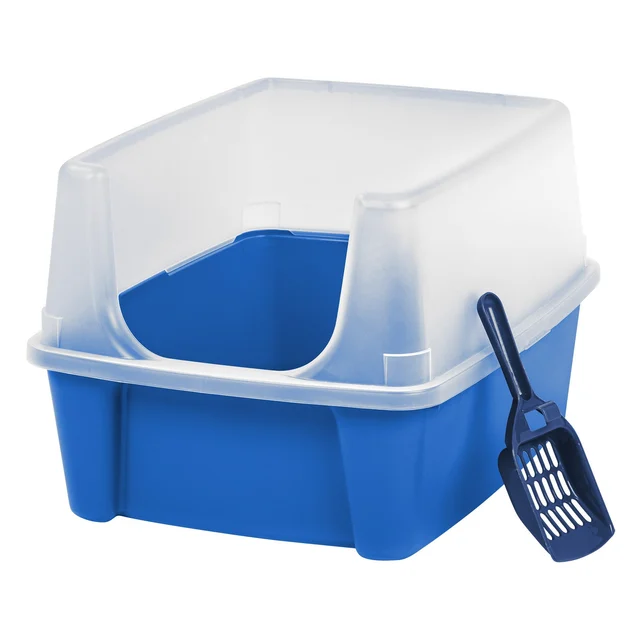
- IRIS USA Large Cat Litter Box with Scatter Shield and Scoop (Open Top, High-Sided) - Buy. A big, tall-walled open pan that stops scatter without ever confusing a cat about how to get in.
- Petmate Booda Dome Cleanstep Litter Box - It depends. A covered dome that trades easy scooping and elbow room for privacy and a tidier look.
- IRIS USA Top Entry Cat Litter Box with Scoop - Buy. The tracking fix: a top-entry cube that keeps litter in and curious dogs out.
- Van Ness Framed Sifting Cat Litter Pan - Skip. A scoop-free promise that only half works and makes a bigger mess than the scoop it replaces.
The verdict in 30 seconds
What mattered most
- Box type
- Litter containment
- Entry accessibility
- Odor & privacy
- Ease of cleaning
- Interior room
A litter box is the one piece of cat gear that has to work every single day, and the truth is that the box's shape matters more than any feature list. We weighed a tall-walled open pan, a covered dome, a top-entry cube, and a sifting set against the criteria that decide whether a box actually gets used and stays clean: litter containment, how easily your cat can get in, odor control, and how much of a chore scooping becomes. Two earn a clear buy, one depends heavily on your cat, and one is a clever idea that falls apart in practice.
A big, tall-walled open pan that stops scatter without ever confusing a cat about how to get in.
Best for: Almost anyone who wants maximum containment and easy access without overthinking it, especially homes with kittens, seniors, or large cats.
- Tall clear scatter shield rings three sides so litter kicked during digging drops back into the pan instead of onto the floor
- Wide, open interior with a low front entry that cats of any age or size accept without hesitation
- Nothing to trap odor: the fully open top means no hidden funk and no filter to buy
- Comes with a matching scoop that clips to the side, and the smooth plastic wipes and rinses clean quickly
- Budget priced despite the generous footprint, so it is easy to buy a second one for a multi-cat home
- Open design does nothing to hide the box or contain smell between scoops, so placement matters
- The tall shield is great for diggers but adds visual bulk in a small bathroom
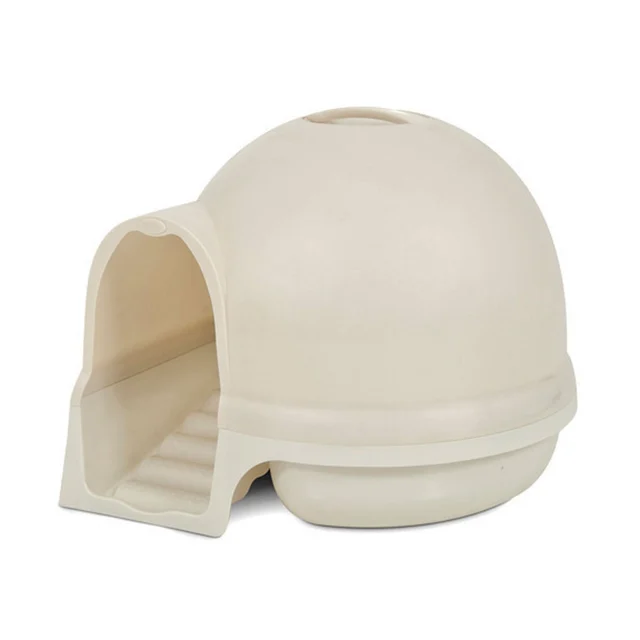
A covered dome that trades easy scooping and elbow room for privacy and a tidier look.
Best for: Small-to-average cats and owners who prioritize privacy and a hidden box over quick, comfortable cleaning.
- Fully enclosed dome gives shy cats privacy and hides waste from view in a shared living space
- Stepped ramp entry and a carbon filter in the lid knock back tracking and odor better than a bare covered box
- Rounded, seamless shape looks far less clinical than a typical hooded box
- Built-in handle and a lid that lifts off make emptying and moving it straightforward
- The domed roof curves inward, so scooping means reaching awkwardly through a single opening
- Interior floor space is tighter than the footprint suggests, and big cats can feel cramped turning around
- Owners report the 'clean steps' still let some litter track out, so a mat is still needed
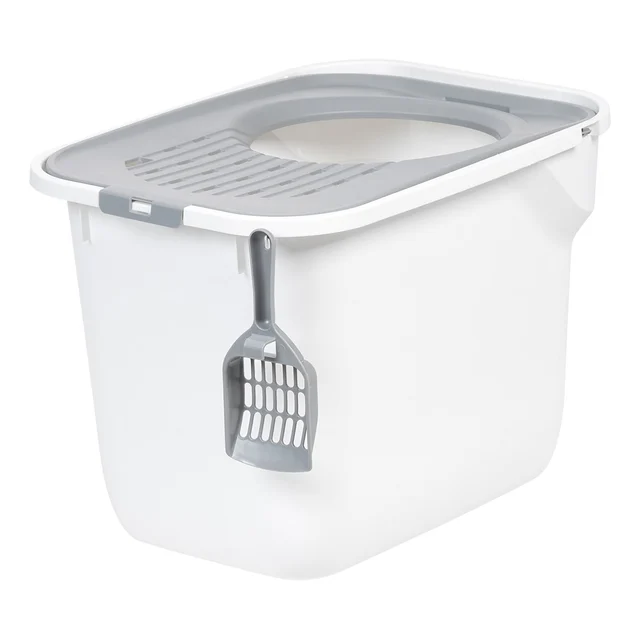
The tracking fix: a top-entry cube that keeps litter in and curious dogs out.
Best for: Agile adult cats in homes fighting litter tracking, or households with a dog that raids the box.
- Cat enters through a hole in the grated lid, and the perforated top acts as a walk-off mat that shakes litter back inside
- Best-in-class scatter control among the boxes here, which is the whole reason to buy one
- High walls and a covered top deter dogs and toddlers and largely contain odor and stray spray
- Simple two-piece design lifts apart for cleaning and comes with a hanging scoop, at a budget price
- Cats must climb up and drop in, which rules it out for kittens, seniors, and cats with mobility issues
- The interior is smaller than an open pan, so very large cats have less room to position and turn
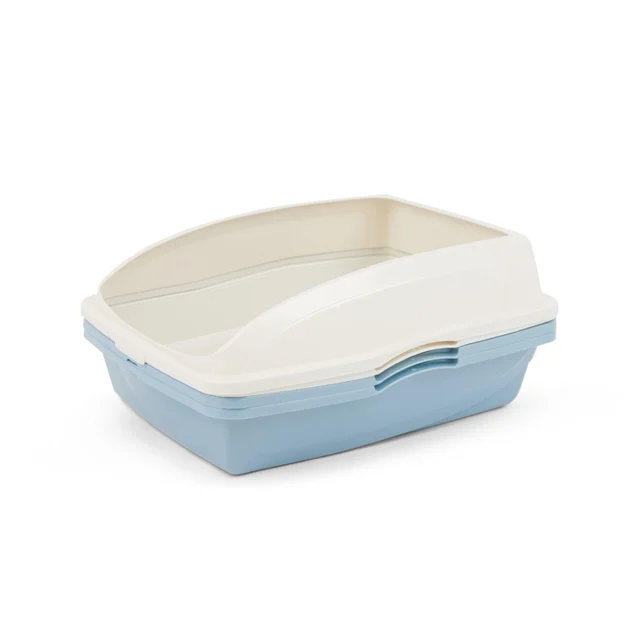
A scoop-free promise that only half works and makes a bigger mess than the scoop it replaces.
Best for: A narrow case: owners committed to non-clumping litter who genuinely dislike scooping and accept the trade-offs.
- Nesting-pan-and-sieve system lets you lift out solids without a scoop when it works
- Snap-on frame adds a bit of height to help hold litter in
- Inexpensive and simple, with no filters or electronics to maintain
- Built for non-clumping litter; with the clumping litter most people use, damp clumps clog the sieve and defeat the point
- Lifting the loaded sifting screen showers stray litter over the edges, so you often reach for a scoop anyway
- Sides are lower and the pans flex, so a determined digger still sends litter onto the floor
- Screens and pans warp and crack over time under repeated lifting
| Criteria | IRIS USA Large Cat Litter Box with Scatter Shield and Scoop (Open Top, High-Sided) Top pick | Petmate Booda Dome Cleanstep Litter Box | IRIS USA Top Entry Cat Litter Box with Scoop | Van Ness Framed Sifting Cat Litter Pan |
|---|---|---|---|---|
| Verdict | Buy it | It depends | Buy it | Skip it |
| Best for | Almost anyone who wants maximum containment and easy access without overthinking it, especially homes with kittens, seniors, or large cats. | Small-to-average cats and owners who prioritize privacy and a hidden box over quick, comfortable cleaning. | Agile adult cats in homes fighting litter tracking, or households with a dog that raids the box. | A narrow case: owners committed to non-clumping litter who genuinely dislike scooping and accept the trade-offs. |
| Price tier | $ · budget | $$ · mid-range | $ · budget | $ · budget |
| Box type | Open high-sided pan | Covered dome | Top-entry cube | Open sifting set |
| Litter containment | Very good; tall scatter shield | Good; enclosed with step ramp | Excellent; grated walk-off lid | Poor; low sides, spills on sift |
| Entry accessibility | Excellent; low open front | Good; stepped ramp | Poor; must climb and drop in | Good; low open front |
| Odor & privacy | Open; no cover or filter | Enclosed; carbon filter | Mostly covered; no filter | Open; no cover or filter |
| Ease of cleaning | Easy; open access, wipes clean | Awkward; reach through dome | Easy; lid lifts off | Fussy; sifting is messy |
| Interior room | Large and open | Tighter than it looks | Moderate; narrower cube | Moderate; shallow pans |
| Works with clumping litter | Yes | Yes | Yes | No; non-clumping only |
| Price tier | $ · budget | $$ · mid-range | $ · budget | $ · budget |
Which one is right for you?
- Almost anyone who wants maximum containment and easy access without overthinking it, especially homes with kittens, seniors, or large cats. Buy it IRIS USA Large Cat Litter Box with Scatter Shield and Scoop (Open Top, High-Sided)
- Agile adult cats in homes fighting litter tracking, or households with a dog that raids the box. Buy it IRIS USA Top Entry Cat Litter Box with Scoop
- Small-to-average cats and owners who prioritize privacy and a hidden box over quick, comfortable cleaning. It depends Petmate Booda Dome Cleanstep Litter Box
- A narrow case: owners committed to non-clumping litter who genuinely dislike scooping and accept the trade-offs. Skip it Van Ness Framed Sifting Cat Litter Pan
How we judged the field
We do not run a lab. Instead we synthesize independent testing, expert commentary, and aggregated owner reports into a single read on each box, then weight the factors that decide whether a litter box is still working and still used a year in. With non-automatic boxes, the form factor is the product, so we focused less on features and more on how each shape behaves in a real home.
The factors that mattered most:
- Litter containment: how well the design keeps flung and tracked litter off your floor, which is the number-one daily complaint.
- Entry accessibility: whether cats of different ages, sizes, and mobility can get in and out without hesitation, because a box a cat avoids is worthless.
- Odor and privacy: the trade-off between hiding the box and trapping smell.
- Ease of cleaning: how quickly you can scoop and wash it, since a chore you dread gets done less often.
- Interior room and litter compatibility: enough space for the cat to turn and dig, and whether the box works with the clumping litter most people actually use.
IRIS USA Large Cat Litter Box with Scatter Shield and Scoop (Open Top, High-Sided)
Buy itCheck price on AmazonThis is the box most homes should start with. It pairs a big, fully open interior with a tall clear shield that wraps three sides, so when a cat digs with enthusiasm the litter it kicks up hits the wall and falls back in rather than onto your floor. Crucially, the front stays low and open, which means kittens, seniors, and heavy cats all step in without a second thought - the containment comes with none of the access problems that sink covered and top-entry designs for some cats. Because the top is open, there is no hidden pocket to trap odor and no filter to keep buying; you see and smell when it needs scooping, which in practice means it gets scooped. It ships with a scoop that clips to the side, wipes clean in seconds, and costs little enough that outfitting a two-cat home is painless. The honest caveats are simply the flip side of an open box: it hides nothing and contains no smell between cleanings, and the tall shield adds some bulk in a cramped bathroom. For sheer do-everything reliability, nothing here beats it.
The Booda Dome is the covered box for people who hate how covered boxes usually look. Its rounded, seamless dome reads more like a piece of modern housewares than a litter box, and the enclosure gives skittish cats real privacy while keeping waste out of sight in a shared room. A stepped ramp at the entrance and a carbon filter in the top do a genuine, if partial, job of cutting tracking and odor. The reason it lands at “it depends” is ergonomics on both ends. The domed roof curves inward, so cleaning means reaching down and around through the single opening, which is more awkward than lifting a flat lid. And the usable floor is tighter than the round footprint implies, so a large cat can feel boxed in when turning around, and owners note the clean steps still let some litter escape onto the floor. For a small or average cat and an owner who values privacy and a hidden box over a fast scoop, it works; for a big cat or anyone who cleans in a hurry, the open pan is the better call.
If your single biggest frustration is litter tracked across the house, this is the most effective non-automatic answer, and it earns its buy on that strength alone. The cat enters and exits through a hole in the grated lid, and that perforated top doubles as a walk-off mat: as the cat climbs out, clinging granules shake loose and drop straight back into the box instead of riding paws onto the floor. The high walls and covered top also keep odor and stray spray contained and make the box effectively dog-proof, a real perk in multi-pet homes. It is a simple, budget-priced two-piece design that pulls apart for cleaning and includes a hanging scoop. The trade-off is access, and it is a firm one: a cat has to hop up and drop in, so this box is wrong for kittens, older cats, and anyone with a cat that has joint trouble, and the interior runs narrower than a big open pan. For a healthy, agile adult cat, though, it solves the tracking problem better than anything else in this comparison.
The sifting pan is a tidy idea on paper: a stack of nesting pans and a sieve that, in theory, lets you lift out waste and skip the scoop. In practice it fights the way most people actually keep a litter box. The system is built around non-clumping litter, but the clumping litter that dominates homes turns to damp, sticky clumps that smear across and clog the screen rather than sifting through it, so the marquee feature quietly stops working. Even when it does sift, hoisting a loaded screen tends to shower loose litter over the edges, which means you reach for a scoop to clean up the cleanup. The sides are lower than a dedicated high-wall pan and the plastic flexes, so a committed digger still throws litter onto the floor, and owners report the screens and pans warp or crack under repeated lifting. It is cheap and it is simple, but a plain open box and a decent scoop do the same job with less mess. Unless you are firmly committed to non-clumping litter, skip it.
IRIS high-sided open pan vs IRIS top-entry cube: which should you buy?
This is the head-to-head that decides most purchases, because it is really a choice between two philosophies of containment. The high-sided open pan contains litter by catching what the cat kicks while leaving the top wide open, so any cat can walk in, you can see when it needs cleaning, and scooping is effortless - it is the more forgiving, more universal box. The top-entry cube contains litter by making the cat climb out over a filtering lid, which stops tracking more completely and locks dogs out, at the cost of demanding a nimble cat and offering a snugger interior. Buy the high-sided pan if you want the box that works for the most cats with the fewest compromises, or if your household includes a kitten, a senior, or a very large cat. Buy the top-entry cube if tracked litter is the problem you most want gone, your cat is a healthy adult that jumps without issue, and a dog keeps getting into the box. Both are genuinely good; they simply solve the problem from opposite directions.
What to look for
- A shape your specific cat will accept - the best box is the one your cat uses willingly; match access to the cat’s age, size, and agility before chasing features.
- Enough size - aim for roughly one and a half times your cat’s body length so it can turn and dig; size up when in doubt.
- High walls or a scatter-control design - the single biggest factor in how much litter ends up on your floor.
- Easy cleaning access - open tops and lift-off lids beat curved domes and multi-piece sifting stacks for how fast you can scoop and wash.
- Litter compatibility - most people use clumping litter, so avoid designs like sifting pans that are built around non-clumping.
- Smooth, durable plastic - a surface that wipes clean and resists scratching keeps odor from setting in and extends the box’s life.
Our final take
For most homes the decision is simple: start with the IRIS high-sided open pan. It contains the digging, welcomes any cat in, hides no odor to surprise you later, and is about as easy to clean as a litter box gets, all at a budget price. Step to the IRIS top-entry cube only when litter tracking is your defining frustration and your cat is an agile adult who will happily hop in, or when a dog keeps raiding the box. The Petmate Booda Dome is a fair covered pick for a small cat and an owner who wants privacy, as long as you accept the awkward scooping, and the Van Ness sifting pan is a clever-sounding design that most cats and most litters are better off without.
Questions, answered
Are covered or open litter boxes better?
It depends on the cat. Many cats prefer an open box like the IRIS high-sided pan because they can see out and the space never feels trapped, and open boxes are easier for you to keep odor-free since nothing seals smell inside. Covered boxes such as the Petmate Booda Dome offer privacy and hide the mess, which some cats and owners appreciate, but they can concentrate odor and are harder to scoop. If your cat already uses a covered box happily, there is no need to switch; if a cat is avoiding the box, trying an open one is a sensible first step.
Do top-entry litter boxes really reduce tracking?
Yes, more than any other style here. With a top-entry box like the IRIS model, the cat exits by climbing onto a perforated lid that shakes clinging litter off the paws and back into the box before they touch the floor. The trade-off is access: a cat has to jump up and drop in, so top-entry boxes are a poor fit for kittens, older cats, or any cat with joint or mobility problems. For a healthy, agile adult in a home plagued by tracked litter, it is the most effective non-automatic fix.
How big should a litter box be?
A common guideline is that a box should be about one and a half times the length of your cat from nose to tail base, so the cat can turn around and dig comfortably. Bigger cats do better in a roomy open pan like the high-sided IRIS than in a compact dome or cube, where they may feel cramped and start perching or eliminating over the edge. When in doubt, size up: too-small boxes are a frequent, avoidable cause of litter-box problems.
Is a sifting litter box worth it?
For most people, no. Sifting pans like the Van Ness set are designed around non-clumping litter, and since most households use clumping litter, wet clumps tend to smear and clog the screen instead of dropping through. Even with the right litter, lifting the loaded sieve tends to scatter litter over the sides, so you often end up using a scoop anyway. A plain open box plus a good scoop is usually less hassle.
How often should I clean and replace a litter box?
Scoop solid and clumped waste at least once a day, and do a full wash with mild soap and water every couple of weeks, more often for covered boxes that trap odor. Replace the box itself when the plastic gets scratched, stained, or holds a smell that washing will not remove, since a rough or lingering surface can put a cat off. This is general product information, not veterinary advice; if a cat suddenly stops using a clean box or strains in it, consult a veterinarian, as that can signal a medical issue.
Deciding between the top two? See our head-to-head: IRIS USA Large Cat Litter Box with Scatter Shield and Scoop (Open Top, High-Sided) vs IRIS USA Top Entry Cat Litter Box with Scoop.
More Pet Supplies reviews
 The Best Dog Ramps and Stairs: 4 Compared (and One to Skip)
  The Best Aquarium Lights: 4 Compared (and One to Skip)
  The Best Aquarium Air Pumps: 4 Compared (and One to Skip)
  The Best Aquarium Filters: 4 Compared (and One to Skip)
  The Best Aquarium Gravel Vacuums: 4 Compared (and One to Skip)
  The Best Aquarium Heaters: 4 Compared (and One to Skip)