

Pet Supplies
The Best Aquarium Lights: 4 Compared (and One to Skip)
Four freshwater LED fixtures compared on usable plant light, spectrum quality, scheduling, mounting fit and splash resistance.
The short version
Buy the Fluval Plant 4.0 LED if you want one fixture that covers a normal planted community tank: 7500K full spectrum at CRI 90, app-driven sunrise and sunset, IP67 sealing and extendable brackets in the box. Buy the Chihiros WRGB II Pro LED Light if you run a high-tech aquascape and need real output with separate red, green and blue channels, keeping in mind it is only IP43 and easy to over-light with. The hygger HG-957 Full Spectrum Aquarium Light is the value option and depends entirely on your plants: it schedules well and has surprising spectrum for the money, but its output ceiling is low and the button-and-LCD controller is tedious. Skip the NICREW ClassicLED Plus, which costs about the same as the hygger while delivering the least usable plant light of the group. Whichever you pick, start at six hours a day and modest intensity, then raise it slowly, because running too much light for too long is what feeds algae. Best for: planted freshwater tanks where you want plants to grow and the tank to still look clean six months later.
Our picks at a glance
- Chihiros WRGB II Pro LED Light - Buy. The output and color rendering serious planted tanks need, with app control that lets you dial the intensity back down.
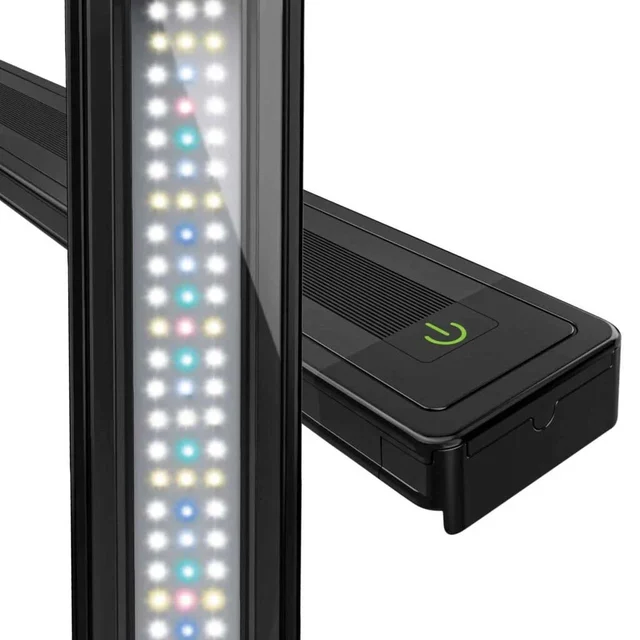
- Fluval Plant 4.0 LED - Buy. The best all-round balance of plant-usable output, scheduling and build for a normal home aquarium.
- hygger HG-957 Full Spectrum Aquarium Light - It depends. A lot of programmable light for very little money, if you can live with a controller panel instead of an app.
- NICREW ClassicLED Plus - Skip. A tidy viewing light that costs about the same as fixtures which actually grow plants.
The verdict in 30 seconds
What mattered most
- Plant-usable output
- Spectrum and color rendering
- Scheduling and ramping
- Mounting and tank-width fit
- Splash and moisture resistance
- Algae risk if run hard
Aquarium lighting is the one piece of gear where buying the brightest option can actively make your tank worse. Too much light for too long is the fastest route to algae, and lumens on a box tell you almost nothing about how much usable light reaches your plants. We compared four current freshwater LED fixtures that cover the real decision: a high-output aquascaping light, a mid-range app-controlled fixture, a budget programmable strip, and a basic light that mostly just makes fish visible. Two are easy recommendations, one fits a narrow set of tanks, and one is not worth its asking price.
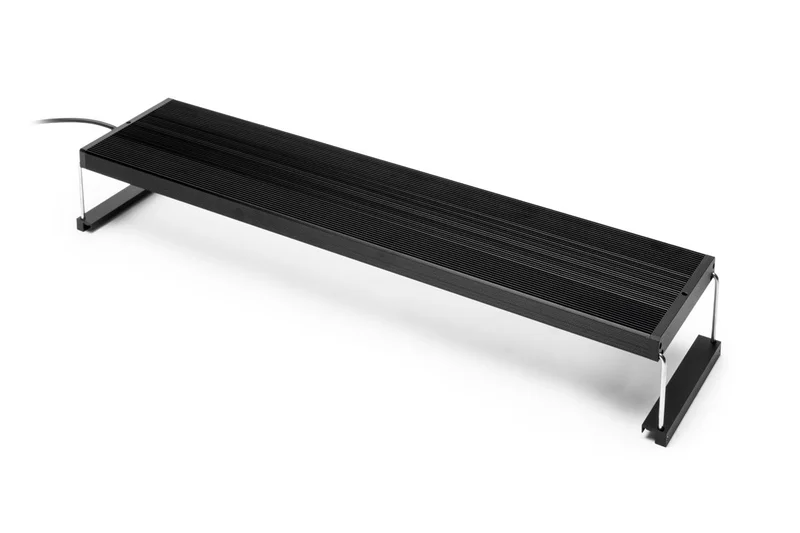
The output and color rendering serious planted tanks need, with app control that lets you dial the intensity back down.
Best for: High-tech or CO2-injected planted tanks and aquascapes where color rendition and reaching the substrate actually matter.
- Genuine high-output fixture: the 60 cm model draws 74W and the 90 cm model 110W, enough to drive carpeting plants and stem plants at depth
- Separate white, red, green and blue channels render reds and greens far more convincingly than a white-plus-blue strip
- MyChihiros Bluetooth app handles ramping, custom curves and per-channel intensity, so you can run it at 40 or 50 percent while a tank matures
- Matte black aluminum unibody sheds heat well and feels built to last
- Mounting is flexible: adjustable steel legs, fixed stands or a hanging kit
- Only IP43 rated, so it tolerates splashes but is not built to be dunked or run under a dripping lid
- Easy to over-light a tank with: run it near full power on a new setup and algae arrives quickly
- Legs and hanging kits are often sold separately depending on the seller
The best all-round balance of plant-usable output, scheduling and build for a normal home aquarium.
Best for: Most freshwater keepers running low to medium light plants who want set-and-forget scheduling and a fixture that survives a wet lid.
- 7500K full spectrum with a 90 CRI rating, so plants get useful light and fish colors look natural rather than washed out
- FluvalConnect app programs a full 24-hour cycle with sunrise, sunset, moonlight and per-channel color mixing, no wall timer needed
- IP67 rated, which is the strongest splash and moisture protection in this group
- Extendable brackets plus riser brackets are in the box, so one size covers a range of tank widths and both rimmed and rimless tanks
- Four sizes from 22W (1600 lm) up to 59W (4700 lm), plus a four-year warranty
- Output sits below a dedicated aquascaping fixture, so very deep tanks or demanding carpet plants will want more
- App-only scheduling means the phone is the remote: there is no full control panel on the unit itself
- Suspension kit is a separate purchase
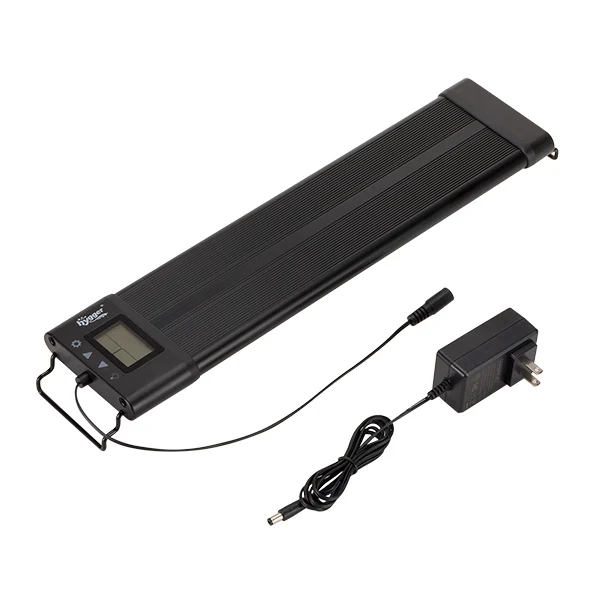
A lot of programmable light for very little money, if you can live with a controller panel instead of an app.
Best for: Budget-conscious keepers who want automated sunrise and sunset on a community or lightly planted tank and do not need aquascaping-grade output.
- Built-in timer panel runs a real 24-hour cycle with roughly 15-minute sunrise and sunset transitions plus a moonlight mode, and it remembers settings after a power cut
- White, blue, red, green and RGB diodes give a broader spectrum than most budget strips, with a claimed CRI of 89
- Ten brightness levels make it practical to start low and raise intensity as plants establish
- Extendable brackets cover roughly 12 to 55 inch tanks across the size range
- Claimed IP68 sealing on the fixture body, unusual at this price
- Output is modest in absolute terms (roughly 927 lm on the smallest model up to 3346 lm on the largest), so it suits low and medium light plants rather than carpets
- Programming happens through a small LCD panel and four buttons, which is fiddly compared with an app
- Plastic end caps and thin bracket wire feel less durable than the aluminum fixtures here
- Color mixing is preset-based, not free channel control
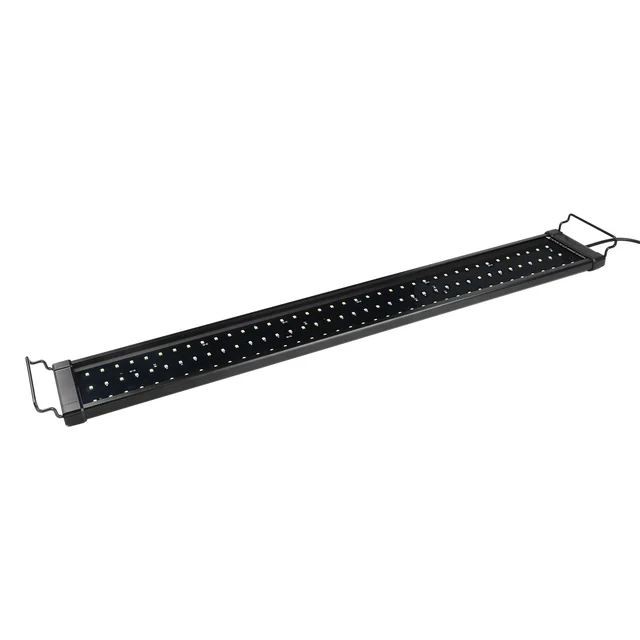
A tidy viewing light that costs about the same as fixtures which actually grow plants.
Best for: Fish-only tanks with plastic plants where the light is purely for viewing and nothing has to grow.
- Inline controller does provide a daylight and moonlight cycle with sunrise and sunset ramping
- CRI 91 makes fish look good in a fish-only or low-light tank
- Adjustable docking mounts slide to fit both framed and rimless tanks
- Slim profile and very low power draw (roughly 10W to 32W depending on length)
- Output is the weakest here: in side-by-side comparisons of budget fixtures it lands at the bottom for usable plant light
- Spectrum leans white and blue, so reds in plants and fish look flat next to an RGB fixture
- Costs roughly what a programmable budget fixture with meaningfully more output costs, which is the whole problem
- You will outgrow it the moment you add a plant more demanding than anubias or java fern
| Criteria | Chihiros WRGB II Pro LED Light | Fluval Plant 4.0 LED Top pick | hygger HG-957 Full Spectrum Aquarium Light | NICREW ClassicLED Plus |
|---|---|---|---|---|
| Verdict | Buy it | Buy it | It depends | Skip it |
| Best for | High-tech or CO2-injected planted tanks and aquascapes where color rendition and reaching the substrate actually matter. | Most freshwater keepers running low to medium light plants who want set-and-forget scheduling and a fixture that survives a wet lid. | Budget-conscious keepers who want automated sunrise and sunset on a community or lightly planted tank and do not need aquascaping-grade output. | Fish-only tanks with plastic plants where the light is purely for viewing and nothing has to grow. |
| Price tier | $$$ · premium | $$ · mid-range | $ · budget | $ · budget |
| Plant-usable output | High: drives carpets and stems at depth | Medium to high: covers low and medium light plants | Low to medium: fine for easy plants | Low: viewing light more than growing light |
| Spectrum and color rendering | Independent W/R/G/B channels, strongest reds | 7500K full spectrum, CRI 90 | White, blue, red, green plus RGB, CRI 89 | White and blue led, CRI 91 but narrow mix |
| Scheduling and ramping | Bluetooth app, custom curves per channel | Bluetooth app, sunrise, sunset, moonlight, weather effects | On-unit LCD timer, 15-minute transitions, memory | Inline controller, basic day and moonlight cycle |
| Mounting and tank-width fit | Adjustable legs, fixed stands or hanging kit | Extendable brackets plus risers included | Extendable brackets, roughly 12 to 55 in range | Sliding docking mounts, framed or rimless |
| Splash and moisture resistance | IP43 (splash only) | IP67 (strongest here) | IP68 claimed on the body | Not published |
| Algae risk if run hard | High if you skip dimming, easy to tame in the app | Moderate, ramping helps a lot | Low to moderate given the output ceiling | Low, mostly because there is little light to abuse |
| Warranty | Typically one year via seller | Four years | One year | One year |
| Price tier | $$$ · premium | $$ · mid-range | $ · budget | $ · budget |
Which one is right for you?
- High-tech or CO2-injected planted tanks and aquascapes where color rendition and reaching the substrate actually matter. Buy it Chihiros WRGB II Pro LED Light
- Most freshwater keepers running low to medium light plants who want set-and-forget scheduling and a fixture that survives a wet lid. Buy it Fluval Plant 4.0 LED
- Budget-conscious keepers who want automated sunrise and sunset on a community or lightly planted tank and do not need aquascaping-grade output. It depends hygger HG-957 Full Spectrum Aquarium Light
- Fish-only tanks with plastic plants where the light is purely for viewing and nothing has to grow. Skip it NICREW ClassicLED Plus
How we judged the field
We do not run a lighting lab. What we do is read across independent PAR testing, manufacturer specifications, and the pattern of what owners report after a year of use, then weight the things that change outcomes in a real tank.
Four criteria did most of the work. First, usable output for plants, judged from measured PAR where it exists and from consistent owner accounts of what actually grew when it does not. Raw lumens and wattage are weak proxies across brands, useful only for comparing sizes within one product family. Second, spectrum quality: whether a fixture has separate red, green and blue emitters alongside white, and what CRI figure the maker publishes. That determines both how well light penetrates dense growth and whether red plants look red. Third, control: built-in timers, gradual ramping, and per-channel dimming, because the ability to run a strong light at half power is what separates a fixture you can live with from one that hands you an algae problem. Fourth, the practical stuff that gets overlooked in spec sheets: whether the brackets fit your tank width, whether the fixture is sealed against splashes, and what the warranty actually covers.
One thing we deliberately did not reward is peak brightness on its own. Aquarium lighting is the rare category where the most powerful option is the easiest to misuse. Light dose is intensity multiplied by hours, and pushing either one past what your CO2 and nutrients can support is the standard route to green spot algae on the glass and hair algae in the moss. Every fixture below is judged on whether it lets you control the dose, not just produce it.
This is the fixture for people whose tank has a plan. The WRGB II Pro puts genuine power over the water: the 60 cm model draws 74W for roughly 6630 lumens, and the 90 cm version steps up to 110W and about 9250 lumens. More important than the totals is how they are produced. Dedicated white, red, green and blue diodes mean you are mixing a spectrum rather than accepting whatever a phosphor-coated white LED emits, and it shows in how alternanthera and ludwigia hold their color instead of drifting brown.
The matte black aluminum unibody runs cool without a fan, which matters over a lid where heat has nowhere to go. Mounting is genuinely flexible, with adjustable steel legs, fixed stands and a hanging kit all available, though which one arrives in your box varies by seller and it is worth confirming before ordering.
The MyChihiros app is what makes this fixture recommendable rather than merely powerful. You can set per-channel intensity, build a custom daily curve, and run the whole thing at 40 percent while a new scape fills in. Owners who skip that step and run it near full power on a fresh tank consistently report algae within weeks, which is a use problem rather than a product fault, but it is a real one.
The main hardware caveat is sealing. IP43 covers splashes and condensation, not immersion or a persistent drip, so this is a fixture for open-top tanks where it sits clear of the water. Given the price, that is worth knowing before you commit.
The Plant 4.0 is the one we would put on most tanks. It runs a 7500K full spectrum with a 90 CRI rating, which lands in the sweet spot where plants receive light they can use and fish look like themselves rather than like a store display. Four sizes span 22W and 1600 lumens up to 59W and 4700 lumens, so there is a version for a 15 inch nano and one for a 61 inch tank.
Control is the strongest part of the package. FluvalConnect handles a complete 24-hour cycle over Bluetooth: sunrise, daylight, sunset, moonlight, plus per-channel color mixing and optional weather effects. That means no wall timer, and more usefully, it means you can start a new tank at low intensity and short hours, then raise both gradually as plants root in. Ramping alone removes the abrupt on-off shock that stresses fish and, in our reading of owner reports, does more for algae control than any single spectrum tweak.
Build quality supports the price. IP67 is the strongest sealing in this comparison, which is the practical answer for anyone running a lid that drips condensation. Extendable brackets and riser brackets ship in the box and cover both framed and rimless tanks. The four-year warranty is well beyond what the budget fixtures offer.
Where it stops short: this is not an aquascaping light. Deep tanks, dense carpets and demanding stem plants will want the output of a dedicated high-tech fixture. There is also no meaningful control panel on the unit itself, so if your phone is dead or the Bluetooth pairing gets confused, you are stuck with whatever schedule was last saved. Neither issue is disqualifying for the tanks this light is aimed at.
The HG-957 punches above its price and its limits are equally clear, which is why it lands here rather than in either extreme. On the plus side, it has a genuine programmable timer built into the fixture: a 24-hour cycle with roughly 15-minute sunrise and sunset transitions, a moonlight mode, ten brightness steps, and memory that survives a power cut. That is a feature set budget fixtures usually skip, and the gradual transitions are the part that matters most.
The spectrum is broader than the usual budget white-and-blue strip, combining white, blue, red and green emitters with RGB diodes for a claimed CRI of 89. Owners comparing it against similarly priced fixtures consistently report more usable plant light, and it schedules better than most of them. hygger also claims IP68 sealing on the fixture body, which is a stronger figure than several fixtures costing considerably more.
The reasons to hesitate are real. Output tops out modestly: roughly 927 lumens at the smallest size and 3346 lumens at the largest, which puts easy and medium plants comfortably in range while carpets and demanding stems are not. Programming happens through a small LCD and four buttons, and setting a full cycle is a tedious sequence you will not want to repeat often. The plastic end caps and thin bracket wire also feel a step below the aluminum fixtures here.
Buy it if your plant list is anubias, java fern, cryptocoryne, vallisneria and similar, and you want automation without spending much. Look elsewhere if you expect to be running CO2 within the year.
There is nothing broken about the ClassicLED Plus. It has a slim profile, low power draw between roughly 10W and 32W depending on length, sliding docking mounts that fit framed and rimless tanks, a CRI 91 rating, and an inline controller that does provide a daylight and moonlight cycle with ramping. As a light for looking at fish, it is fine.
The problem is the comparison it invites. In side-by-side testing of budget aquarium fixtures, it lands at the bottom for usable plant light, and its spectrum leans white and blue in a way that makes red plants and red fish look muted. It costs roughly what a programmable budget fixture with meaningfully more output and better color mixing costs. Paying similar money for less light and thinner spectrum is not a tradeoff that pays off.
There is one narrow case where it makes sense: a fish-only tank with artificial plants where nothing has to grow and you specifically want a low, clean-looking light. If a single live plant is in your plan, or might be later, you will replace this fixture and end up spending twice.
Fluval Plant 4.0 LED vs Chihiros WRGB II Pro LED Light: which should you buy?
These two are not really competing for the same tank, and picking correctly comes down to what you actually intend to grow.
The Chihiros wins on raw capability. Independent per-channel control, more output, and better red rendition make it the right tool for a CO2-injected scape where a carpet has to fill in and stem plants need to color up. It also gives you the most granular control over intensity, which you will need, because running it at full power on a tank without matching CO2 and nutrients is a reliable way to grow algae instead.
The Fluval wins on fit for a normal aquarium. It is better sealed at IP67 against the Chihiros IP43, it arrives with brackets and risers that fit the tank you already have, and the app is friendlier for someone who wants to set a schedule once and stop thinking about it. The four-year warranty is a meaningful gap over what the Chihiros typically carries through resellers. For a planted community tank with crypts, swords, java fern and a few stems, the Fluval delivers what those plants can actually use and costs less doing it.
The deciding question is CO2. If you are injecting it or plan to, buy the Chihiros and dim it. If you are not, the extra output is a liability rather than a feature, and the Fluval is the better purchase.
What to look for
- Output matched to your plants, not to the biggest number. Easy plants such as anubias, java fern and cryptocoryne want low light. Carpets and red stems want high light plus CO2. Buying above your plan means dimming a fixture you overpaid for, or growing algae.
- PAR over lumens and watts. Lumens describe brightness to a human eye and watts describe consumption. Neither predicts what reaches your substrate. Use independent PAR figures where they exist and treat manufacturer lumen claims as within-family comparisons only.
- Full spectrum with real red and green channels. White and blue grows easy plants but flattens color. Separate red, green and blue emitters improve both penetration through dense growth and how the tank looks.
- A built-in timer with ramping. Sunrise and sunset transitions reduce stress on fish and let you run shorter, gentler photoperiods without babysitting a wall timer. App control adds per-channel dimming, which is the single most useful algae lever you have.
- Brackets that match your tank width and rim. Measure front to back and outside width, then check the bracket extension range. Rimless tanks need mounts that clamp bare glass. Getting this wrong is the most common return reason in this category.
- An IP rating you have looked up. IP43 is splash tolerance for an open-top tank. IP65 and above matters if you run a lid that drips or a spray bar near the surface. Add a drip loop in the cord regardless.
- A photoperiod plan before you plug it in. Start at six hours and modest intensity, hold for two to three weeks, then increase one variable at a time. This costs nothing and prevents most first-year algae problems.
Our final take
Buy the Fluval Plant 4.0 LED unless you have a specific reason not to. It provides spectrum-correct light at a level low and medium plants can use, complete 24-hour scheduling from the app, the best sealing here, brackets that fit the tank you own, and a four-year warranty. That combination covers the overwhelming majority of freshwater tanks.
Step up to the Chihiros WRGB II Pro LED Light when your tank has ambitions: CO2, a carpet, red stems, or an aquascape where color rendering is the point. Buy it with the intention of running it dimmed at first, and confirm which mounting hardware your seller includes.
The hygger HG-957 Full Spectrum Aquarium Light earns its keep on a budget if your plant list stays easy and you accept the button-driven controller. And the NICREW ClassicLED Plus is the one to leave on the shelf, not because it fails at anything, but because the money buys more light and better color almost anywhere else.
The fixture matters less than what you do with it. Six hours at moderate intensity on a modest light beats ten hours at full power on an expensive one, every time.
Questions, answered
Why do reviewers talk about PAR instead of lumens or watts?
Lumens measure brightness as a human eye perceives it, and watts measure electricity consumed. Plants respond to photons in the roughly 400 to 700 nm range, which is what PAR measures. A fixture can look bright and still deliver little usable light to plants, and a strip with more watts can lose to a better-designed fixture with good optics. Use lumens and watts to compare fixtures within the same family, and treat independent PAR measurements or plain owner reports of what actually grew as the more useful signal across brands.
Does full spectrum really matter, or is white light enough?
Plants use red and blue most heavily for photosynthesis, but green light penetrates deeper into dense growth and is a large part of why a tank looks natural. A fixture with separate red, green and blue diodes alongside white does two jobs at once: it supports growth through the canopy and it renders red and orange plants and fish as something other than brown. A white-and-blue strip can grow easy plants, but reds will look flat and lower leaves tend to melt away sooner.
How long should I run the light each day?
Six to eight hours is a sensible band for most freshwater tanks. Algae is driven by the total light dose, meaning intensity multiplied by duration, relative to available CO2 and nutrients. New tanks in particular do better at six hours and reduced intensity while plants settle in. If you see green spot or hair algae appearing, cut duration or intensity first and give it two to three weeks before changing anything else. Splitting the photoperiod with a midday break is popular but is a fine-tuning trick, not a fix for too much light.
Will the fixture fit my tank, and does it need a timer plug?
Check two numbers: the fixture length and the bracket extension range, then measure your tank front to back as well as the outside width. Extendable or sliding brackets cover a span rather than a fixed size, and rimless tanks need mounts that clamp to bare glass. Any fixture with a built-in timer or app scheduling does not need a plug-in timer. A basic light with only an on-off switch does, and that extra purchase is worth factoring into what a cheap light really costs.
What IP rating do I need above an aquarium?
IP ratings describe protection against solids and water. IP43 means splash tolerance only, which is fine on an open-top tank with a fixture sitting above the waterline. IP65 through IP68 add real resistance to jets or immersion, which matters if you have a lid that drips condensation, a spray bar near the surface, or a household where the tank gets bumped. Whatever the rating, keep a drip loop in the power cord so water running down the cable falls off before it reaches the outlet.
Deciding between the top two? See our head-to-head: Fluval Plant 4.0 LED vs Chihiros WRGB II Pro LED Light.
More Pet Supplies reviews
 The Best Aquarium Air Pumps: 4 Compared (and One to Skip)
  The Best Aquarium Filters: 4 Compared (and One to Skip)
  The Best Aquarium Gravel Vacuums: 4 Compared (and One to Skip)
  The Best Aquarium Heaters: 4 Compared (and One to Skip)
  The Best Aquarium Protein Skimmers: 4 Compared (and One to Skip)
  The Best Aquarium Substrates: 4 Compared (and One to Skip)