

Pet Supplies
The Best Aquarium Air Pumps: 4 Compared (and One to Skip)
Four current aquarium air pumps compared on real world noise, pressure at depth, flow control, and whether the diaphragm can be replaced.
The short version
Buy the EHEIM Air Pump 400 if the tank is anywhere you sleep, work, or relax: it is built to run very quietly, it has two individually adjustable outlets, and it ships with non-return valves that prevent back siphoning. Buy the Fluval Q1 Air Pump if you want most of that for less, accepting one fixed output, with repair parts available so the pump stays serviceable. The hygger Quiet Mini is genuinely silent and genuinely low pressure, which makes it superb for a betta or shrimp nano tank and unsuitable for anything deep or filter driven. Skip the Marina 200, a basic pump with no flow control that is easy to out-buy. Whichever you pick, fit a check valve and mount the pump above the waterline, because that is the failure that soaks a floor. Best for: aquarium owners who care more about how the pump sounds in month eighteen than how it looks on day one.
Our picks at a glance
- EHEIM Air Pump 400 - Buy. The pump you buy when you want to forget the pump exists: two individually adjustable outlets, real pressure, and a design built around quiet running.
- Fluval Q1 Air Pump - Buy. A well damped, rebuildable mid size pump with enough pressure to keep sponge filters working near the bottom of a tall tank.
- hygger Quiet Mini Air Pump (1.5W) - It depends. A piezoelectric pump with no motor and almost no noise, which is close to ideal in a betta tank and useless in a tall one.
- Marina 200 Air Pump - Skip. Stocked widely and cheap, but a basic hard-shell pump with no flow control that is easy to out-buy.
The verdict in 30 seconds
What mattered most
- Noise in a quiet room
- Pressure at depth
- Outlets
- Flow control on the pump
- Serviceability
- Best suited to
Almost every aquarium air pump moves enough air on day one, which is why the specification sheet is close to useless for choosing one. What separates them is how loud they still are a year later, whether they can push air to the bottom of a tall tank, and whether a worn diaphragm is a repair or a replacement. Two of the four below are easy recommendations, one is excellent inside a narrow set of tanks and frustrating outside it, and one is the loud option you should walk past.
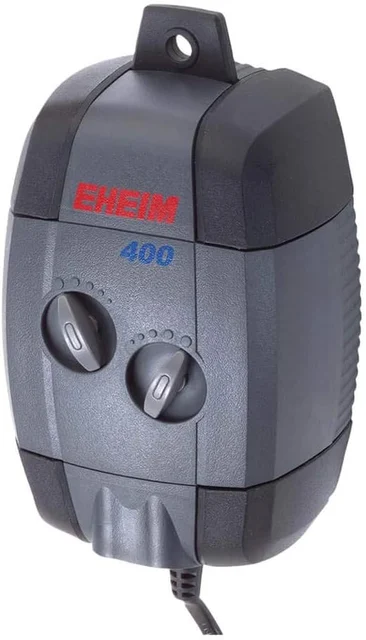
The pump you buy when you want to forget the pump exists: two individually adjustable outlets, real pressure, and a design built around quiet running.
Best for: Tanks in a bedroom, living room, or home office, where the owner is willing to pay once to stop hearing the pump.
- EHEIM describes the air pump line as built to work very quietly, with vibration-resistant rubber feet.
- Two outlets, each with its own flow dial on the pump body, so a sponge filter and an air stone can run at different rates with no separate manifold.
- Rubber feet plus a hook, so you can hang it on the aquarium glass off a hard shelf entirely and remove the main source of transmitted noise.
- Ships with diffusers and non-return valves, so the back siphon risk is covered before you have thought about it.
- EHEIM runs a spare parts service, so check whether a diaphragm set is available for your model before relying on a repair.
- Costs more than a supermarket pump, and the payback only appears over years of continuous running.
- Availability varies by retailer.
- Overkill for a temporary quarantine or grow out tank where nobody is listening.
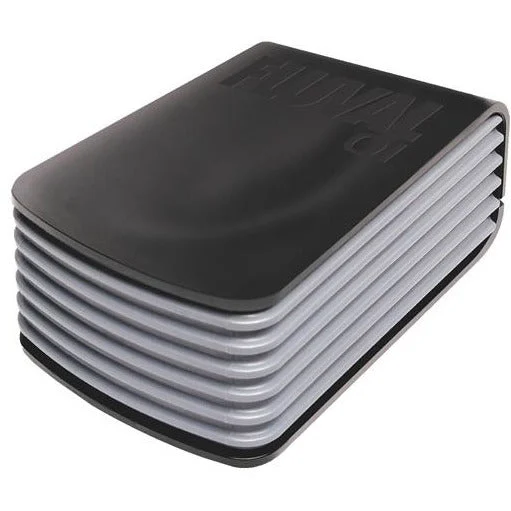
A well damped, rebuildable mid size pump with enough pressure to keep sponge filters working near the bottom of a tall tank.
Best for: Mid size community tanks running air driven sponge filtration, where pressure and repairability matter more than the last bit of quiet.
- Swing arm and diaphragm design aimed at quiet running.
- Sized to drive sponge filters and air stones in mid size tanks.
- Fluval lists repair parts for the Q series; confirm the module for your model before buying.
- Soft feet help absorb vibration.
- Costs less than the premium option while doing much of the same work.
- No flow control knob on the Q1, so dialing output down means adding an inline air valve.
- Noise is quiet rather than silent, and how it sounds depends on what it sits on.
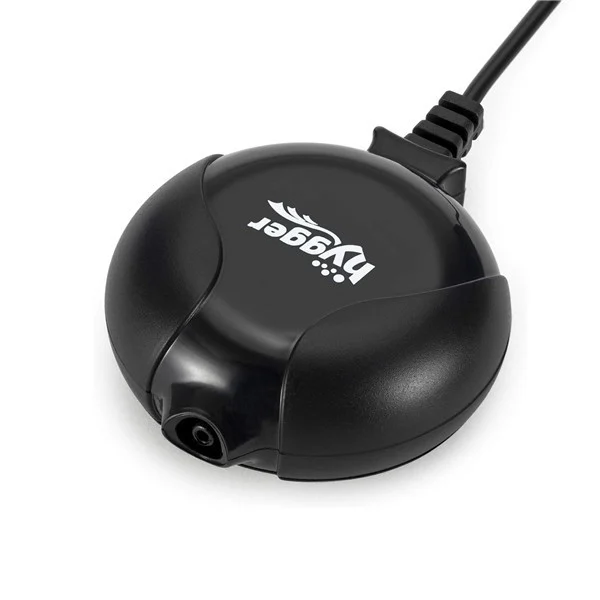
A piezoelectric pump with no motor and almost no noise, which is close to ideal in a betta tank and useless in a tall one.
Best for: Bedroom nano tanks, betta and shrimp setups, and anyone who wants aeration they genuinely cannot hear.
- Driven by a vibrating ceramic plate rather than a motor and swing arm, so there is no mechanical buzz to transmit into furniture.
- Rated at 1.5 watts, low enough that running it permanently costs very little.
- Small and light enough to tuck behind a nano tank or clip out of sight.
- Comes with airline and an air stone, so it works straight out of the packaging.
- Output is low by design (the maker lists a flow rate of 420 ml/min), which rules out large sponge filters, protein skimmers, under gravel plates, and tall tanks.
- Suited to small tanks, so it is a second pump rather than a main one in most setups.
- No flow control, so trimming the bubble rate for a shrimp tank still means buying an inline valve.
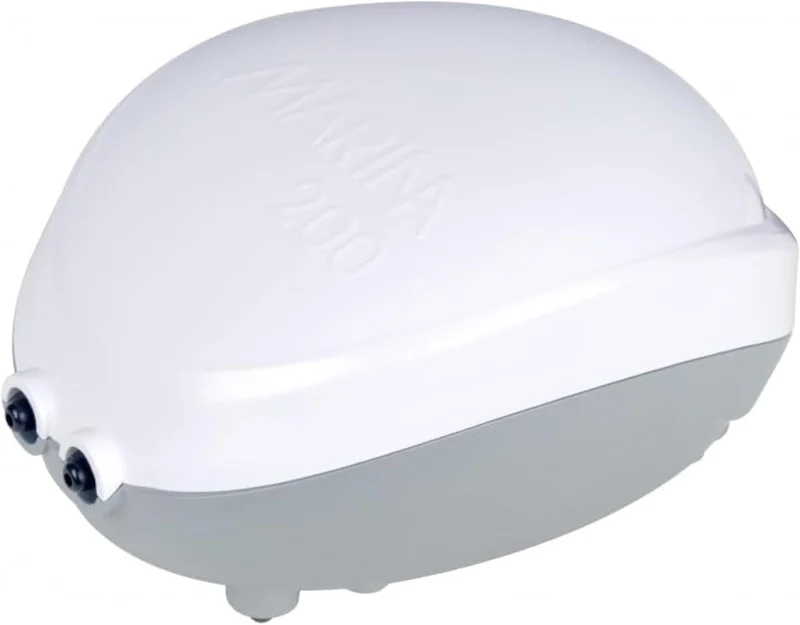
Stocked widely and cheap, but a basic hard-shell pump with no flow control that is easy to out-buy.
Best for: Almost nobody at the point of purchase. If you already own one and cannot hear it, keep running it rather than replacing a working pump.
- Widely sold and cheap enough to be an impulse buy.
- Low profile shape that fits inside a cabinet.
- Suits shallow tanks, which is all some setups need.
- Basic budget pumps tend to be louder than premium designs, so expect some noise.
- Output drops as the air stone sits deeper, so check the pressure rating against your tank depth.
- Basic shell with limited damping, so how loud it is in your room depends heavily on what you stand it on.
- No flow control on the pump, so trimming output means a separate inline valve.
| Criteria | EHEIM Air Pump 400 Top pick | Fluval Q1 Air Pump | hygger Quiet Mini Air Pump (1.5W) | Marina 200 Air Pump |
|---|---|---|---|---|
| Verdict | Buy it | Buy it | It depends | Skip it |
| Best for | Tanks in a bedroom, living room, or home office, where the owner is willing to pay once to stop hearing the pump. | Mid size community tanks running air driven sponge filtration, where pressure and repairability matter more than the last bit of quiet. | Bedroom nano tanks, betta and shrimp setups, and anyone who wants aeration they genuinely cannot hear. | Almost nobody at the point of purchase. If you already own one and cannot hear it, keep running it rather than replacing a working pump. |
| Price tier | $$ · premium | $ · mid-range | $ · budget | $ · budget |
| Noise in a quiet room | Built for quiet running, with rubber feet | Quiet, varies with mounting surface | Very quiet, no motor at all | Basic budget pump, expect some noise |
| Pressure at depth | Higher output, suits sponge filters | Sized for mid size tanks | Low by design, small tanks only | Check pressure against tank depth |
| Outlets | Two | One | One | Two |
| Flow control on the pump | Yes, a dial for each outlet | No, add an inline valve | No | No |
| Serviceability | Spare parts service offered | Repair parts listed for the Q series | No swing arm to wear out, but nothing to rebuild either | Limited, treat it as disposable |
| Best suited to | Bedroom and living room tanks, community and planted setups | Mid size tanks running air driven sponge filters | Small nano tanks | Shallow tanks where noise genuinely does not matter |
| Price tier | $$ · premium | $ · mid-range | $ · budget | $ · budget |
Which one is right for you?
- Tanks in a bedroom, living room, or home office, where the owner is willing to pay once to stop hearing the pump. Buy it EHEIM Air Pump 400
- Mid size community tanks running air driven sponge filtration, where pressure and repairability matter more than the last bit of quiet. Buy it Fluval Q1 Air Pump
- Bedroom nano tanks, betta and shrimp setups, and anyone who wants aeration they genuinely cannot hear. It depends hygger Quiet Mini Air Pump (1.5W)
- Almost nobody at the point of purchase. If you already own one and cannot hear it, keep running it rather than replacing a working pump. Skip it Marina 200 Air Pump
How we judged the field
We do not run a lab. We read manufacturer pressure and flow specifications and weigh the things that decide whether a pump stays plugged in.
Four criteria did most of the work.
Noise you can live with. An air pump is a rubber diaphragm being flexed dozens of times a second. What you hear is that diaphragm buzz plus whatever the pump body transmits into the shelf underneath it. Noise is a common reason air pumps get returned, unplugged, or exiled to a garage.
Pressure, not just flow. Flow ratings in liters or gallons per hour are measured with nothing attached and no water to push against. Depth is what the pump actually has to beat. A pump advertised for a large tank can still stall when the air stone is sitting at the bottom of that tank, which is why we treated pressure specifications as more meaningful than the gallon rating on the box.
Whether it can be repaired. Diaphragms are consumables. They stiffen, crack, and get loud, and the internal flap valves go sticky. A pump with a published repair kit or replacement diaphragm set can be brought back to close to new in ten minutes. A sealed pump is a disposable item on a two year timer, which changes the value calculation completely.
What ships in the box. A check valve and a length of airline cost almost nothing, and their absence is exactly why so many owners find out about back siphoning by mopping a floor. Pumps that include the valve are doing new owners a favor.
This is the pump you buy when you want to stop thinking about the pump. EHEIM describes its air pump line as a very quietly working device.
The pump has vibration-resistant rubber feet, and there is a hook so you can hang it on the aquarium glass off the shelf entirely. Decoupling a pump from furniture is the cheapest noise reduction available, and EHEIM designed the pump to let you do it.
Practically, the 400 gives you two outlets, each individually adjustable at the pump, so a sponge filter on one line and an air stone on the other can run at completely different rates without a separate manifold. It ships with diffusers and non-return valves, which means the back siphon problem is handled before you have thought about it. EHEIM runs a spare parts service, so check for a diaphragm set before counting on a repair.
The catch is the outlay. This costs more than a supermarket pump, and the payback only appears if you keep the tank running for years. If you are setting up a temporary quarantine tank in a garage, it is the wrong purchase. If the tank is in a bedroom or a home office, it is the one on this list we would pick first.
The Q1 is the sensible middle. Fluval built the Q series as a quiet swing arm and diaphragm pump with soft feet to absorb vibration.
Where it earns its place is pressure. The Q1 is sized for air driven filtration on a mid size community tank.
Fluval also lists repair parts for the Q series, which matters more over the years than almost any specification.
Two things to know before you buy. We could not confirm a flow control knob on the Q1, so plan on an inline air valve if you need to dial the output down. It is a quiet pump rather than a silent one, and mounting surface changes how it sounds.
This one is a genuinely different machine, and its verdict depends entirely on your tank. Instead of a motor swinging an arm against a diaphragm, it uses a vibrating piezoelectric ceramic plate. There is no motor, no swing arm, and essentially no mechanical buzz to transmit into furniture. The maker rates it at 1.5 watts and 420 ml/min, so running it permanently costs very little.
For a betta tank on a nightstand, a shrimp tank on a desk, or a small planted nano, that combination is close to ideal, and it comes with airline and an air stone so it works straight out of the packaging.
The limit is pressure, and it is a hard limit rather than a soft one. The maker lists a flow rate of 420 ml/min, which is fine in shallow water on a small tank. It is not enough for a large sponge filter, a protein skimmer, an under gravel plate, or a tall tank, and no amount of positioning fixes physics. Using it as a main pump for a standard four foot tank is the mistake to avoid.
There is also no flow control, so if the bubble rate is too brisk for a shrimp tank you are back to buying an inline valve. Treat it as a specialist tool for small, shallow, quiet setups and it is excellent. Treat it as a general purpose pump and it will let you down.
Marina pumps are everywhere, which is most of their appeal: any pet shop has one, and the price makes it an easy grab when you are already at the till buying food. That convenience is the strongest argument for it, and it is not a strong argument.
We could not verify Marina’s current specifications on the maker site, so treat this as a basic budget pump. Budget pumps tend to have less damping, so how loud it ends up in your room depends heavily on what you stand it on, and trimming the output may mean buying a valve separately.
None of that makes it broken. It moves air, it is cheap, and if you already own one and cannot hear it, there is no reason to replace a working pump. But at the point of purchase, the alternatives on this list cost modestly more and solve the two problems that actually generate long term regret. Buying this one is choosing the loud option on purpose.
EHEIM Air Pump 400 vs Fluval Q1 Air Pump: which should you buy?
These are the two that a serious tank owner should be choosing between, and they answer slightly different questions.
The EHEIM wins on quiet and on control. Two individually adjustable outlets on the pump body mean you can balance a sponge filter against an air stone without touching an inline valve. It also arrives with check valves, which closes the failure mode that floods floors. The rubber feet and the hook give you two more ways to reduce noise.
The Fluval wins on cost per unit of capability. You get a damped body, enough pressure to run air driven filtration, and repair parts that keep the pump serviceable, for less money. What you give up is the flow control (add an inline valve, which is trivial) and possibly a little quiet, which some owners never notice and some do.
The decision rule we would use: if the tank is in a room where you sleep, read, or take calls, spend the extra on the EHEIM and stop thinking about it. If the tank is in a hallway, a basement, a fish room, or anywhere with background noise, the Fluval Q1 does the same job for less and you will not hear the difference.
What to look for
- A pressure figure, not just a gallon rating. Flow ratings are measured against no resistance. Depth is the real load. If the specification sheet lists kPa, use it; if it lists only gallons, treat the number as optimistic for anything deeper than a foot.
- A check valve in the box, or in your basket. When the pump stops, water climbs the airline and siphons out of the tank through it. A one way valve inline between pump and tank prevents that, and the arrow on the valve must point toward the tank. This is the cheapest insurance in the hobby.
- The pump above the waterline. Even with a valve fitted, mount the pump higher than the tank’s water surface, or run the airline up above the rim and back down before it enters the water. Gravity then cannot start a siphon at all, so the valve becomes a backup rather than the only defense.
- Rubber feet or a hanging hook. Most perceived noise is vibration transferred into furniture. A pump with real damping, or one you can hang, will beat a nominally quieter pump bolted to a glass cabinet.
- Whatever it sits on. A folded towel, a mouse pad, or a scrap of closed cell foam costs nothing and often does more than upgrading the pump. Never stand a pump directly on a cabinet panel or a bare glass shelf, which act as soundboards.
- A published repair kit. Diaphragms are consumables and they are the reason pumps get louder with age. A pump with a replacement diaphragm or repair module available is a five year purchase. A sealed one is not.
- Flow control, on the pump or inline. Too much air is as much a problem as too little in shrimp and betta tanks. Either buy a pump with a dial or budget for a cheap inline valve.
Our final take
Air pumps are a category where the specification sheet and the long run experience diverge more than almost anywhere else in fishkeeping. Nearly every pump moves enough air on day one. What separates them is how loud they are in month eighteen, whether they still push air to the bottom of a tall tank, and whether a worn diaphragm ends the pump’s life or costs ten minutes of your time.
On that basis the EHEIM Air Pump 400 is the pick: built for quiet running, two independently adjustable outlets, and non-return valves included. The Fluval Q1 Air Pump is the value choice and a genuinely good pump, giving up the flow dial in exchange for a lower price and a rebuildable design. The hygger Quiet Mini is the right answer for nano tanks and the wrong answer for everything else, so buy it knowing exactly what it cannot do. The Marina 200 is the one to walk past.
Whichever you choose, spend the small amount on a check valve and mount the pump above the waterline. The pump you can hear is annoying. The pump that siphons your tank onto the carpet is a different kind of afternoon.
Questions, answered
Do I really need a check valve on an aquarium air pump?
Yes, on every air line. When the pump stops, whether you unplug it or the power drops, water climbs back up the tubing and can siphon out of the tank through the pump, which sits on the floor or in a cabinet. A one way check valve fits inline between the pump and the tank and costs almost nothing. The arrow printed on it must point toward the tank. Fit one on every line, including the one you think is short enough not to matter.
Where should the pump sit relative to the tank?
Above the waterline if you possibly can. Mounting the pump higher than the tank's water surface, or running the airline up over the rim and back down before it enters the water, means gravity cannot start a siphon at all. The check valve then becomes a backup rather than your only defense. Many quality pumps include a hanging tab for exactly this reason.
Why does my air pump get louder over time?
Two causes dominate. The rubber diaphragm stiffens and develops small tears, turning a soft hiss into a flapping rattle, and the internal flap valves go sticky, which disrupts the pump's rhythm. Both are consumable parts, so a pump with a published repair kit can be brought back close to new. The third cause is not the pump: a bare shelf or a glass cabinet panel acts as a soundboard. Standing the pump on foam, a folded towel, or a mouse pad often cuts perceived noise more than buying a pricier pump would.
How do I know a pump is powerful enough for my tank?
Look for a pressure figure in kPa rather than only a gallon rating. Flow ratings are measured with nothing attached and no water to push against, so they flatter small pumps. Water depth is the real load. If you are running a sponge filter, an under gravel plate, or an air stone more than about a foot down, choose a pump whose specification lists pressure and treat that as the real rating. A nano pump rated for fifteen gallons can still fail in a tall fifteen gallon tank.
Do I need an air pump at all if I already run a filter?
Not always. A hang on back or canister filter that agitates the surface is already exchanging gas with the air. An air pump earns its place when you run air driven sponge filters, when the tank is heavily stocked or warm (warmer water holds less oxygen), during medication that depresses oxygen levels, or in a quarantine tank where a sponge filter is the entire filtration system. It is also cheap insurance for a tank you care about, which is why many owners run one alongside a filter rather than instead of it.
Deciding between the top two? See our head-to-head: EHEIM Air Pump 400 vs Fluval Q1 Air Pump.
More Pet Supplies reviews
 The Best Aquarium Filters: 4 Compared (and One to Skip)
  The Best Aquarium Gravel Vacuums: 4 Compared (and One to Skip)
  The Best Aquarium Heaters: 4 Compared (and One to Skip)
  The Best Aquarium Protein Skimmers: 4 Compared (and One to Skip)
  The Best Aquarium Substrates: 4 Compared (and One to Skip)
  The Best Aquarium Water Test Kits: 4 Compared (and One to Skip)